 Popular
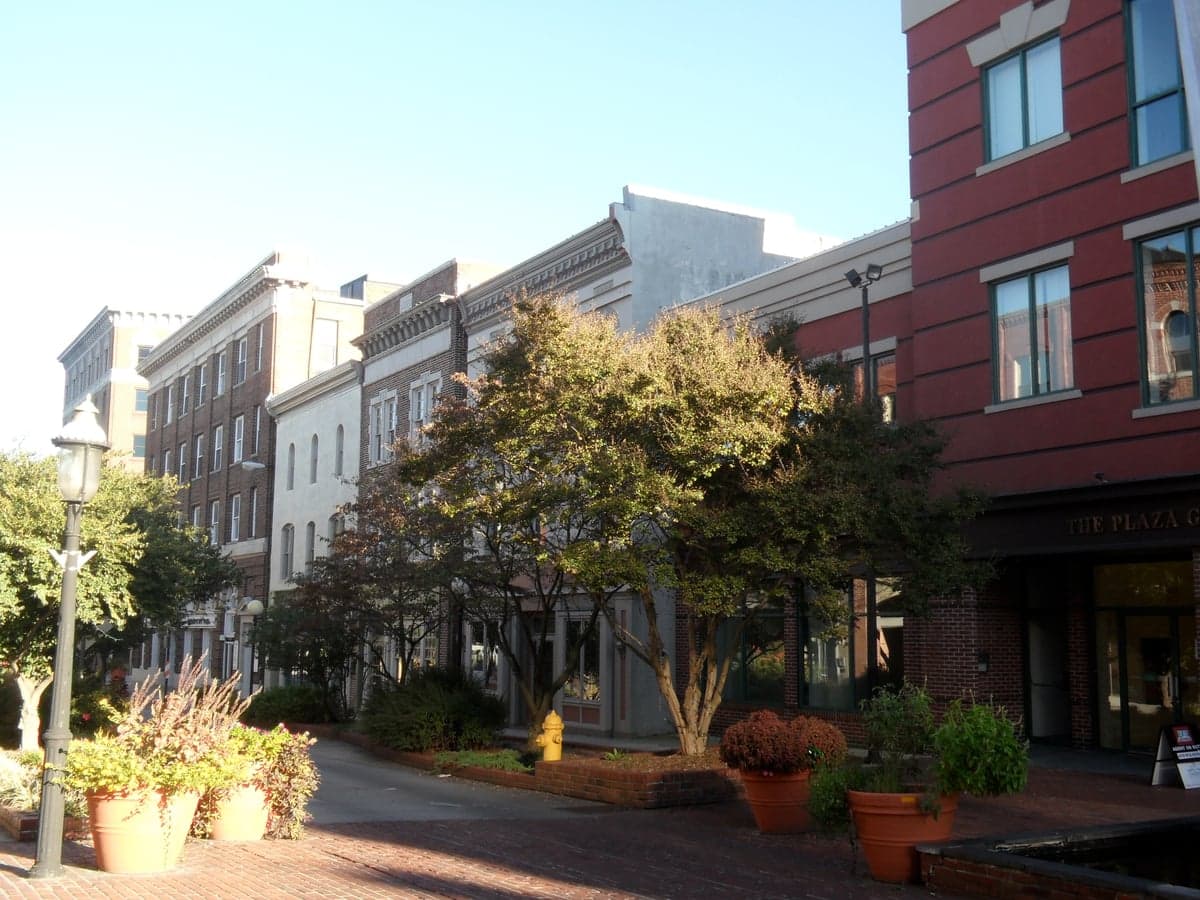
Photo: Wikipedia
Demographics of Salisbury, MD
Affluence Level in Salisbury, MD
A below-average socioeconomic profile. Incomes, home values, and educational attainment trail the U.S., with higher poverty and unemployment.
People of Salisbury, MD
The people of Salisbury, Maryland today form a compact, majority-minority city of 33,080 residents, characterized by a near-even split between Black (40.4%) and White (43.4%) populations, a growing Hispanic community (5.9%), and a small but notable East/Southeast Asian presence (2.5%). The city is denser and more diverse than the surrounding Wicomico County, with a foreign-born share of 10.8% that reflects both longstanding immigrant communities and recent arrivals drawn to the region’s lower cost of living and proximity to the Chesapeake Bay. Salisbury’s identity is shaped by its role as a regional hub for healthcare, education, and agriculture, with a college-educated rate of 28.3% that lags behind the national average but anchors a growing professional class.
How the city was settled and grew
Salisbury was founded in 1732 as a port town on the Wicomico River, serving as a trading post for the tobacco and timber of the Eastern Shore. The original population was overwhelmingly English and Scots-Irish, with a small number of enslaved Africans who worked the surrounding plantations. By the early 19th century, the city became a commercial center for the region’s poultry and seafood industries, drawing free Black families and German immigrants to neighborhoods like Newtown, a historically Black district that grew around the railroad and the Salisbury University campus. The late 1800s saw an influx of Italian and Polish immigrants who settled in the Church Street area near the downtown waterfront, working in the canneries and lumber mills. The early 20th century brought a second wave of Black migration from rural Somerset and Dorchester counties, who established the Georgetown neighborhood east of the railroad tracks, a tight-knit community centered on the Zion Baptist Church and the old Salisbury High School. By 1950, the city’s population was roughly 70% White and 30% Black, with a small Jewish community concentrated around the North Division Street corridor.
Modern era (post-1965)
The 1965 Hart-Celler Act and the broader Civil Rights movement reshaped Salisbury’s demographics. The city’s Black population grew steadily through the 1970s and 1980s as African Americans from the rural Eastern Shore moved into the city for jobs at the newly expanded Peninsula Regional Medical Center and the growing poultry processing plants. The Westside neighborhood, west of the Wicomico River, became a predominantly Black middle-class area, while the Eastside neighborhoods around the university saw an influx of White professionals and faculty. The 1990s and 2000s brought a wave of Hispanic immigrants, primarily from Mexico and Central America, who settled in the South Salisbury area near the industrial parks and the Route 13 corridor, working in construction, landscaping, and poultry processing. East/Southeast Asian communities, including Vietnamese and Filipino families, arrived in smaller numbers, often drawn by medical residency programs at the hospital and the university’s international student programs. The Indian subcontinent population remains tiny at 0.6%, concentrated among professionals at the medical center and Salisbury University. By 2020, the city had shifted from a White-majority to a plurality-Black city, with the White share dropping from 55% in 2000 to 43.4% today, while the Hispanic share rose from 2.1% to 5.9%.
The future
Salisbury’s population is trending toward greater diversity, but the city is not homogenizing into a single melting pot. The Black and White populations are increasingly residentially distinct, with Black families concentrated in the Westside and Newtown, White families in the College Park area near the university and the newer subdivisions west of Route 13, and Hispanic families in South Salisbury. The foreign-born share has plateaued at around 10-11% over the past decade, suggesting that immigration is not accelerating but rather stabilizing. The East/Southeast Asian community is small but growing slowly, driven by medical and academic professionals. The Indian subcontinent population is likely to remain a niche group tied to the hospital and university. Over the next 10-20 years, Salisbury will likely become more diverse in absolute terms, but the city’s neighborhoods will remain tribalized by race and income, with the downtown area seeing modest gentrification as Salisbury University expands. The city’s population is projected to grow slowly, reaching roughly 35,000 by 2040, driven by natural increase and limited in-migration from the Baltimore-Washington corridor.
For someone moving to Salisbury now, the city offers a genuinely diverse, working-to-middle-class environment where race and neighborhood still strongly correlate. The city is not a post-racial suburb but a historically grounded, majority-minority regional hub where community identity remains tied to the historic neighborhoods built by each wave of settlement. Newcomers should expect a place where local politics and social life are shaped by the Black-White dynamic, with a growing but still secondary Hispanic presence, and where the university and hospital serve as the primary engines of demographic change.

* Values derived from national, state, county, city and local statistics and may differ in a specific area. Last updated: 2026-04-19T07:05:31.000Z
Narrative content on this page is AI-generated and may contain mistakes. Verify any details that matter before acting on them.
ReloMaps may earn a commission from affiliate links at no extra cost to you.

