Photo: Wikipedia
Find The Best Places To Live
in Bellevue
PRO TIP! You can paste a Zillow or Redfin link to get info on that property.
What It's Like Living in Bellevue, WA
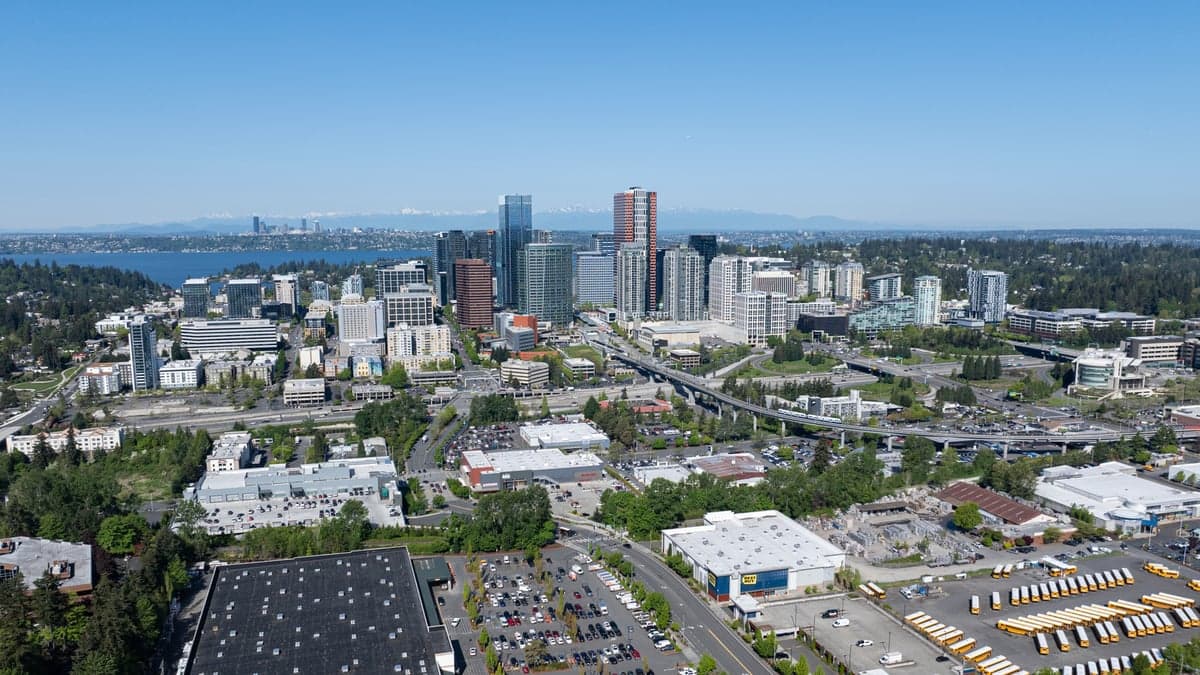
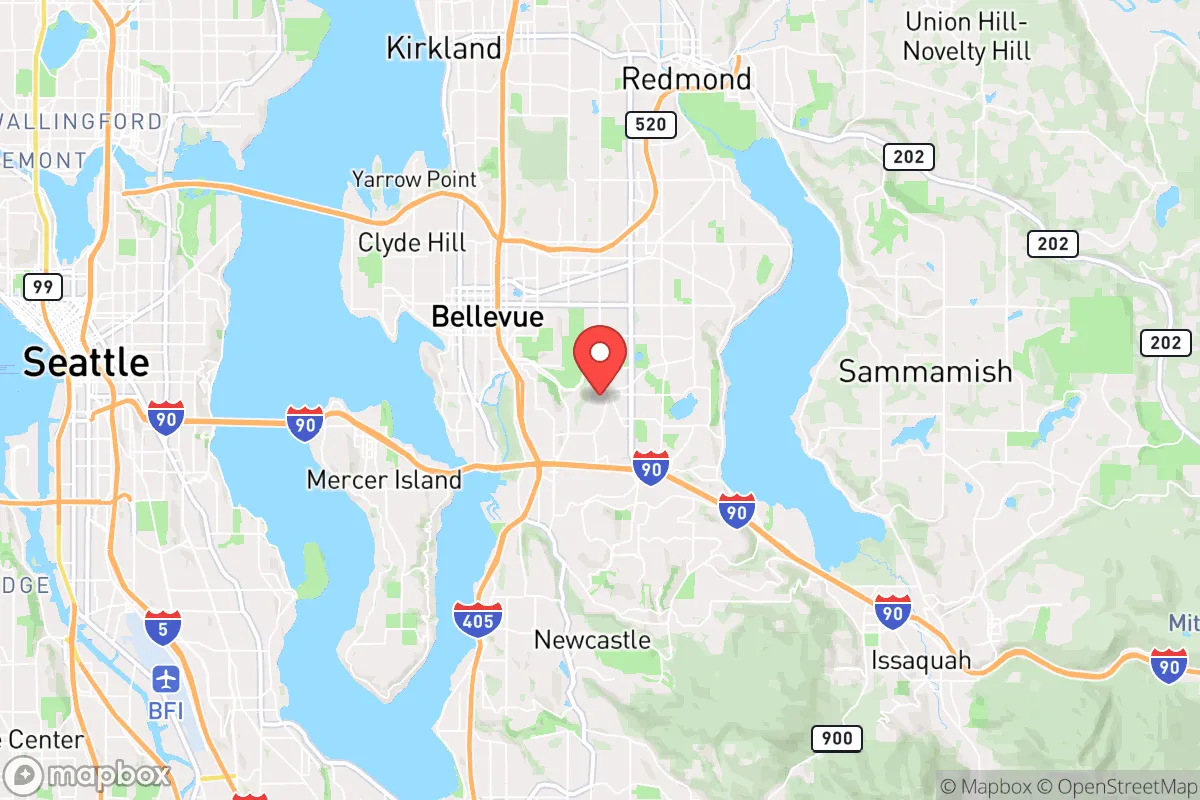
Bellevue has a reputation as Seattle’s polished, well-managed sibling—the one who actually reads the HOA rules and keeps the lawn edged. It’s a city of tech campuses, lakefront parks, and families who moved here specifically for the schools, but it’s also a place where a $1.2 million median home price is considered normal and a 23-minute average commute feels like a small victory. If you’re looking for gritty urban energy or a sleepy small town, this isn’t it; Bellevue is a prosperous, professional suburb that has grown into a city of its own, and it wears that identity without apology.
Daily Rhythm: Work, Errands, and the Weekend Reset
Most mornings here start with a commute that, by regional standards, is mercifully short—the average is just under 24 minutes, though that number can double if you’re heading into Seattle during peak hours. A huge chunk of the workforce never leaves Bellevue at all: 71.4% of adults hold a bachelor’s degree or higher, and many of them walk or drive a few miles to the sprawling Microsoft campus in nearby Redmond or to one of the many Amazon and T-Mobile offices scattered along the 405 corridor. The median household income of $161,300 reflects this concentration of high-skill, high-pay jobs, and you see it in the daily rhythm—coffee shops like Bellden Cafe or Woods Coffee are packed with remote workers by 9 a.m., and the grocery aisles at the Bellevue Whole Foods or Uwajimaya are full of people who clearly aren’t watching their budget.
Weekends are when the city exhales. Families head to Meydenbauer Beach Park for paddleboarding and picnics with a view of the Seattle skyline, or they hike the trails at Cougar Mountain Regional Wildland Park just south of town. The dining scene is serious but not flashy—locals argue over whether Din Tai Fung (the original U.S. location) or Seastar Restaurant & Raw Bar has the better happy hour, and the Bellevue Farmers Market on Saturdays is a genuine community gathering, not just a tourist stop. For a city of 151,199 people, it feels surprisingly self-contained: you can live, work, shop, and play here without crossing a bridge into Seattle for months at a time.
Sports, Schools, and the Community Identity
Bellevue doesn’t have a major pro sports team of its own—Seattle’s Seahawks, Mariners, and Sounders are a 15-minute drive away—but high school sports are a genuinely big deal. Bellevue High School’s football program is a state powerhouse with multiple championships, and Friday night games in the fall draw crowds that include alumni, parents, and neighbors who have no kids in the district. The Bellevue Wolverines are a point of civic pride in a way that surprises newcomers from smaller towns. The school system itself is a primary reason families move here; it’s consistently ranked among Washington’s best, and the competition to get into the right elementary school or advanced program is real. That pressure is both a draw and a source of frustration—some parents love the rigor, others feel it creates a high-stakes environment for kids as young as third grade.
Culturally, Bellevue leans professional and family-oriented, but it’s not as homogenous as outsiders assume. The city has a large and growing Asian American population—close to 40%—which shows up in the restaurant landscape (think excellent Korean barbecue, dim sum, and bubble tea spots along 156th Avenue NE) and in community events like the Bellevue Cherry Blossom Festival at the Botanical Garden. The median age of 38.3 reflects a population heavy on established professionals and parents, not retirees or recent college grads. If you’re single and in your twenties, you might find the social scene a bit quiet; most nightlife energy is in downtown Bellevue’s high-end bars and hotel lounges, not dive bars or music venues.
What’s There to Do: Parks, Festivals, and the Outdoors
Outdoor access is one of Bellevue’s strongest selling points. Downtown Park is a 21-acre green space with a reflecting pond and walking paths that feels like the city’s living room, and the Bellevue Botanical Garden hosts seasonal light displays and plant sales that draw thousands. For more serious recreation, Lake Sammamish State Park is a 10-minute drive east, offering swimming beaches, boat launches, and trails that connect to the broader Issaquah Alps network. The city also runs an extensive system of paved trails—the Lake to Lake Trail links several parks and is popular with runners and cyclists.
Annual events give the city a sense of rhythm. The Bellevue Arts Fair in late July brings hundreds of artists and crafts vendors to the downtown streets, and the Bellevue Jazz & Blues Festival in August fills venues like the Meydenbauer Center with free and ticketed shows. The Bellevue Collection—a massive shopping complex that includes Lincoln Square and Bellevue Square—hosts outdoor concerts and a holiday ice rink, though locals have mixed feelings about it: it’s convenient and high-end, but it also contributes to the traffic congestion that frustrates nearly everyone. Speaking of which: the 405 freeway through Bellevue is a genuine pain point, especially during afternoon rush and when there’s a Mariners game or a Seahawks home game in Seattle. The city’s light rail connection (the 2 Line) opened in 2024 and is slowly changing commuting patterns, but for now, most people still drive.
Pros and Cons of Living Here
- Pros: Top-rated public schools that genuinely prepare kids for competitive colleges; a low violent crime rate of 110.9 per 100,000 (well below the national average); easy access to both urban amenities and outdoor recreation; a strong job market that doesn’t require a Seattle commute; a diverse, well-educated population that keeps the cultural scene interesting.
- Cons: The cost of living index sits at 300—triple the U.S. average—and the median home value of $1,203,100 prices out most middle-class buyers; traffic on I-405 is reliably bad during commute hours and on weekends; the social scene can feel insular and family-focused, making it tough for singles to meet people; some residents find the city’s polished, affluent vibe a bit sterile compared to Seattle’s grittier neighborhoods.
Bellevue works best for people who value stability, good schools, and a predictable daily routine over spontaneity and urban chaos. It’s a city that delivers on its promises—safe streets, strong schools, beautiful parks—but it asks for a high price tag and a willingness to accept that not everything is walkable or edgy. If that trade-off sounds reasonable, you’ll likely find it a comfortable, even enviable place to land.

Similar small cities to Bellevue
* Values derived from national, state, county, city and local statistics and may differ in a specific area. Last updated: 2026-04-21T11:04:03.000Z
Narrative content on this page is AI-generated and may contain mistakes. Verify any details that matter before acting on them.
ReloMaps may earn a commission from affiliate links at no extra cost to you.

