Quality of Life in San Angelo, TX
A high quality of life with strong walkability, manageable living costs, healthy neighborhood signals, and solid amenity access.
What does Quality of Life tell us?
Quality of Life blends cost of living, nearby amenities, socioeconomic signals, and neighborhood character. City-level scores represent the whole municipality; individual neighborhoods can differ.
What does this tell us?
Quality of Life blends cost of living, nearby amenities, socioeconomic signals, and neighborhood character. City-level scores represent the whole municipality; individual neighborhoods can differ.
Cost of Living
17% below national average
The Real Cost of Living in San Angelo, TX for 2026
| Tier | Individual | Family (4) |
|---|---|---|
| Survival | $18k | $34k |
| Comfortable | $35k | $51k |
| Luxury | $111k+ | $172k+ |
| Elite (Top 5%) | $131k+ | $203k+ |
125%
The Area Signal
A metric tracking the socioeconomic signals of the area.
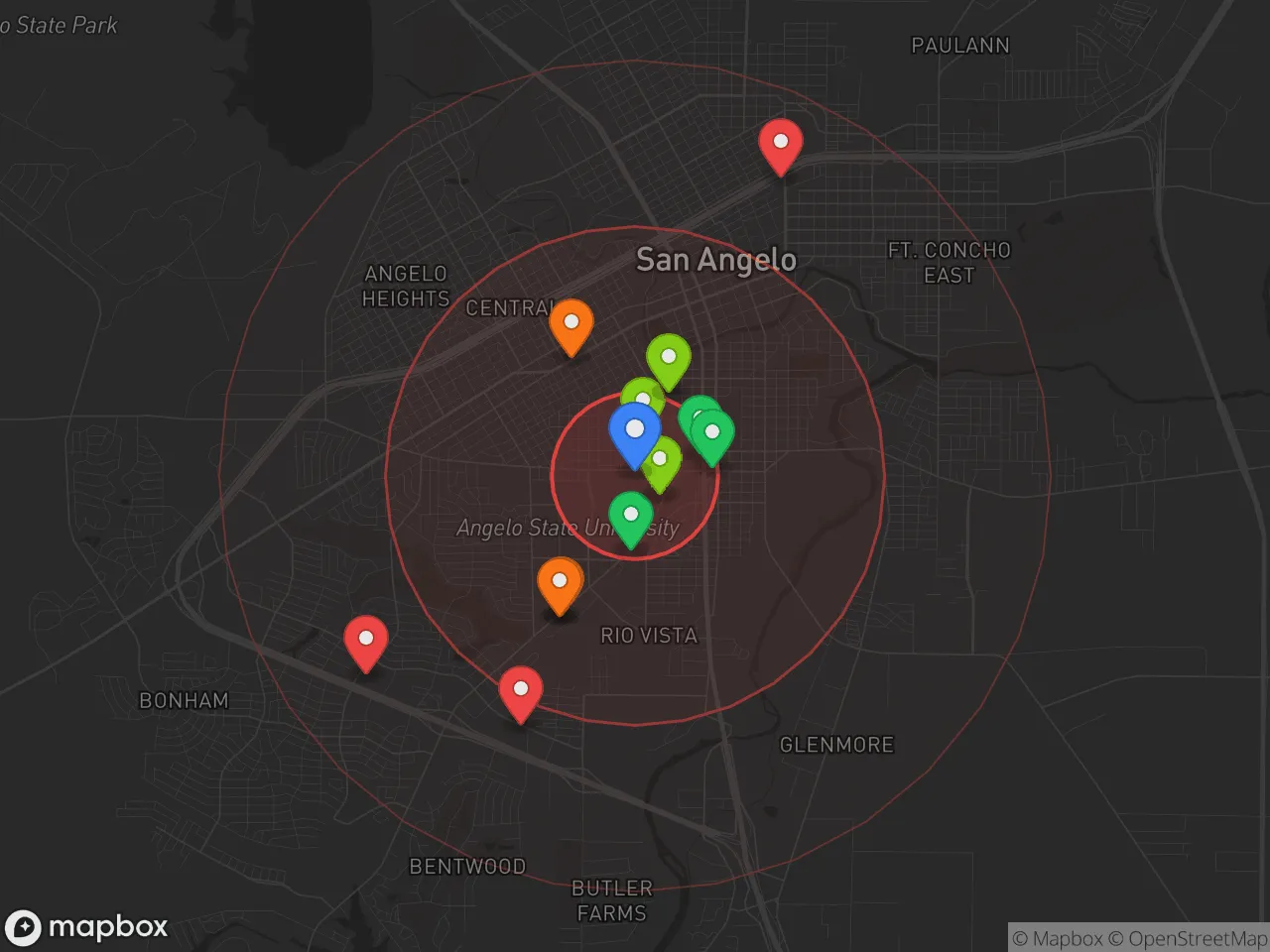
Hobbies
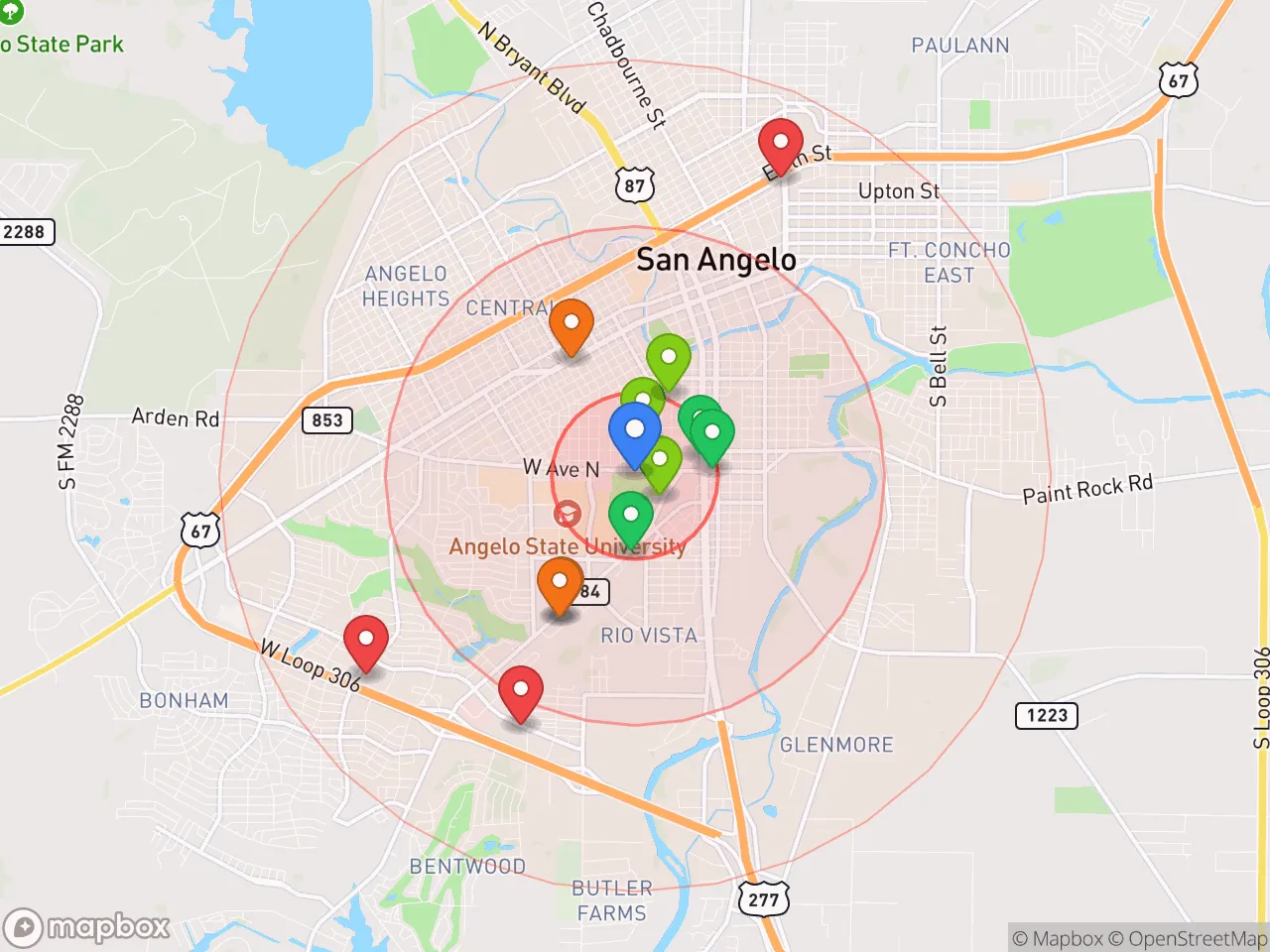
Explore the areaGroceries
5 within 10 miles
Gas
20 within 10 miles
Hospital
4 within 20 miles
Airport
SAN — San Angelo Regional
Post Office
USPS — San Angelo, TX
Critical Amenities
Quality-of-Life Analysis
San Angelo presents a notably affordable quality of life that attracts a mix of working families, military personnel connected to Goodfellow Air Force Base, and retirees seeking a slower pace. The city’s cost of living index sits at 83 (100 is the U.S. average), making it significantly cheaper than the national norm while offering a stable, middle-income lifestyle typical of West Texas regional hubs.
Cost of living, housing, and affordability compared to nearby cities
Housing costs in San Angelo are well below both state and national averages, with a median home value of $179,300 and a median rent of $1,121. For context, the median home value in Texas overall is roughly $300,000, meaning San Angelo homes cost about 40% less. Compared to larger West Texas cities like Midland or Odessa, where oil-boom demand pushes prices higher, San Angelo offers a more stable and accessible market. The average commute time is just 18.5 minutes, well under the national average of 26 minutes, which reduces daily transportation costs and frees up time for family or leisure. Utility and grocery costs also track below the U.S. average, reinforcing the city’s reputation as a place where a moderate income goes further than in most urban or suburban settings.
What daily life is like for families: schools, amenities, and local rhythm
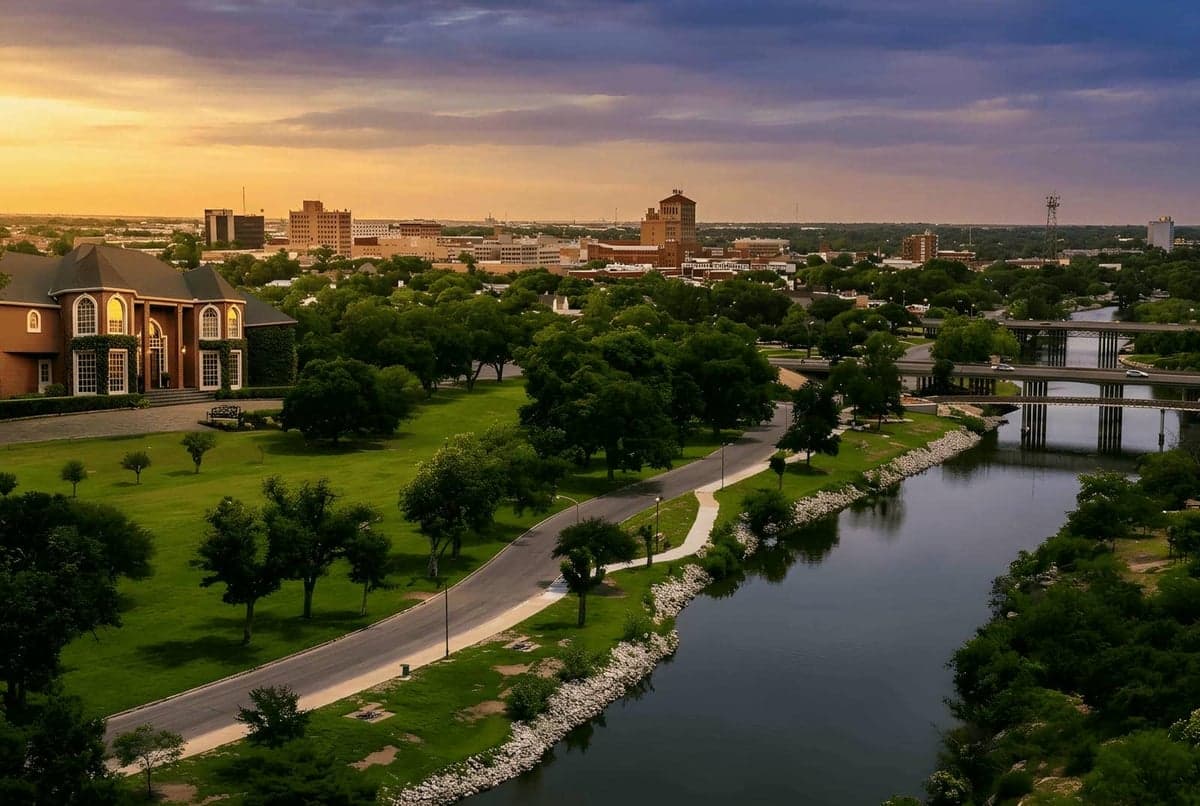
Daily life in San Angelo centers on outdoor recreation and community-oriented activities. The Concho River runs through the city, providing access to the River Walk and Lake Nasworthy for kayaking, fishing, and hiking. The San Angelo State Park, located just west of town, offers over 7,000 acres of trails and wildlife viewing. For families, the San Angelo Independent School District operates 22 campuses, including the well-regarded Lake View High School and Central High School. Higher education options include Angelo State University, a member of the Texas Tech University System, which enrolls over 10,000 students and contributes to the local cultural calendar with theater, concerts, and Division II athletics. Retail and dining are concentrated along Sherwood Way and Bryant Boulevard, with a mix of national chains and local spots like the Miss Hattie’s and The Wharf. The city’s pace is noticeably slower than Dallas or Austin, with most errands and commutes taking under 20 minutes, which residents frequently cite as a major draw.
San Angelo is best suited for people who value affordability, short commutes, and a tight-knit community feel over urban nightlife or rapid career growth. Military families, remote workers, and retirees will find the low housing costs and access to outdoor amenities particularly appealing. Those seeking high-end shopping, diverse fine dining, or a fast-paced job market may find the options limited, but for anyone prioritizing financial breathing room and a relaxed daily rhythm, San Angelo delivers a solid return on income.

Crime in San Angelo, TX
Generally safer than 58% of comparable U.S. locations.
Violent CrimeViolent Crime Analysis
Property CrimeProperty Crime Analysis
Crime Analysis
San Angelo's overall crime picture is mixed, with a violent crime rate that sits below the national average but a property crime rate that significantly exceeds it. The city recorded 284.5 violent crimes per 100,000 residents in the most recent reporting period, compared to a national average of roughly 380 per 100,000. However, the property crime rate of 2,185 per 100,000 is notably higher than both the Texas state average (approximately 2,200) and the national average (approximately 1,950), making property theft and burglary the primary safety concerns for most residents.
Crime in context
San Angelo's violent crime rate is roughly 25% lower than the U.S. average, placing it in a safer tier than many similarly sized Texas cities. The city's homicide rate is also below the national median. Property crime, however, is the more pressing issue. The rate of 2,185 per 100,000 is about 12% higher than the national average. This disparity is driven largely by larceny-theft and motor vehicle theft, which are more common in San Angelo than in the state as a whole. It is important to note that Texas as a state has a property crime rate that is already above the national average, so San Angelo's figures are elevated even within that context.
What residents experience
For the average resident, the most likely crime encounter is a property-related incident—a stolen package, a vehicle break-in, or a burglary. Violent crime, while less common, is not absent. The city's law enforcement presence is provided by the San Angelo Police Department, which has maintained a community-oriented policing approach. However, residents should be aware that the broader judicial environment in Tom Green County, like many Texas counties, can influence outcomes. While San Angelo itself is not a large metro area, the surrounding region's judicial philosophy matters. In jurisdictions where progressive or lenient approaches to prosecution and sentencing are adopted, the result is often more criminals on the street, undermining public safety and victim justice. San Angelo's local courts have generally maintained a more traditional stance, but the trend in many Texas urban centers is a source of concern for residents who prioritize accountability.
Neighborhood-level variation in San Angelo is significant. Areas south of the Concho River, particularly around the historic downtown and near the university, tend to see higher rates of property crime. The more affluent neighborhoods in the northern and western parts of the city, such as those near the San Angelo Country Club and along the Loop 306 corridor, report lower crime rates. The city's public safety data shows that the highest concentration of incidents occurs in the central corridor along US-87 and the area around the San Angelo Regional Airport. Prospective residents are advised to consult the city's crime mapping tool and speak with local real estate agents to identify specific blocks with lower incident rates, as the difference between adjacent streets can be substantial.
* Values derived from national, state, county, city and local statistics and may differ in a specific area. Last updated: 2026-07-10T00:58:05.000Z
Narrative content on this page is AI-generated and may contain mistakes. Verify any details that matter before acting on them.
ReloMaps may earn a commission from affiliate links at no extra cost to you.

