Strategic Assessment of San Angelo, TX
Meaningful friction. Expect exposure to either population pressure, blast zones, or natural disaster risk. Consider buying a retreat property.
What does the Strategic Assessment tell us?
Our Strategic Assessment grades tactical survivability of an area. Major population centers, military targets, fallout zones, natural disasters, and border exposure all drive risk — lower exposure means a more defensible position in a crisis.
This is heavily inspired by Joel Skousen's Strategic Relocation book. Highly recommended you checkout the book ($)What does this tell us?
Our Strategic Assessment grades tactical survivability of an area. Major population centers, military targets, fallout zones, natural disasters, and border exposure all drive risk — lower exposure means a more defensible position in a crisis.
This is heavily inspired by Joel Skousen's Strategic Relocation book. Highly recommended you checkout the book ($)Strategic Pillars

Key Distances
Regional Safe Places
Below is our recommended "safe zones" in Texas and the surrounding area based on our strategic heuristics. For most people, it's unrealistic to live in a “safe zone” full-time due to work, family or other personal reasons. They tend to be more rural. However, many of these areas are perfect for second homes and retreat properties that double as a vacation home or even a short-term rental.

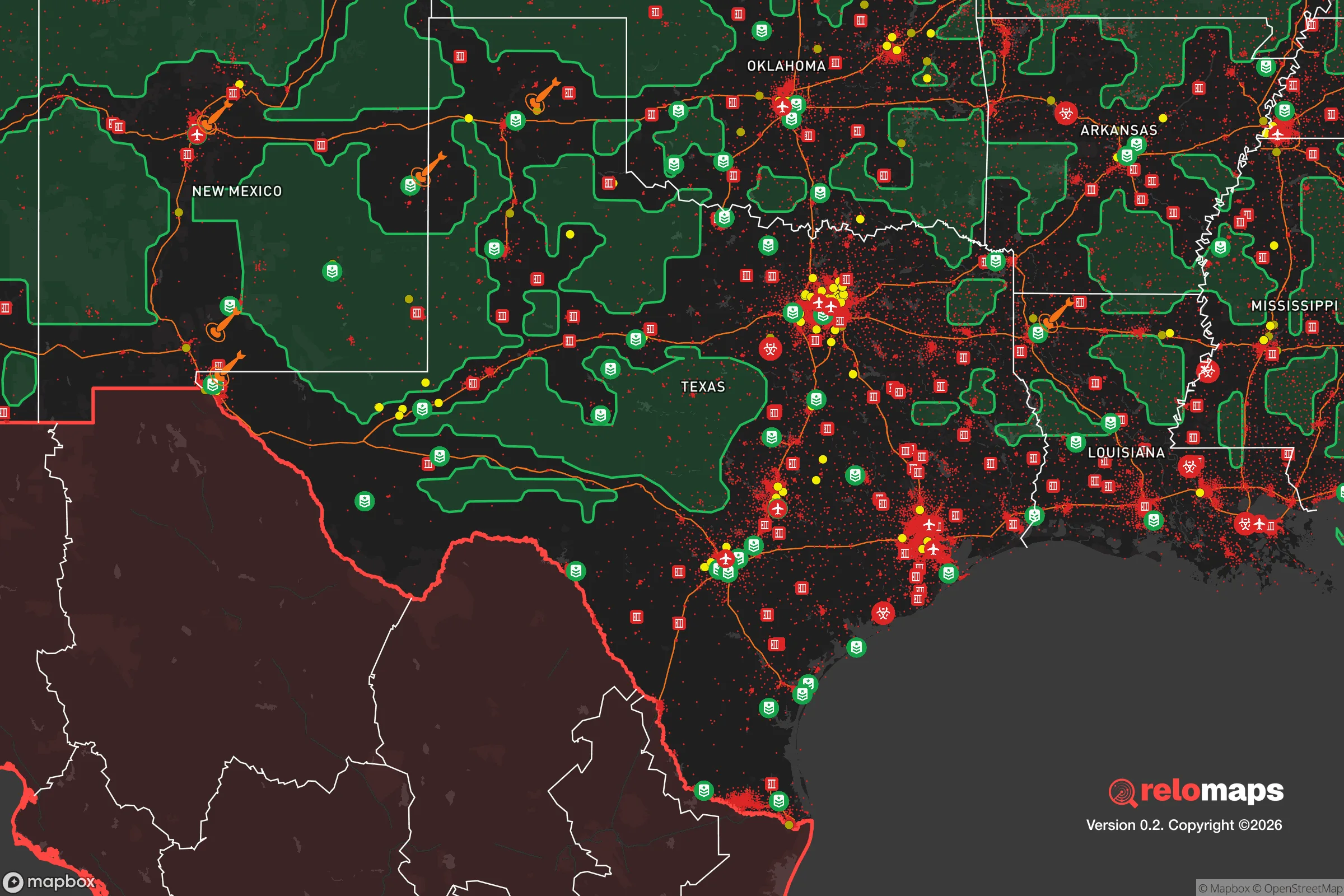


Important Note: For informational purposes only. This does not mean nothing bad ever happens in the green zones. Please use common sense. This is based on public data and modeled with AI. We tried to take a conservative approach but mistakes happen. We update this regularly as new information becomes available.
Solar Generator Recommendations
Backup power matters more here than in safer locations. We've picked three solar generators across budgets and capacity tiers — start with the budget unit if you only need a few essentials, or step up if you want to run a fridge and HVAC for days at a time.

Jackery Portable Power Station Explorer 300
Budget OptionPower on the Go: Weighing only 11 lbs, it's convenient to set up and store with book-sized foldable solar panels

BLUETTI Portable Power Station AC180
Designed for both indoor and outdoor scenarios, AC180 is highly capable as it has a robost capacity and continuous output power.

EF ECOFLOW DELTA Pro Ultra Power Station
Upgraded PickEcoFlow DELTA Pro Ultra is a whole-home energy system designed to grow with your family. Integrated with the Smart Home Panel 2, it scales to meet your evolving energy needs — keeping your home powered, intelligent, and secure through every stage of life.
We earn a commission, at no additional cost to you.
Strategic Assessment Analysis
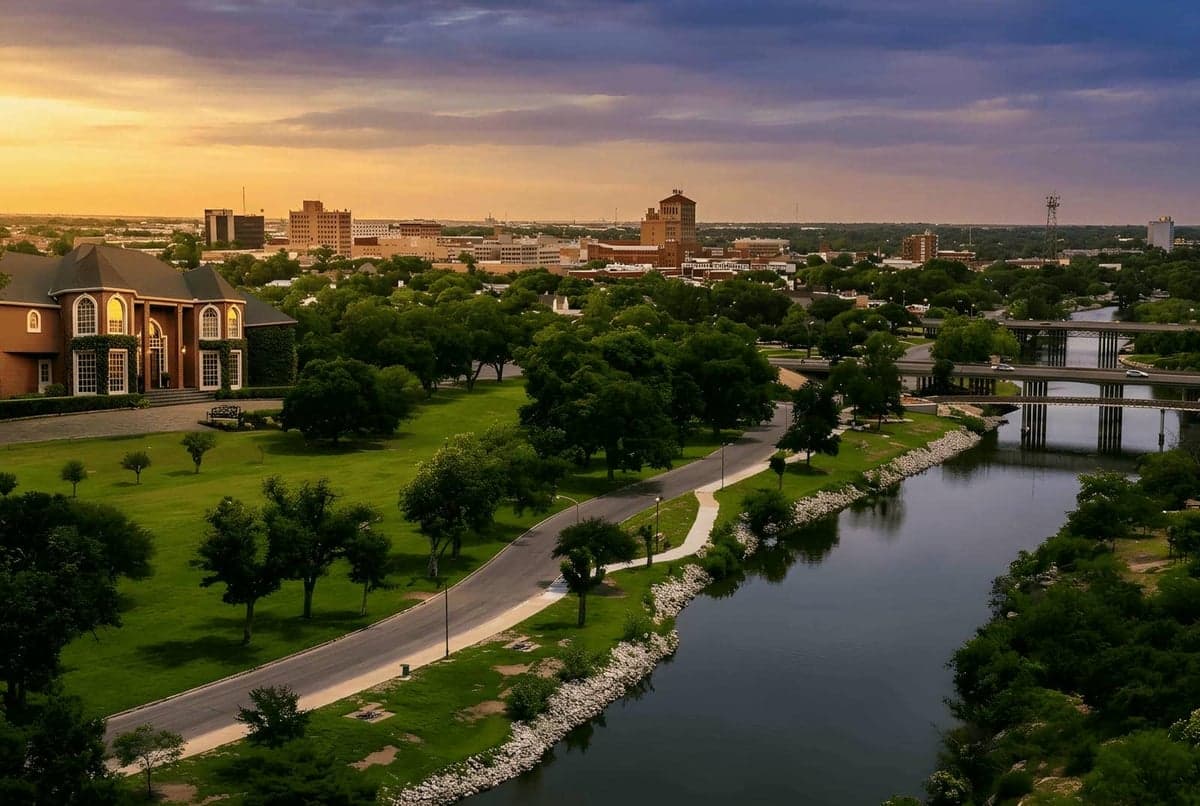
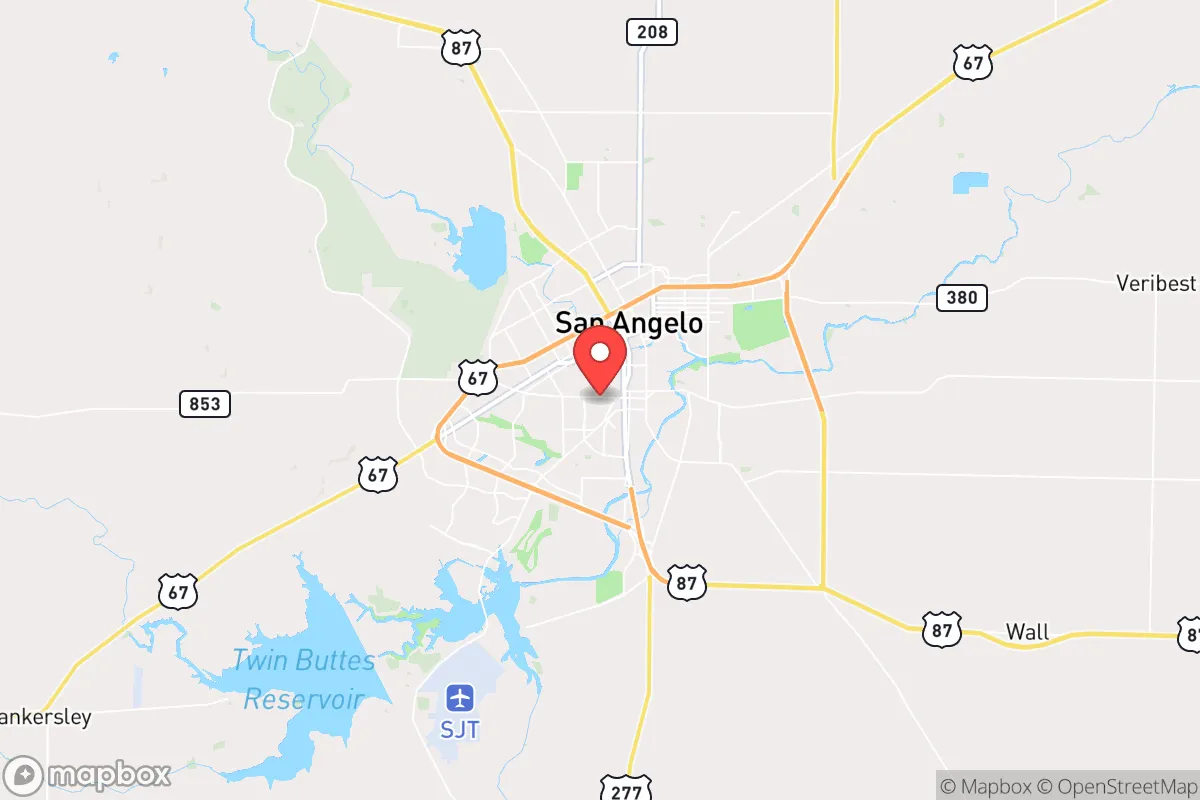
San Angelo, Texas, offers a compelling mix of geographic isolation and resource abundance that makes it a serious contender for anyone prioritizing resilience and self-sufficiency. Situated in the Concho Valley at the intersection of the North and South Concho Rivers, the city sits roughly 200 miles from the major metropolitan hubs of Dallas-Fort Worth, Austin, and San Antonio, placing it far enough from the immediate blast and fallout zones of a major urban or military strike while remaining accessible for supply runs or family visits. With a population hovering around 100,000, San Angelo is large enough to support a regional hospital, a university (Angelo State University), and a functioning airport, yet small enough to avoid the congestion, crime, and infrastructure fragility that plague larger cities.
Geographic position and natural advantages for long-term stability
San Angelo’s location in West-Central Texas provides several structural advantages for a relocator focused on disaster readiness. The region sits atop the Edwards-Trinity Plateau aquifer system, which supplies reliable groundwater, and the city draws its municipal water from the twin reservoirs of O.C. Fisher Lake and Twin Buttes Reservoir. These water bodies, while subject to drought cycles, give the area a more secure water posture than many Texas towns that rely solely on the Ogallala Aquifer or the Colorado River. The terrain is semi-arid, rolling hills with limestone bedrock, which reduces the risk of catastrophic flooding (unlike Houston or San Antonio) and provides natural drainage. The climate is hot and dry, with an average of 260 sunny days per year, which is ideal for solar energy generation and off-grid gardening if you plan for irrigation. The lack of dense forest cover also minimizes wildfire risk compared to the Hill Country or East Texas, though grass fires are a periodic concern. For a family looking to buy acreage, the surrounding Tom Green County offers relatively affordable land with decent soil for small-scale farming, and the absence of major fault lines means earthquakes are essentially a non-issue.
Risk exposure: natural hazards and proximity to strategic targets
No location is risk-free, and San Angelo has its own set of vulnerabilities. The primary natural threat is drought and extreme heat, which can stress water supplies and agricultural output. The region experienced severe drought from 2011 to 2015, and climate models suggest longer, hotter dry spells ahead. Flash flooding can occur during intense summer thunderstorms, particularly in low-lying areas near the Concho Rivers, but these events are localized and short-lived. Tornado risk is moderate—lower than in the Dallas-Fort Worth metroplex but higher than in the Panhandle—so a storm shelter or reinforced safe room is a prudent investment. From a man-made risk perspective, San Angelo’s distance from major cities is a double-edged sword. While it avoids the direct blast and fallout zones of a nuclear event targeting a large metro area, it is within 150 miles of Dyess Air Force Base (Abilene), which houses B-1B bombers and is a potential high-value target. Goodfellow Air Force Base, located right in San Angelo, is a smaller intelligence training facility and is less likely to be a primary target, but its presence still elevates the area’s risk profile slightly. The city is also downwind of the Permian Basin oil fields, where a major industrial accident or intentional disruption could cause localized air or water contamination. For a relocator, the key takeaway is that San Angelo is not a zero-risk sanctuary, but its risks are manageable with preparation—unlike living within 50 miles of a major city or a strategic military installation.
Practical resilience: food, water, energy, and defensibility for a relocator
For someone serious about self-sufficiency, San Angelo’s practical resilience is above average for a Texas city of its size. Water access is the strongest asset: the Concho River system and the two reservoirs provide a surface water supply that can be supplemented with private wells in many areas outside city limits. Rainwater harvesting is viable given the 20 inches of annual rainfall, and many rural properties already have cisterns. The local climate supports year-round vegetable gardening with shade cloth and drip irrigation, and the surrounding ranchland means beef, lamb, and goat are locally available. The San Angelo Stock Show and Rodeo is a major regional event, and the agricultural infrastructure—feed stores, livestock auctions, equipment dealers—is robust. For energy, the area has excellent solar potential, and net metering policies from AEP Texas allow homeowners to offset grid usage. Natural gas is widely available in the city, and propane delivery is common in rural areas. Defensibility is a mixed bag: the city itself is spread out with a low population density, which makes it harder to secure a perimeter but also reduces the risk of civil unrest compared to a dense urban center. The surrounding terrain is open and provides good lines of sight, and the local culture is heavily oriented toward hunting and firearms ownership, which means a significant portion of the population is already armed and trained. The Tom Green County Sheriff’s Office and San Angelo Police Department are well-regarded and maintain a visible presence, but in a prolonged grid-down scenario, residents would largely rely on themselves and their neighbors. The presence of Angelo State University and a regional medical center (Shannon Medical Center) adds a layer of community resilience, as these institutions have backup generators and emergency protocols.
Overall, San Angelo presents a balanced strategic picture for the disaster-conscious relocator. It offers genuine advantages in water security, energy independence, and distance from the most likely high-value targets, all within a community that values self-reliance and mutual aid. The trade-offs are real: you will contend with heat, drought, and the logistical challenges of being far from major supply chains, and you cannot ignore the proximity of Dyess Air Force Base as a potential risk. But for a family or individual looking to put down roots in a place where you can realistically build a resilient lifestyle—with a well, solar panels, a garden, and a network of like-minded neighbors—San Angelo is one of the more viable options in Texas. It is not a bunker, but it is a solid base camp.

* Values derived from national, state, county, city and local statistics and may differ in a specific area. Last updated: 2026-07-10T00:58:05.000Z
Narrative content on this page is AI-generated and may contain mistakes. Verify any details that matter before acting on them.
ReloMaps may earn a commission from affiliate links at no extra cost to you.

