 Popular
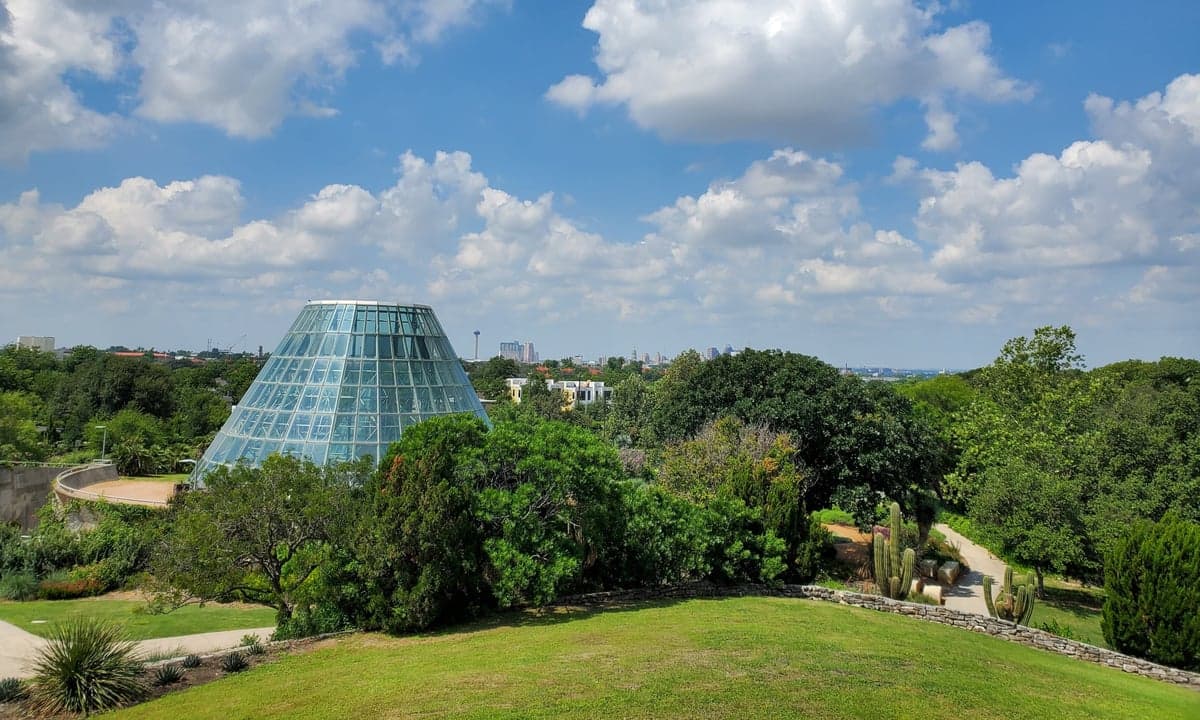
Photo: Wikipedia
Personal Sovereignty in San Antonio, TX
Strong independent fundamentals that actively favor personal liberty and low regulation.
What does Personal Sovereignty tell us?
Personal Sovereignty measures your capacity for self-reliance and independence with minimal government friction. Higher scores mean fewer barriers between you and the way you want to live... but it assumes you have the space you need and good neighbors.
What does this tell us?
Personal Sovereignty measures your capacity for self-reliance and independence with minimal government friction. Higher scores mean fewer barriers between you and the way you want to live... but it assumes you have the space you need and good neighbors.
State Policy
Energy independence: Net exporter (220% of energy produced in-state)
Personal Liberty
Homesteading

Personal Liberty Analysis
San Antonio offers a notably high degree of personal sovereignty relative to many major U.S. metros, largely due to Texas’s constitutional and statutory framework that prioritizes individual liberty over state control. For the strategic relocator—whether a single professional or a parent—the city provides a legal environment where self-defense, property rights, and economic autonomy are strongly protected, though local municipal ordinances introduce some friction. The key question for a survivalist or prepper mindset is whether San Antonio’s balance of state-level freedom and city-level regulation allows for genuine self-reliance without constant government overreach. The answer is largely yes, but with specific caveats around zoning, medical mandates, and local tax policies that require careful navigation.
Tax burden and regulatory posture: How state policies protect your income and property
Texas’s absence of a state income tax is the single most powerful tool for preserving personal sovereignty in San Antonio. Every dollar earned stays in your pocket, free from state-level confiscation, which directly supports self-reliance by allowing you to allocate resources to preparedness, land, or equipment without government intermediation. The state’s regulatory posture is similarly hands-off: no state-level business licensing requirements for most sole proprietorships, no state-level building codes in unincorporated areas, and a right-to-work law that prevents forced union membership. However, San Antonio’s city government imposes a property tax rate of roughly 1.3% to 1.5% of assessed value (depending on the specific school district and municipal utility district), which is moderate by Texas standards but still a significant annual cost. The city also enforces its own building codes and zoning ordinances, which can be more restrictive than state law—particularly for accessory dwelling units, home-based businesses, or alternative energy installations. For the prepper, the key takeaway is that state-level protections are robust, but you must research whether your specific neighborhood falls under city jurisdiction or an extraterritorial jurisdiction (ETJ) where county rules apply, as the latter offers far more regulatory freedom.
Self-defense and gun law specifics: What the Castle Doctrine and permitless carry mean for you
Texas’s firearm laws are among the most permissive in the nation, and San Antonio residents benefit directly from this framework. Permitless carry (also known as constitutional carry) became law in 2021, meaning any law-abiding adult 21 or older can carry a handgun openly or concealed without a license or training requirement. The Castle Doctrine is fully codified in Texas Penal Code §9.32, establishing a legal presumption that a homeowner or occupant who uses deadly force against an intruder who has unlawfully entered their dwelling, vehicle, or workplace acted reasonably—no duty to retreat applies. This presumption extends to occupied vehicles and places of business, which is critical for daily carry scenarios. San Antonio’s local government has not attempted to create its own gun control ordinances (such as city-level magazine bans or waiting periods), as Texas law preempts such local regulations under Government Code §229.001. However, the city does enforce a “no weapons” policy in city-owned buildings and parks, which can be a nuisance for those who carry everywhere. For the survivalist, the legal environment is excellent: you can defend your home, family, and property with lethal force if necessary, and you can carry that capability with you throughout the metro area without bureaucratic hurdles. The only notable gap is the lack of a state-level “stand your ground” statute that explicitly covers public spaces outside the home—though Texas courts have generally interpreted the Castle Doctrine broadly in such cases.
Self-reliance and homesteading viability: Lot sizes, zoning, and off-grid feasibility
San Antonio’s urban core offers limited homesteading potential, but the surrounding Bexar County and adjacent counties (Comal, Kendall, Bandera) provide significant opportunities for self-reliance. Inside the city limits, minimum lot sizes in residential zones are typically 5,000 to 7,500 square feet, which restricts large-scale gardening, livestock, or water harvesting. The city’s zoning code explicitly prohibits keeping chickens in most residential districts (except for a limited pilot program in certain areas), and beekeeping requires a permit with strict setback requirements. For the prepper seeking true self-sufficiency, the practical answer is to look outside San Antonio’s ETJ—areas like Helotes, Castroville, or the Hill Country north of Loop 1604 offer 1- to 5-acre lots with county-level zoning that allows livestock, rainwater collection, and alternative energy systems without city interference. Off-grid feasibility is high in these areas: Texas law explicitly protects the right to install solar panels and wind turbines (Property Code §202.001), and rainwater harvesting is not only legal but encouraged through tax exemptions on related equipment. Septic systems are permitted on lots of one acre or more in most counties, and private wells are legal with a permit from the local groundwater district. For the serious homesteader, the strategy is clear: buy land in the county, not the city, and you can operate with minimal government oversight—no building permits for agricultural structures, no restrictions on food storage, and no limits on water usage from your own well.
Personal liberties: Parental rights, medical autonomy, speech, and property protections
Texas has been a national leader in protecting parental rights, and San Antonio families benefit directly from this legal framework. The state’s Parental Bill of Rights (Texas Family Code §151.001) explicitly affirms that parents have the fundamental right to direct their children’s education, healthcare, and moral upbringing. This means no government-mandated medical procedures without parental consent, no school curriculum that overrides parental values, and the ability to opt children out of any instruction that conflicts with religious or moral beliefs. Medical autonomy for adults is similarly strong: Texas law prohibits any vaccine mandate for adults (except in limited healthcare settings) and allows the use of alternative medical treatments, including herbal remedies and dietary supplements, without state interference. The state’s recent ban on COVID-19 vaccine mandates for private employers (Senate Bill 7, 2023) further reinforces this principle. Free speech protections are robust under both the First Amendment and the Texas Religious Freedom Restoration Act, which requires the government to show a compelling interest before burdening religious exercise. Property rights are protected by the Texas Constitution’s “takings” clause, which is more protective than the federal version—any regulatory action that reduces property value by more than 25% requires compensation. For the parent or individual concerned about government overreach, San Antonio offers a legal environment where you can raise your children according to your values, make your own medical decisions, speak your mind without fear of censorship, and use your property as you see fit—provided you are outside the city’s most restrictive zoning areas.
Overall, San Antonio ranks among the top major U.S. cities for personal sovereignty, particularly when compared to coastal metros like Portland, Seattle, or New York City, where state and local governments routinely override individual rights on guns, education, and property use. The city’s main weaknesses are its municipal zoning and property tax burden, which can be mitigated by choosing a county location. For the survivalist or prepper, the strategic move is to live in the county while working in the city—capturing the economic opportunities of a major metro while operating under the far more permissive legal framework of Texas state law. The bottom line: San Antonio provides a solid foundation for self-reliance, but the degree of sovereignty you achieve depends almost entirely on whether you choose to live under city or county jurisdiction.

* Values derived from national, state, county, city and local statistics and may differ in a specific area. Last updated: 2026-04-28T15:32:18.000Z
Narrative content on this page is AI-generated and may contain mistakes. Verify any details that matter before acting on them.
ReloMaps may earn a commission from affiliate links at no extra cost to you.

