 Popular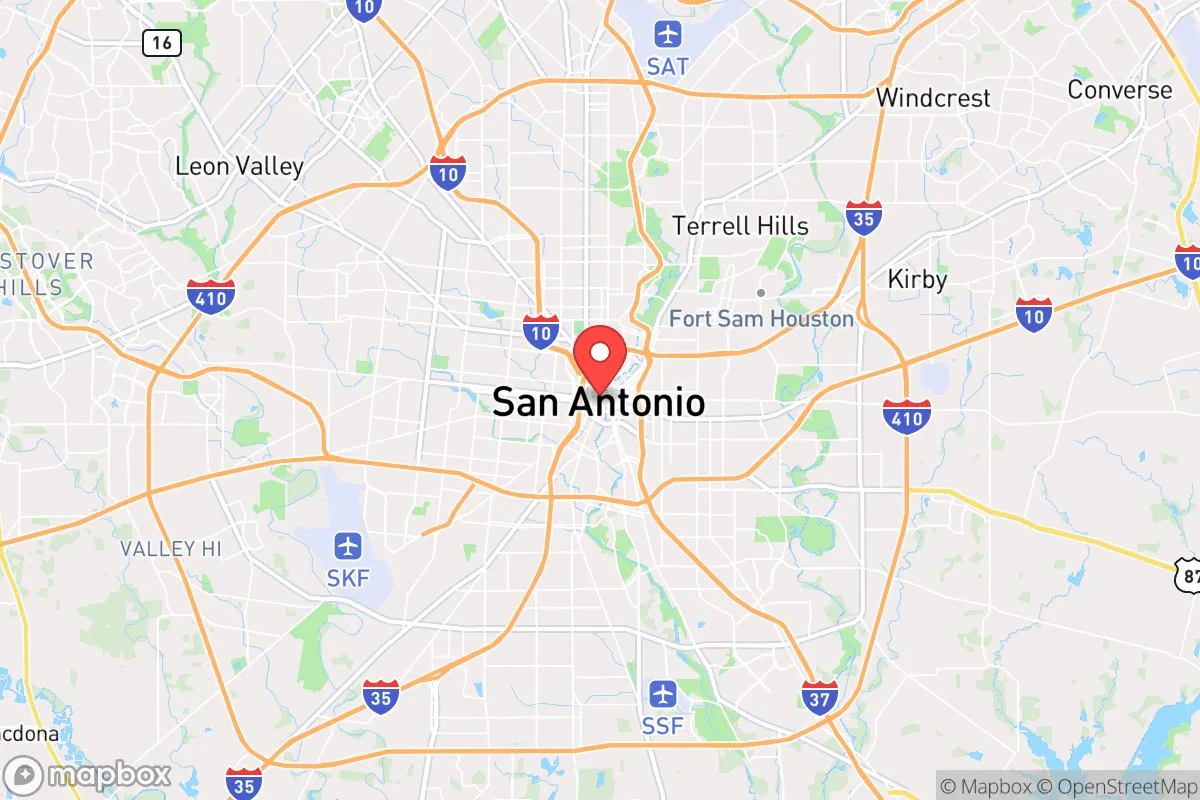
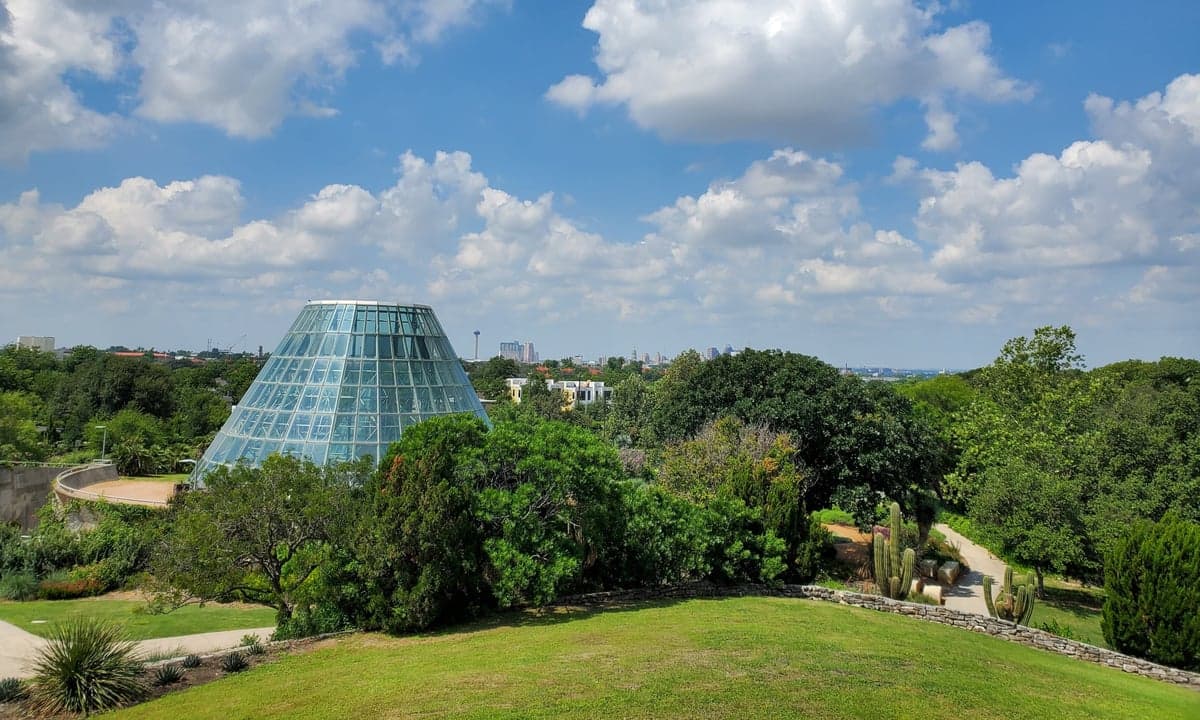
Photo: Wikipedia
Political ClimatePolitical Climate in San Antonio, TX
District shown is the primary district for this city’s centroid. Cities may span multiple districts.
Local Political AnalysisPolitical Analysis of San Antonio, TX
San Antonio’s political climate has shifted noticeably over the past decade, and if you’ve lived here as long as I have, you can feel it in the air. The city now carries a Cook PVI of D+19, meaning it votes about 19 points more Democratic than the national average — a far cry from the more balanced, live-and-let-live place I remember from the 1990s and early 2000s. While Bexar County as a whole still has a strong conservative undercurrent, especially in the northern suburbs and unincorporated areas, the city proper has moved steadily leftward. You see it in local ordinances, school board decisions, and the general attitude at city council meetings. It’s not the same San Antonio that used to pride itself on being a big, friendly small town where folks minded their own business.
How it compares
Drive 20 minutes north to Boerne or Fair Oaks Ranch, and you’re in a completely different political world — those areas lean heavily Republican, with Boerne’s Kendall County voting about 30 points to the right in recent elections. Head east to Schertz or Cibolo, and you’ll find a more mixed but still conservative-leaning electorate. Even New Braunfels, just 30 miles up I-35, is a solid red stronghold. The contrast is stark: San Antonio’s city council and mayor’s office have embraced progressive policies on everything from police funding to zoning reform, while the surrounding towns are fighting to keep property taxes low and local control intact. It’s like two different states living side by side.
What this means for residents
For those of us who value personal freedoms and limited government, the trend is concerning. The city has pushed through mandatory paid sick leave ordinances that small business owners say are crushing, and there’s been a steady creep of regulations on short-term rentals, signage, and even what you can do on your own property. Property taxes in Bexar County have climbed faster than inflation, partly because the city keeps expanding its budget for social programs and new city staff. If you’re a gun owner, you’ve watched the city council flirt with “safe storage” ordinances that feel like a backdoor to more restrictions. The school board elections have become battlegrounds over curriculum and parental rights, with progressive candidates winning more seats each cycle. It’s not that San Antonio is unlivable — far from it — but you have to be more vigilant about what’s being proposed at city hall.
Culturally, San Antonio still has its charms: the River Walk, the Spurs, the incredible food scene, and a genuine sense of community that’s hard to find in bigger cities. But the policy direction is unmistakable. The city’s non-discrimination ordinance from 2013 was one of the first in Texas to include gender identity, and since then, the city has added protections for abortion access and declared itself a “sanctuary city” for immigrants. For conservatives, these moves feel like government overreach into areas best left to families, churches, and local communities. Looking ahead, I expect the divide between San Antonio and its suburbs to widen, with more families and businesses voting with their feet and heading north or east. The city will likely keep leaning left, but the real question is whether it can do so without driving away the middle-class families and small business owners who make it work.

State Political ClimatePolitical Climate in Texas
State Political AnalysisPolitical Environment in the State
Texas has been a reliably Republican state for over three decades, but the political climate is far from monolithic. The dominant coalition remains conservative, anchored by the state’s vast rural and suburban areas, but the margin has tightened from double-digit wins in the 2000s to a 5.5-point victory for Donald Trump in 2024. Over the last 10-20 years, the state has shifted from a solid red stronghold to a competitive battleground, driven primarily by explosive population growth in the blue-leaning metros of Austin, Dallas, Houston, and San Antonio, while the rest of the state has held firm or moved further right.
Urban vs. rural divide
The political map of Texas is a stark story of two realities. The major urban cores—Austin (Travis County), Dallas (Dallas County), Houston (Harris County), and San Antonio (Bexar County)—have become Democratic strongholds, often voting blue by 15-30 points. These cities are the engines of the state’s economic growth, drawing in a diverse, younger, and more educated population that leans left on social issues. In contrast, the vast rural and exurban counties—places like Lubbock (Lubbock County), Amarillo (Potter/Randall Counties), and the sprawling Permian Basin (Midland and Odessa)—vote Republican by 40-60 points. The real political action, however, is in the suburbs. Counties like Collin (north of Dallas) and Montgomery (north of Houston) were once reliably red but have seen their margins shrink as new residents arrive. Fort Bend County (southwest of Houston) actually flipped to the Democrats in 2018 and has stayed competitive, a warning sign for conservatives. The 2024 election saw a slight rightward shift in some of these suburban areas, but the trend line over a decade is clear: the urban-suburban axis is the battleground, while rural Texas remains a conservative fortress.
Policy environment
Texas’s policy environment is a major draw for conservatives, but it’s not without its own government overreach. The state has no personal income tax, a huge advantage, but property taxes are among the highest in the nation, effectively a tax on homeownership. The regulatory posture is famously business-friendly, with minimal red tape for industries like energy and tech. On education, the state has leaned into school choice, with the 2023 passage of a universal Education Savings Account (ESA) program that lets parents use state funds for private or homeschool expenses—a win for parental rights. Healthcare is a mixed bag: Texas did not expand Medicaid, keeping government out of that system, but the state’s maternal mortality rates are concerning, and rural hospital closures are a real issue. Election laws have tightened since 2021’s SB 1, which restricted mail-in voting and expanded poll watcher access—a move that conservatives see as securing election integrity but critics call suppression. The state also passed a near-total abortion ban (trigger law after Dobbs) and a law banning gender transition procedures for minors (SB 14 in 2023), reflecting a strong social conservative bent. The bottom line: Texas offers low taxes and light regulation, but the property tax burden and some bureaucratic inefficiencies (like the grid’s ERCOT) are real trade-offs.
Trajectory & freedom
On the freedom front, Texas has moved in two directions simultaneously. On the positive side for conservatives, the state has expanded Second Amendment rights with permitless carry (2021’s HB 1927), allowing law-abiding adults to carry a handgun without a license. Parental rights were strengthened with the 2023 ESA program and the ban on transgender procedures for minors. Property rights got a boost with the 2015 passage of a Right to Farm amendment, protecting agricultural operations from nuisance lawsuits. However, there are concerning expansions of government power. The 2021 abortion law (SB 8) created a novel private enforcement mechanism that some see as a dangerous precedent for state-sanctioned bounty hunting. The state’s response to the 2021 winter storm (Uri) was a massive government failure, leading to increased regulation of the power grid (SB 3), which some argue is a step toward more state control. More recently, the 2023 border security law (SB 4) allows state and local police to arrest people suspected of illegal entry—a strong assertion of state sovereignty that is currently tied up in court. The trajectory is toward a more assertive state government that is willing to use its power to enforce conservative values, but also one that has shown it can be heavy-handed in a crisis. The net effect for a freedom-loving resident is positive, but the state is not libertarian—it’s a muscular conservative state that will regulate in areas it cares about.
Civil unrest & political movements
Texas has seen its share of political flashpoints. The 2020 Black Lives Matter protests in Austin were among the largest and most sustained in the country, leading to a city council vote to defund the police (later partially reversed). This created a massive backlash, fueling the rise of the “Defund the Police” narrative and helping Republicans flip several suburban state house seats in 2022. Immigration politics are a constant, visible issue, especially along the border in El Paso and the Rio Grande Valley. The state’s busing of migrants to northern cities (Operation Lone Star) has been a high-profile political statement. There is a growing, vocal secessionist movement (the “Texit” movement), though it remains fringe and has no serious political path. Election integrity remains a hot-button issue, with the 2020 and 2022 cycles seeing intense scrutiny of Harris County’s voting procedures, leading to the state takeover of elections in that county in 2023. A new resident will notice the strong presence of both conservative and progressive activism—from pro-life rallies at the Capitol to drag queen story hours in Austin. The political temperature is high, and the culture war is a daily reality, especially in the suburbs where school board meetings have become battlegrounds over curriculum and library books.
Projection
Over the next 5-10 years, Texas is likely to remain a Republican-leaning state, but the margin will continue to shrink. The demographic trends are clear: the state is becoming more urban, more diverse, and more educated, all factors that correlate with Democratic voting. The 2024 election showed that the GOP can still win statewide, but the path is narrowing. The key battleground will be the suburbs of Dallas, Houston, and San Antonio, where new arrivals from California and the Northeast are often moderate but not necessarily conservative. The state’s political leadership is likely to double down on conservative policies—more school choice, tighter border security, and continued resistance to Medicaid expansion—to energize the base. However, the risk is that these policies alienate the growing suburban moderate bloc. A new resident moving in now should expect a state that is politically competitive but still governed by a conservative majority. The culture war will intensify, especially around education and LGBTQ issues. The biggest wildcard is the border: if the federal government fails to act, Texas will continue to assert its own authority, which could lead to a constitutional showdown. For a conservative, Texas remains a safe harbor, but it’s no longer a lock—it’s a state that has to be fought for every election cycle.
For a new resident, the bottom line is this: Texas offers a policy environment that is broadly aligned with conservative values—low taxes, strong gun rights, parental control in education, and a business-friendly climate. However, you will be moving into a state that is politically contested, with a growing progressive presence in the cities and a government that is not afraid to use its power. If you value personal freedom and limited government, you’ll find a lot to like, but you’ll also need to be engaged in the fight to keep it that way. The property taxes will sting, the summers are brutal, and the politics are in your face—but for many conservatives, it’s still the best bet in the country.
* Values derived from national, state, county, city and local statistics and may differ in a specific area. Last updated: 2026-04-28T15:32:18.000Z
Narrative content on this page is AI-generated and may contain mistakes. Verify any details that matter before acting on them.
ReloMaps may earn a commission from affiliate links at no extra cost to you.

