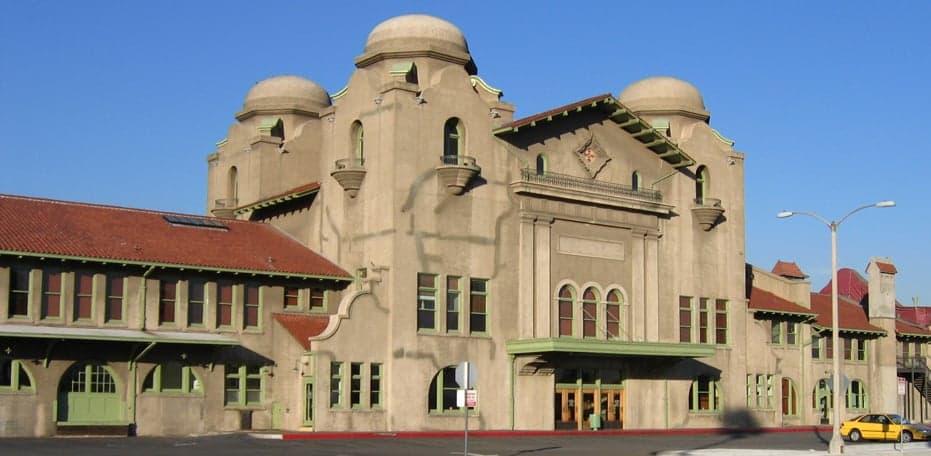
Photo: Wikipedia
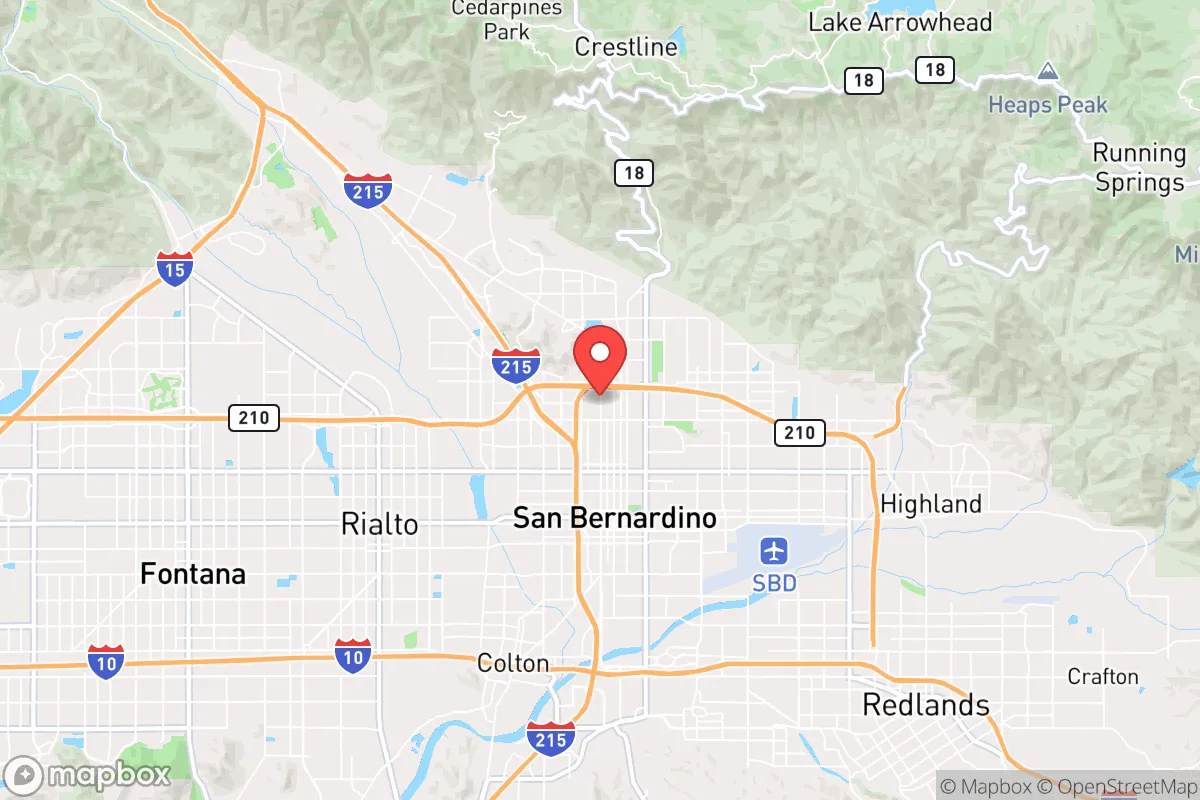
Personal Sovereignty in San Bernardino, CA
Viable for self-reliance. Generally workable, though some barriers may limit total independence.
What does Personal Sovereignty tell us?
Personal Sovereignty measures your capacity for self-reliance and independence with minimal government friction. Higher scores mean fewer barriers between you and the way you want to live... but it assumes you have the space you need and good neighbors.
What does this tell us?
Personal Sovereignty measures your capacity for self-reliance and independence with minimal government friction. Higher scores mean fewer barriers between you and the way you want to live... but it assumes you have the space you need and good neighbors.
State Policy
Energy independence: Importer (33% of energy produced in-state)
Personal Liberty
Homesteading

Personal Liberty Analysis
San Bernardino offers a mixed bag for those prioritizing personal sovereignty, with California’s heavy-handed state apparatus clashing against the city’s own gritty, hands-off reality. While the state aggressively curtails gun rights, taxes income heavily, and mandates vaccine policies, the city’s sprawling geography, lower cost of land, and relative neglect from local enforcement create pockets where a self-reliant individual can carve out more autonomy than coastal California allows. The key is understanding that state-level overreach is the baseline, but local conditions—like lax zoning enforcement and a survivalist-friendly climate—can tip the scales back toward personal control for those willing to navigate the bureaucracy.
Tax burden and regulatory posture: what you pay and what you can do
California’s tax regime is a primary drag on sovereignty here. The state’s top marginal income tax rate of 13.3% applies to earnings over $1 million, but even middle-income earners in San Bernardino face a combined state and local tax burden that ranks among the highest in the nation. Sales tax in the city is 8.75%, and property taxes, while capped at 1% of assessed value under Proposition 13, still add up due to high home prices relative to inland areas. For a prepper or survivalist, this means every dollar earned is harder to keep, and every tool or supply purchased carries a premium. Regulatory posture is equally stifling: California’s California Environmental Quality Act (CEQA) can delay or kill any construction project, including building a backyard bunker or installing solar panels without permits. The state’s California Air Resources Board (CARB) also restricts modifications to vehicles and generators, limiting off-grid energy setups. However, San Bernardino County’s relatively weak local enforcement means many residents simply ignore minor permit requirements—a pragmatic workaround for those willing to risk fines.
Self-defense and gun law specifics: what you can carry and where
California’s gun laws are among the most restrictive in the nation, directly impacting self-defense sovereignty. San Bernardino residents face a 10-day waiting period for all firearm purchases, a statewide ban on “assault weapons” (including many common semi-automatic rifles), and a limit of one handgun purchase per 30 days. Magazine capacity is capped at 10 rounds, and “bullet button” rifles are effectively banned. Concealed carry permits (CCWs) are issued by the San Bernardino County Sheriff, and while the county is more permissive than coastal areas, the process still requires a good cause statement, live-fire training, and a fee of several hundred dollars. As of 2024, the sheriff’s office has been issuing CCWs more freely after the Bruen decision, but the state’s new “sensitive places” law bans carry in most public spaces, including parks, hospitals, and any business that posts a sign. For a survivalist, this means your home defense options are decent—you can own handguns, shotguns, and bolt-action rifles—but your ability to defend yourself outside the home is heavily restricted. Ammunition purchases also require a background check and are tracked by the state, a clear infringement on privacy.
Self-reliance and homesteading viability: lot sizes, zoning, and off-grid feasibility
San Bernardino’s geography offers real opportunities for self-reliance, especially compared to coastal California. The city sits in the Inland Empire, with many residential lots ranging from 5,000 to 10,000 square feet in older neighborhoods, and larger parcels of 1-5 acres available in the foothills and unincorporated areas like Devore or Lytle Creek. Zoning is generally R-1 (single-family residential), which allows for gardens, small livestock (chickens, rabbits, and in some areas, goats), and outbuildings like sheds or workshops. However, the city’s municipal code requires permits for structures over 120 square feet, and off-grid living is effectively illegal—the city mandates connection to municipal water and sewer, and solar panels must be grid-tied. For a prepper, this means you can grow food and keep animals, but you cannot disconnect from the grid without facing fines or condemnation. The climate is semi-arid, with average annual rainfall of only 16 inches, so rainwater catchment is legal but limited by state water rights laws. The San Bernardino National Forest to the north provides public land for hunting, foraging, and bug-out locations, but access is regulated by the U.S. Forest Service. Overall, homesteading here is possible but requires working within a regulatory framework that favors suburban compliance over true independence.
Personal liberties: parental rights, medical autonomy, speech, and property
California’s progressive policies significantly erode personal liberties in San Bernardino. Parental rights are under constant assault: the state’s 2023 law AB 1955 prohibits schools from notifying parents if a child changes their gender identity or pronouns, effectively cutting parents out of their children’s lives. The state also mandates comprehensive sexual education in public schools, which many conservative parents find objectionable. Medical autonomy is similarly constrained—California has some of the strictest vaccine mandates in the country, including for school attendance (though medical and personal belief exemptions exist for some vaccines). The state’s COVID-19 emergency orders, while expired, set a precedent for future mandates. On speech, California’s “hate speech” laws and workplace harassment regulations can chill political expression, though San Bernardino’s local culture is more libertarian than San Francisco’s. Property rights are the brightest spot: Proposition 13 limits property tax increases, and the city’s relatively low land prices mean you can own a home outright for under $400,000. However, the state’s rent control laws (AB 1482) apply to some rentals, and the California Coastal Commission has no jurisdiction here, so building is easier than on the coast. For a survivalist, the key takeaway is that your home is your castle, but your children and your body are subject to state control.
Overall, San Bernardino ranks as a mediocre option for personal sovereignty compared to states like Texas, Idaho, or Montana, but it is one of the better locations within California. The state’s tax burden, gun restrictions, and erosion of parental rights are significant negatives, but the city’s low cost of land, lax local enforcement, and proximity to public lands offer a foothold for self-reliance. For a single individual or family willing to navigate California’s regulatory maze, San Bernardino provides a base where you can own property, grow food, and defend your home—just don’t expect to carry a rifle in public or opt out of the state’s vaccine mandates. If you’re looking for a place to ride out societal collapse, this isn’t it; but if you need to stay in California for work or family, San Bernardino is a pragmatic compromise that lets you keep more of your freedom than the coastal cities allow.

* Values derived from national, state, county, city and local statistics and may differ in a specific area. Last updated: 2026-04-24T09:08:44.000Z
Narrative content on this page is AI-generated and may contain mistakes. Verify any details that matter before acting on them.
ReloMaps may earn a commission from affiliate links at no extra cost to you.

