Photo: Wikipedia
Demographics of San Luis, AZ
Affluence Level in San Luis, AZ
A below-average socioeconomic profile. Incomes, home values, and educational attainment trail the U.S., with higher poverty and unemployment.
People of San Luis, AZ
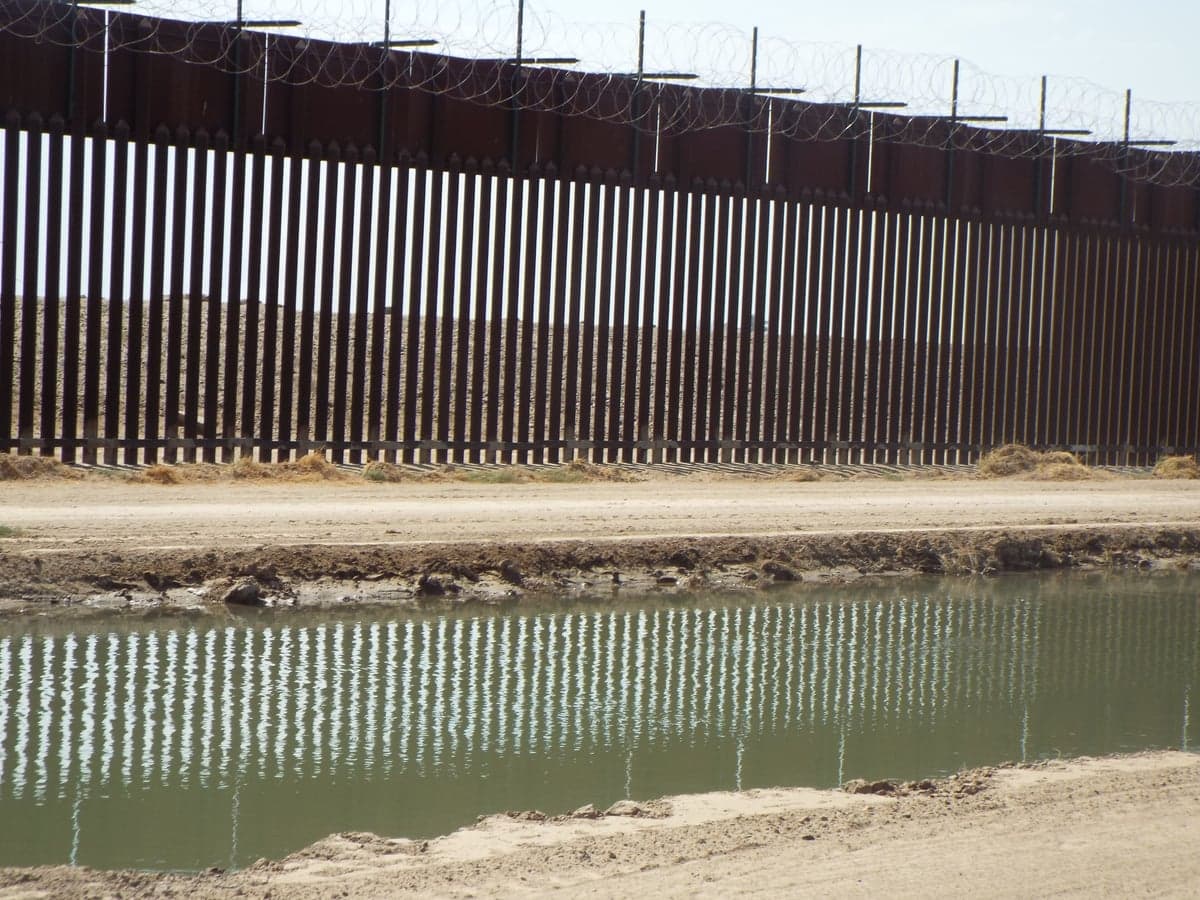
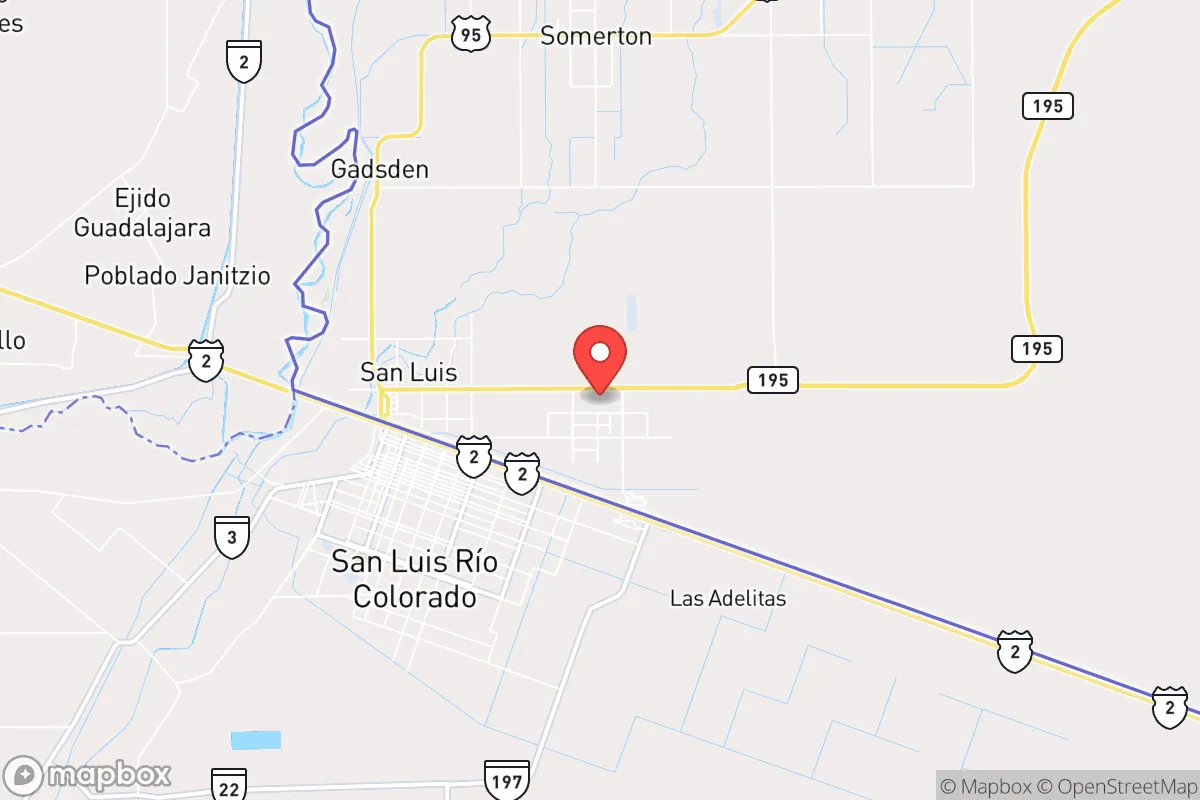
San Luis, Arizona, is a city of 35,998 residents that is overwhelmingly Hispanic (93.0%) and young, with a median age well below the national average. Its population is characterized by a high foreign-born share (28.0%), a very low college attainment rate (9.4%), and a strong sense of cultural continuity rooted in its border location and agricultural history. The city’s identity is shaped by its role as a binational community, where daily life, commerce, and family ties flow across the border with San Luis Río Colorado, Sonora.
How the city was settled and grew
San Luis was founded in 1930 as a planned agricultural community, part of a larger irrigation project that brought water from the Colorado River to the arid Yuma Valley. The original settlers were Mexican and Mexican-American farmworkers drawn by the promise of steady work in cotton, lettuce, and citrus fields. The first neighborhoods, such as Barrio Viejo (the old neighborhood) near the original town center, were built by these families using adobe and wood, often without formal infrastructure. By the 1950s, the city’s population remained small—under 1,000—and almost entirely Hispanic, with a handful of Anglo farm managers and merchants living in what is now the Historic Downtown district along Main Street. The Bracero Program (1942–1964) brought additional Mexican laborers, many of whom settled permanently in the Colonia San Luis area, a cluster of unincorporated, low-income neighborhoods that lacked paved roads and sewer lines until the 1990s.
Modern era (post-1965)
The 1965 Immigration and Nationality Act ended the Bracero Program and shifted migration patterns, but San Luis continued to grow as a destination for Mexican immigrants, particularly from the states of Sonora and Sinaloa. The city’s population surged from 1,194 in 1970 to 15,322 by 2000, driven by agricultural expansion and the rise of the winter vegetable industry. Newer subdivisions like Sunset Vista and Rancho del Rey were developed in the 1990s and 2000s to house a growing middle class of dual-income families, many with members working in Yuma’s service sector or in cross-border trade. The foreign-born share peaked at around 35% in 2010 before declining to 28.0% today, reflecting both a slowdown in immigration and the maturation of second- and third-generation families. The Black population (1.6%) and East/Southeast Asian population (0.1%) remain tiny, concentrated in the newer Foothills Estates area, a master-planned community on the city’s eastern edge that attracts a small number of professionals and retirees. The White non-Hispanic share (4.2%) is mostly older residents in Historic Downtown and a few farm owners in the surrounding county.
The future
San Luis is likely to remain overwhelmingly Hispanic for the foreseeable future, with the foreign-born share stabilizing or slowly declining as native-born generations grow. The city is not homogenizing into a single enclave but is instead developing internal distinctions: Barrio Viejo remains a working-class, Spanish-dominant area; Sunset Vista and Rancho del Rey are more English-bilingual and middle-class; and Foothills Estates is attracting a small but growing number of non-Hispanic residents. The college attainment rate (9.4%) is among the lowest in Arizona, which limits upward mobility and keeps the city’s economy tied to agriculture, retail, and cross-border services. Over the next 10–20 years, the population is projected to grow modestly—perhaps to 45,000–50,000—as families expand and some in-migration continues from Mexico, but the city is unlikely to see significant diversification beyond its current ethnic composition. The primary demographic shift will be generational: a rising share of U.S.-born, English-fluent residents who may push for better schools and infrastructure.
For someone moving in now, San Luis offers a deeply rooted, family-oriented community with strong ties to Mexico and a slower pace of life. The trade-offs are clear: low cost of living and a tight-knit social fabric, but limited economic opportunity, low educational attainment, and minimal ethnic diversity outside the Hispanic majority. This is a place where cultural continuity is the norm, not a transition zone toward a more mixed population.

* Values derived from national, state, county, city and local statistics and may differ in a specific area. Last updated: 2026-05-01T08:53:36.000Z
Narrative content on this page is AI-generated and may contain mistakes. Verify any details that matter before acting on them.
ReloMaps may earn a commission from affiliate links at no extra cost to you.

