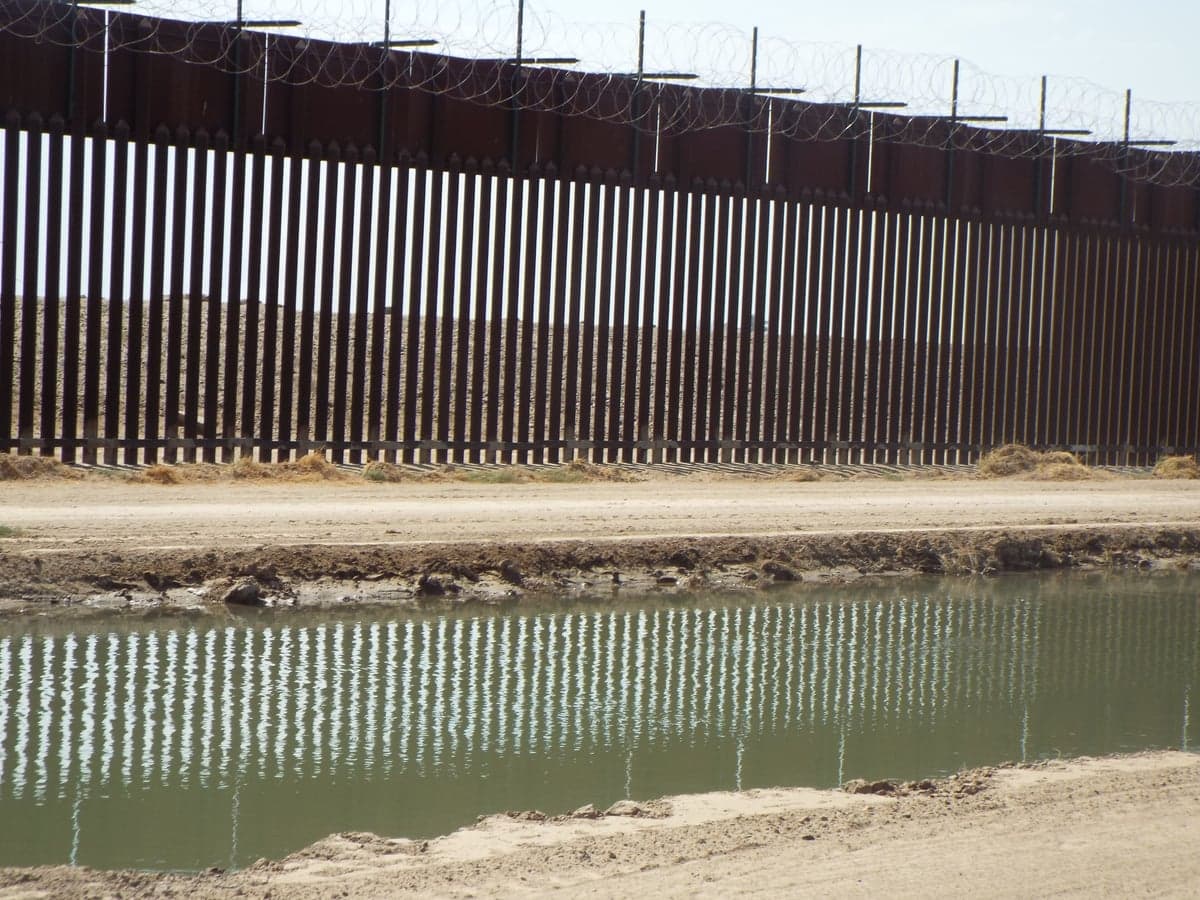
Photo: Wikipedia
Personal Sovereignty in San Luis, AZ
Viable for self-reliance. Generally workable, though some barriers may limit total independence.
What does Personal Sovereignty tell us?
Personal Sovereignty measures your capacity for self-reliance and independence with minimal government friction. Higher scores mean fewer barriers between you and the way you want to live... but it assumes you have the space you need and good neighbors.
What does this tell us?
Personal Sovereignty measures your capacity for self-reliance and independence with minimal government friction. Higher scores mean fewer barriers between you and the way you want to live... but it assumes you have the space you need and good neighbors.
State Policy
Energy independence: Importer (20% of energy produced in-state)
Personal Liberty
Homesteading

Personal Liberty Analysis
For the individual or family prioritizing personal sovereignty, San Luis, Arizona presents a complex picture that demands careful scrutiny. While Arizona as a whole has historically championed individual liberties, the reality on the ground in this border city is shaped by intense federal presence, local enforcement priorities, and a state-level legal framework that offers both strong protections and notable limitations. The autonomy environment here is not one of unchecked freedom, but rather a battleground where state-level rights often clash with federal overreach and municipal realities, making it a location that requires a strategic, informed approach rather than blind optimism.
Tax burden and regulatory posture in Arizona’s border region
Arizona’s tax structure is a clear win for those seeking to keep more of their own money. The state boasts a flat income tax rate of 2.5%, one of the lowest in the nation, and no state-level tax on Social Security benefits. Property taxes are also relatively low, with effective rates typically hovering around 0.6% to 0.8% of assessed value, though Yuma County (which includes San Luis) has slightly higher mill levies for schools and infrastructure than some other rural counties. Sales tax in San Luis is 8.7%, combining the state’s 5.6% rate with county and city additions—a moderate burden but not crushing. The regulatory posture in Arizona is generally business-friendly, with minimal red tape for small-scale enterprises and homesteading activities. However, San Luis itself operates under a city code that can be more restrictive than the surrounding county, particularly regarding land use and building permits. The state’s right-to-work status and lack of a state-level occupational licensing board for many trades further reduce government entanglement, but federal agencies like Customs and Border Protection exert a heavy, unavoidable influence on daily life here, creating a regulatory shadow that state-level reforms cannot fully dispel.
Self-defense and gun law specifics for San Luis residents
Arizona is a constitutional carry state, meaning no permit is required to carry a concealed firearm for anyone legally allowed to possess one. This is a bedrock liberty for the survivalist mindset. San Luis residents benefit from this state preemption, which prohibits local governments from enacting their own gun control ordinances—a critical protection against city-level overreach. The state also has strong stand-your-ground and castle doctrine laws, with no duty to retreat in any place where a person is lawfully present. However, the practical reality in San Luis is complicated by its proximity to the border. Federal law enforcement presence is heavy, and checkpoints are common on major highways leading out of the area. While these checkpoints are ostensibly for immigration enforcement, they can create a chilling effect on lawful gun transport, as federal agents operate under different rules than state or local police. Additionally, the city’s high property crime rates (discussed elsewhere) mean that self-defense is not a theoretical concern but a daily consideration. For the prepper, the legal framework is solid, but the operational environment demands constant vigilance regarding federal interactions.
Self-reliance and homesteading viability: lot sizes, zoning, and off-grid feasibility
San Luis itself is a dense, urbanized border town where traditional homesteading is largely impractical. Most residential lots are 6,000 to 8,000 square feet, with strict zoning that limits livestock, large gardens, and outbuildings. The city’s municipal water and sewer systems are mandatory for most properties, and off-grid living within city limits is effectively prohibited. However, the surrounding unincorporated areas of Yuma County tell a different story. Just a few miles east or north of San Luis, you can find 1- to 5-acre parcels with far fewer restrictions. These areas allow for rainwater harvesting, solar panel installation, and even small-scale livestock like chickens or goats, provided you meet basic setback and health codes. The county’s building department is generally reasonable, but permits are still required for any permanent structure. Off-grid feasibility is high in these outlying areas, with abundant sunshine for solar power and the potential for well water (though drilling costs can be $10,000–$20,000). The trade-off is distance from supplies and services, plus the ever-present border security infrastructure. For the serious prepper, the land is available and affordable, but it requires a deliberate move away from San Luis proper to achieve true self-reliance.
Personal liberties: parental rights, medical autonomy, speech, and property
Arizona has been a battleground for personal liberties, with mixed results. On parental rights, the state has strong laws protecting a parent’s authority over their children’s education and medical decisions, including a school choice program that allows public funds to follow the child to private or homeschool settings. This is a significant win for families seeking to opt out of government-run indoctrination. Medical autonomy is more precarious. While Arizona does not have a state-level vaccine mandate, it also lacks strong protections against employer or private business mandates, leaving individuals exposed to corporate overreach. The state’s emergency powers were curtailed after 2020, limiting a governor’s ability to shut down businesses or impose prolonged lockdowns without legislative approval—a crucial safeguard. Free speech is broadly protected under the state constitution, which has its own free speech clause that courts have interpreted as at least as protective as the First Amendment. Property rights are generally strong, with Arizona being a non-disclosure state for real estate transactions, meaning sale prices are not public record—a small but meaningful privacy protection. However, the federal government’s vast land holdings in the region (much of western Arizona is BLM or military land) limit private property availability and create a constant tension between state and federal authority.
In the broader context of the American Southwest, San Luis offers a mixed sovereignty profile. The state-level framework is among the most liberty-respecting in the nation, with low taxes, constitutional carry, and strong parental rights. But the city’s location on the border means that federal overreach is not a distant threat but a daily reality, with checkpoints, surveillance, and a heavy law enforcement presence that can feel oppressive to those who value autonomy. For the survivalist or prepper, the surrounding county land provides a viable base for self-reliance, but the urban core of San Luis itself is a place where personal sovereignty is constantly negotiated against federal power. Compared to deep-blue states like California or New York, this is a haven; compared to rural Idaho or Montana, it is a compromise. The key is to leverage the state’s strong legal protections while physically distancing yourself from the federal footprint that defines this border community.

* Values derived from national, state, county, city and local statistics and may differ in a specific area. Last updated: 2026-05-01T08:53:36.000Z
Narrative content on this page is AI-generated and may contain mistakes. Verify any details that matter before acting on them.
ReloMaps may earn a commission from affiliate links at no extra cost to you.

