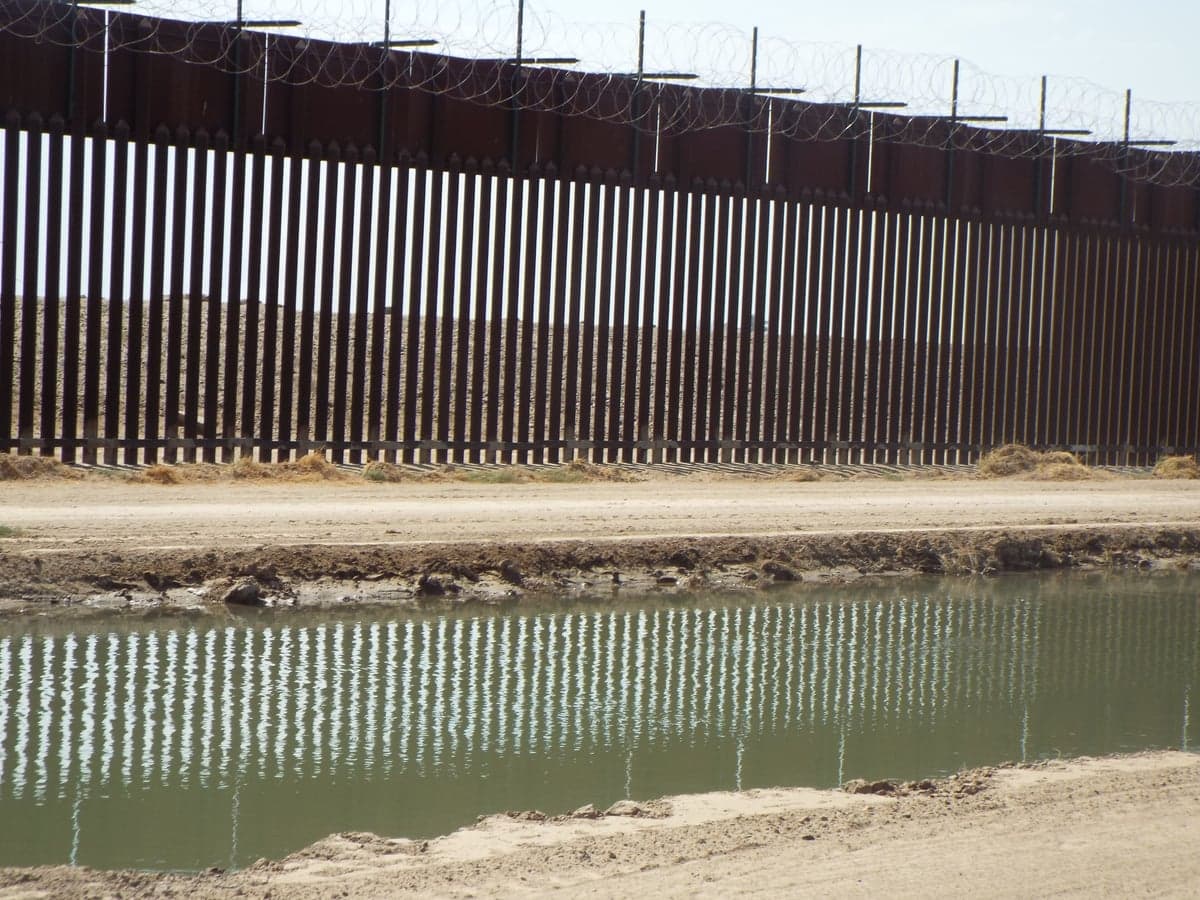
Photo: Wikipedia
Political ClimatePolitical Climate in San Luis, AZ
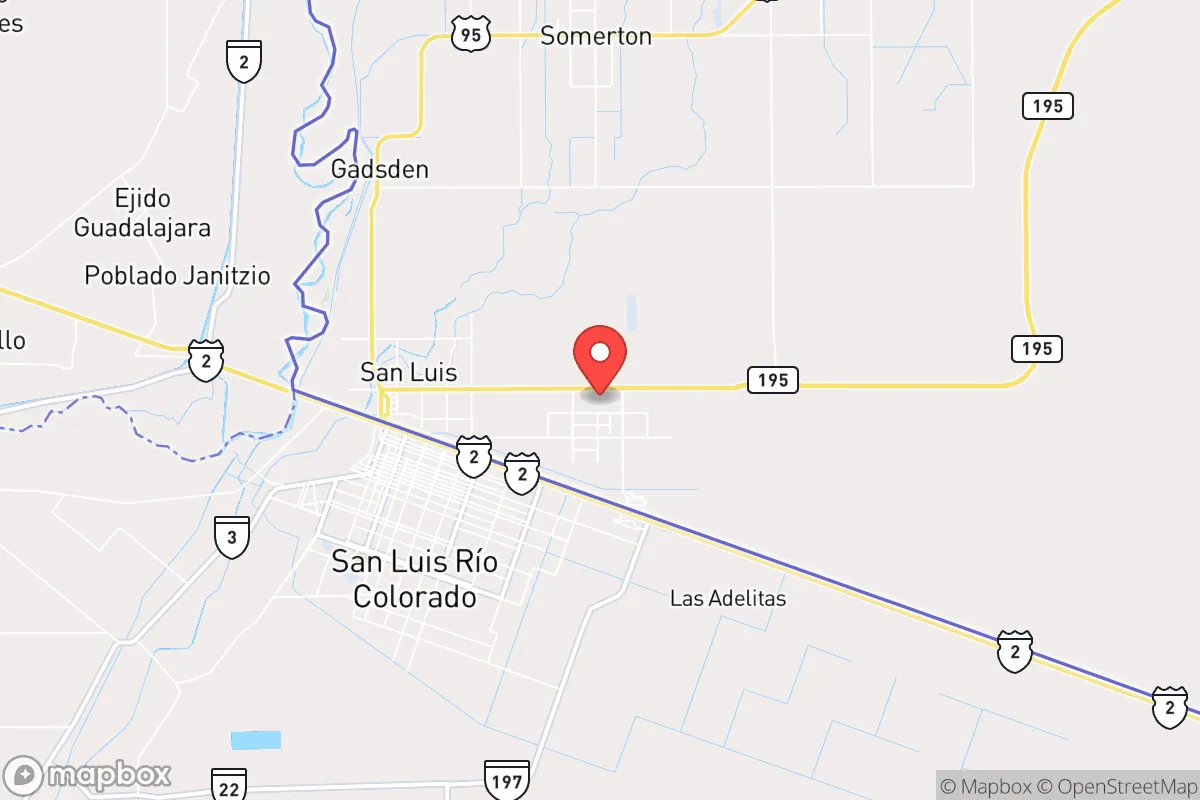
District shown is the primary district for this city’s centroid. Cities may span multiple districts.
Local Political AnalysisPolitical Analysis of San Luis, AZ
San Luis, Arizona, leans heavily Democratic, with a Cook PVI of D+13, meaning it votes about 13 points more Democratic than the national average. That’s not surprising given its demographics and location right on the Mexican border, but if you’ve lived here as long as I have, you know the political feel has shifted—and not necessarily for the better. The town has long been a stronghold for the Democratic Party, with local elections often uncontested or decided in primaries, but the real story is how progressive policies are creeping in, and that’s got a lot of us watching closely.
How it compares
Drive 30 minutes north to Yuma, and you’ll find a much more balanced political scene—Yuma County as a whole leans Republican, especially in rural precincts. San Luis is the outlier, a blue dot in a redder region. Compare it to Somerton or Gadsden, which are also heavily Hispanic and Democratic, but San Luis is more consistently progressive. The contrast is stark when you head east toward Wellton or Dateland, where you’ll see Trump signs still up from 2024. Here in San Luis, you’re more likely to see campaign signs for local Democrats who parrot national talking points on immigration and the environment. That D+13 rating isn’t just a number—it means the city council and school board are almost entirely controlled by one party, and that’s where the rubber meets the road for personal freedoms.
What this means for residents
For folks living here, the political climate directly affects daily life. The local government has pushed for more regulations on small businesses—things like stricter health code inspections and zoning changes that make it harder to run a home-based shop. There’s also been a push for higher minimum wages and paid leave mandates, which sound good on paper but hit small family-run operations hard. I’ve seen friends close up their taco stands because they couldn’t keep up with the paperwork. On the education front, the school board has leaned into progressive curriculum changes, including social-emotional learning programs that some parents feel push a political agenda. Property taxes have crept up to fund these initiatives, and there’s little opposition at the ballot box because the primary elections are the only real contests. If you value limited government and local control, San Luis can feel like a place where the bureaucracy is growing faster than the economy.
Cultural and policy distinctions
One thing that sets San Luis apart is its strong sense of community—people look out for each other, and that’s not political. But the policy direction is concerning. The city has embraced sanctuary-style policies, limiting cooperation with federal immigration enforcement, which sounds compassionate but has strained relations with border patrol and state law enforcement. There’s also been a push for more public housing and rent control measures, which some worry will discourage private investment. The long-term trend? If the current trajectory holds, San Luis could become a test case for progressive governance in a border town—more regulations, higher taxes, and a growing reliance on government programs. For those of us who remember when the town was more about self-reliance and family businesses, it’s a shift that feels like a slow erosion of the freedoms that made this place work. Keep an eye on the next city council election—if the same crowd stays in, expect more of the same.

State Political ClimatePolitical Climate in Arizona
State Political AnalysisPolitical Environment in the State
Arizona has transformed from a reliably conservative stronghold into a true battleground state over the past two decades, with its partisan lean shifting from a solid +10 Republican advantage in 2004 to a razor-thin margin in 2024 where Donald Trump carried the state by just over 5 points. The dominant coalitions are now a three-way tug-of-war between traditional Reagan-style conservatives in the suburbs and exurbs, a growing populist base in rural and exurban areas, and a rapidly expanding progressive bloc centered in Maricopa County’s inner suburbs and Tucson. The 10-20 year trajectory shows a state that was once safely red becoming increasingly purple, driven by massive in-migration from California and other blue states, demographic shifts among Latino voters, and a suburban revolt against Trump-era politics that has since partially receded.
Urban vs. rural divide
The political map of Arizona is a stark story of two worlds. Maricopa County, home to Phoenix and its sprawling suburbs, contains about 60% of the state’s population and has become the epicenter of the state’s political volatility. In 2020, Joe Biden became the first Democrat to carry Maricopa since Harry Truman in 1948, flipping it by just over 10,000 votes out of 2 million cast. By 2024, Trump flipped it back by a similar margin, driven by strong turnout in exurban areas like Queen Creek and Buckeye, where conservative families have flocked for affordable housing and lower taxes. Meanwhile, Tucson and Pima County remain reliably Democratic, with Tucson’s university-driven economy and liberal enclaves like the Fourth Avenue district providing a solid blue base. The rural counties tell a different story: Yavapai County (Prescott), Mohave County (Kingman, Lake Havasu City), and Pinal County (Casa Grande, Maricopa) are deeply red, often voting 65-70% Republican. The most politically distinct suburb is Scottsdale, which has shifted from reliably conservative to a swing area, with its affluent, educated voters increasingly splitting tickets—voting for Republicans on taxes and crime but Democrats on social issues and education. Flagstaff, home to Northern Arizona University, stands as a blue island in the northern part of the state, while Yuma in the southwest remains a competitive area with a large Latino population that has trended toward Republicans in recent cycles.
Policy environment
Arizona’s policy environment is a mixed bag that reflects its political tug-of-war. On the positive side for conservatives, the state has a flat income tax rate of 2.5% after a 2023 cut, one of the lowest in the nation, and no estate or inheritance tax. Property taxes are relatively low, with an average effective rate around 0.62%. The regulatory posture is generally business-friendly, with right-to-work laws and limited zoning in many rural areas. However, education policy has become a flashpoint: Governor Katie Hobbs, a Democrat, has pushed for increased funding for public schools while opposing the expansion of Empowerment Scholarship Accounts (ESAs), the state’s universal school choice program that allows parents to use public funds for private or homeschool expenses. The ESA program remains in place but faces constant legal and political challenges. Healthcare policy is similarly contested: Arizona expanded Medicaid under Obamacare in 2013, and the state has a robust telehealth infrastructure, but rural access remains poor. Election laws have been a major battleground: the state passed voter ID requirements and stricter ballot security measures after the 2020 election, but Democratic lawsuits have blocked some provisions. The state also has a unique system of citizen initiatives that allows voters to bypass the legislature on issues like marijuana legalization (passed in 2020) and minimum wage increases (passed in 2016).
Trajectory & freedom
The trajectory of personal freedom in Arizona is a mixed picture that should concern anyone who values limited government. On the positive side, the state has strong gun rights: it is a constitutional carry state, meaning no permit is needed to carry a concealed firearm, and it has preemption laws that prevent cities like Tucson and Flagstaff from enacting their own gun restrictions. The 2022 legislative session saw the passage of a Second Amendment sanctuary law that prohibits state resources from being used to enforce federal gun laws. Parental rights have been strengthened by the ESA program and a 2023 law requiring schools to notify parents of any changes to a student’s health or well-being, including gender identity issues. However, there are troubling trends: the state has seen a push for “sanctuary” policies in Phoenix and Tucson, where local police are prohibited from cooperating with federal immigration enforcement, creating a de facto safe haven for illegal immigration. Property rights have been eroded by a 2023 Supreme Court ruling that upheld the state’s ability to impose impact fees on new construction, driving up housing costs. Medical autonomy took a hit in 2024 when the state Supreme Court upheld a near-total abortion ban from 1864, though the legislature quickly repealed it and replaced it with a 15-week ban. The net effect is a state where freedom is expanding in some areas (school choice, gun rights) but contracting in others (immigration enforcement, property rights).
Civil unrest & political movements
Arizona has been a hotbed of political activism and civil unrest in recent years. The 2020 election aftermath saw massive protests in Phoenix, with both pro-Trump and anti-Trump demonstrations turning violent at times, including a shooting at a Trump rally in 2020. The state has become a focal point for immigration politics, with the border crisis driving intense activism on both sides. The “Save Our State” movement, a coalition of conservative groups, has organized regular protests at the state capitol demanding stricter border enforcement and opposing sanctuary policies. On the left, the “Arizona for Abortion Access” coalition has mobilized thousands of volunteers to gather signatures for a 2024 ballot measure to enshrine abortion rights in the state constitution. Election integrity remains a live issue: the 2021 “audit” of Maricopa County ballots by the Arizona Senate, led by Republican lawmakers, was a national flashpoint that exposed deep distrust in the electoral system. The state has also seen a rise in “secession” rhetoric from rural counties like Mohave and Yavapai, where some activists have called for breaking away from Maricopa County’s dominance. A new resident would notice the constant presence of political signs, the heated debates at local government meetings, and the palpable tension between the growing progressive urban core and the conservative rural hinterlands.
Projection
Over the next 5-10 years, Arizona is likely to become even more competitive, with the potential to flip permanently blue if current demographic trends continue. The state is adding about 100,000 new residents per year, many from California, Colorado, and Illinois—states with more progressive political cultures. These newcomers tend to be younger, more diverse, and more liberal, and they are concentrated in Maricopa County’s suburban growth corridors like Mesa and Chandler. However, there is a countervailing trend: many of the California transplants are actually conservative-leaning families fleeing high taxes and crime, and they are settling in exurban areas like Maricopa (the city) and Casa Grande, where they are reinforcing the Republican base. The Latino vote, long assumed to be reliably Democratic, is shifting rightward, with many working-class Latino voters in Yuma and the border region supporting Republicans on economic and border security issues. The wild card is the state’s growing independent voter bloc, now about 35% of the electorate, who swing wildly between parties based on the issues of the day. A new resident moving in now should expect to live in a state where every election is a nail-biter, where the political climate is polarized but not paralyzed, and where the outcome of any given race is genuinely uncertain.
For a conservative-leaning individual or family considering a move to Arizona, the bottom line is this: you will find a state that still values low taxes, school choice, and gun rights, but you will also encounter a political environment that is increasingly contested and unpredictable. The urban centers of Phoenix and Tucson are becoming more progressive by the year, while the exurbs and rural areas remain deeply conservative. If you want to live in a community that shares your values, look to the outer suburbs like Queen Creek or Prescott Valley, where the culture is still traditional and the schools are strong. But be prepared for the fight—Arizona is not the safe red state it once was, and the battle for its soul is far from over.
* Values derived from national, state, county, city and local statistics and may differ in a specific area. Last updated: 2026-05-01T08:53:36.000Z
Narrative content on this page is AI-generated and may contain mistakes. Verify any details that matter before acting on them.
ReloMaps may earn a commission from affiliate links at no extra cost to you.

