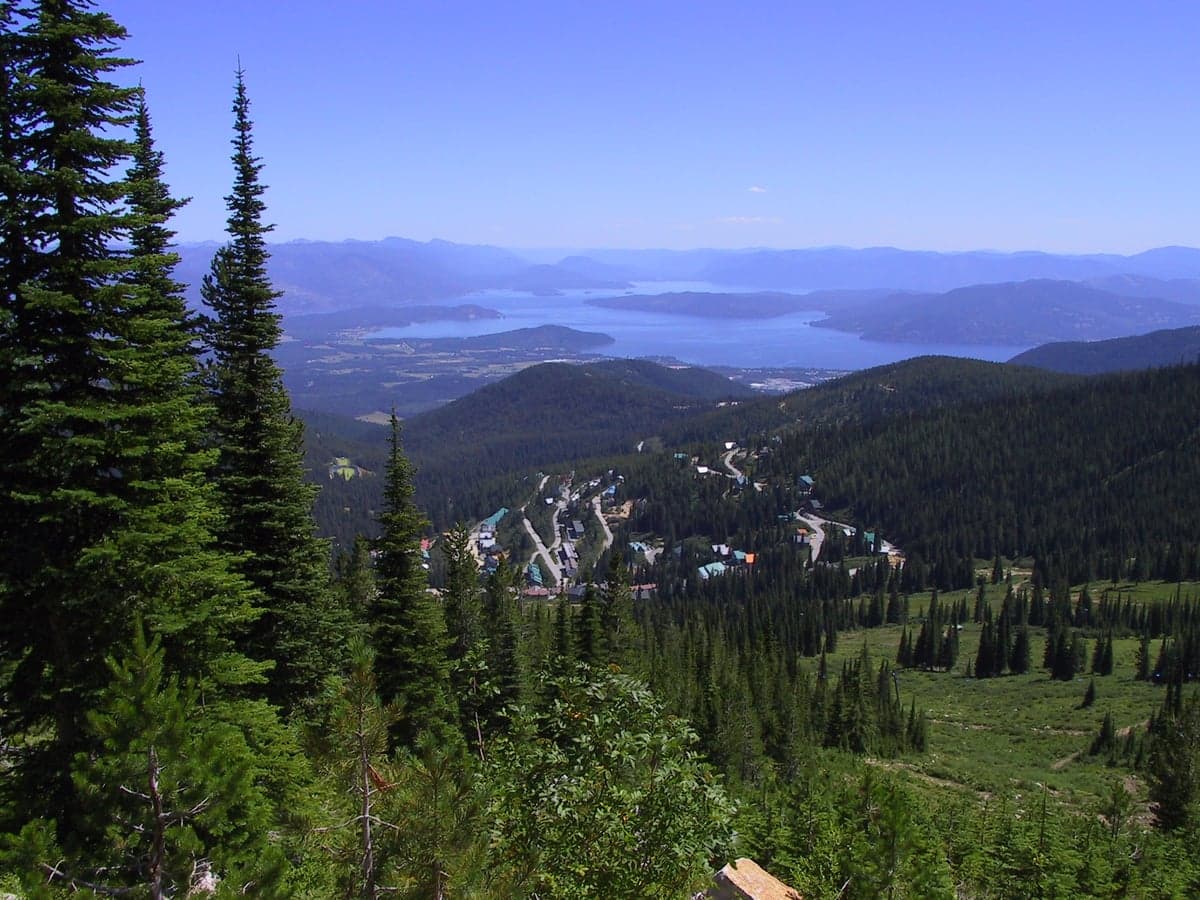
Photo: Wikipedia
Personal Sovereignty in Sandpoint, ID
Viable for self-reliance. Generally workable, though some barriers may limit total independence.
What does Personal Sovereignty tell us?
Personal Sovereignty measures your capacity for self-reliance and independence with minimal government friction. Higher scores mean fewer barriers between you and the way you want to live... but it assumes you have the space you need and good neighbors.
What does this tell us?
Personal Sovereignty measures your capacity for self-reliance and independence with minimal government friction. Higher scores mean fewer barriers between you and the way you want to live... but it assumes you have the space you need and good neighbors.
State Policy
Energy independence: Importer (25% of energy produced in-state)
Personal Liberty
Homesteading

Personal Liberty Analysis
Sandpoint, Idaho, offers one of the strongest personal sovereignty environments in the lower 48, largely because it sits in a state that has systematically pushed back against federal overreach and built a legal framework that prioritizes individual autonomy over collective mandates. For those who view government expansion as a threat to liberty—whether through taxation, health mandates, or property restrictions—this region functions as a practical sanctuary. The combination of a low-tax, low-regulation state government, a deeply ingrained self-reliance culture, and a geography that rewards preparedness makes Sandpoint a top-tier relocation target for survivalists, preppers, and anyone seeking to minimize their dependence on a system they distrust.
Tax burden and regulatory posture: how Idaho compares to high-control states
Idaho’s tax structure is deliberately designed to leave more money in your pocket and less in the state’s coffers. There is no state inheritance tax, no estate tax, and no tax on Social Security benefits—critical for those building generational wealth or planning for long-term self-sufficiency. The state income tax is a flat 5.8%, and while Bonner County’s property tax rate hovers around 0.7% of assessed value, the lack of a state-level property tax keeps the total burden manageable. More importantly, Idaho’s regulatory posture is aggressively pro-freedom. The state has preempted local governments from enacting their own gun bans, mask mandates, or vaccine passports—meaning Sandpoint city council cannot impose the kind of emergency orders that turned other towns into lockdown zones. For anyone who watched 2020–2021 as a preview of future government overreach, this legal firewall is non-negotiable. The state also has a right-to-farm law that protects agricultural operations from nuisance lawsuits, and it does not require a permit to build a private well on most rural parcels—both of which are foundational for off-grid living.
Self-defense and gun law specifics: what Sandpoint allows that other states don’t
Idaho is a constitutional carry state, meaning no permit is required to carry a concealed firearm for anyone legally allowed to possess one. Sandpoint residents can carry openly or concealed without government permission, and the state preempts all local firearm ordinances—so there is no patchwork of city-level restrictions. Stand-your-ground law is fully in effect, with no duty to retreat in any place where you have a legal right to be. Magazine capacity is unlimited, and there are no state-level restrictions on firearm types, including suppressors and short-barreled rifles, provided federal NFA requirements are met. For preppers, the practical implication is that you can stockpile, train, and defend yourself without worrying about a future governor or city council changing the rules overnight. Idaho also has a strong castle doctrine that extends to vehicles and workplaces. The local sheriff’s office in Bonner County is known for a pro-Second Amendment stance, and the county has been declared a Second Amendment Sanctuary—meaning local law enforcement will not enforce federal gun laws they deem unconstitutional. This is not theoretical; it has been tested in court and upheld.
Self-reliance and homesteading viability: lot sizes, zoning, and off-grid feasibility
Sandpoint’s rural zoning allows for genuine self-reliance in a way that suburban subdivisions simply do not. Outside the city limits, minimum lot sizes in Bonner County range from 5 to 20 acres depending on the zone, and many parcels are sold with no HOA or restrictive covenants. This means you can build a shop, keep livestock, install solar panels, and dig a well without asking for permission from a homeowners’ association that answers to a corporate board. Off-grid living is fully legal: Idaho has no state law requiring connection to the electrical grid, and the county allows composting toilets and greywater systems with proper permits. Rainwater collection is unrestricted at the state level, though local well permits are required for groundwater extraction. The growing season is short (roughly 90–120 days), but the soil in the Pend Oreille River valley is fertile enough for market gardens and root cellars. For preppers, the key advantage is that you can legally build a self-sufficient homestead on a modest acreage without fighting zoning boards or environmental regulations that exist in states like Oregon, Washington, or California. The biggest practical hurdle is winter access—many rural properties require a 4WD vehicle and a snowplow for 4–5 months of the year.
Personal liberties: parental rights, medical autonomy, speech, and property
Idaho has been at the forefront of protecting parental rights in education and healthcare. The state passed the Parental Rights in Education Act, which requires schools to notify parents before any curriculum involving sexual orientation or gender identity is taught, and it prohibits school personnel from withholding information about a child’s mental or physical health from parents. Medical autonomy is similarly strong: Idaho has banned vaccine passports, prohibited mask mandates in schools, and passed a law that prohibits discrimination based on vaccination status—meaning you cannot be denied service or employment for refusing a vaccine. The state also has a broad religious exemption law that covers medical procedures, including vaccinations. On free speech, Idaho has no hate speech laws that criminalize political or religious expression, and the state has passed legislation to protect public speakers from being silenced by “hostile audience” ordinances. Property rights are protected by a strong eminent domain statute that requires just compensation and a public purpose test, and the state has a Private Property Protection Act that allows landowners to sue local governments for regulatory takings. For those who view the erosion of these rights in other states as a warning sign, Sandpoint represents a place where the legal framework still assumes the individual is sovereign unless proven otherwise.
Compared to the Pacific Northwest’s coastal cities—where property taxes are higher, gun laws are tighter, and emergency powers have been used to shut down businesses and churches—Sandpoint offers a dramatically different sovereignty equation. It is not a libertarian utopia; property taxes still exist, building permits are still required, and the federal government still owns 62% of Idaho’s land, which limits private expansion. But for someone looking to live with minimal government interference, maximum self-defense rights, and the legal ability to build a self-sufficient life, Sandpoint ranks among the top small towns in America. The trade-off is isolation, harsh winters, and a local economy that depends heavily on tourism and timber—but for those who see those as features rather than bugs, the sovereignty calculus is clear.

* Values derived from national, state, county, city and local statistics and may differ in a specific area. Last updated: 2026-04-21T09:14:03.000Z
Narrative content on this page is AI-generated and may contain mistakes. Verify any details that matter before acting on them.
ReloMaps may earn a commission from affiliate links at no extra cost to you.

