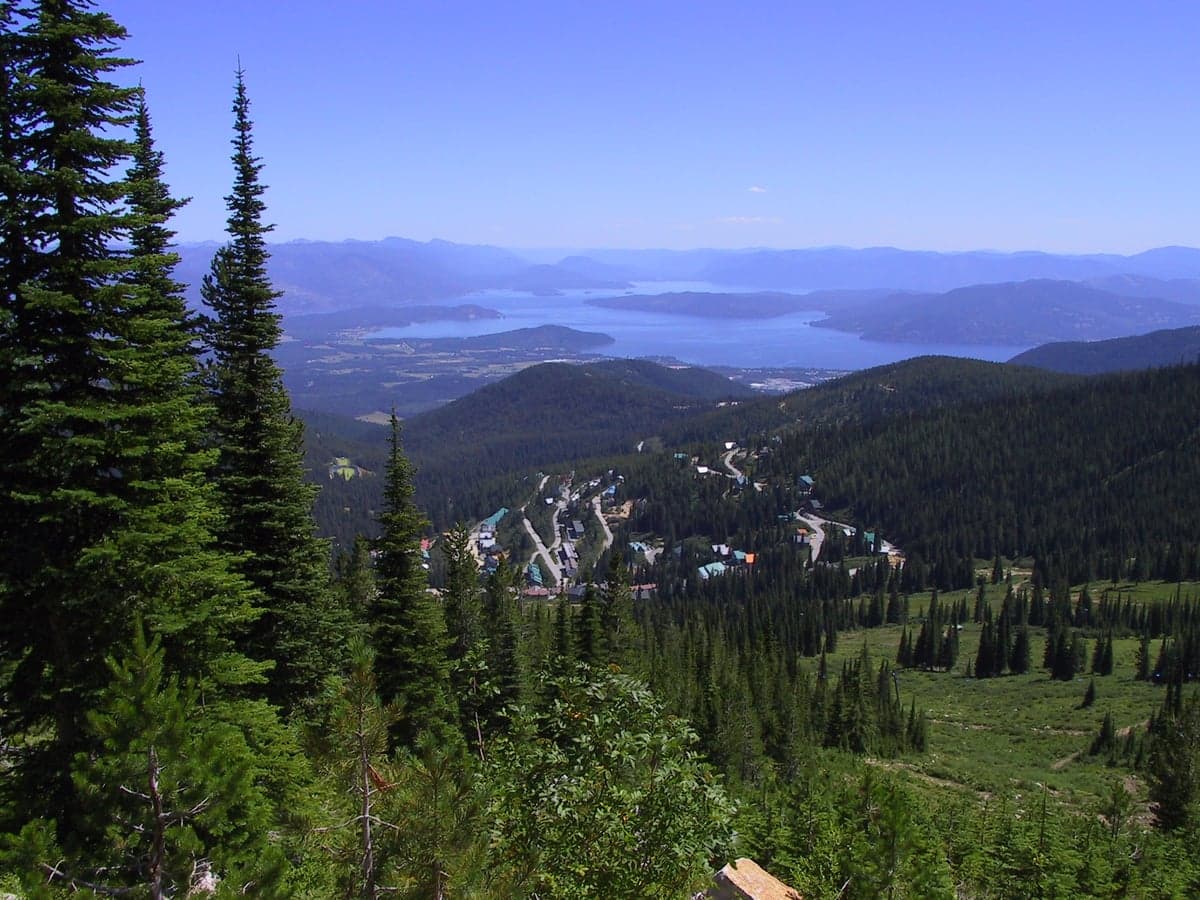
Photo: Wikipedia
Political ClimatePolitical Climate in Sandpoint, ID
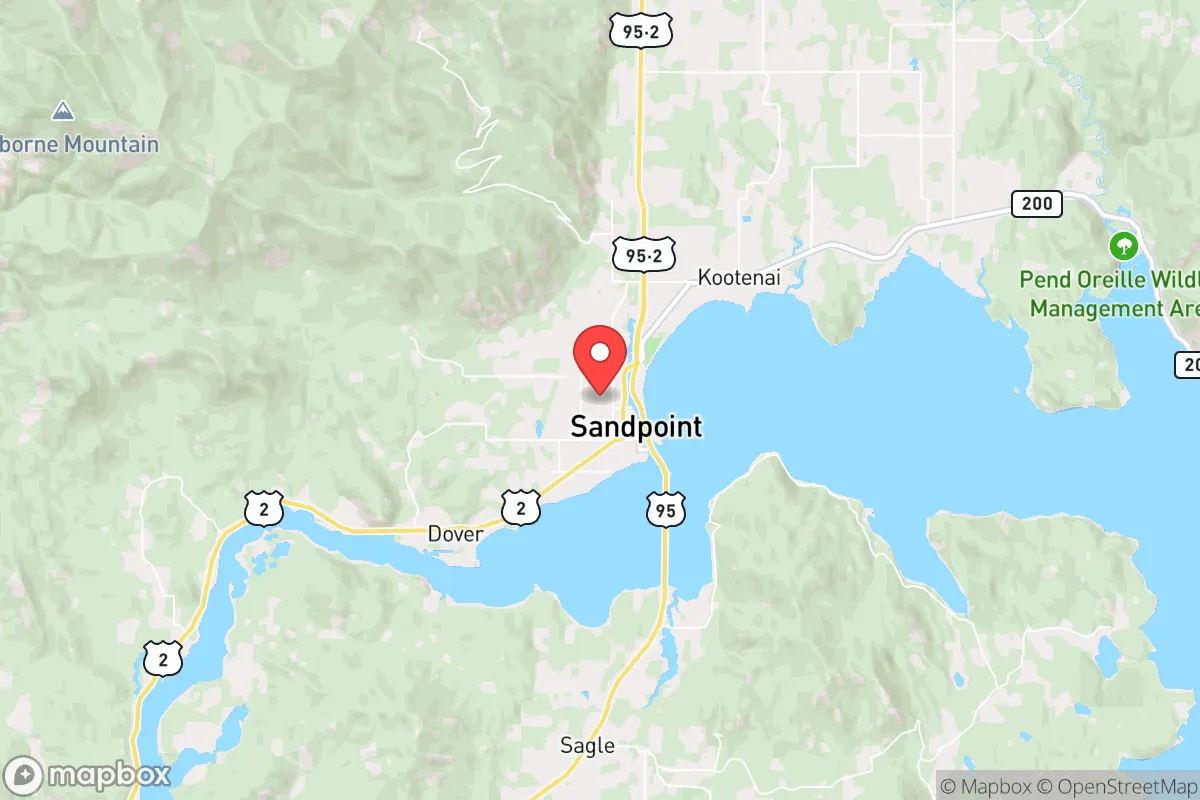
District shown is the primary district for this city’s centroid. Cities may span multiple districts.
Local Political AnalysisPolitical Analysis of Sandpoint, ID
Sandpoint, Idaho, sits deep in conservative territory with a Cook PVI of R+22, meaning the area votes about 22 points more Republican than the national average. That’s not just a number—it reflects a long-standing, no-nonsense political culture where folks value personal liberty, limited government, and the right to live without a bunch of bureaucratic red tape. Over the last decade, though, you’ve seen a slow but real shift: more people moving in from places like California and Seattle, bringing progressive ideas that clash with the local way of doing things. The trajectory here is a tug-of-war between the old guard who want to keep Sandpoint free and the newcomers who think more government oversight is the answer.
How it compares
Compared to nearby towns, Sandpoint is actually a bit of a mixed bag. Head south to Coeur d’Alene, and you’ll find a similar conservative vibe, but with more of a corporate, polished Republicanism—think chamber of commerce types. Drive north to Bonners Ferry or east to Clark Fork, and you’re in deeper red territory, where folks are even more skeptical of federal overreach and zoning laws. The real contrast is with places like Moscow, Idaho (home to the university), or even Sandpoint’s own city council dynamics, where a handful of progressive voices have started pushing for things like stricter land-use regulations and diversity initiatives. That’s a red flag for anyone who’s watched how these small changes can snowball into bigger government control over property rights and local businesses.
What this means for residents
For residents, the political climate directly affects daily life in ways that matter. Property taxes and zoning rules are the big ones—Sandpoint’s been seeing more pressure to adopt “smart growth” policies that sound good on paper but often mean more permits, fees, and limits on what you can do with your own land. The local school board has also become a battleground, with some pushing for curriculum changes that lean into progressive social agendas, while others fight to keep education focused on basics and local values. If you’re a gun owner, you’ll appreciate that Idaho’s state preemption laws still protect your rights, but there’s always chatter about local ordinances that could chip away at that. The bottom line: if you value being left alone to run your life and your business without a bunch of government interference, Sandpoint is still a good bet, but you’ve got to stay engaged to keep it that way.
Culturally, Sandpoint has a distinct libertarian streak that sets it apart from the more buttoned-up conservatism in places like Boise. You’ll see a lot of “Don’t Tread on Me” flags and a genuine distrust of federal land management—the U.S. Forest Service and BLM have a heavy hand here, and locals are constantly pushing back against closures and restrictions on public access. There’s also a strong independent streak in local politics, with candidates who run on platforms of cutting taxes, reducing regulations, and protecting Second Amendment rights. The recent push for a local “sanctuary city” ordinance for gun rights is a good example of how Sandpoint residents are willing to draw a line in the sand. If you’re looking for a place where the government stays out of your way and your neighbors respect your freedom to live as you see fit, Sandpoint is still holding the line—but it’s a fight worth keeping an eye on.

State Political ClimatePolitical Climate in Idaho
State Political AnalysisPolitical Environment in the State
Idaho has been a reliably Republican stronghold for decades, but the story is more nuanced than a simple red-state label. The state’s political center of gravity has shifted dramatically over the past 20 years, moving from a moderate, libertarian-leaning conservatism toward a more assertive, culturally conservative posture, driven largely by an influx of out-of-state transplants and a growing rural-urban divide. While the GOP holds a supermajority in the legislature and hasn’t voted for a Democratic presidential candidate since 1964, the real action is in the internal battles between traditional small-government conservatives and a newer wave of populist, freedom-focused activists.
Urban vs. rural divide
The political map of Idaho is a study in contrasts. The Treasure Valley, anchored by Boise, Meridian, and Nampa, is the state’s population and economic engine. While Ada County (Boise) has trended slightly more purple in recent cycles—still voting Republican but with a growing Democratic minority—the surrounding counties like Canyon (Nampa) and Kootenai (Coeur d’Alene) remain deeply red. The real conservative strongholds are the rural counties: Bonner County in the north, Lemhi County in the central mountains, and Oneida County in the southeast routinely deliver 70-80% of the vote for GOP candidates. The urban-rural split is stark: Boise’s downtown and near-east side lean left, while the sprawling suburbs of Eagle and Star are solidly conservative. The Panhandle, particularly around Sandpoint and Post Falls, has seen a surge of new residents from California and Washington, many of whom are fleeing progressive policies but bringing their own brand of libertarian conservatism that sometimes clashes with the older, more establishment GOP.
Policy environment
Idaho’s policy environment is a mixed bag for conservatives. On the plus side, the state has no corporate income tax (phased out in 2024) and a flat 5.8% personal income tax, with a goal of reaching 5.5% by 2027. Property taxes are relatively low, though they vary by county. The regulatory posture is generally business-friendly, with minimal zoning restrictions outside of Boise. However, the education landscape is a flashpoint. The state has a robust school choice movement, with a new Idaho Education Savings Account (ESA) program passed in 2024, allowing parents to use public funds for private school or homeschooling expenses. But the public school system remains underfunded by national standards, and teacher pay lags behind neighboring states. Healthcare policy is largely hands-off, with no state-level individual mandate and a limited Medicaid expansion that was passed by ballot initiative in 2018, which many conservatives still view as a federal overreach. Election laws are relatively secure: voter ID is required, and the state has banned ballot harvesting and ranked-choice voting. The legislature also passed a law in 2023 requiring hand-counting of ballots in all counties, a move that has drawn both praise for transparency and criticism for logistical challenges.
Trajectory & freedom
Idaho is arguably becoming more free in several key areas, but the trajectory is not without tension. The state has been a national leader in gun rights, passing constitutional carry in 2016 and a Second Amendment Sanctuary law in 2021 that prohibits state enforcement of federal gun restrictions. Parental rights have been strengthened with the Parental Rights in Education Act (2023), which requires schools to notify parents about curriculum changes and prohibits instruction on gender identity in K-3. Medical autonomy has seen a major win with the Medical Freedom Act (2023), which bans vaccine mandates by private employers and government entities. On the flip side, property rights have been tested by the influx of new development, particularly in the Treasure Valley, where local governments have imposed impact fees and growth caps that some conservatives see as an infringement on private property use. The state also passed a Transgender Sports Ban (2020) and a Gender-Affirming Care Ban for Minors (2023), which have been challenged in court but remain in effect. The overall trend is toward expanding personal liberty, but the pace is uneven and often contested in the courts.
Civil unrest & political movements
Idaho has a history of fringe activism, but the mainstream political movements are more organized than ever. The Idaho Freedom Foundation and Idahoans for Open Primaries are two powerful, competing factions within the GOP. The former pushes for hardline conservative policies and has been instrumental in primary challenges against moderate Republicans. The latter advocates for a top-four primary system to break the party’s grip on power. Protests have been relatively muted compared to other states, but there have been flashpoints: the 2020 Black Lives Matter protests in Boise drew several hundred participants, while counter-protests by the Proud Boys and other groups were also present. Immigration politics are a hot-button issue, with the state passing a sanctuary city ban in 2023 that prohibits local governments from adopting policies that limit cooperation with federal immigration enforcement. The Constitutional Sheriffs and Peace Officers Association has a strong presence in rural counties, where sheriffs have publicly stated they will not enforce federal gun laws. Election integrity remains a top concern, with the Idaho Secretary of State facing lawsuits over voter roll maintenance and the hand-counting mandate. A new resident would notice a palpable sense of political engagement, with yard signs, bumper stickers, and local political meetings being common in even small towns.
Projection
Over the next 5-10 years, Idaho is likely to become more conservative, but in a way that may surprise some. The in-migration from California, Washington, and Oregon is not slowing down—the state added over 100,000 new residents between 2020 and 2024. Many of these newcomers are fleeing progressive policies and are often more culturally conservative than the native Idahoans they’re joining. This will likely push the state further on issues like school choice, gun rights, and parental rights. However, the demographic shift is also bringing more diversity and a younger population, which could moderate some positions on social issues over time. The biggest wildcard is the housing crisis: as Boise and the Treasure Valley become increasingly unaffordable, the political pressure to expand zoning and increase density will clash with the traditional conservative preference for local control and property rights. Expect more legislative battles over land use, property taxes, and growth management. The Republican Party will continue to be the dominant force, but internal fractures between the establishment and the populist wing will intensify, potentially leading to more competitive primaries and a shift toward even more libertarian-leaning policies.
For a new resident, the bottom line is this: Idaho offers a high degree of personal freedom, low taxes, and a government that is generally on your side when it comes to gun rights, parental control, and medical choice. But it’s not a libertarian paradise—there are still property tax burdens, a growing regulatory environment in the cities, and a public school system that may not meet the expectations of families used to well-funded districts elsewhere. If you value a state where your voice matters at the local level and where the political culture is still rooted in self-reliance, Idaho is a solid bet. Just be prepared for the growing pains that come with being one of the fastest-growing states in the nation.
* Values derived from national, state, county, city and local statistics and may differ in a specific area. Last updated: 2026-04-21T09:14:03.000Z
Narrative content on this page is AI-generated and may contain mistakes. Verify any details that matter before acting on them.
ReloMaps may earn a commission from affiliate links at no extra cost to you.

