
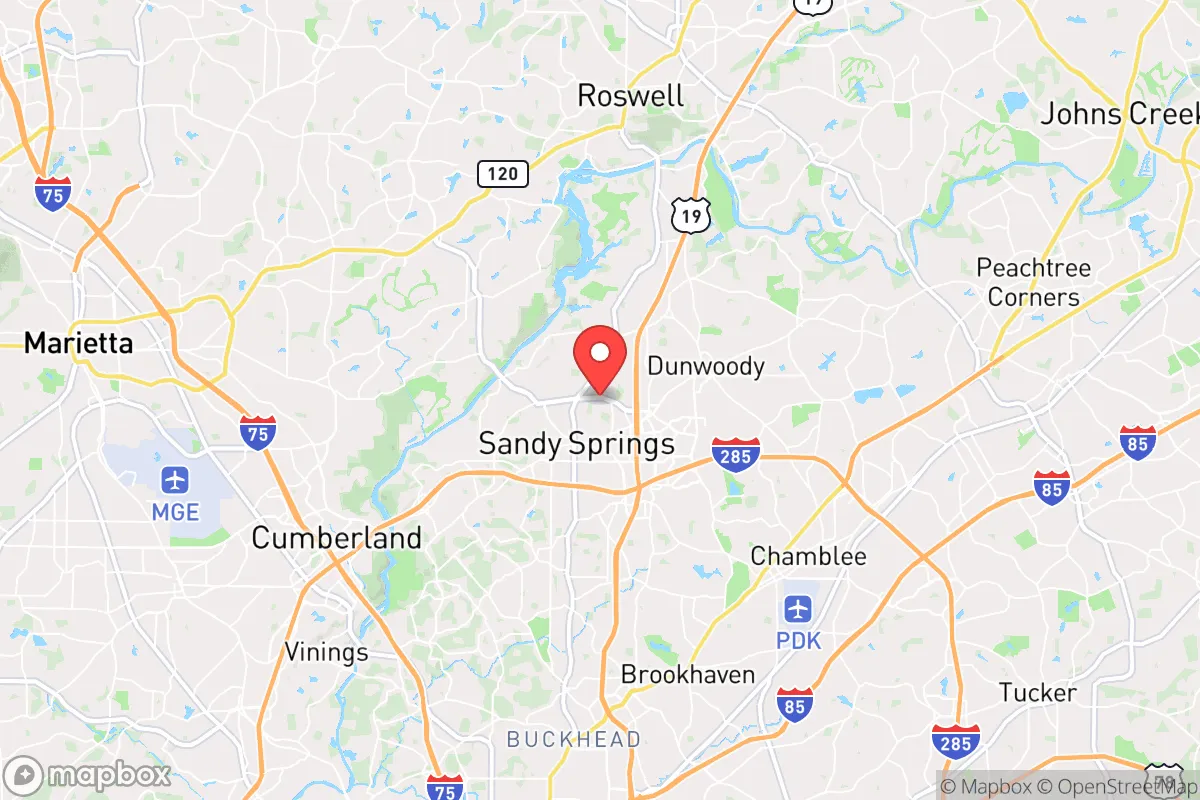
Photo: Wikipedia
Quality of Life in Sandy Springs, GA
A high quality of life with strong walkability, manageable living costs, healthy neighborhood signals, and solid amenity access.
What does Quality of Life tell us?
Quality of Life blends cost of living, nearby amenities, socioeconomic signals, and neighborhood character. City-level scores represent the whole municipality; individual neighborhoods can differ.
What does this tell us?
Quality of Life blends cost of living, nearby amenities, socioeconomic signals, and neighborhood character. City-level scores represent the whole municipality; individual neighborhoods can differ.
Cost of Living
75% above national average
The Real Cost of Living in Sandy Springs, GA for 2026
| Tier | Individual | Family (4) |
|---|---|---|
| Survival | $29k | $54k |
| Comfortable | $113k | $167k |
| Luxury | $184k+ | $284k+ |
| Elite (Top 5%) | $301k+ | $467k+ |
61%
The Area Signal
A metric tracking the socioeconomic signals of the area.
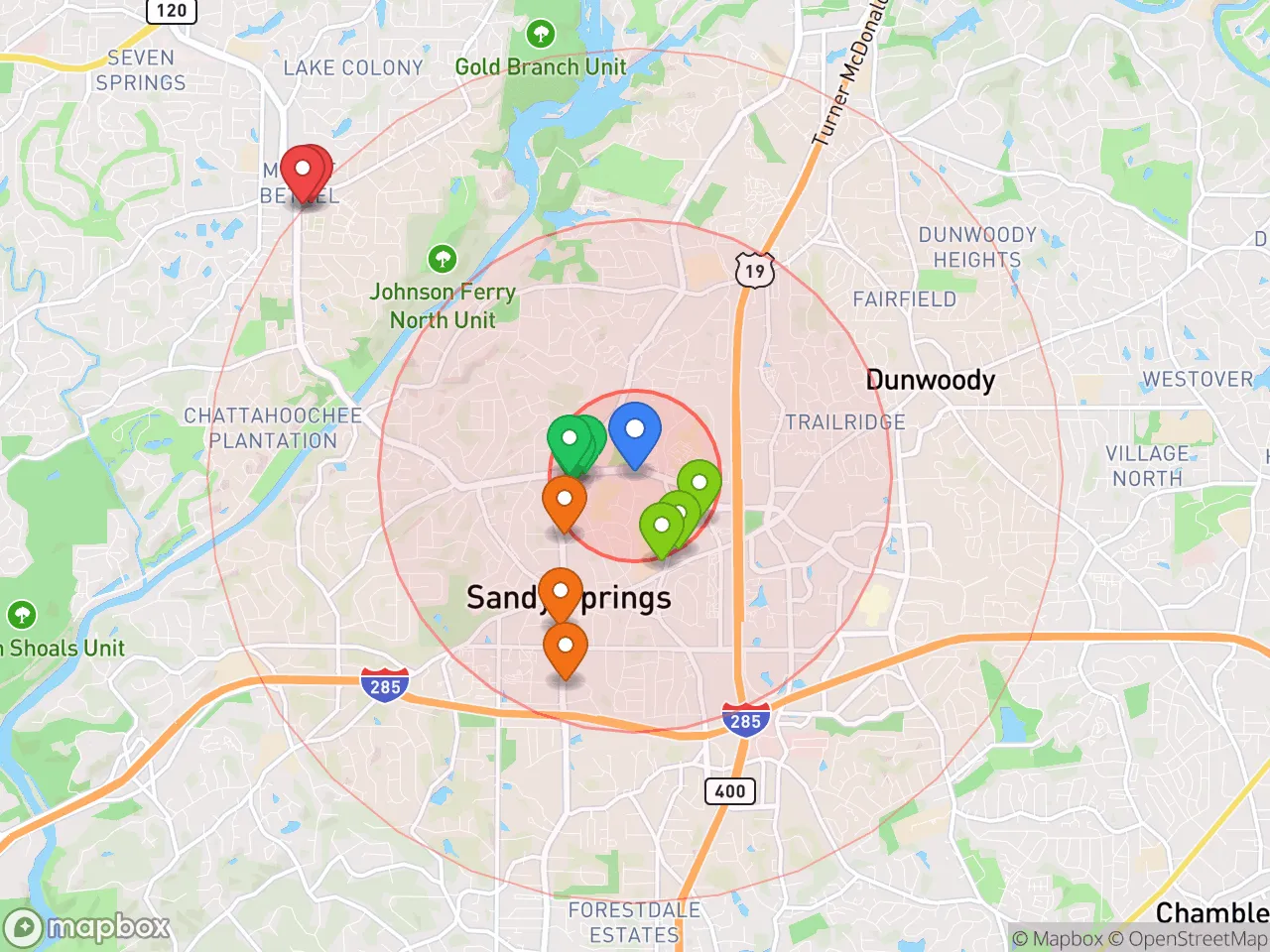
Hobbies
Explore the areaGroceries
8 within 10 miles
Gas
20 within 10 miles
Hospital
20 within 20 miles
Airport
ATL — Hartsfield–Jackson Atlanta International
Post Office
USPS — Atlanta, GA
Critical Amenities
Quality-of-Life Analysis
Sandy Springs, Georgia, is an affluent northern suburb of Atlanta with a cost-of-living index of 175 (75% above the U.S. average), reflecting its status as a hub for professionals, executives, and families drawn to high-end housing, top-rated schools, and proximity to major employers. The city’s population of roughly 108,000 skews educated and upwardly mobile, with a median household income well above the national figure, and a significant share of residents working in finance, healthcare, and technology. Daily life here balances suburban comfort with urban access, though the premium price tag means it is not a fit for budget-conscious movers.
Cost of living, housing, and affordability compared to Buckhead and Alpharetta
Sandy Springs’ cost of living is driven primarily by housing: the median home value sits at $583,900, and the median rent is $1,789 per month. While these figures are steep relative to the national median, they are competitive within Atlanta’s northern arc. For context, nearby Buckhead (within Atlanta city limits) posts a median home value near $700,000, while Alpharetta, 12 miles north, hovers around $600,000. Sandy Springs thus offers a slight discount versus Buckhead while maintaining similar commute times—the average one-way commute is 26.6 minutes, slightly below the Atlanta metro average of 30 minutes. Property taxes in Fulton County are moderate, with an effective rate around 1.1%, though buyers should note that homes in Sandy Springs often carry HOA fees in planned communities. Renters face a tight market: vacancy rates are low, and a one-bedroom apartment typically rents for $1,500–$1,800, making shared housing or longer commutes necessary for many service workers.
Amenities, schools, and what daily life is like for families and professionals
Daily life in Sandy Springs revolves around its top-rated public schools, part of the Fulton County School System, with North Springs Charter High School and Riverwood International Charter School consistently earning A ratings from Niche. The city also hosts several private options, including Holy Innocents’ Episcopal School. For recreation, the Chattahoochee River National Recreation Area offers hiking, kayaking, and fishing within city limits, while the Sandy Springs Performing Arts Center at City Springs anchors a walkable downtown district with restaurants, a farmers market, and seasonal concerts. Professionals benefit from the city’s location along the Georgia 400 corridor, providing a 15-minute drive to Buckhead’s financial district and a 25-minute commute to Midtown Atlanta. The city’s PATH400 trail connects to Atlanta’s BeltLine, and MARTA bus service runs through major arteries, though most residents rely on cars. Retail is abundant: Perimeter Mall and the upscale Avalon development in Alpharetta are both within 10 minutes. The rhythm is distinctly suburban—quiet neighborhoods, active homeowners associations, and a calendar of community events like the Sandy Springs Festival—but with enough dining and nightlife along Roswell Road to satisfy young professionals.
Sandy Springs is best suited for affluent professionals and families who prioritize school quality, short commutes, and suburban amenities over urban grit or affordability. Singles and couples without children will find the social scene adequate but not vibrant, while retirees may prefer lower-cost options like Dunwoody or Roswell. The city’s high cost of living and car-dependent layout make it a poor fit for budget-limited renters or those seeking walkable urbanism. For those who can afford the premium, Sandy Springs delivers a polished, low-crime environment with strong public services and easy access to Atlanta’s job centers.

Crime in Sandy Springs, GA
Lower crime rates than 77% of comparable U.S. locations.
Violent CrimeViolent Crime Analysis
Property CrimeProperty Crime Analysis
Crime Analysis
Sandy Springs, Georgia, presents a mixed safety profile for potential residents. While the city's violent crime rate of 113.3 per 100,000 residents is notably low, its property crime rate of 1,239.2 per 100,000 is a significant concern, particularly given the broader metro Atlanta area's trend toward progressive prosecutorial policies that prioritize offender rehabilitation over incarceration. This combination of low violent crime but elevated property crime, set against a backdrop of a justice system that often reduces consequences for repeat offenders, creates a specific risk landscape that newcomers should evaluate carefully.
Crime in context
Sandy Springs' violent crime rate is roughly 70% lower than the national average, making it one of the safer large suburbs in the Atlanta region for violent offenses like homicide, robbery, and aggravated assault. However, the property crime rate sits well above the national average, driven largely by vehicle break-ins, package theft, and residential burglaries. This disparity is typical of affluent suburbs near progressive metro hubs like Atlanta, where Fulton County's district attorney has implemented policies that reduce pretrial detention and limit felony charges for property crimes. These reforms, while intended to reduce mass incarceration, have been linked to increased recidivism among property offenders who cycle quickly back onto the streets. For context, Sandy Springs' property crime rate is about 15% higher than the Georgia state average, a gap that has widened since 2020 as metro-area prosecutorial policies have shifted.
What residents experience
Daily life in Sandy Springs involves a tangible awareness of property crime. Residents commonly report car break-ins at apartment complexes along the Roswell Road corridor and at shopping centers like the City Springs development. Package theft from front porches is endemic, and many homeowners have invested in security cameras and alarm systems as a standard precaution. Violent crime is rare and typically confined to specific late-night incidents at bars or domestic disputes, not random street violence. The Sandy Springs Police Department maintains a dedicated Crime Prevention Unit that conducts community meetings and offers free home security surveys, but the underlying driver of property crime—a justice system that often releases offenders on signature bonds with minimal consequences—remains outside local control. Residents should expect to take proactive measures: locking vehicles, securing garages, and using package lockers are now baseline habits rather than optional precautions.
Neighborhood-level variation is significant. Areas east of Georgia 400, particularly the gated communities near the Chattahoochee River, report near-zero crime. In contrast, the Ridgeview and North Springs neighborhoods near the MARTA station see higher property crime due to easier transit access for offenders. The Perimeter Center business district experiences concentrated car break-ins during work hours. Overall, Sandy Springs offers a safe environment for families and professionals who are willing to adopt urban-level security habits, but the property crime reality—amplified by metro Atlanta's progressive criminal justice policies—demands vigilance that many suburban newcomers may not expect.
* Values derived from national, state, county, city and local statistics and may differ in a specific area. Last updated: 2026-04-23T05:07:57.000Z
Narrative content on this page is AI-generated and may contain mistakes. Verify any details that matter before acting on them.
ReloMaps may earn a commission from affiliate links at no extra cost to you.

