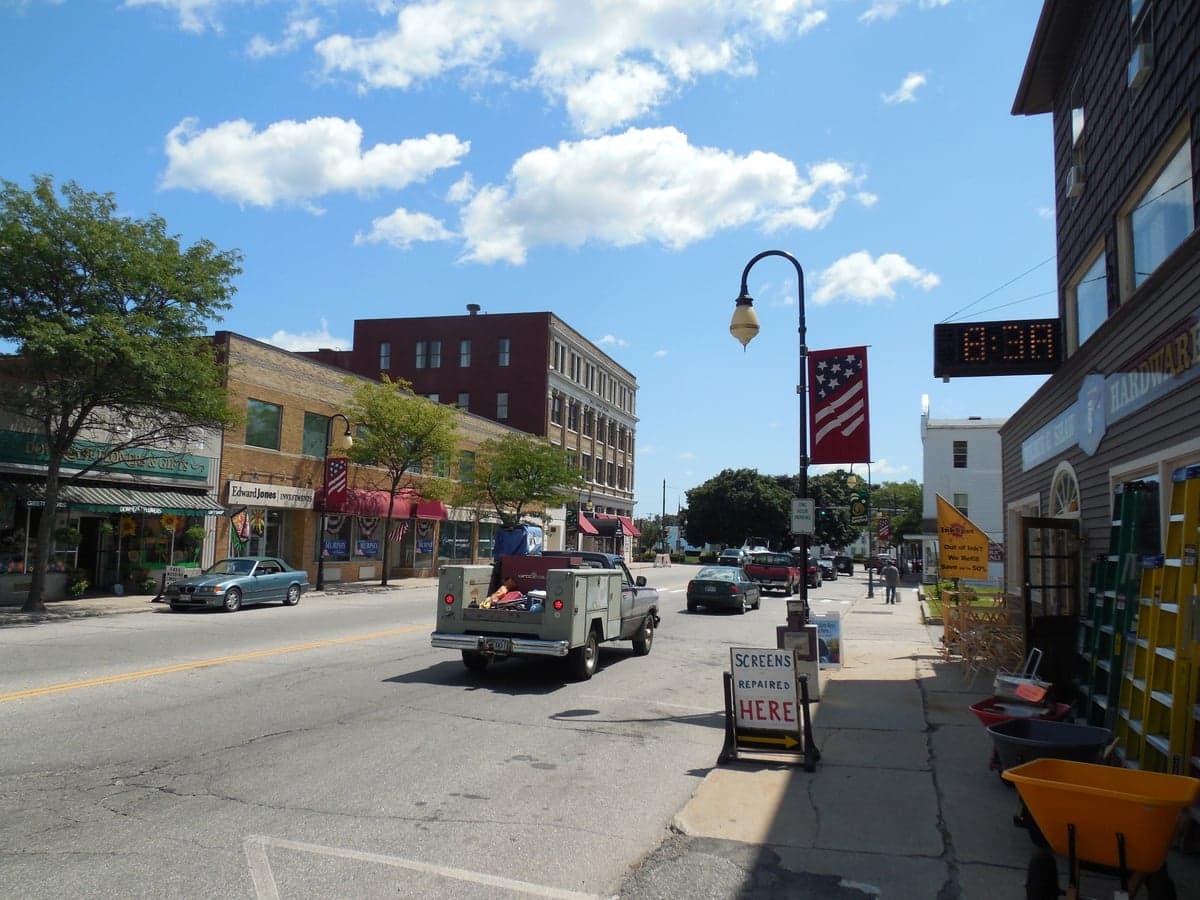
Photo: Wikipedia
Personal Sovereignty in Sanford, ME
Viable for self-reliance. Generally workable, though some barriers may limit total independence.
What does Personal Sovereignty tell us?
Personal Sovereignty measures your capacity for self-reliance and independence with minimal government friction. Higher scores mean fewer barriers between you and the way you want to live... but it assumes you have the space you need and good neighbors.
What does this tell us?
Personal Sovereignty measures your capacity for self-reliance and independence with minimal government friction. Higher scores mean fewer barriers between you and the way you want to live... but it assumes you have the space you need and good neighbors.
State Policy
Energy independence: Importer (30% of energy produced in-state)
Personal Liberty
Homesteading

Personal Liberty Analysis
For the liberty-minded individual or family evaluating Sanford, Maine, the personal sovereignty picture is a study in contrasts: the state’s constitutional protections for self-defense and property rights are robust, but its tax burden and regulatory density rank among the highest in New England, creating a trade-off that demands careful calculation. Sanford itself, as a former mill town undergoing a measured revival, offers a lower cost of entry than coastal Maine enclaves, yet the state-level apparatus—from income taxes to land-use restrictions—means you are never truly free from government reach. This analysis breaks down the key sovereignty factors for a survivalist or prepper mindset, weighing the practical autonomy of daily life against the encroachments of state power.
Tax burden and regulatory posture: what you keep and what the state takes
Maine’s tax climate is a significant drag on personal sovereignty. The state imposes a progressive income tax with a top marginal rate of 7.15%, one of the highest in the nation, and a statewide property tax rate that averages roughly 1.3% of assessed value—though York County, where Sanford sits, tends to be slightly above that. For a prepper focused on self-reliance, every dollar extracted by the state is a dollar not spent on land, supplies, or resilience infrastructure. The sales tax is 5.5%, but it exempts groceries and prescription drugs, a small mercy. More concerning is the regulatory posture: Maine’s land-use laws under the Department of Environmental Protection (DEP) can be onerous for anyone wanting to build a workshop, install a solar array, or dig a well without permits. Sanford’s local zoning is generally more permissive than coastal towns, but the state’s Shoreland Zoning Act still applies to any property within 250 feet of a lake, river, or wetland—common features in the area. For the liberty-minded, this represents a clear overreach: the state telling you what you can do on your own land. Property taxes in Sanford specifically run around $2,800 annually on a median home, which, combined with income tax, means a household earning $60,000 effectively loses over 20% of its gross income to state and local levies before federal taxes. That’s a heavy price for the privilege of living in a state with otherwise strong constitutional protections.
Self-defense and gun law specifics: constitutional carry and its limits
On self-defense, Maine is a bright spot for personal sovereignty. The state has permitless (constitutional) carry for both open and concealed handguns for anyone 21 or older who is legally allowed to possess a firearm. No license, no training requirement, no government permission slip—just the right, as the Maine Constitution affirms in Article I, Section 16, to keep and bear arms for defense of self and state. This is a non-negotiable for the survivalist mindset: the ability to defend your home, your family, and your supplies without bureaucratic hurdles. However, there are limits. Maine has a “red flag” law (enacted in 2019) that allows law enforcement to petition a court to temporarily seize firearms from someone deemed a danger to themselves or others. For the liberty-minded, this is a troubling erosion of due process—a judge can order confiscation without a criminal conviction or even a hearing for the gun owner. Additionally, Sanford’s local police department has been known to cooperate with federal agencies on gun tracing, though there is no local ordinance that goes beyond state law. The state also bans the possession of “machine guns” (fully automatic weapons) without a federal tax stamp, and NFA items like suppressors are legal but require federal paperwork. For the prepper, the bottom line is: you can carry daily without a license, but the red flag law means your guns are never truly safe from state seizure if a neighbor or ex-spouse makes a false report. This is a vulnerability that must be factored into any sovereignty assessment.
Self-reliance and homesteading viability: lot sizes, zoning, and off-grid feasibility
Sanford’s rural character makes it one of the more viable spots in southern Maine for a self-reliant lifestyle, but the state’s regulatory thumbprint is still heavy. Minimum lot sizes in Sanford’s rural zoning districts are typically 1 to 2 acres, which is enough for a substantial garden, a few chickens, and perhaps a small orchard, but not for large-scale livestock or hunting on your own land. The city allows accessory dwelling units (ADUs) and home-based businesses, which is good for a side hustle or rental income, but any new structure requires a building permit and DEP review if it’s near wetlands. Off-grid living is technically possible—Maine has no state law requiring grid connection—but local building codes mandate that any dwelling must have a “safe and sanitary” water supply and waste disposal system, which usually means a drilled well and a septic system approved by the Maine CDC. Solar panels are legal and net metering is available, but the state’s regulatory environment for battery storage and generator installation is straightforward. The real challenge for the prepper is the cost of land: a 2-acre parcel in Sanford runs $40,000 to $80,000, and building a simple off-grid cabin can easily hit $150,000 after permits, well, and septic. For comparison, rural Aroostook County offers far cheaper land and looser zoning, but it’s six hours north. Sanford’s advantage is proximity to resources (Portland is 35 minutes) while still allowing a degree of self-sufficiency. The state’s strict pesticide and herbicide regulations also limit what you can do to manage your land, which is a nuisance for anyone wanting to clear brush or plant a food forest without government oversight.
Personal liberties: parental rights, medical autonomy, speech, and property
Maine’s record on personal liberties is mixed, and for the conservative prepper, several areas raise red flags. On parental rights, the state has a strong presumption of parental authority in education and healthcare decisions, but Maine was one of the first states to mandate that schools allow students to use their preferred name and pronouns without parental notification—a direct challenge to family sovereignty. The state also has a universal school vaccination requirement with no philosophical exemption, only medical and religious (the latter narrowly defined). For parents who value medical autonomy, this is a significant overreach: your child cannot attend public school without a vaccine schedule dictated by the state. On medical freedom, Maine has no right-to-try law for terminally ill patients (though federal law provides some access), and the state’s medical marijuana program is robust but heavily regulated. Free speech is protected under the Maine Constitution, but the state has a “hate crime” statute that enhances penalties for speech deemed to incite violence—a potential chill for those who speak bluntly about political or social issues. Property rights are generally strong, with no statewide rent control and a relatively straightforward eviction process, but the state’s “bottle bill” and strict recycling mandates can feel like petty government intrusion. For the survivalist, the most concerning liberty issue is the state’s emergency powers: during the COVID-19 pandemic, Governor Janet Mills imposed sweeping executive orders that shut down businesses, limited gatherings, and mandated masks, all without legislative approval. The Maine Legislature has since passed a bill to limit such powers, but the precedent remains: when the state decides there’s a crisis, your personal liberties can be suspended quickly. This is the core tension for anyone considering Sanford: the day-to-day freedoms are real, but the state’s capacity for overreach is equally real.
Overall, Sanford offers a moderate level of personal sovereignty relative to other areas in the Northeast. It is far more liberty-friendly than Massachusetts or New York, where gun laws are draconian and taxes are even higher, but it falls short of the true freedom found in states like New Hampshire (no income tax, no sales tax, no red flag law) or rural parts of the Midwest. For the prepper or survivalist, Sanford’s best feature is its constitutional carry and relatively affordable land, but the state’s tax burden, regulatory density, and emergency powers are persistent threats to autonomy. If you value low taxes and minimal government above all, look north to New Hampshire or west to Texas. If you want a balance of self-defense rights and a rural New England lifestyle, Sanford is a viable option—but only if you are prepared to fight for your freedoms at the ballot box and in the courts, because the state will not grant them willingly.

* Values derived from national, state, county, city and local statistics and may differ in a specific area. Last updated: 2026-04-19T06:21:20.000Z
Narrative content on this page is AI-generated and may contain mistakes. Verify any details that matter before acting on them.
ReloMaps may earn a commission from affiliate links at no extra cost to you.

