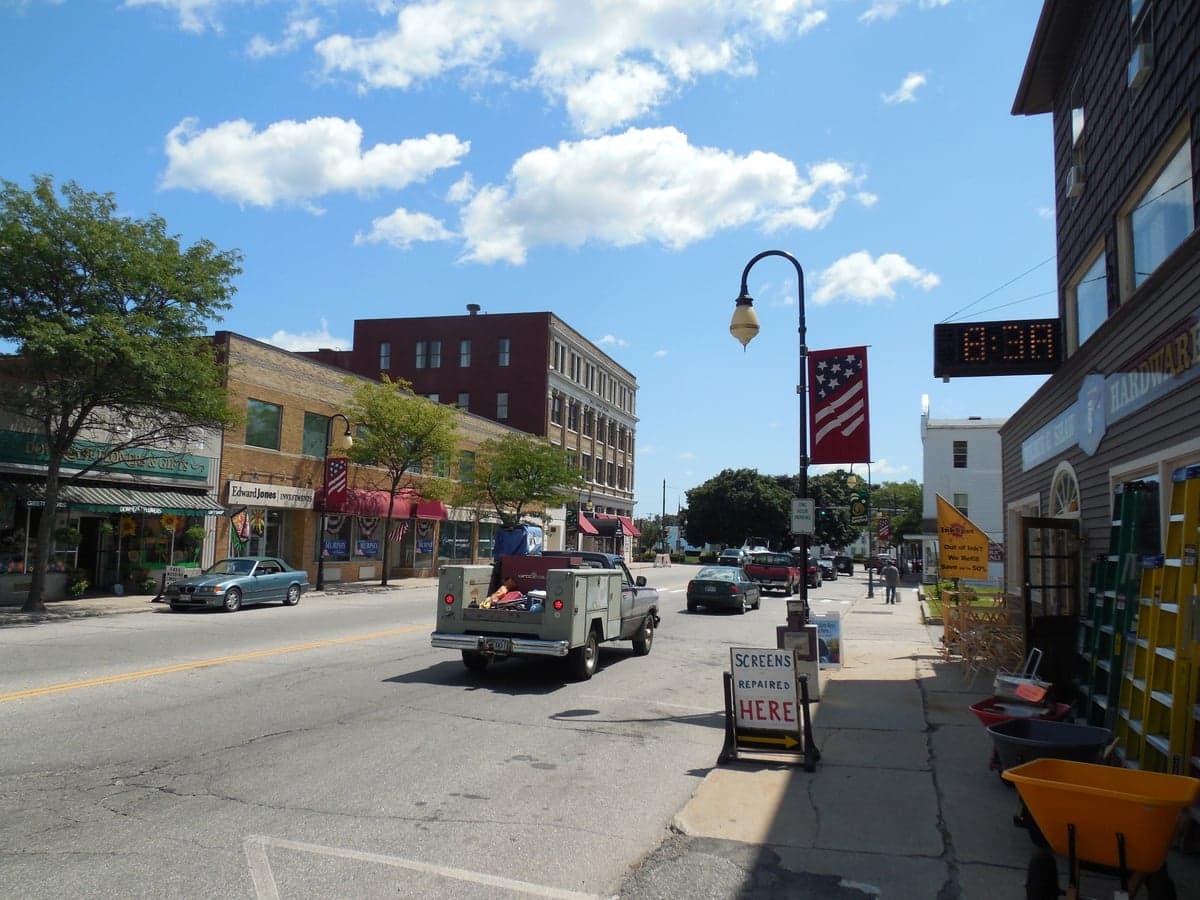
Photo: Wikipedia
Political ClimatePolitical Climate in Sanford, ME
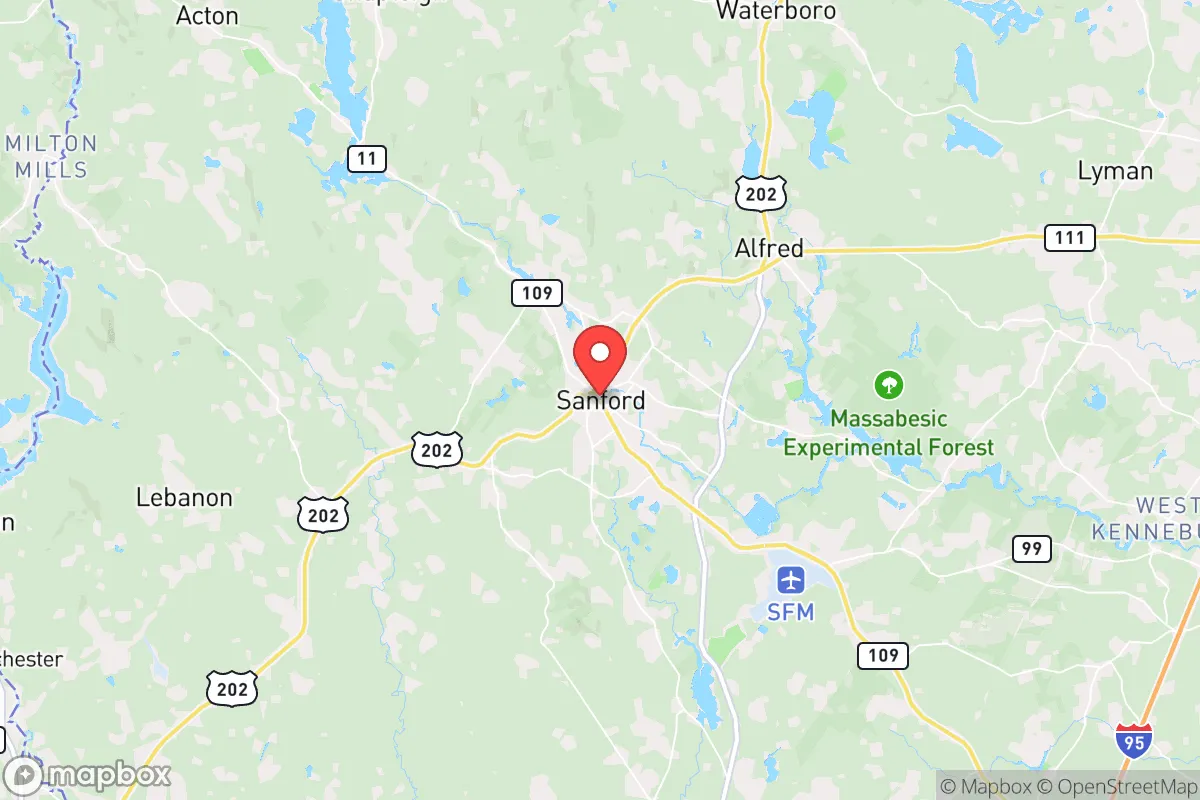
District shown is the primary district for this city’s centroid. Cities may span multiple districts.
Local Political AnalysisPolitical Analysis of Sanford, ME
Sanford, Maine, has a Cook PVI of D+11, meaning it leans significantly more Democratic than the nation as a whole, but that number doesn’t tell the whole story for a longtime resident. The political climate here has shifted noticeably over the past decade, moving from a reliably blue-collar, independent-minded town toward a more progressive, government-heavy approach that many of us find concerning. You used to be able to count on Sanford to vote its pocketbook and keep its nose out of your business, but now there’s a growing push for policies that feel like they’re coming from Portland or Boston, not from the folks who’ve lived here for generations. The trajectory is clear: more regulation, more taxes, and less room for the kind of personal freedom that used to define this community.
How it compares
Sanford’s D+11 rating puts it well to the left of surrounding York County towns that still hold onto a more conservative, live-and-let-live ethos. Drive 15 minutes north to Alfred or 20 minutes west to Acton, and you’ll find precincts that vote Republican by double digits, with a focus on local control and low taxes. Even nearby Springvale, which is technically part of Sanford, has a more mixed political history, though it’s been pulled along with the city’s overall shift. The contrast is stark when you compare Sanford to places like Waterboro or Shapleigh, where town meetings still have a real say and zoning boards don’t try to micromanage every shed or fence. What used to be a quiet, working-class mill town is now being reshaped by newcomers and outside money, and the political lean reflects that—more state mandates, more school board initiatives that feel like social experiments, and less trust in the people to run their own lives.
What this means for residents
For those of us who’ve been here a while, the practical impact of Sanford’s political shift is felt in your wallet and your daily routine. Property taxes have climbed steadily, partly because the city government has embraced state-level progressive priorities like expanded social services and school programs that don’t always align with what families actually want. You’ll see more ordinances—things like strict rental inspections, noise complaints that get escalated, and land-use rules that make it harder to run a small business out of your garage or keep a few chickens in the backyard. The school system has also become a flashpoint, with curriculum changes and diversity initiatives that some parents feel push a particular worldview rather than focusing on reading, writing, and math. If you value the freedom to make your own choices without a bureaucrat’s sign-off, Sanford’s direction is something to watch closely, because the trend is toward more control, not less.
Culturally, Sanford still has its old bones—the Sanford-Springvale Historical Museum, the annual Summerfest, and a strong sense of community at local diners and hardware stores—but the policy distinctions are growing sharper. The city council has passed resolutions supporting statewide gun control measures and environmental regulations that go beyond what neighboring towns require, and there’s a vocal push for more affordable housing mandates that some worry will invite even more government oversight. For a conservative-minded resident, the long-term concern is that Sanford’s D+11 lean will harden into a permanent progressive majority, making it harder to push back on taxes, school choice, and property rights. If you’re considering a move here, just know that the political climate isn’t what it was 20 years ago, and it’s not trending in a direction that favors personal liberty or fiscal restraint.

State Political ClimatePolitical Climate in Maine
State Political AnalysisPolitical Environment in the State
Maine has long been known as a politically independent state, but over the past two decades, it has shifted noticeably to the left, particularly at the state level. While the state still elects centrist governors like Janet Mills, the legislature and statewide ballot initiatives have increasingly reflected progressive priorities, from expanded Medicaid to ranked-choice voting. The overall partisan lean is now a reliable blue in presidential elections, with Democrats controlling both chambers of the legislature and the governor’s office, but the margin is often narrow enough that a motivated conservative minority can still influence outcomes—especially in the sprawling, rural Second Congressional District.
Urban vs. rural divide
The political map of Maine is essentially a tale of two districts. The First Congressional District, anchored by the Portland metro area and the southern coastal counties of Cumberland and York, is solidly Democratic and drives the state’s leftward tilt. Portland itself is a progressive stronghold, with city council races often dominated by candidates backed by the Maine Democratic Socialists of America. In contrast, the Second Congressional District—covering the vast, forested interior and northern reaches—is one of the most conservative districts in New England. Places like Bangor, Presque Isle, and the rural towns of Aroostook County reliably vote Republican, though the margins have been shrinking as retirees and remote workers from southern Maine move north. The town of Lewiston, once a blue-collar Democratic bastion, has become a political battleground as its immigrant population grows and manufacturing jobs decline. The political divide is stark: drive 30 minutes north of Portland and you’ll find towns like Gray and New Gloucester that vote red, but the cultural and policy influence of the southern coast is overwhelming.
Policy environment
Maine’s policy environment has become increasingly burdensome for conservatives. The state income tax is a flat 5.8% on most income, but the top marginal rate hits 7.15% above roughly $58,000—one of the highest in the nation for middle-class earners. Property taxes are also steep, especially in coastal towns like Kennebunk and Camden, where mill rates can exceed 20. The regulatory climate is heavy: Maine has some of the strictest environmental regulations in the country, including a ban on single-use plastic bags and a phased-in ban on certain PFAS chemicals that has rattled farmers. Education policy is dominated by teachers’ unions, and the state has adopted controversial “culturally responsive” curriculum standards that many parents view as ideological. On healthcare, Maine expanded Medicaid under the Affordable Care Act via a 2017 ballot initiative, and the state-run exchange is robust. Election laws are notably progressive: Maine was the first state to adopt ranked-choice voting for federal elections, and it offers same-day voter registration and no-excuse absentee voting. For a conservative family, the policy environment feels like a slow but steady expansion of government into daily life.
Trajectory & freedom
Maine’s trajectory on personal freedom is mixed, but the trend lines are concerning for conservatives. On the positive side, Maine is a “shall issue” state for concealed carry permits, and there is no state-level assault weapons ban or magazine capacity limit—though Portland and a few other towns have passed local ordinances that are being challenged in court. The state also has a strong tradition of property rights, with relatively few zoning restrictions outside of coastal areas. However, recent legislation has expanded government reach. In 2023, the legislature passed a law requiring all public schools to provide free menstrual products in bathrooms, a small but symbolic expansion of state mandates. More significantly, the state enacted a “shield law” in 2022 that prohibits state and local law enforcement from cooperating with federal immigration enforcement in most cases, effectively creating a sanctuary state. Parental rights took a hit in 2024 when the legislature overrode Governor Mills’ veto of a bill that allows minors as young as 16 to consent to certain mental health treatments without parental notification. The state also passed a strict “right to repair” law for vehicle data, which supporters call consumer freedom but critics see as government overreach into private contracts. The overall direction is toward more state control, not less.
Civil unrest & political movements
Maine is not a hotbed of civil unrest, but there are visible flashpoints. The most organized conservative movement is the Maine Gun Owners Association, which has successfully fought off several gun control bills in Augusta. In 2023, a proposal for a statewide “red flag” law died in committee after intense opposition from rural sheriffs. Immigration politics have become a major issue, particularly in Lewiston, where the arrival of hundreds of Somali refugees in the 2010s strained public services and sparked occasional protests. The city’s mayor in 2023 publicly called for a pause on refugee resettlement, drawing national attention. On the left, the Maine People’s Alliance and the Maine Democratic Socialists of America are active, organizing around rent control and climate policy. Election integrity has been a low-level concern: the 2020 presidential election saw a small but vocal group of activists question the ranked-choice voting system, though no major irregularities were found. The most visible flashpoint for a new resident would likely be the debate over the state’s “sanctuary” policies, which have led to occasional confrontations between local police and ICE agents in Portland.
Projection
Over the next five to ten years, Maine is likely to continue its gradual leftward shift, driven by in-migration from Massachusetts, New York, and other blue states. These new residents tend to be wealthier, more educated, and more progressive, and they are concentrated in the southern counties. The Second District may hold the line for a while, but demographic trends are not favorable: the rural north is aging and losing population, while Portland and its suburbs are growing. The 2024 election results showed that even in the Second District, the Republican margin shrank to single digits. A conservative moving to Maine today should expect that within a decade, the state will likely have a Democratic trifecta in perpetuity, with more progressive policies on taxes, energy, and education. The one wild card is the state’s independent streak: Mainers have a history of voting against their own party on ballot initiatives, so a well-organized conservative movement could still win on specific issues like property tax caps or parental rights.
For a new resident, the bottom line is this: Maine offers a beautiful, safe, and relatively affordable place to live, but the political climate is increasingly hostile to conservative values. If you’re moving here, expect to pay high taxes, navigate a thicket of state regulations, and watch your children’s schools adopt curricula you may not agree with. The rural areas still offer a degree of freedom, but the state government in Augusta is steadily eroding local control. If you value personal liberty and limited government, Maine is a state to approach with open eyes—and a willingness to fight for your rights at the local level.
* Values derived from national, state, county, city and local statistics and may differ in a specific area. Last updated: 2026-04-19T06:21:20.000Z
Narrative content on this page is AI-generated and may contain mistakes. Verify any details that matter before acting on them.
ReloMaps may earn a commission from affiliate links at no extra cost to you.

