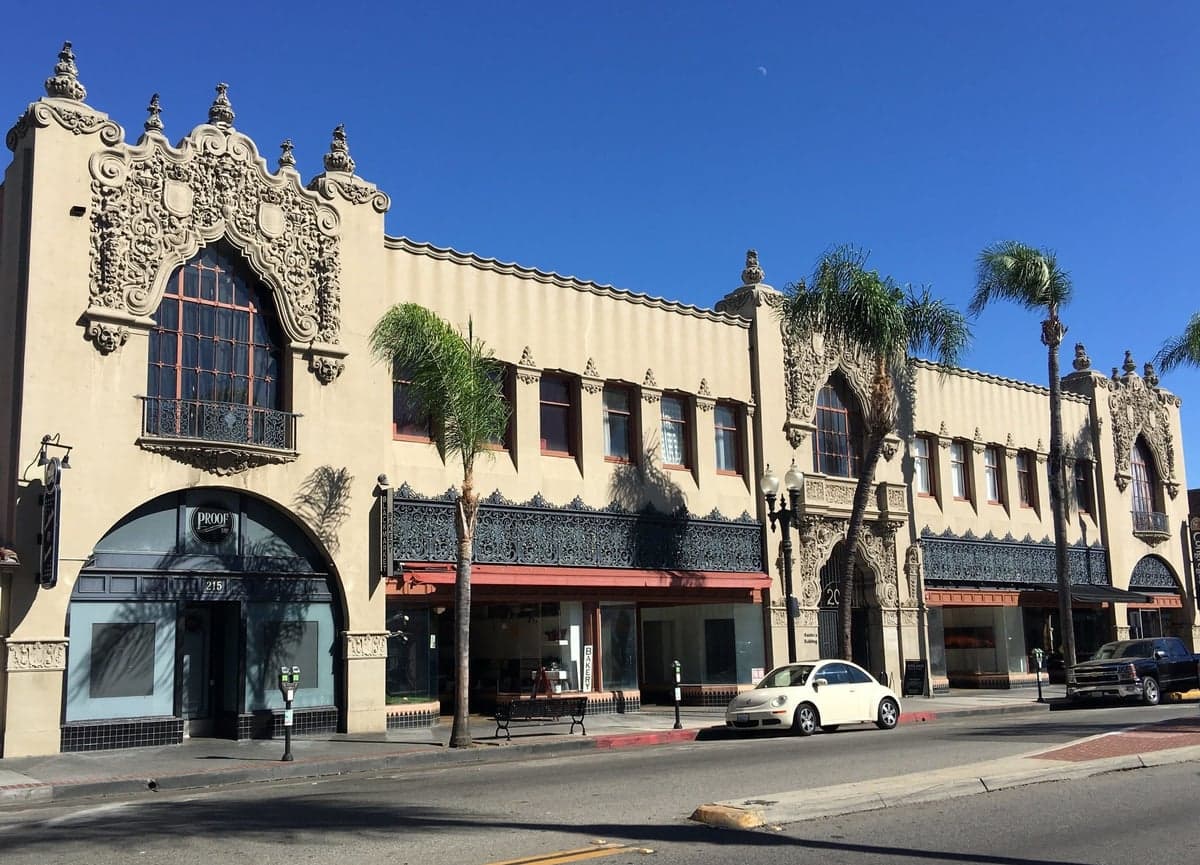
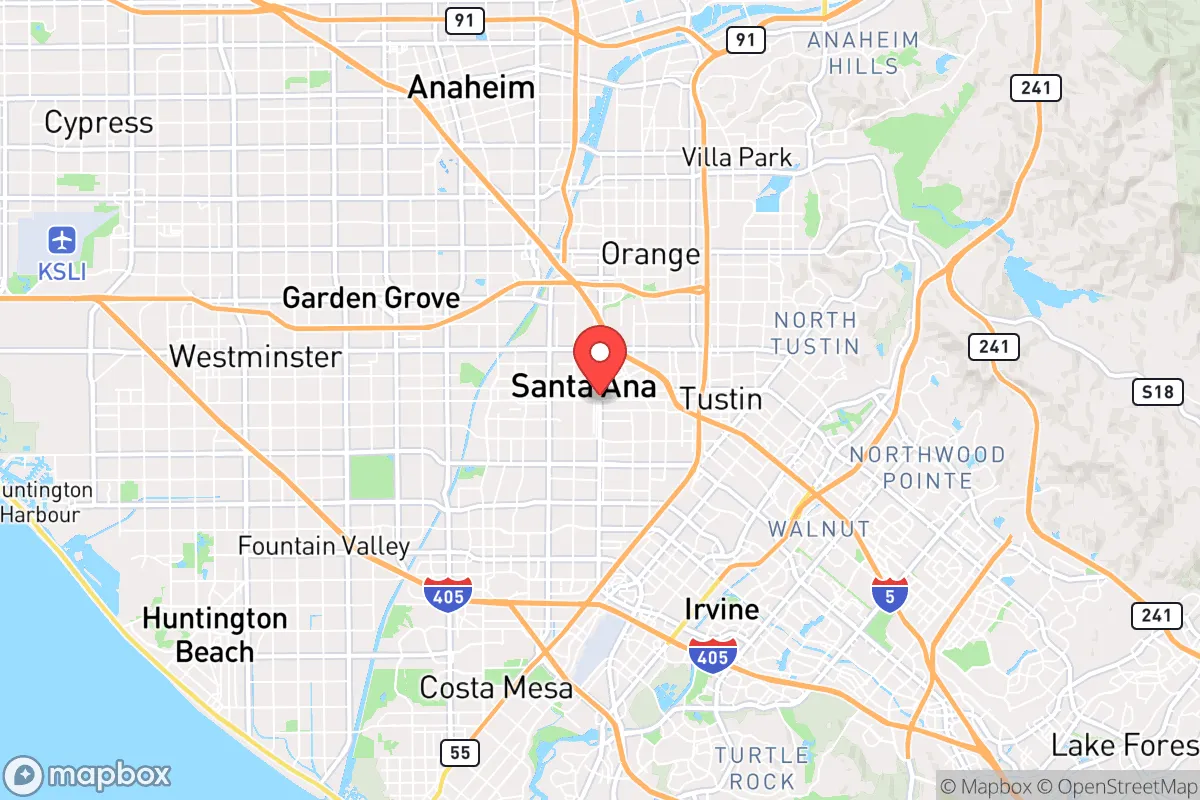
Photo: Wikipedia
Personal Sovereignty in Santa Ana, CA
Moderate friction. Expect trade-offs in some aspect of personal liberty and independence.
What does Personal Sovereignty tell us?
Personal Sovereignty measures your capacity for self-reliance and independence with minimal government friction. Higher scores mean fewer barriers between you and the way you want to live... but it assumes you have the space you need and good neighbors.
What does this tell us?
Personal Sovereignty measures your capacity for self-reliance and independence with minimal government friction. Higher scores mean fewer barriers between you and the way you want to live... but it assumes you have the space you need and good neighbors.
State Policy
Energy independence: Importer (33% of energy produced in-state)
Personal Liberty
Homesteading

Personal Liberty Analysis
Santa Ana, California, presents a challenging environment for personal sovereignty, where state-level policies heavily constrain individual autonomy in taxation, self-defense, and daily life. As the county seat of Orange County, it sits in a region that has historically balanced conservative and liberal influences, but California’s overarching regulatory framework—from high income taxes to strict gun laws—creates a landscape where self-reliance is tested at every turn. For conservative-leaning individuals and families prioritizing freedom from government overreach, Santa Ana demands a clear-eyed assessment of the trade-offs between its urban conveniences and the erosion of personal liberties.
Tax burden and regulatory posture in Santa Ana
California’s tax structure is among the most aggressive in the nation, and Santa Ana residents bear the full weight of it. The state’s top marginal income tax rate of 13.3% applies to high earners, while the state sales tax rate of 7.25% is supplemented by local add-ons, pushing the combined rate in Santa Ana to 7.75% as of 2026. Property taxes are capped at 1% of assessed value under Proposition 13, but annual increases and transfer taxes can still burden homeowners. The regulatory environment is equally dense: California’s extensive environmental and labor laws—such as the California Environmental Quality Act (CEQA) and stringent overtime rules—drive up business costs and limit entrepreneurial flexibility. For a prepper or survivalist, this means every dollar earned is heavily taxed, and starting a home-based business or workshop faces layers of permitting and compliance. The state’s energy regulations, including mandates for renewable energy and high electricity rates (averaging $0.30 per kWh), further strain self-sufficiency efforts, making off-grid power generation a costly necessity rather than a simple choice.
Self-defense and gun law specifics in Santa Ana
California’s gun laws are among the strictest in the United States, and Santa Ana residents must navigate a web of restrictions that directly impact personal defense. The state requires a 10-day waiting period for all firearm purchases, a background check through the California Department of Justice, and a Firearm Safety Certificate. Semi-automatic rifles with “assault weapon” features—like pistol grips or flash suppressors—are banned, and magazines holding more than 10 rounds are prohibited. Concealed carry permits (CCWs) are issued at the county level, and Orange County has historically been more permissive than coastal counties, but applicants must still demonstrate “good cause” and complete a training course. As of 2026, the state’s “sensitive places” law restricts carrying firearms in parks, hospitals, and many public spaces, further limiting self-defense options. For a survivalist, this means relying on less-lethal options or alternative security measures, as the legal path to armed defense is narrow and costly. The state’s red flag laws also allow temporary firearm seizures based on third-party reports, raising concerns about due process and government overreach.
Self-reliance and homesteading viability in Santa Ana
Santa Ana’s urban density and zoning laws make traditional homesteading or off-grid living nearly impossible. The city’s median lot size is around 6,000 square feet, typical for older suburban neighborhoods, but most residential zones prohibit livestock, extensive gardening, or accessory dwelling units (ADUs) without permits. While California’s 2020 ADU law eased some restrictions, Santa Ana still enforces setbacks and parking requirements that limit backyard independence. Off-grid feasibility is low: the city requires connection to municipal water and sewer, and solar panel installations must comply with building codes and utility interconnection rules. Rainwater collection is legal but limited to 200 gallons per property without a permit, and composting is restricted in some areas due to odor ordinances. For a prepper, the best option is to seek properties in unincorporated parts of Orange County or nearby rural areas like Silverado Canyon, where lot sizes increase and zoning is looser. Even then, California’s fire hazard regulations and water rights laws complicate self-reliance, making Santa Ana a poor base for serious homesteading.
Personal liberties in Santa Ana: parental rights, medical autonomy, speech, and property
California’s progressive policies directly impact personal liberties in ways that concern conservative families. Parental rights are limited by state mandates: schools cannot notify parents of a child’s gender identity changes without the child’s consent under the 2024 SAFETY Act, and comprehensive sex education is required from kindergarten onward, with no opt-out for controversial content. Medical autonomy is constrained by vaccine mandates for school attendance (including COVID-19 shots for K-12 students as of 2025) and strict licensing for alternative treatments like homeopathy or herbal remedies. Free speech is protected under the First Amendment, but California’s hate speech laws and workplace harassment regulations can chill public expression, especially on divisive topics like immigration or gender. Property rights are weakened by rent control policies (Santa Ana has a rent stabilization ordinance covering units built before 1995) and the California Coastal Commission’s authority over land use, which can delay or block development. For a survivalist, these policies mean that raising children according to traditional values, seeking medical alternatives, or speaking openly about political views carries legal and social risks. The state’s strong tenant protections also make it harder for landlords to manage properties, reducing the appeal of real estate as a sovereignty tool.
Overall, Santa Ana offers a low level of personal sovereignty compared to states like Texas or Florida, where tax burdens are lighter, gun laws are more permissive, and parental rights are stronger. The city’s urban environment and California’s regulatory apparatus create a system where government oversight touches nearly every aspect of life, from what you can grow in your backyard to how you defend your home. For a conservative-leaning individual or family prioritizing self-reliance and freedom from overreach, Santa Ana is a location to approach with caution—best suited for those who can navigate its legal complexities or who are willing to invest heavily in legal compliance and alternative strategies. The trade-off is access to a diverse economy and coastal proximity, but the cost in personal autonomy is steep.

* Values derived from national, state, county, city and local statistics and may differ in a specific area. Last updated: 2026-04-19T04:25:24.000Z
Narrative content on this page is AI-generated and may contain mistakes. Verify any details that matter before acting on them.
ReloMaps may earn a commission from affiliate links at no extra cost to you.

