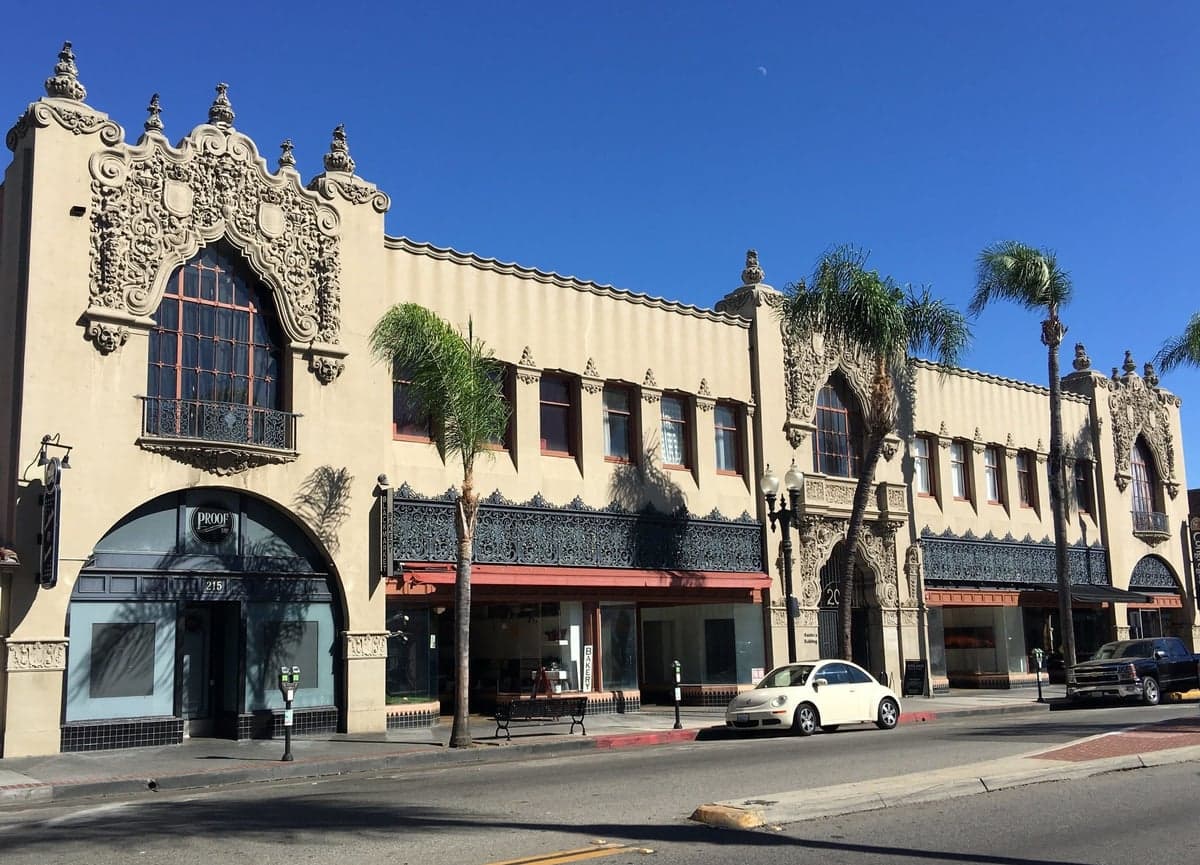
Photo: Wikipedia
Quality of Life in Santa Ana, CA
A high quality of life with strong walkability, manageable living costs, healthy neighborhood signals, and solid amenity access.
What does Quality of Life tell us?
Quality of Life blends cost of living, nearby amenities, socioeconomic signals, and neighborhood character. City-level scores represent the whole municipality; individual neighborhoods can differ.
What does this tell us?
Quality of Life blends cost of living, nearby amenities, socioeconomic signals, and neighborhood character. City-level scores represent the whole municipality; individual neighborhoods can differ.
Cost of Living
95% above national average
The Real Cost of Living in Santa Ana, CA for 2026
| Tier | Individual | Family (4) |
|---|---|---|
| Survival | $32k | $59k |
| Comfortable | $91k | $134k |
| Luxury | $134k+ | $207k+ |
| Elite (Top 5%) | $157k+ | $244k+ |
66%
The Area Signal
A metric tracking the socioeconomic signals of the area.


Hobbies
Explore the areaGroceries
5 within 10 miles
Gas
0 within 10 miles
Hospital
3 within 20 miles
Airport
LAX — Los Angeles International
Post Office
USPS — Irvine, CA
Critical Amenities
Quality-of-Life Analysis
Santa Ana presents a quality-of-life profile that is both more affordable than much of coastal Orange County and denser, more urban, and more diverse than its affluent neighbors. With a cost-of-living index of 195 — nearly double the national average — the city is home to a large working- and middle-class population, many of whom are first- or second-generation immigrants, alongside professionals drawn by its central location and relative housing value compared to Irvine or Newport Beach.
Cost of living, housing costs, and how Santa Ana compares to nearby cities
Santa Ana’s cost-of-living index of 195 (where 100 equals the U.S. average) is high by national standards but notably lower than many Orange County cities. The median home value of $657,800 is roughly $200,000 less than the Orange County median, making it one of the more attainable entry points for homebuyers in the region. Median rent sits at $1,975, which is below the county average of around $2,400, though still steep for many budgets. The average commute of 24.8 minutes is shorter than the countywide average of about 28 minutes, thanks to Santa Ana’s central location near the I-5, I-405, and SR-55 freeways. However, residents should note that property taxes, while capped at roughly 1% of assessed value under Proposition 13, combine with high home prices to create a significant monthly housing burden. Compared to nearby Tustin or Costa Mesa, Santa Ana offers lower prices but also older housing stock and fewer new-construction options.
What daily life is like: amenities, schools, and neighborhood character
Daily life in Santa Ana is shaped by its status as Orange County’s most densely populated city and its role as a regional hub for Latino culture and commerce. The city’s Downtown Artists Village and the Bowers Museum provide cultural anchors, while the Santa Ana Zoo and the 22-mile Santa Ana River Trail offer outdoor recreation. The Santa Ana Unified School District serves most of the city, with several schools earning above-average state ratings, though families often research individual campuses closely. The city’s walkability is above average for Orange County, especially in the downtown core, but most residents still rely on cars for errands and commuting. Nightlife and dining are concentrated along Fourth Street and in the South Coast Metro area, with a mix of taquerias, Vietnamese pho houses, and upscale gastropubs. The overall rhythm is faster-paced than suburban Mission Viejo but less polished than Irvine, appealing to those who value cultural authenticity and urban energy over manicured lawns.
Santa Ana is best suited for buyers and renters who prioritize affordability within Orange County, cultural diversity, and a central commute over suburban quiet or top-tier school rankings. First-time homebuyers, young professionals, and families who value walkable neighborhoods and a strong sense of community will find the city a pragmatic choice. Those seeking large lots, elite public schools, or low crime rates may prefer nearby Tustin or Ladera Ranch, but for residents who want an authentic, urban-infill lifestyle at a relative discount, Santa Ana delivers a distinctive quality of life that few other Southern California cities can match at this price point.

Crime in Santa Ana, CA
WARNING: The crime statistics are unreliable for this jurisdiction. Local authorities have either not reported or under reported their data to the FBI. This could be due to bad intentions, incompetence or technical issues. Regardless, we suggest skepticism.
Higher crime rates than 67% of comparable U.S. locations.
Violent CrimeViolent Crime Analysis
Property CrimeProperty Crime Analysis
Crime Analysis
Santa Ana, California, reports a violent crime rate of 332 incidents per 100,000 residents and a property crime rate of 1,309.2 per 100,000. These figures place the city above both the national and California state averages for violent crime, while property crime aligns closely with the state median. The overall safety picture is complicated by the city's dense urban environment and its location within Orange County, a region where progressive prosecutorial policies have increasingly influenced local justice outcomes.
Crime in context
Santa Ana's violent crime rate is roughly 15% higher than the national average of about 290 per 100,000 and significantly above California's state average of approximately 280 per 100,000. Property crime, at 1,309.2 per 100,000, is nearly identical to the California average of 1,310 per 100,000 but about 30% higher than the national average of roughly 1,000 per 100,000. These numbers reflect a city where theft, burglary, and motor vehicle theft are persistent concerns, while aggravated assault and robbery drive the violent crime tally. The presence of a progressive district attorney in Orange County, who has emphasized alternatives to incarceration and reduced sentencing for certain non-violent offenses, has been cited by local law enforcement as a factor contributing to repeat offending and a perception of diminished consequences for property crimes.
What residents experience
Residents report that property crime—particularly vehicle break-ins, package theft, and residential burglary—is the most common safety issue in daily life. Many neighborhoods experience higher-than-average rates of larceny and auto theft, especially near commercial corridors like Bristol Street and the 5 Freeway corridor. Violent crime, while less frequent, is concentrated in specific areas, including parts of the downtown core and the Lacy neighborhood. The city's police department has responded with targeted patrols and community policing initiatives, but clearance rates for property crimes remain low, often below 15%, which undermines deterrence. The progressive justice philosophy in the county—which includes diversion programs and reduced bail for many non-violent offenders—has led to a revolving-door effect for repeat property criminals, a pattern that frustrates both residents and business owners.
Neighborhood-level variation
Safety conditions vary considerably across Santa Ana's 28 square miles. North Santa Ana, particularly the Floral Park and Park Santiago neighborhoods, sees significantly lower crime rates than the city average, with violent crime roughly 40% below the citywide figure. In contrast, the southwest quadrant—including the Delhi and Logan neighborhoods—experiences violent crime rates up to double the city average. Property crime is more evenly distributed but spikes near transit hubs, shopping centers, and the Civic Center area. Prospective residents should examine block-level crime maps and consider that the city's overall statistics mask pockets of both relative safety and elevated risk, with the progressive legal environment amplifying concerns about property crime recurrence across all areas.
* Values derived from national, state, county, city and local statistics and may differ in a specific area. Last updated: 2026-04-19T04:25:24.000Z
Narrative content on this page is AI-generated and may contain mistakes. Verify any details that matter before acting on them.
ReloMaps may earn a commission from affiliate links at no extra cost to you.

