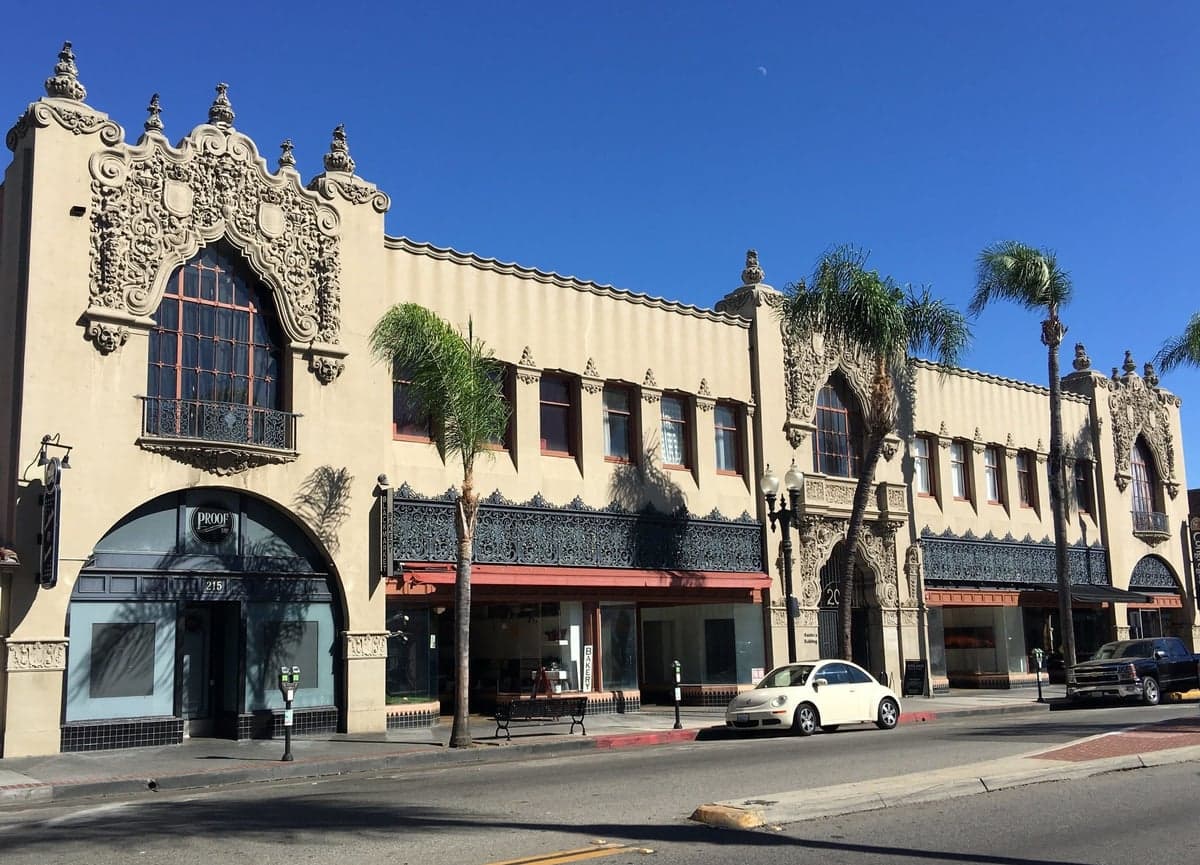
Photo: Wikipedia
Demographics of Santa Ana, CA
Affluence Level in Santa Ana, CA
A middle-class area roughly in line with national averages across income, home values, education, and employment.
People of Santa Ana, CA
The people of Santa Ana, California, today form a dense, predominantly Hispanic city of 311,639 residents, where 77.3% identify as Hispanic or Latino, 11.3% as East or Southeast Asian, and just 8.7% as non-Hispanic white. With only 18.0% of adults holding a bachelor’s degree, the city is a working-class hub defined by its immigrant roots, high population density, and a strong sense of neighborhood identity. Santa Ana is the most Hispanic big city in Orange County, a distinction that shapes its politics, economy, and daily life.
How the city was settled and grew
Santa Ana’s modern population history begins in the late 19th century, not with Spanish missions. The city was founded in 1869 on former Rancho Santiago de Santa Ana land, and its first growth spurt came with the arrival of the Southern Pacific Railroad in 1877. Early settlers were a mix of Midwestern Anglo farmers and European immigrants—Germans, Irish, and Italians—who worked the citrus groves and walnut orchards that blanketed the area. The original downtown core, centered around Fourth Street, became the commercial heart for these early residents. By the 1920s, a small Mexican community had formed in the Logan neighborhood, just north of downtown, drawn by agricultural labor. During World War II, the opening of the Santa Ana Army Air Base (now John Wayne Airport) brought a wave of military personnel and defense workers, many of whom settled in the Flores Park and West Floral Park areas, which developed as middle-class Anglo neighborhoods with Craftsman and Spanish Colonial Revival homes.
Modern era (post-1965)
The passage of the Hart-Cellar Act in 1965, combined with the collapse of the region’s citrus industry in the 1970s, radically reshaped Santa Ana. Mexican and Central American immigrants, fleeing economic hardship and civil wars, arrived in large numbers, filling the low-wage service and manufacturing jobs that replaced agriculture. The Bristol Street corridor and the South Coast Metro area (the city’s southern edge, bordering Costa Mesa) became entry points for new arrivals, with dense apartment complexes and small businesses catering to Spanish-speaking residents. By 1990, the Hispanic share of the population had surged past 65%, while the white share dropped below 20%. The Asian population, primarily Vietnamese and Filipino, grew more modestly, clustering in the South Main Street area and parts of Lacy Park, where Buddhist temples and Vietnamese markets appeared. The 1990s and 2000s saw white flight accelerate, with many Anglo families moving to Irvine, Tustin, or Ladera Ranch. Today, the non-Hispanic white population is just 8.7%, concentrated in the historic West Floral Park and Park Santiago neighborhoods, which retain their older, tree-lined character.
The future
Santa Ana’s population is not homogenizing; it is deepening its Hispanic identity while seeing modest diversification at the margins. The Hispanic share has stabilized around 77%, with immigration from Mexico slowing and second- and third-generation families moving to more affordable inland areas like Riverside and San Bernardino counties. The East and Southeast Asian share (11.3%) is holding steady, with Vietnamese and Filipino families remaining in the South Main and Lacy Park enclaves. The Indian subcontinent population is tiny at 0.6%, and the Black population is just 0.7%, with no signs of significant growth. The city’s low college attainment rate (18.0%) and high poverty rate (around 18%) suggest that upward mobility remains a challenge, though gentrification pressures are rising near the downtown Arts District and the Santa Ana Regional Transportation Center. Over the next 10–20 years, Santa Ana will likely remain a predominantly Hispanic, working-class city, with gradual displacement of lower-income renters by higher-income commuters drawn to its proximity to Irvine and Costa Mesa. The city’s political character—solidly Democratic, with a strong labor and immigrant-rights movement—will persist, but the cultural and economic divide between the established Hispanic middle class and newer, poorer arrivals may widen.
For a conservative-leaning individual or family considering a move to Santa Ana, the bottom line is this: you will be living in a dense, majority-Hispanic, working-class city with low educational attainment and high poverty, but also with strong neighborhood ties, a vibrant street life, and some of the most affordable housing in coastal Orange County. The city is not becoming more diverse in the traditional sense—it is becoming more Hispanic and more economically stratified. If you value walkability, cultural authenticity, and proximity to job centers, Santa Ana offers that. If you prioritize high-performing schools, low crime, and a politically conservative environment, you will likely find a better fit in nearby Tustin, Yorba Linda, or Ladera Ranch.

* Values derived from national, state, county, city and local statistics and may differ in a specific area. Last updated: 2026-04-19T04:25:24.000Z
Narrative content on this page is AI-generated and may contain mistakes. Verify any details that matter before acting on them.
ReloMaps may earn a commission from affiliate links at no extra cost to you.

