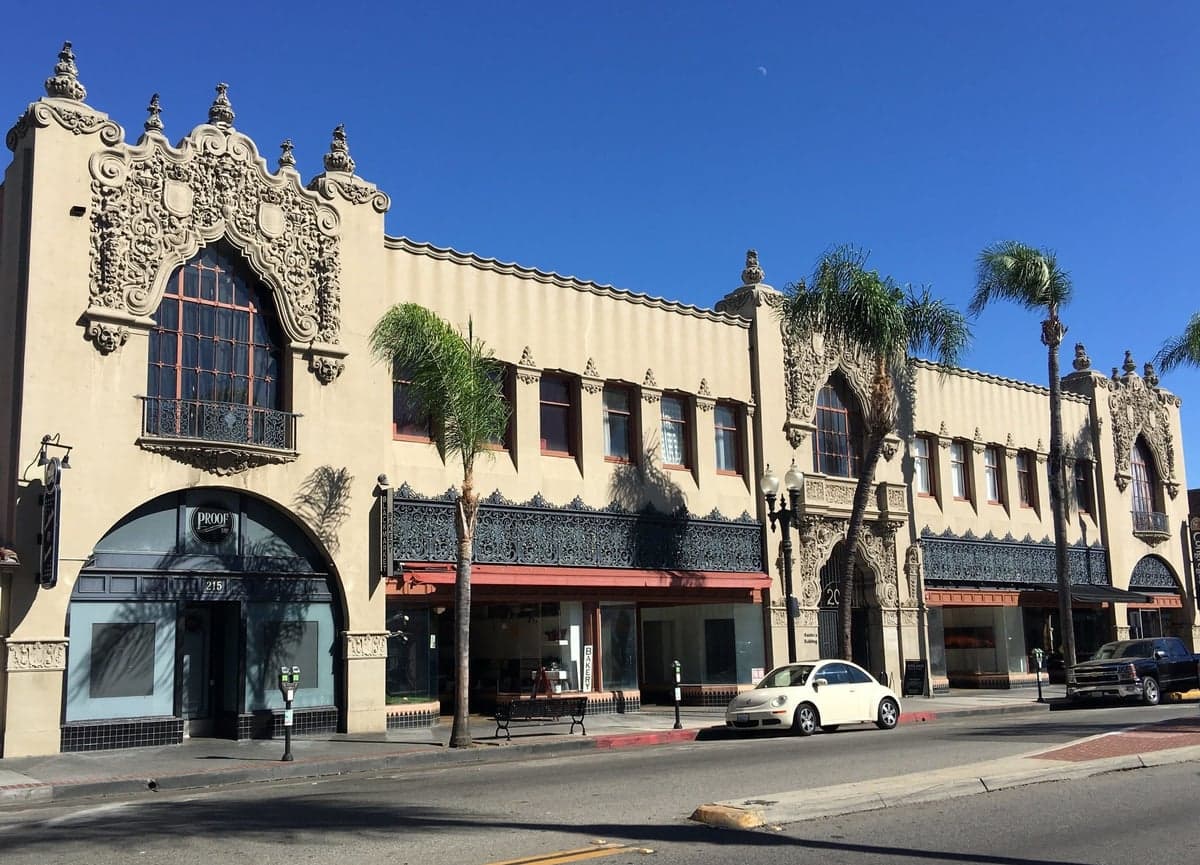
Photo: Wikipedia
Political ClimatePolitical Climate in Santa Ana, CA
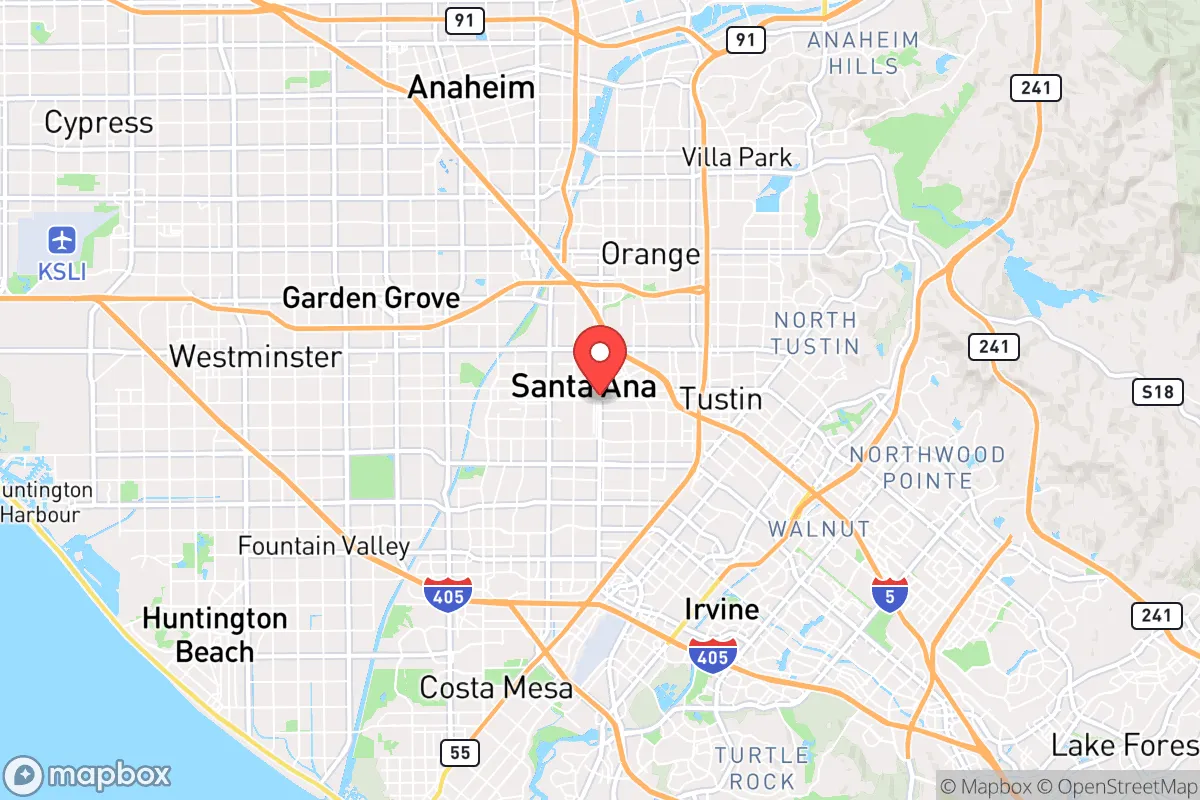
District shown is the primary district for this city’s centroid. Cities may span multiple districts.
Local Political AnalysisPolitical Analysis of Santa Ana, CA
Look, I’ve lived in Santa Ana my whole life, and I’ve watched this city’s politics shift from a pretty balanced, live-and-let-live vibe to a deep blue stronghold that feels like it’s run by people who don’t trust you to make your own decisions. The Cook PVI is D+11, which tells you the math is heavily stacked in favor of progressive candidates. That wasn’t always the case—back in the ’90s, you’d see a mix of conservative and moderate Democrats on the council, and folks were more focused on keeping the streets safe and the taxes low. Now, it’s a one-party show, and that party has been pushing harder every year on things like rent control, zoning overhauls, and police oversight measures that sound good on paper but end up tying the hands of the people who actually keep order.
How it compares
If you drive 15 minutes north to Orange or 20 minutes east to Villa Park, you’ll feel like you’re in a different country politically. Orange still has a Republican mayor and a city council that fights against state mandates on housing density and homeless encampments. Villa Park is even more conservative—they’ve kept their police force independent and fought off attempts to impose county-level rent caps. Santa Ana, by contrast, is the progressive engine of the county. Our city council has been solidly Democratic for decades, but the current crop is further left than the old guard. They’ve embraced “sanctuary city” policies, expanded the living wage ordinance, and pushed for a city-run utility that would give them more control over your energy bills. Meanwhile, neighboring Tustin and Costa Mesa are more purple—they still have competitive races and a real debate about taxes and public safety. Here, the primary is the only election that matters, and that means the most activist voices tend to win.
What this means for residents
For the average person, the biggest practical effect is that you feel like the government is in your business more than it should be. Want to remodel your garage into an ADU? Good luck—the city has layered on so many new fees and environmental review requirements that it’s cheaper to just move. The city council passed a “just cause” eviction ordinance that makes it nearly impossible to ask a problem tenant to leave, even if they’re damaging the property or disturbing neighbors. And the police department has been under a consent decree since 2021, which means officers are more cautious about proactive enforcement—property crime has ticked up as a result. If you’re a small business owner, the minimum wage is already over $16 an hour locally, and there’s talk of pushing it to $20. That’s great for activists, but it’s squeezing the mom-and-pop shops that used to define downtown. The long-term trajectory is more of the same: higher taxes, more regulations, and a city government that sees itself as a social engineer rather than a service provider.
One cultural distinction that stands out is how the city’s leadership leans into identity politics. The council has made a point of flying the LGBTQ+ pride flag over city hall, and they’ve renamed streets after labor leaders and progressive icons. It’s not that those things are bad on their own, but it feels like the city is more interested in making symbolic statements than fixing the potholes or cutting the red tape for a new business. The old Santa Ana was a place where you could work hard, buy a house, and raise a family without the government constantly telling you how to live. Now, it feels like every year brings a new ordinance that limits your freedom—whether it’s a ban on plastic bags, a restriction on short-term rentals, or a mandate that landlords accept Section 8 vouchers. If you value personal liberty and want a government that stays out of your way, Santa Ana is heading in the wrong direction, and I don’t see it turning back anytime soon.

State Political ClimatePolitical Climate in California
State Political AnalysisPolitical Environment in the State
California is a deep blue state where Democrats hold every statewide office and supermajorities in both legislative chambers, but that monolithic label hides a fractured and increasingly volatile political reality. The state’s overall partisan lean has shifted from a competitive purple in the 1990s to a solidly Democratic +29-point margin in the 2024 presidential race, yet that number is propped up almost entirely by the coastal metros of Los Angeles, San Francisco, and San Diego. Beneath the surface, a massive rural and exurban backlash is brewing, and the state’s trajectory on personal freedom—especially for conservatives—has become a central concern for anyone considering a move here.
Urban vs. rural divide
The political map of California is a tale of two nations. The urban core—Los Angeles County, the San Francisco Bay Area, and San Diego—drives the state’s Democratic supermajority, with LA County alone delivering over 2 million votes for Joe Biden in 2020. These areas are dense, diverse, and heavily influenced by tech, entertainment, and public-sector unions. Meanwhile, the Central Valley and inland counties like Kern, Tulare, and Shasta are reliably Republican, often voting +30 to +40 points for the GOP. The real story is in the suburbs that once leaned moderate but have flipped hard to the left: Orange County, once a conservative stronghold, went blue in 2016 and has stayed there, driven by Asian-American and Latino voters shifting toward Democrats. Conversely, San Bernardino County and Riverside County (the Inland Empire) are trending redder as working-class families flee coastal housing costs and bring their conservative values with them. The divide isn’t just about geography—it’s about lifestyle, economics, and a growing sense that the state government in Sacramento doesn’t represent the people east of the coastal range.
Policy environment
California’s policy environment is a textbook case of progressive governance with a heavy hand. The state has the highest personal income tax rate in the nation (13.3% for top earners), a corporate tax rate of 8.84%, and a sales tax that can exceed 10% in some cities. Property taxes are capped by Prop 13, but that’s under constant attack from the legislature. On education, California spends over $20,000 per pupil but ranks near the bottom in reading and math proficiency—a classic case of high spending, low results. Healthcare is dominated by the state’s massive Medi-Cal system, and the state has aggressively expanded abortion access and transgender medical rights, including becoming a “sanctuary” for minors seeking gender-affirming care without parental consent. Election laws are among the most liberal in the country: universal mail-in ballots, same-day registration, and no voter ID requirement. For a conservative, the policy environment feels like a one-way ratchet toward more government control, with little room for local opt-outs.
Trajectory & freedom
California is becoming less free by almost any measure, especially for conservatives. The state’s trajectory on personal liberty is alarming: in 2023, Governor Gavin Newsom signed a package of bills that effectively bans concealed carry in most public places (SB 2), restricts firearm purchases to one handgun per month, and expands the state’s “red flag” law. On parental rights, AB 1955 (2024) prohibits school districts from requiring notification when a child changes their gender identity, effectively overriding parental authority. On speech, the state has passed laws targeting “hate speech” online and created a new “Office of Election Cybersecurity” that critics say chills political dissent. Medical autonomy took a hit with the state’s COVID-19 vaccine mandates for schoolchildren and healthcare workers, though some have been rolled back. Property rights are under constant pressure from rent control expansions and the California Environmental Quality Act (CEQA), which is weaponized by NIMBY groups to block new housing. The trend is clear: Sacramento is centralizing power and eroding local control, making it harder for conservatives to live according to their values.
Civil unrest & political movements
California has been a flashpoint for civil unrest and political movements on both sides. The 2020 George Floyd protests in Los Angeles and Oakland saw widespread looting and property destruction, with some estimates putting damage at over $1 billion. The state’s sanctuary law (SB 54) limits cooperation between local law enforcement and federal immigration authorities, creating a de facto safe haven for undocumented immigrants and fueling tensions in border-adjacent communities like San Ysidro and Calexico. On the right, the “California Exodusters” movement has seen hundreds of thousands of residents leave for Texas, Arizona, and Idaho, driven by taxes, crime, and political alienation. Secession rhetoric—both the “Calexit” movement and the more recent “State of Jefferson” proposal for Northern California and Southern Oregon—has cooled but not disappeared. Election integrity remains a hot-button issue: the state’s universal mail-in system, while popular with Democrats, has led to widespread concerns about ballot harvesting and voter roll accuracy, especially in rural counties like Modoc and Lassen. A new resident will notice the political tension in everyday life—from bumper stickers to local news coverage—and the sense that the state is culturally at war with itself.
Projection
Over the next 5-10 years, California will likely become even more Democratic at the state level, but the cracks are deepening. Demographic trends favor the left: the state’s Latino population, which leans Democratic, is growing, while white conservative populations are aging and leaving. However, the exodus of middle-class families—especially from the Bay Area and LA—is hollowing out the tax base and creating a housing affordability crisis that even the state’s own policies can’t fix. The Inland Empire and Central Valley will continue to trend red, but they lack the population density to flip statewide elections. Expect more progressive legislation on rent control, healthcare, and climate regulation, but also growing backlash in the form of local ballot measures and school board takeovers. For a conservative moving in now, the next decade will feel like living in a blue bubble that’s increasingly hostile to traditional values, with the only relief being the ability to find like-minded communities in places like Bakersfield, Redding, or Elk Grove.
For a new resident, the bottom line is this: California offers unmatched natural beauty, economic opportunity, and cultural diversity, but it comes at the cost of high taxes, heavy regulation, and a political climate that is actively hostile to conservative values. If you’re a single professional or a parent who values personal freedom, local control, and a government that stays out of your life, you’ll find yourself swimming against a powerful current. The state is not going to flip red anytime soon, and the policy environment will only become more restrictive. Your best bet is to target the few remaining conservative enclaves—Huntington Beach, Temecula, or Murrieta—where local governments still push back against Sacramento’s overreach. But even there, the tide is rising, and you’ll need to be prepared for a constant political fight.
* Values derived from national, state, county, city and local statistics and may differ in a specific area. Last updated: 2026-04-19T04:25:24.000Z
Narrative content on this page is AI-generated and may contain mistakes. Verify any details that matter before acting on them.
ReloMaps may earn a commission from affiliate links at no extra cost to you.

