Photo: Wikipedia
Demographics of Santa Fe, NM
Affluence Level in Santa Fe, NM
A middle-class area roughly in line with national averages across income, home values, education, and employment.
People of Santa Fe, NM
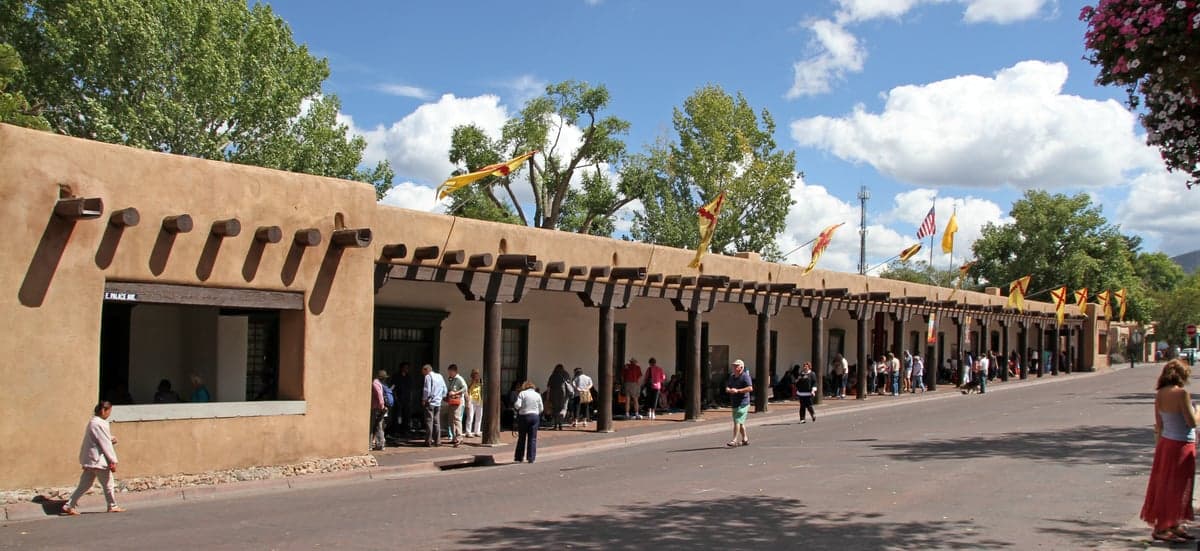
The people of Santa Fe, New Mexico, today number 88,224, forming a city that is nearly evenly split between Hispanic residents (49.9%) and non-Hispanic White residents (42.2%), with a small but growing East/Southeast Asian population (1.3%) and a tiny Indian-subcontinent community (0.5%). The foreign-born share stands at 8.9%, and 45.4% of adults hold a college degree, giving Santa Fe a character that blends deep Hispanic roots with a highly educated, arts-oriented Anglo influx. The city’s identity is defined by this dual heritage—a place where centuries-old Spanish and Pueblo Indian traditions coexist with a modern, liberal-leaning creative class, all set against the backdrop of the Sangre de Cristo Mountains.
How the city was settled and grew
Santa Fe was founded in 1610 as the capital of the Spanish province of Nuevo México, making it the oldest state capital in the United States. The original population was a mix of Spanish colonists, mestizos, and Indigenous Pueblo people, drawn by land grants and the promise of a new frontier. The Spanish established the Barrio de Analco neighborhood south of the Santa Fe River, where the earliest non-Indigenous settlers built homes and the San Miguel Chapel. After the Pueblo Revolt of 1680 and the Spanish reconquest in 1692, the city was resettled by Spanish families who received large land grants, creating a pattern of extended-family compounds in what is now the Historic East Side and the Railyard District area. The 1848 Treaty of Guadalupe Hidalgo brought Santa Fe under U.S. control, and Anglo-American traders, lawyers, and government officials began arriving, settling primarily around the Plaza and the Canyon Road corridor. The railroad arrived in 1880, bringing a wave of European immigrants—Irish, German, and Italian workers—who built homes in the South Capitol neighborhood. By the mid-20th century, Santa Fe’s population remained small (under 30,000) and overwhelmingly Hispanic, with a small Anglo elite centered on government and the nascent art scene.
Modern era (post-1965)
The 1965 Immigration and Nationality Act had a modest direct effect on Santa Fe, as the city’s foreign-born population today is only 8.9%, lower than the national average. The major demographic shift came from domestic in-migration. Starting in the 1970s, a wave of Anglo artists, writers, and retirees—many from California and the Northeast—moved to Santa Fe, drawn by the climate, the landscape, and the city’s reputation as a cultural haven. This influx transformed neighborhoods like Cerro Gordo and the East Side Historic District, where historic adobe homes were renovated and prices rose sharply. The Hispanic population, while remaining the largest single group, saw its share decline from roughly 70% in 1970 to 49.9% today, as Anglo newcomers and their descendants grew. The East/Southeast Asian community (1.3%) is a recent arrival, concentrated in the Midtown area near St. Michael’s Drive, where many work in the hospitality and healthcare sectors. The Indian-subcontinent population (0.5%) is tiny and dispersed, with no single neighborhood concentration. The Black population (1.1%) remains very small, with most families living in the Southside area near the airport. Suburbanization has been limited by the city’s strict growth controls and historic preservation laws, but the Southside and Airport Road corridor have seen new subdivisions and strip-mall development, absorbing middle-class families of all backgrounds.
The future
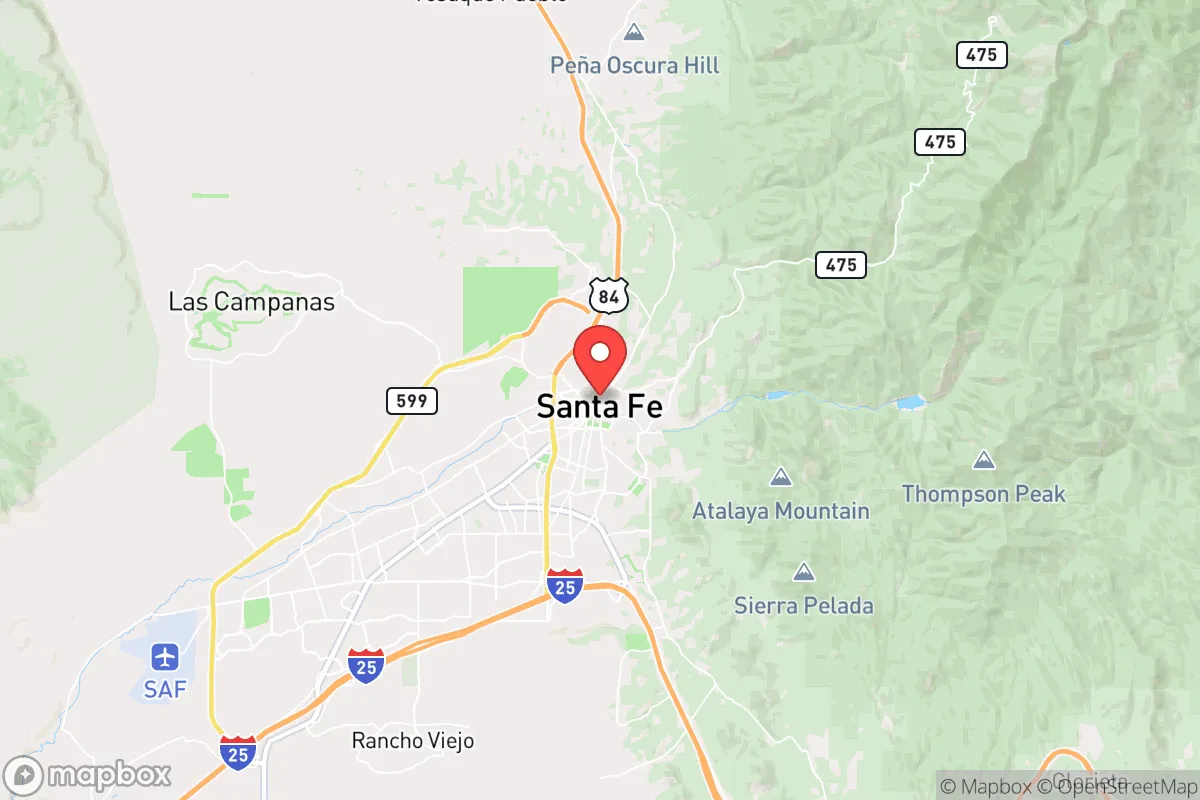
Santa Fe’s population is aging and slowly homogenizing into two distinct enclaves: the historic core (East Side, Cerro Gordo) remains predominantly Anglo and affluent, while the Southside and outlying areas like Agua Fría Village are more Hispanic and working-class. The Hispanic population is stable but not growing rapidly, as birth rates decline and out-migration to cheaper areas in Texas and the Mountain West increases. The East/Southeast Asian community is growing slowly, driven by employment at Los Alamos National Laboratory (about 35 miles away) and the healthcare sector, but it remains a small niche. The Indian-subcontinent population is plateauing, with most families tied to tech or academic jobs at the lab or Santa Fe Community College. The city’s strict land-use policies and high housing costs (median home price above $500,000) are likely to continue limiting population growth, keeping Santa Fe a small, expensive city. The next 10-20 years will likely see a continued slow decline in the Hispanic share and a gradual increase in the Anglo share, as wealthy retirees and remote workers replace younger families who cannot afford to stay. The foreign-born share may rise slightly as the city’s hospitality industry attracts more Latin American immigrants, but Santa Fe will remain a predominantly native-born, bicultural city.
For someone moving to Santa Fe now, the city offers a stable, culturally rich environment with a clear demographic divide: the historic core is Anglo-dominated and expensive, while the Southside is more diverse and affordable. The population is not growing rapidly, and the city’s character is unlikely to change dramatically in the coming decades. New residents should expect a place where Hispanic and Anglo traditions are deeply intertwined but increasingly separate in daily life, and where the cost of entry is high enough to filter for income and education.

* Values derived from national, state, county, city and local statistics and may differ in a specific area. Last updated: 2026-04-19T07:01:32.000Z
Narrative content on this page is AI-generated and may contain mistakes. Verify any details that matter before acting on them.
ReloMaps may earn a commission from affiliate links at no extra cost to you.

