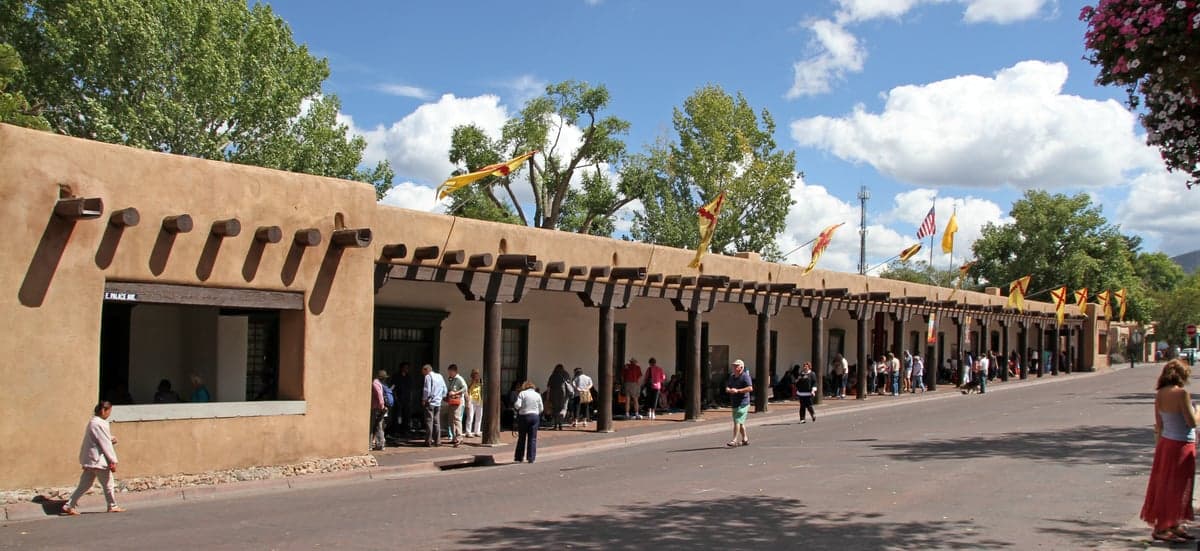
Photo: Wikipedia
Political ClimatePolitical Climate in Santa Fe, NM
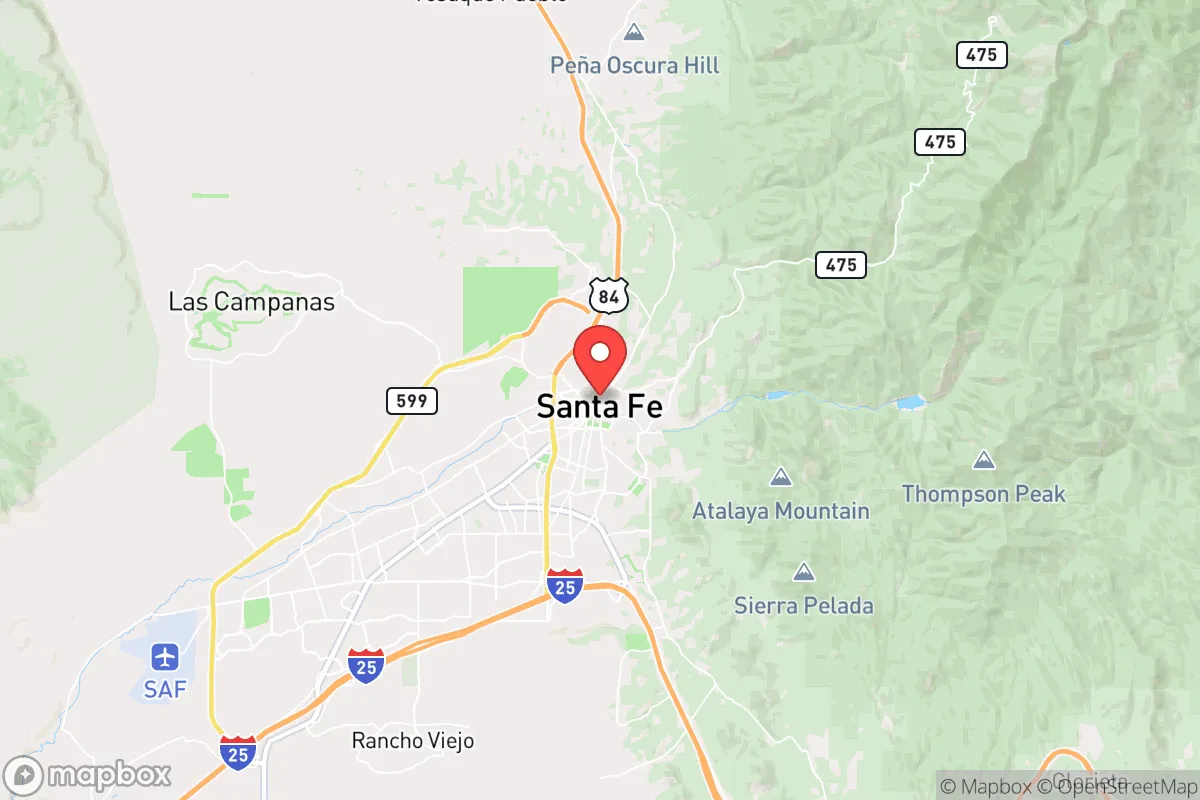
District shown is the primary district for this city’s centroid. Cities may span multiple districts.
Local Political AnalysisPolitical Analysis of Santa Fe, NM
Santa Fe’s political climate has shifted noticeably over the past decade, and if you’ve lived here as long as I have, you’ve felt it. The city itself leans heavily Democratic—Cook PVI is D+3, but that number understates how deep blue the core really is. In 2024, Santa Fe County went for the Democratic presidential candidate by roughly 30 points, while surrounding areas like Los Alamos and Rio Arriba County are more mixed, and places like Española or the rural villages north of town still vote more conservatively. The trajectory here is clear: Santa Fe is getting bluer, more progressive, and more aligned with state-level policies that many of us see as creeping government overreach.
How it compares
Drive 20 minutes south to Eldorado or 30 minutes east to the edge of the Sangre de Cristos, and you’ll find a different political reality. Those areas lean Republican or libertarian-leaning, with lower taxes, fewer regulations, and a general distrust of the Santa Fe city council’s agenda. Meanwhile, Albuquerque, about an hour south, is more purple but still more conservative than Santa Fe on issues like property rights and gun laws. The contrast is stark: Santa Fe’s local government has pushed rent control measures, strict short-term rental ordinances, and a plastic bag ban that feels like a solution in search of a problem. In the surrounding counties, folks just want to be left alone to run their businesses and live their lives.
What this means for residents
If you value personal freedom and limited government, Santa Fe can feel like a slow squeeze. The city council has been aggressive on zoning changes that limit what you can do with your own property—think tighter restrictions on home-based businesses and new building permits that take months. Property taxes are moderate, but the cost of living has spiked, partly due to state-level mandates on minimum wage and renewable energy requirements that drive up utility bills. For families, the public school system is increasingly influenced by progressive curriculum mandates, while charter schools and private options are limited. The police department has faced defunding debates, and while that hasn’t fully materialized, it’s a sign of where the wind is blowing. Long-term, I see Santa Fe becoming a place where only the wealthy or those heavily subsidized by government can afford to stay, while middle-class families and small business owners get priced out or pushed to the outskirts.
Culturally, Santa Fe has always prided itself on being unique—artsy, historic, and independent. But that independence is being eroded by a one-size-fits-all progressive agenda. The city’s ban on gas-powered leaf blowers, its strict water-use regulations that penalize homeowners with larger lots, and its push for “sanctuary city” policies that limit local law enforcement’s cooperation with federal immigration authorities all signal a government that trusts itself more than its citizens. The state legislature in Santa Fe has also passed some of the most restrictive gun laws in the West, including a ban on carrying firearms in public buildings and near polling places. For those of us who remember when Santa Fe was a live-and-let-live place, it’s disappointing to watch it become a laboratory for top-down social engineering. If you’re considering a move here, just know that your personal freedoms will be subject to more and more local control every year.

State Political ClimatePolitical Climate in New Mexico
State Political AnalysisPolitical Environment in the State
New Mexico has long been a solidly blue state in presidential elections, voting Democratic by double digits in every cycle since 2008, but the picture is more complicated than the statewide numbers suggest. The dominant coalition is a mix of urban progressives in Albuquerque and Santa Fe, organized labor, and a significant Hispanic electorate that historically leaned conservative but has shifted left in recent decades. Over the last 10-20 years, the state has moved from a purple-ish swing state—where Republicans like Pete Domenici and Gary Johnson held statewide office—to a reliably Democratic stronghold, driven by rapid growth in the Albuquerque metro and a steady exodus of rural conservatives to Texas and Arizona.
Urban vs. rural divide
The political map of New Mexico is a textbook case of urban-rural polarization. Bernalillo County (Albuquerque) alone casts about a third of the state's votes and has trended 15-20 points Democratic in recent cycles, powered by government workers at Sandia National Labs, university faculty at UNM, and a growing service sector. Santa Fe County is even bluer, routinely voting 70%+ Democratic, driven by state government employees, artists, and wealthy retirees from California and Colorado. On the flip side, the eastern plains—Lea County (Hobbs), Roosevelt County (Portales), and Curry County (Clovis)—vote 75-80% Republican, anchored by oil and gas workers, ranchers, and military families at Cannon Air Force Base. The southern tier, including Doña Ana County (Las Cruces), is a genuine battleground: Las Cruces itself leans blue due to NMSU and healthcare workers, but the surrounding agricultural areas and the border town of Sunland Park are more conservative. The real wildcard is Sandoval County, just north of Albuquerque, where the exurban boomtown of Rio Rancho has grown from 50,000 to 100,000+ residents since 2000—many of them refugees from Albuquerque's crime and taxes—and now votes about 50-50, making it the state's only true swing county.
Policy environment
New Mexico's policy climate is a mixed bag that leans progressively, with some surprising holdovers from its more conservative past. On taxes, the state has a progressive income tax with a top rate of 5.9% and a gross receipts tax (essentially a sales tax) that can hit 8-9% in Albuquerque—high by national standards, but there's no estate tax and Social Security income is exempt. The regulatory posture is generally business-friendly for oil and gas (the state's economic lifeblood) but hostile to small businesses in other sectors, with a minimum wage of $12.00 that's set to rise annually. Education is a sore spot: the state ranks near the bottom nationally in K-12 outcomes, despite per-pupil spending above the national average, and the 2019 "Yazzie/Martinez" lawsuit forced the legislature to pour more money into at-risk programs with mixed results. Healthcare is dominated by the state's Medicaid expansion under the Affordable Care Act, which covers nearly half the population—a point of pride for progressives but a concern for conservatives who see it as creating dependency. Election laws are moderately restrictive: same-day registration is allowed, no-excuse absentee voting is available, and the state has automatic voter registration at the DMV, but voter ID is required (a photo ID or a utility bill). The 2020 election saw no major fraud controversies, but rural counties have complained about ballot harvesting in urban areas.
Trajectory & freedom
Over the past five years, New Mexico has been on a clear trajectory toward less personal freedom in several key areas, particularly for gun owners and parents. In 2021, the legislature passed a "red flag" law (HB 129) allowing courts to temporarily seize firearms from individuals deemed a threat, without a criminal conviction—a move that outraged rural sheriffs, many of whom vowed not to enforce it. In 2023, the state banned carrying firearms in public buildings and near polling places (SB 116), and in 2024, it passed a 7-day waiting period for all firearm purchases, one of the strictest in the nation. On parental rights, the 2023 "Healthy Families Act" mandated paid sick leave for all workers, which small business owners say is an unfunded mandate, and the state has resisted school choice expansion, with no voucher or ESA program. Medical autonomy took a hit in 2022 when the legislature passed a law requiring insurance companies to cover abortion without copays, effectively codifying abortion access as a state right. Property rights are under pressure from the 2023 "Land Use Planning Act," which gives the state more say over local zoning—a move that rural counties see as a power grab. The one bright spot for conservatives is that the state has not adopted a state-level income tax increase since 2021, and the oil and gas industry remains largely unregulated compared to Colorado or California.
Civil unrest & political movements
New Mexico has seen its share of political flashpoints, though they rarely make national headlines. The most visible movement is the Second Amendment sanctuary movement, where 28 of 33 counties have passed resolutions declaring they won't enforce state gun laws they deem unconstitutional—a direct challenge to Santa Fe that has created a de facto patchwork of enforcement. In 2020, the "Abolish ICE" protests in Albuquerque turned violent, with statues toppled and the federal courthouse vandalized, but the movement has since fizzled. Immigration politics are a constant undercurrent: the state is a "sanctuary" state by practice if not by law, with the 2019 "New Mexico Values Act" barring state agencies from cooperating with federal immigration enforcement. This has led to tensions in border towns like Deming and Lordsburg, where locals complain about cartel activity and human trafficking. The 2022 "Otero County election controversy," where county commissioners initially refused to certify primary results over voting machine concerns, was a brief national story but fizzled after a court order. More quietly, a secessionist movement in eastern New Mexico—the "State of Jefferson" style push to join Texas—has gained some traction in Lea and Curry counties, though it's more of a protest vote than a serious political effort. New residents in Albuquerque will notice the homeless encampments along the Rio Grande and the frequent protests at the state capitol, but most of the state is quiet and rural.
Projection
Looking ahead 5-10 years, the trajectory is concerning for conservatives. In-migration is heavily skewed toward progressives from California, Colorado, and the Pacific Northwest, drawn by cheap housing and the state's liberal social policies. The Albuquerque metro is projected to add 100,000 residents by 2035, almost all in Bernalillo and Sandoval counties, which will further entrench Democratic dominance. The rural eastern plains are losing population as oil and gas jobs become more automated and young people leave for Texas. The wildcard is the Hispanic vote: younger Hispanic voters in urban areas are trending left, but older Hispanic voters in rural areas still lean conservative—if the Democratic party overreaches on cultural issues (like the 2023 law requiring all schools to teach "ethnic studies"), they could lose some of that base. Realistically, New Mexico will remain a blue state for the foreseeable future, but it won't become California—the state's small population and geographic isolation limit the scale of change. A new resident moving to Rio Rancho or Los Lunas can expect a purple-ish environment where local politics are still competitive, but statewide elections will be Democratic landslides.
For a conservative-leaning individual or family, the bottom line is this: New Mexico offers a low cost of living and wide-open spaces, but you'll be swimming against the political current. If you're moving to the eastern plains (Hobbs, Clovis, Portales), you'll find a conservative community that feels like West Texas. If you're moving to Albuquerque or Santa Fe, you'll be in a blue bubble where your values are the minority. The state's gun laws are getting worse, taxes are moderate but rising, and the education system is a mess. But if you value privacy, low population density, and a slower pace of life, New Mexico still has plenty to offer—just know that the state government in Santa Fe is not your friend.
* Values derived from national, state, county, city and local statistics and may differ in a specific area. Last updated: 2026-04-19T07:01:32.000Z
Narrative content on this page is AI-generated and may contain mistakes. Verify any details that matter before acting on them.
ReloMaps may earn a commission from affiliate links at no extra cost to you.

