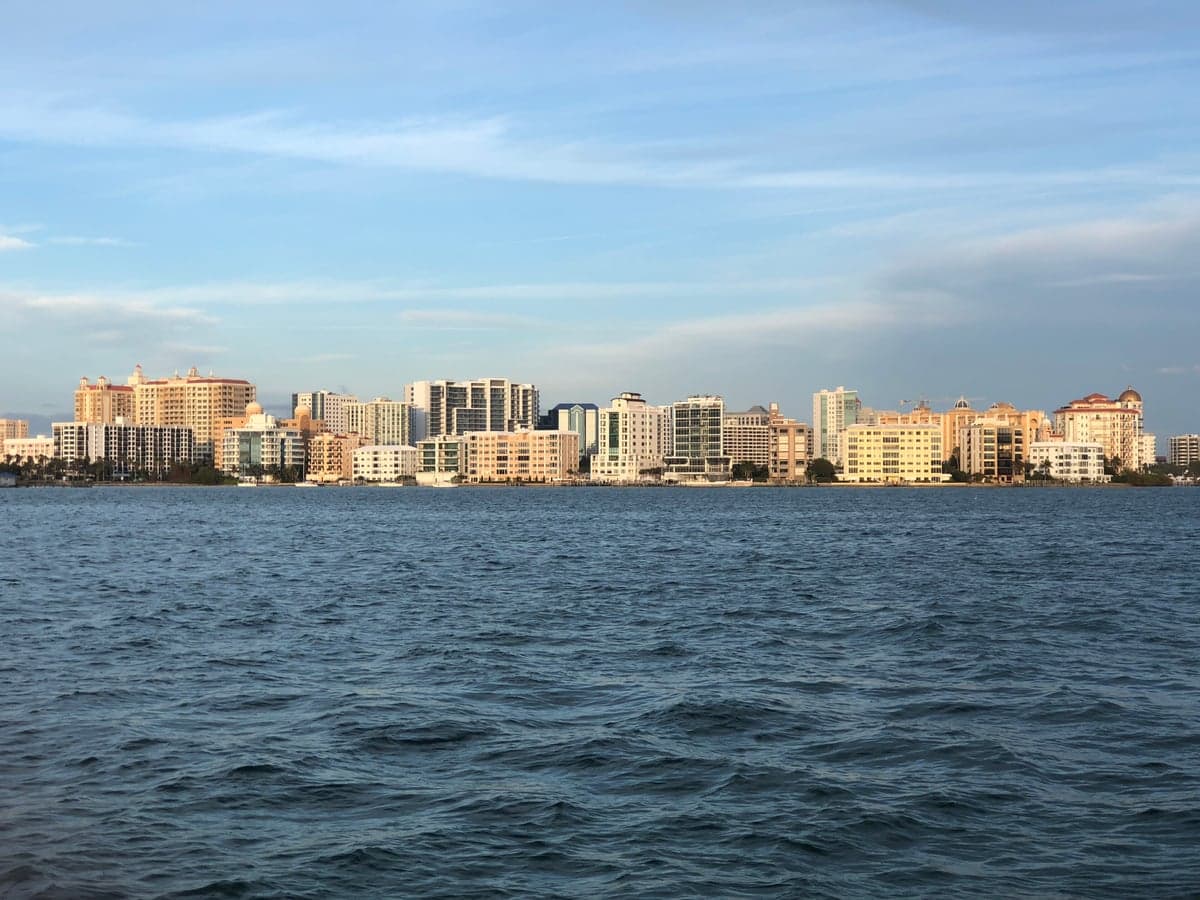
Photo: Wikipedia
Personal Sovereignty in Sarasota, FL
Viable for self-reliance. Generally workable, though some barriers may limit total independence.
What does Personal Sovereignty tell us?
Personal Sovereignty measures your capacity for self-reliance and independence with minimal government friction. Higher scores mean fewer barriers between you and the way you want to live... but it assumes you have the space you need and good neighbors.
What does this tell us?
Personal Sovereignty measures your capacity for self-reliance and independence with minimal government friction. Higher scores mean fewer barriers between you and the way you want to live... but it assumes you have the space you need and good neighbors.
State Policy
Energy independence: Importer (10% of energy produced in-state)
Personal Liberty
Homesteading

Personal Liberty Analysis
Sarasota, Florida, offers a notably high degree of personal sovereignty compared to most of the Northeast and West Coast, but it is not a libertarian free-for-all. The city sits within a state that has aggressively pushed back against federal overreach on pandemic mandates, parental rights, and Second Amendment protections, yet local governance in Sarasota County retains a moderate, sometimes interventionist streak, particularly in land use and environmental regulations. For the survivalist or prepper-minded individual, the key question is whether the state’s strong preemption laws and constitutional framework outweigh the county’s more restrictive zoning and development codes. The answer is a qualified yes—Florida’s legal architecture provides a robust shield for personal autonomy, but you must navigate local ordinances with care.
Tax burden and regulatory posture: How Florida’s lack of income tax and preemption laws protect your wallet and choices
Florida’s absence of a state personal income tax is the single most powerful tool for preserving personal sovereignty here. Sarasota residents keep 100% of their earned income, which directly funds your own preparedness stockpiles, land purchases, and off-grid investments rather than state coffers. The state’s regulatory posture is aggressively preemptive: local governments cannot enact their own minimum wage, paid leave mandates, or rent control ordinances, which prevents Sarasota County from layering on the kind of burdens seen in cities like Portland or Seattle. Property taxes in Sarasota County average around 0.83% of assessed value (roughly $2,500 annually on a $300,000 home), which is moderate for Florida and well below the national average. However, be aware that Sarasota’s local government has a history of using impact fees and stormwater utility taxes to fund growth, and the county’s comprehensive plan heavily restricts what you can do with your land—especially in coastal high-hazard zones. For the prepper, the regulatory posture is a mixed bag: the state keeps the tax man at bay, but the county will still demand permits for sheds, fences, and rainwater collection systems in many residential zones.
Self-defense and gun law specifics: Stand Your Ground, permitless carry, and what Sarasota’s local enforcement actually looks like
Florida is a gold standard for Second Amendment sovereignty. Since July 2023, the state has allowed permitless carry (constitutional carry) for any law-abiding adult 21 or older, meaning you can carry a concealed or openly holstered firearm without a government-issued license. Sarasota County Sheriff’s Office has publicly stated it will not enforce any federal gun laws that conflict with state statutes, a stance that aligns with the state’s 2011 Firearm Preemption Law, which prohibits local governments from regulating gun ownership or carry. Stand Your Ground laws are fully in effect—you have no duty to retreat in any place you have a legal right to be, and the Castle Doctrine extends to your vehicle and workplace. For the survivalist, this means your home, truck, and bug-out vehicle are legally defensible spaces. One practical nuance: Sarasota has a higher-than-average number of "gun-free zones" by private property choice (many shopping centers and medical campuses post signs), but these carry no force of law unless you refuse to leave when asked. The local sheriff’s office is generally pro-2A, and NRA membership is common in the rural eastern parts of the county. If you’re coming from a state with magazine capacity limits or "may issue" carry, Sarasota is a dramatic upgrade in personal defense sovereignty.
Self-reliance and homesteading viability: Lot sizes, zoning, and off-grid feasibility in Sarasota County
This is where Sarasota’s sovereignty picture gets complicated. The county is heavily developed, and true off-grid homesteading is difficult within city limits or suburban subdivisions. Minimum lot sizes in the unincorporated eastern part of the county (Myakka City, east of I-75) start at 1 acre for agricultural zoning, but most residential parcels are 0.25 to 0.5 acres. Zoning codes explicitly prohibit "primitive" living—no outhouses, no permanent tents, and no structures without permits. Rainwater collection is legal but must comply with Florida Building Code, and solar panels are allowed but subject to HOA restrictions in many communities. For the serious prepper, the best bet is to buy land in the rural eastern corridor (near the Myakka River State Park area), where you can find 5- to 20-acre parcels zoned for agriculture. These allow livestock, gardens, and even small-scale farming without the intense oversight of the coastal zones. However, Sarasota County does enforce strict well and septic regulations—you cannot simply dig a well or install a composting toilet without permits and inspections. Off-grid feasibility is real but requires navigating the county’s environmental health department. The trade-off: you get no state income tax and strong property rights, but you must play by local land-use rules that favor suburban order over frontier-style independence.
Personal liberties: Parental rights, medical autonomy, speech, and property protections
Florida has become a national leader in parental rights, with the Parental Bill of Rights (2021) and the Parental Rights in Education Act (2022) giving parents explicit legal authority over their children’s medical decisions, education, and upbringing. In Sarasota, this means you can opt your child out of any curriculum you find objectionable, and the school board has been conservative-leaning, generally deferring to parents over administrators. Medical autonomy is strong: Florida law prohibits vaccine passports and mandates, and the state has banned COVID-19 vaccine requirements for employment and school attendance. For the prepper, this means you can refuse any medical intervention without losing your job or your child’s place in school. Free speech protections are robust—Florida has anti-SLAPP laws and prohibits local governments from restricting speech based on viewpoint. Property rights are protected by the state’s "Bert Harris Act," which allows landowners to sue local governments for regulatory takings if a new ordinance reduces property value by more than 50%. This is a powerful tool against overzealous zoning changes. The one area where Sarasota falls short is in the realm of "home rule"—the county has used its police powers to ban short-term rentals in residential zones and restrict noise and outdoor burning, which can chafe the homesteader who wants to run a generator or burn brush without a permit.
Overall, Sarasota offers a level of personal sovereignty that is rare in the United States, particularly for those coming from high-tax, high-regulation states. The combination of no income tax, constitutional carry, strong parental rights, and robust property protections creates a legal environment where a prepared individual can live largely free from government intrusion. The trade-offs are real—local zoning is restrictive, and the county’s environmental regulations can feel meddlesome to the off-grid purist. But compared to the Pacific Northwest, the Northeast corridor, or California, Sarasota is a sanctuary for the survivalist mindset. If you can afford the land in the eastern rural corridor and are willing to work within the permit system for wells and structures, you will find a community that values self-reliance and respects your right to be left alone. The state’s legal framework is your shield; the county’s bureaucracy is your manageable adversary. For the strategic relocator prioritizing sovereignty, Sarasota ranks in the top tier of Florida destinations, behind only the Panhandle’s truly rural counties but ahead of the heavily regulated Southeast coast.

* Values derived from national, state, county, city and local statistics and may differ in a specific area. Last updated: 2026-05-14T01:43:34.000Z
Narrative content on this page is AI-generated and may contain mistakes. Verify any details that matter before acting on them.
ReloMaps may earn a commission from affiliate links at no extra cost to you.

