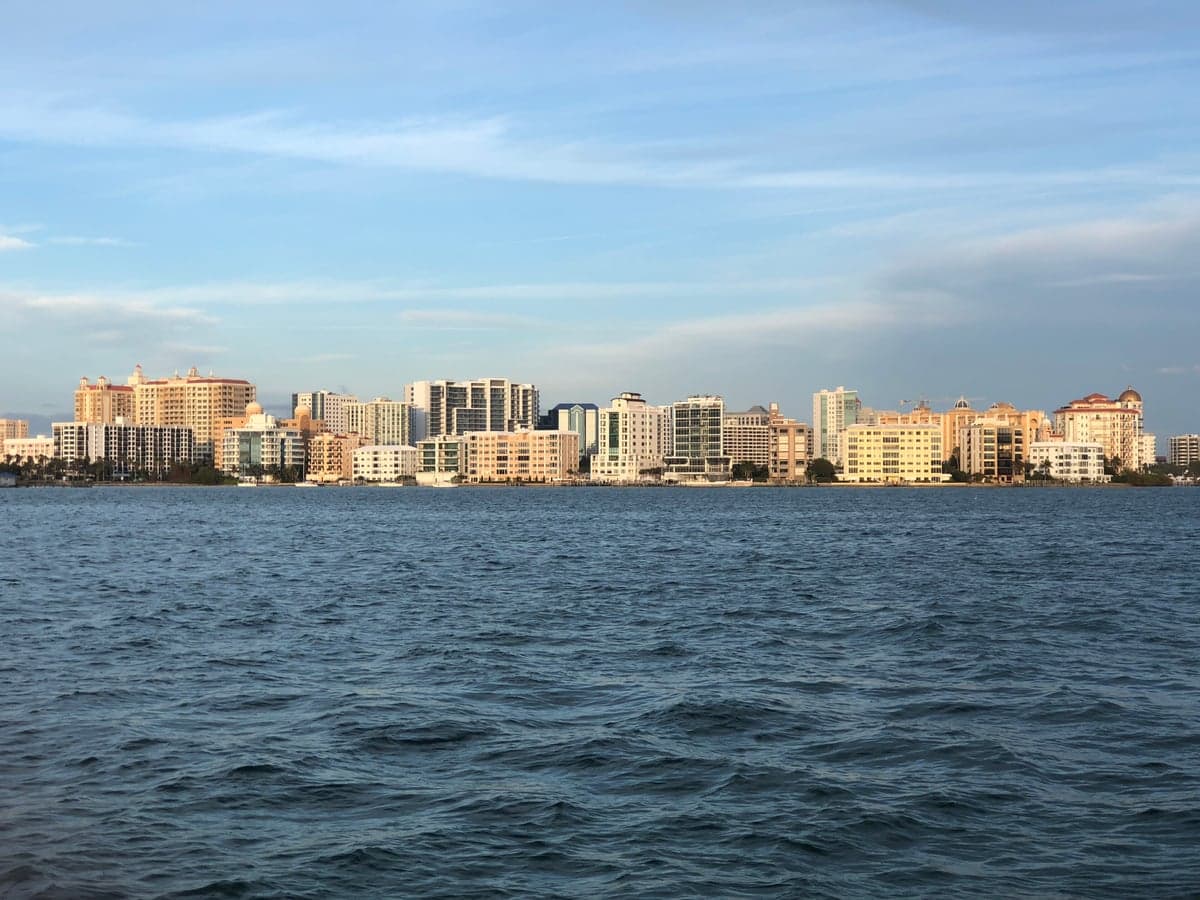
Photo: Wikipedia
Quality of Life in Sarasota, FL
A high quality of life with strong walkability, manageable living costs, healthy neighborhood signals, and solid amenity access.
What does Quality of Life tell us?
Quality of Life blends cost of living, nearby amenities, socioeconomic signals, and neighborhood character. City-level scores represent the whole municipality; individual neighborhoods can differ.
What does this tell us?
Quality of Life blends cost of living, nearby amenities, socioeconomic signals, and neighborhood character. City-level scores represent the whole municipality; individual neighborhoods can differ.
Cost of Living
36% above national average
The Real Cost of Living in Sarasota, FL for 2026
| Tier | Individual | Family (4) |
|---|---|---|
| Survival | $24k | $45k |
| Comfortable | $80k | $117k |
| Luxury | $127k+ | $196k+ |
| Elite (Top 5%) | $255k+ | $395k+ |
60%
The Area Signal
A metric tracking the socioeconomic signals of the area.
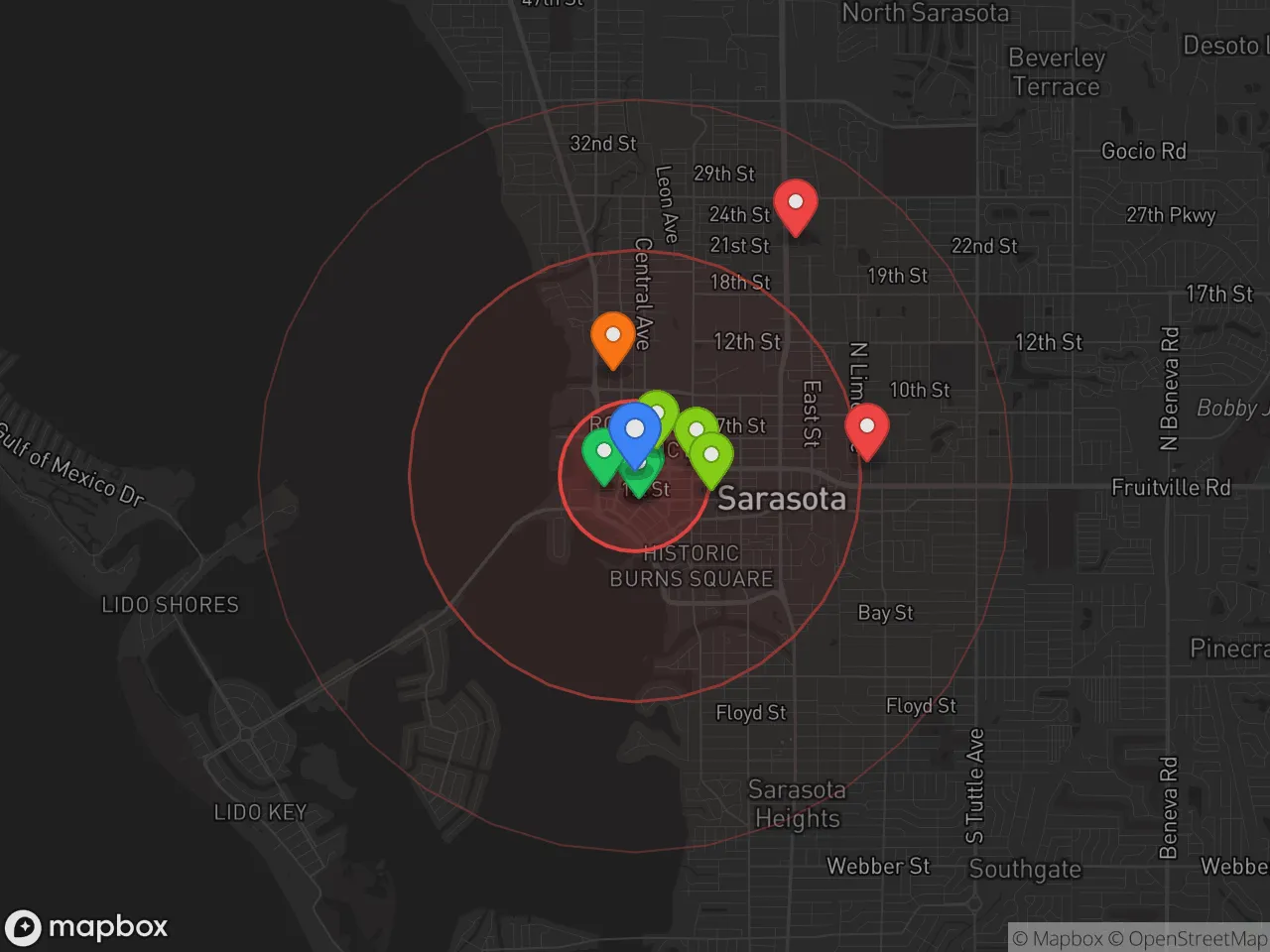
Hobbies
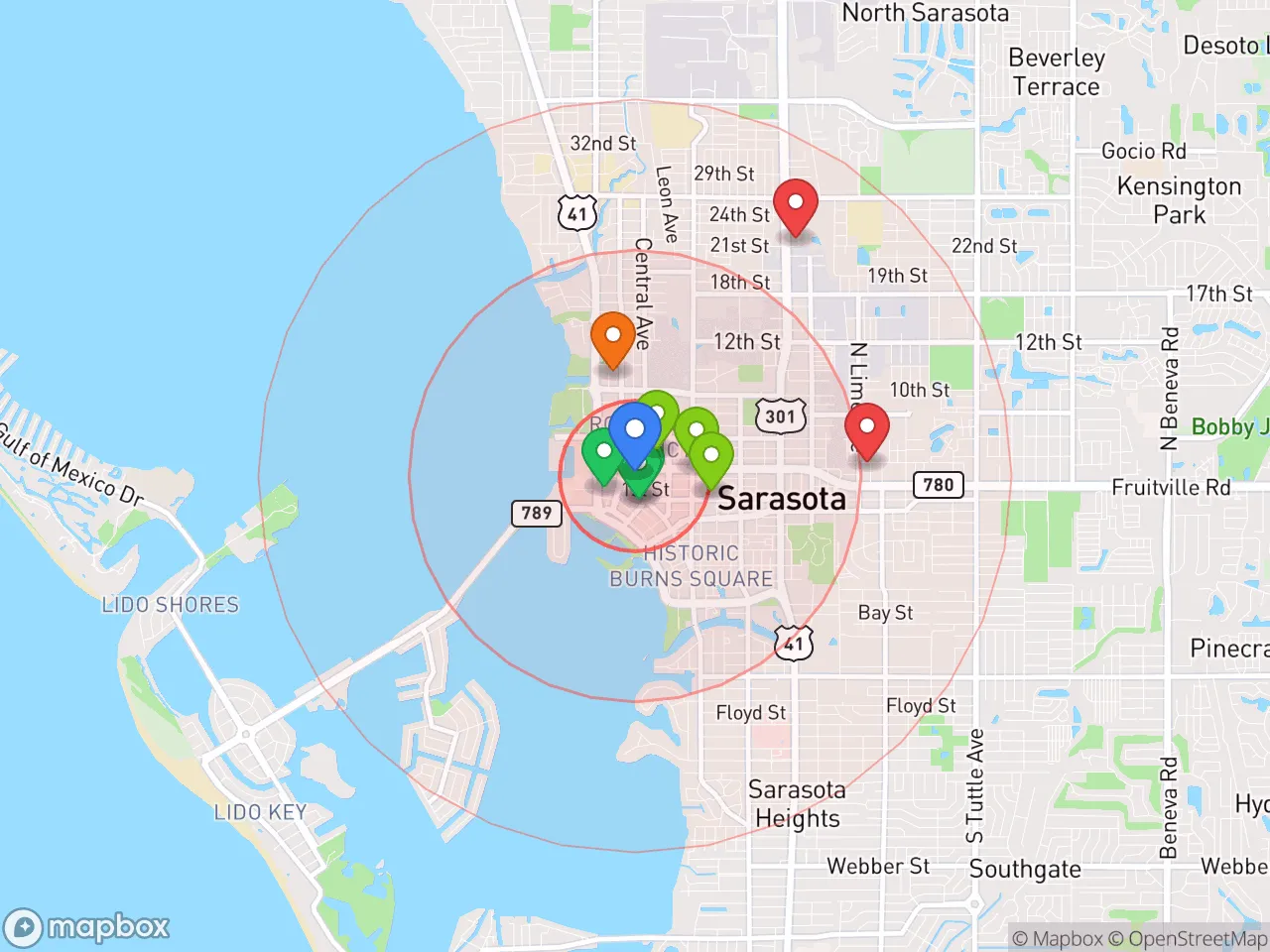
Explore the areaGroceries
4 within 10 miles
Gas
20 within 10 miles
Hospital
16 within 20 miles
Airport
TPA — Tampa International
Post Office
USPS — Sarasota, FL
Critical Amenities
Quality-of-Life Analysis
Sarasota, Florida, is a city defined by its affluence, cultural richness, and coastal lifestyle, attracting a demographic mix of wealthy retirees, remote professionals, and families seeking a high quality of life. With a cost of living index of 136—well above the national average of 100—Sarasota commands a premium for its Gulf Coast setting, but the trade-off is access to world-class beaches, a thriving arts scene, and a slower, sun-drenched pace of life that many find irresistible.
Cost of living, housing, and affordability compared to nearby areas
Sarasota’s housing market is the primary driver of its elevated cost of living. The median home value sits at $409,700, significantly higher than the national median of roughly $350,000, while the median rent of $1,514 per month is also above the U.S. average. Compared to nearby cities like Bradenton (median home value ~$370,000) or Venice (~$420,000), Sarasota is moderately more expensive but still far cheaper than Naples ($600,000+) or the Miami metro. The average commute time of just 21.3 minutes is notably short for a city of its size, reflecting a compact urban core and limited sprawl relative to Tampa or Orlando. For renters, the market is tight—vacancy rates hover around 5%—and many newcomers find that buying a home requires a household income well above the local median of $62,000. Property taxes in Sarasota County are moderate, averaging about 0.9% of assessed value, which is lower than in many Northeast or Midwest states but higher than in parts of rural Florida.
What daily life is like for families, retirees, and professionals
Daily life in Sarasota revolves around outdoor recreation, cultural engagement, and a strong sense of community. The city’s public schools are consistently rated among the best in Florida, with Sarasota County Schools earning an A grade from the state and schools like Pine View School (a gifted magnet) ranking nationally. For retirees, the area offers dozens of golf courses, the Ringling Museum of Art, and the Sarasota Opera, while families frequent the Mote Marine Laboratory & Aquarium and the 60-acre Marie Selby Botanical Gardens. The rhythm is unhurried—many residents start their day with a walk on Siesta Key Beach (voted #1 beach in the U.S. multiple times) and end it with dinner at a waterfront restaurant on St. Armands Circle. The city’s walkable downtown, centered on Main Street and the Bayfront, hosts a weekly farmers market and year-round festivals. However, summers are hot and humid, with afternoon thunderstorms a near-daily occurrence from June through September, and hurricane season (June–November) requires preparedness. Traffic on U.S. 41 and I-75 can be heavy during snowbird season (January–March), but the short commute times mean most errands remain manageable.
Who thrives in Sarasota? The city is ideal for affluent retirees seeking cultural amenities and beach access, remote workers with six-figure incomes who can afford the housing premium, and families who prioritize top-rated schools and a safe, low-crime environment. It is less suited for young professionals on entry-level salaries or those seeking a fast-paced urban nightlife, as the job market is heavily tilted toward healthcare, tourism, and real estate. For those who value natural beauty, a strong arts community, and a relaxed coastal lifestyle—and have the financial means to sustain it—Sarasota offers a quality of life that few U.S. cities can match.

Crime in Sarasota, FL
Crime rates similar to the national median for U.S. locations.
Violent CrimeViolent Crime Analysis
Property CrimeProperty Crime Analysis
Crime Analysis
Sarasota, Florida, presents a mixed safety profile that requires careful examination. While the city's violent crime rate of 166.8 incidents per 100,000 residents is notably lower than both the Florida state average and national figures, its property crime rate of 735.6 per 100,000 sits above the national median, indicating a higher risk for theft and burglary. Prospective residents should weigh these statistics against the broader context of the region's criminal justice policies, which can influence long-term safety trends.
Crime in context
To understand Sarasota's safety, it's essential to compare its numbers to larger benchmarks. The city's violent crime rate is roughly 55% lower than the national average, placing it in a safer tier for serious offenses like homicide, assault, and robbery. However, the property crime rate is approximately 15% higher than the national average, driven largely by larceny-theft and vehicle break-ins. This pattern is common in affluent, tourist-heavy areas where opportunistic crime is more prevalent. A key concern for residents is the influence of progressive judicial policies in Sarasota County. The area's district attorney and judges have, in recent years, adopted more lenient approaches to non-violent property crimes and drug offenses, including diversion programs and reduced sentencing. While intended to reduce incarceration, these policies can result in repeat offenders cycling through the system quickly, undermining deterrence and increasing the likelihood of property crime recidivism. This directly impacts public safety by keeping more criminals on the street, a factor that should give potential movers pause.
What residents experience
Daily life in Sarasota for most residents involves a low risk of violent confrontation, but a constant vigilance against property theft. Car break-ins, package thefts from porches, and bicycle thefts are the most commonly reported issues, particularly in downtown areas and near popular beaches like Siesta Key. Residents often report that police response times for property crimes can be slow, as resources are stretched. The perception of safety is also shaped by visible homelessness and panhandling in certain commercial corridors, which, while not directly violent, can create unease. The progressive justice philosophy in Sarasota means that even when property criminals are arrested, they frequently face minimal consequences—often a citation or a short jail stay—before being released. This cycle frustrates victims and erodes trust in the system, as it prioritizes offender rehabilitation over public protection and victim restitution.
Neighborhood-level variation is significant in Sarasota. Areas like Laurel Park and the Rosemary District near downtown experience higher rates of property crime and occasional violent incidents, while gated communities and suburbs like Lakewood Ranch or Palmer Ranch report far lower crime rates. The barrier islands, including Siesta Key and Lido Key, see seasonal spikes in theft from vehicles and vacation rentals. For those considering a move, focusing on neighborhoods with active homeowners' associations, private security patrols, and a strong police presence is advisable. Ultimately, while Sarasota's violent crime numbers are reassuring, the combination of above-average property crime and a lenient judicial environment means residents must take proactive steps—like installing security systems and avoiding leaving valuables in cars—to protect their property and peace of mind.
* Values derived from national, state, county, city and local statistics and may differ in a specific area. Last updated: 2026-05-14T01:43:34.000Z
Narrative content on this page is AI-generated and may contain mistakes. Verify any details that matter before acting on them.
ReloMaps may earn a commission from affiliate links at no extra cost to you.

