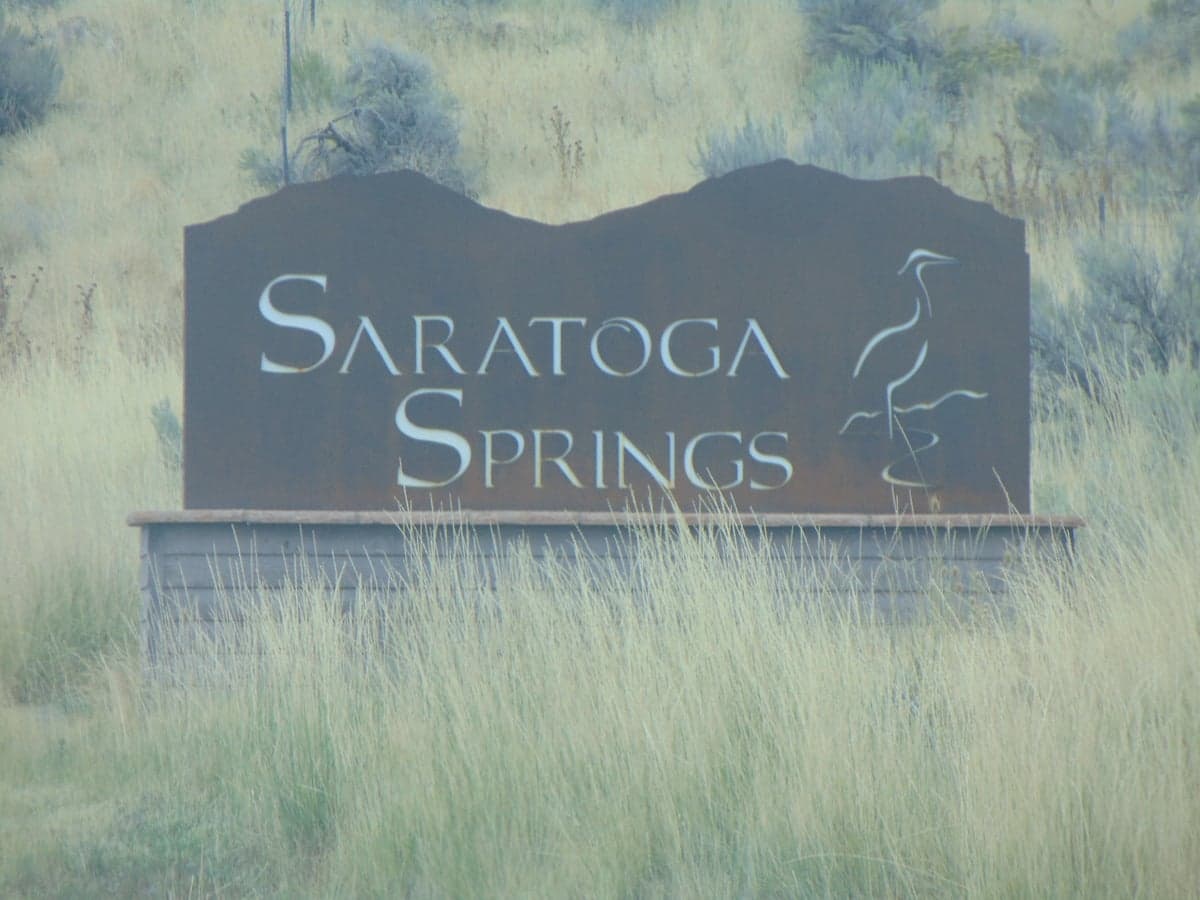
Photo: Wikipedia
Strategic Assessment of Saratoga Springs, UT
Workable tactical position. Some exposure to population density or targets, but generally defensible in a crisis.
What does the Strategic Assessment tell us?
Our Strategic Assessment grades tactical survivability of an area. Major population centers, military targets, fallout zones, natural disasters, and border exposure all drive risk — lower exposure means a more defensible position in a crisis.
This is heavily inspired by Joel Skousen's Strategic Relocation book. Highly recommended you checkout the book ($)What does this tell us?
Our Strategic Assessment grades tactical survivability of an area. Major population centers, military targets, fallout zones, natural disasters, and border exposure all drive risk — lower exposure means a more defensible position in a crisis.
This is heavily inspired by Joel Skousen's Strategic Relocation book. Highly recommended you checkout the book ($)Strategic Pillars

Key Distances
Regional Safe Places
Below is our recommended "safe zones" in Utah and the surrounding area based on our strategic heuristics. For most people, it's unrealistic to live in a “safe zone” full-time due to work, family or other personal reasons. They tend to be more rural. However, many of these areas are perfect for second homes and retreat properties that double as a vacation home or even a short-term rental.


Important Note: For informational purposes only. This does not mean nothing bad ever happens in the green zones. Please use common sense. This is based on public data and modeled with AI. We tried to take a conservative approach but mistakes happen. We update this regularly as new information becomes available.
Solar Generator Recommendations
Backup power matters more here than in safer locations. We've picked three solar generators across budgets and capacity tiers — start with the budget unit if you only need a few essentials, or step up if you want to run a fridge and HVAC for days at a time.

Jackery Portable Power Station Explorer 300
Budget OptionPower on the Go: Weighing only 11 lbs, it's convenient to set up and store with book-sized foldable solar panels

BLUETTI Portable Power Station AC180
Designed for both indoor and outdoor scenarios, AC180 is highly capable as it has a robost capacity and continuous output power.

EF ECOFLOW DELTA Pro Ultra Power Station
Upgraded PickEcoFlow DELTA Pro Ultra is a whole-home energy system designed to grow with your family. Integrated with the Smart Home Panel 2, it scales to meet your evolving energy needs — keeping your home powered, intelligent, and secure through every stage of life.
We earn a commission, at no additional cost to you.
Strategic Assessment Analysis
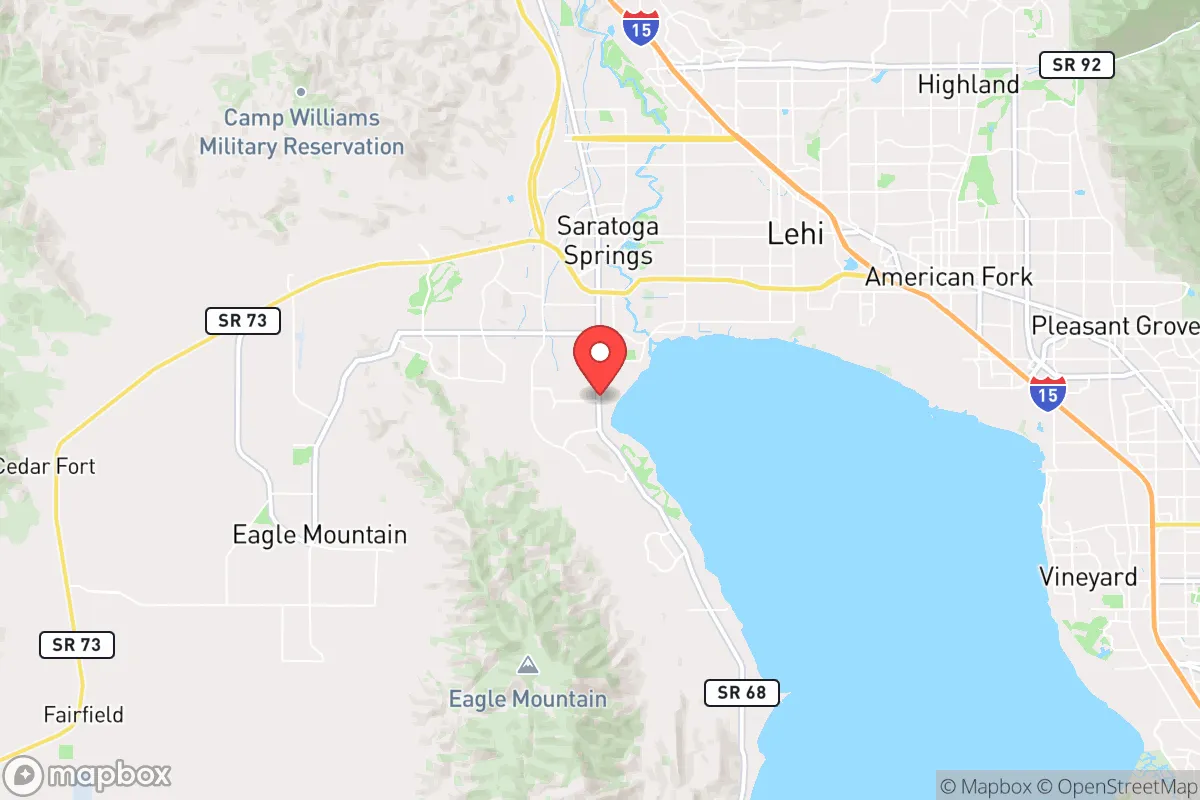
Saratoga Springs, Utah, occupies a strategic niche that balances proximity to the economic engine of the Wasatch Front with a degree of geographic insulation that appeals to those thinking about long-term resilience. Situated on the western shore of Utah Lake, roughly 40 miles south of Salt Lake City and 30 miles north of Provo, this growing city of about 40,000 residents sits at the base of the Lake Mountains. For a relocator with a prepper or survivalist mindset, the key advantage here is that Saratoga Springs is not a major population center itself, but it's close enough to the resources and infrastructure of the I-15 corridor to be practical for daily life. The area's rapid growth—nearly tripling in population since 2010—signals both opportunity and a potential strain on local systems, which is a factor worth weighing carefully.
Geographic position and natural advantages for long-term security
The city's location offers several natural buffers that enhance its strategic value. To the west, the Lake Mountains and the vast Utah Test and Training Range create a sparsely populated barrier that limits direct approach from that direction. To the east, Utah Lake itself provides a natural moat, though it's shallow and not a defensible water source in a crisis. The surrounding terrain is a mix of high desert and mountain foothills, with the Wasatch Range visible to the east. This geography means Saratoga Springs is not a natural chokepoint or target for large-scale military or civil disruption, unlike the I-15 corridor cities directly to the north and south. The area's elevation—around 4,500 feet—provides a moderate climate with four distinct seasons, reducing the risk of extreme weather events that plague coastal or plains regions. Water access is a critical consideration: the city draws from deep aquifers and has rights to Utah Lake water, but the lake itself is notoriously shallow and prone to algae blooms, making it a poor emergency source without treatment. The nearby Jordan River and Provo River systems offer additional but limited surface water options. For a relocator, the natural advantages here are real but not overwhelming—this is not a self-sufficient mountain redoubt, but it's far better positioned than a suburb of Los Angeles or Chicago.
Risks, exposures, and proximity to fallout-relevant landmarks
The most significant strategic vulnerability for Saratoga Springs is its proximity to high-value targets along the Wasatch Front. Hill Air Force Base, located about 50 miles north near Ogden, is a major military installation that houses F-35s and is a clear target in any conflict involving strategic bombing. The Tooele Army Depot, roughly 40 miles west, stores chemical weapons and conventional munitions—a potential secondary hazard zone. Salt Lake City International Airport, a major transportation hub, is about 35 miles north. In a worst-case scenario involving nuclear exchange or large-scale terrorist attack, Saratoga Springs would be within the fallout plume radius of strikes on these targets, depending on wind patterns. The city's position west of the Wasatch Front's population spine means prevailing winds from the west could carry fallout from Hill AFB or Tooele directly over the area. Additionally, the I-15 corridor, just 10 miles east, is a natural evacuation route that could become a choke point during civil unrest or mass evacuation events. The city's own growth means it's becoming more integrated into the greater Salt Lake City metro area, which increases its exposure to supply chain disruptions and social contagion from urban unrest. For a relocator prioritizing isolation from these risks, Saratoga Springs is a compromise—not remote enough to avoid fallout dangers, but far enough to offer a buffer that many closer-in suburbs lack.
Practical resilience for a relocator: food, water, energy, and defensibility
When assessing day-to-day resilience, Saratoga Springs presents a mixed picture. Water security is the most pressing concern: the city relies on groundwater wells and has limited storage capacity. In a prolonged drought or infrastructure failure, residents would need to have their own storage and filtration systems. The shallow Utah Lake is not a reliable backup without significant treatment. Food production potential is moderate: the surrounding agricultural land in Utah County is some of the most productive in the state, but it's increasingly being developed for housing. Community gardens and backyard farming are feasible, but the high desert climate limits growing seasons and requires irrigation. Local farmers' markets and co-ops exist but are not robust enough to replace supply chains in a crisis. Energy infrastructure is relatively stable: Rocky Mountain Power serves the area with a grid that's less prone to outages than coastal or mountain regions, but it's still vulnerable to EMP or cyberattacks. Solar potential is excellent—the area averages over 200 sunny days per year—making off-grid solar a viable investment. Defensibility is a mixed bag: the city's layout is typical suburban sprawl, with cul-de-sacs and winding streets that can be easily blocked, but also with multiple entry points from the main roads (Redwood Road, SR-68, and I-15 access). The Lake Mountains to the west provide a natural barrier, but the east side is open to the valley. For a family or individual, the best approach is to choose a home on the western edge of the city, closer to the mountains, where fewer through roads exist. Community cohesion is a wild card: Saratoga Springs has a strong LDS (Mormon) cultural presence, which can foster tight-knit neighborhood networks and mutual aid—a significant advantage in a crisis. However, outsiders may find it harder to integrate quickly. The city's rapid growth means many residents are newcomers, diluting the traditional community bonds but also creating opportunities for like-minded preppers to connect.
The overall strategic picture for Saratoga Springs is one of calculated trade-offs. It offers a genuine buffer from the worst of urban chaos while remaining practical for employment and supply access. The risks from nearby military and infrastructure targets are real but not disqualifying for someone who is prepared—adequate fallout shelters, water storage, and a go-bag for secondary evacuation can mitigate much of the danger. The area's natural resources are sufficient for a medium-term survival scenario but not for indefinite self-sufficiency. For a conservative-leaning relocator who values community, religious freedom, and a slower pace of life, Saratoga Springs is a solid choice—provided you go in with eyes open about its vulnerabilities. It's not a bug-out location in the wilderness, but it's a defensible suburban position that can serve as a base for building resilience. The key is to treat it as a starting point, not a final destination: invest in local networks, harden your property, and maintain the ability to relocate further west or south if the situation deteriorates. In a world where the Wasatch Front is a likely target, Saratoga Springs is a reasonable hedge—not a fortress, but a place where preparation can make the difference between surviving and thriving.

* Values derived from national, state, county, city and local statistics and may differ in a specific area. Last updated: 2026-04-21T10:30:41.000Z
Narrative content on this page is AI-generated and may contain mistakes. Verify any details that matter before acting on them.
ReloMaps may earn a commission from affiliate links at no extra cost to you.

