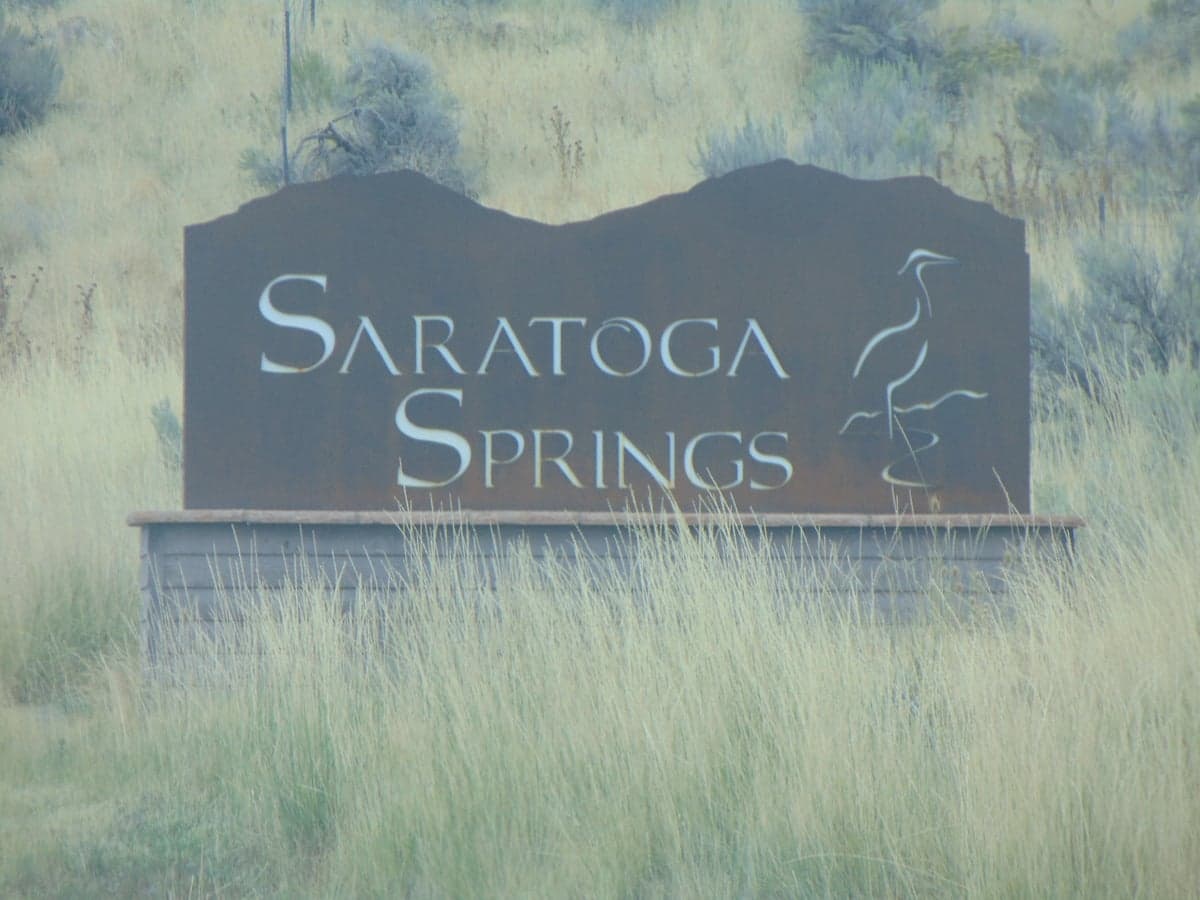
Photo: Wikipedia
Demographics of Saratoga Springs, UT
Affluence Level in Saratoga Springs, UT
An upper-middle-class area. Household wealth, education levels, and homeownership run ahead of national benchmarks.
People of Saratoga Springs, UT
The people of Saratoga Springs, Utah, today form a rapidly growing, predominantly white and family-oriented community of roughly 44,070 residents, characterized by a high rate of college education (52.0%) and a notably low foreign-born share (3.3%). The city is overwhelmingly Mormon (LDS), with a strong culture of large families, civic volunteerism, and conservative values, reflected in its low crime rates and high homeownership. While the population is 82.7% white, a significant Hispanic minority (11.7%) and a small but present East/Southeast Asian community (1.3%) add modest diversity, though the city remains far less diverse than the national average. Saratoga Springs is best understood as a planned, master-planned suburb that has exploded from a few hundred residents in the 1990s to a mid-sized city, driven almost entirely by domestic in-migration from other parts of Utah and the Intermountain West.
How the city was settled and grew
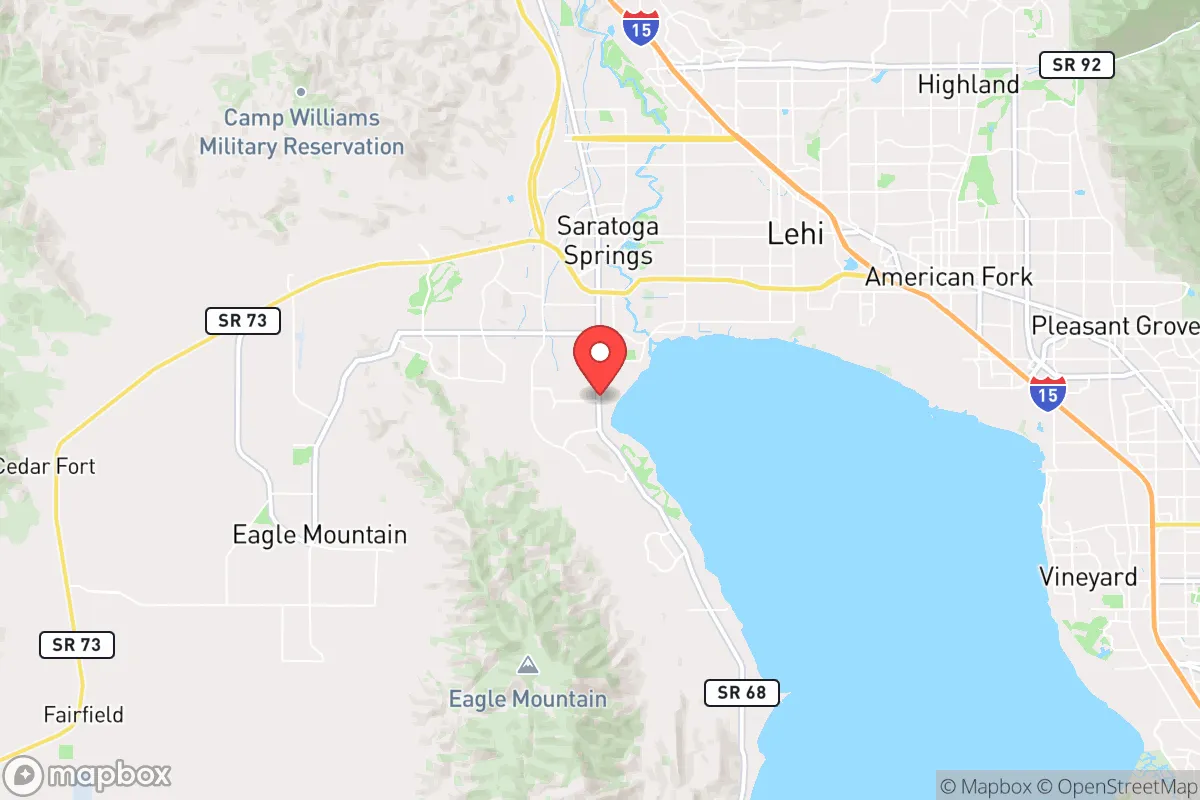
Saratoga Springs was not a pioneer-era settlement. The area was originally used for grazing and dry farming by LDS pioneers who settled nearby Lehi and American Fork in the 1850s, but no permanent town existed here until the late 20th century. The land remained largely rural, with a handful of farmsteads, until the 1970s when developers began eyeing Utah Lake’s eastern shore for suburban expansion. The first modern subdivision, Saratoga Shores, was platted in the 1970s as a seasonal and retirement community, drawing a small population of mostly white, middle-class families from Salt Lake and Utah counties who wanted lakefront lots. The city was officially incorporated in 1997 with fewer than 1,000 residents, and its early growth was almost entirely driven by young LDS families seeking affordable single-family homes on large lots, away from the denser development of Lehi and American Fork. The historic core of the city is the area around Redwood Road and the Saratoga Shores neighborhood, where the original lakefront homes and the city’s first small commercial strip remain.
Modern era (post-1965)
The post-1965 Hart-Cellar Act had minimal direct impact on Saratoga Springs, as the city’s growth has been overwhelmingly domestic. The real population surge began after 2000, driven by the expansion of Utah County’s tech economy (the “Silicon Slopes” boom in Lehi) and the construction of the Mountain View Corridor highway. Two major master-planned communities absorbed the bulk of this growth. The Ranches, a massive development of single-family homes on half-acre lots, began filling in the 2000s and 2010s, attracting upper-middle-class white families, many of whom worked at Adobe, Vivint, or other tech firms in Lehi. Harvest Hills, a newer development on the city’s east side, has drawn a slightly more diverse mix, including some Hispanic and East/Southeast Asian families, though the numbers remain small. The Hispanic population (11.7%) is concentrated in older, more affordable rental duplexes and townhomes near the Saratoga Springs Town Center area, often working in construction, landscaping, and service jobs that support the larger white homeowner population. The East/Southeast Asian community (1.3%) is scattered but slightly more visible in the newer subdivisions near Pony Express Parkway, where tech workers have settled. The Indian-subcontinent population (0.1%) is negligible, and the Black population (0.1%) is virtually nonexistent, reflecting the city’s status as one of the least racially diverse suburbs in the Salt Lake metro area.
The future
The population of Saratoga Springs is projected to continue growing rapidly, potentially reaching 60,000–70,000 by 2040, as build-out of the remaining master-planned communities proceeds. The city is homogenizing rather than tribalizing: new arrivals are overwhelmingly white LDS families from other parts of Utah County, drawn by the same factors (large lots, low crime, good schools) that attracted the first wave. The Hispanic share is likely to plateau or grow slowly, as affordable housing becomes scarcer and the city’s zoning favors large, expensive single-family homes. The East/Southeast Asian community may grow modestly as tech employment expands, but Saratoga Springs lacks the ethnic infrastructure (temples, grocery stores, community organizations) that would attract a larger diaspora. The city will likely remain a culturally and politically conservative, predominantly white, family-centric suburb for the foreseeable future, with diversity limited to a small Hispanic service class and a thin layer of Asian tech professionals.
For someone moving in now, Saratoga Springs offers a predictable, safe, and homogeneous environment where the dominant culture is LDS, family-oriented, and politically conservative. The city is becoming denser and more suburban, but it is not becoming more diverse in any meaningful sense. New residents should expect a community where nearly everyone shares similar values, religious background, and lifestyle, and where the small minority populations are largely assimilated into the broader white LDS culture. This is a place for those seeking stability and community cohesion, not for those looking for ethnic or cultural variety.

* Values derived from national, state, county, city and local statistics and may differ in a specific area. Last updated: 2026-04-21T10:30:41.000Z
Narrative content on this page is AI-generated and may contain mistakes. Verify any details that matter before acting on them.
ReloMaps may earn a commission from affiliate links at no extra cost to you.

