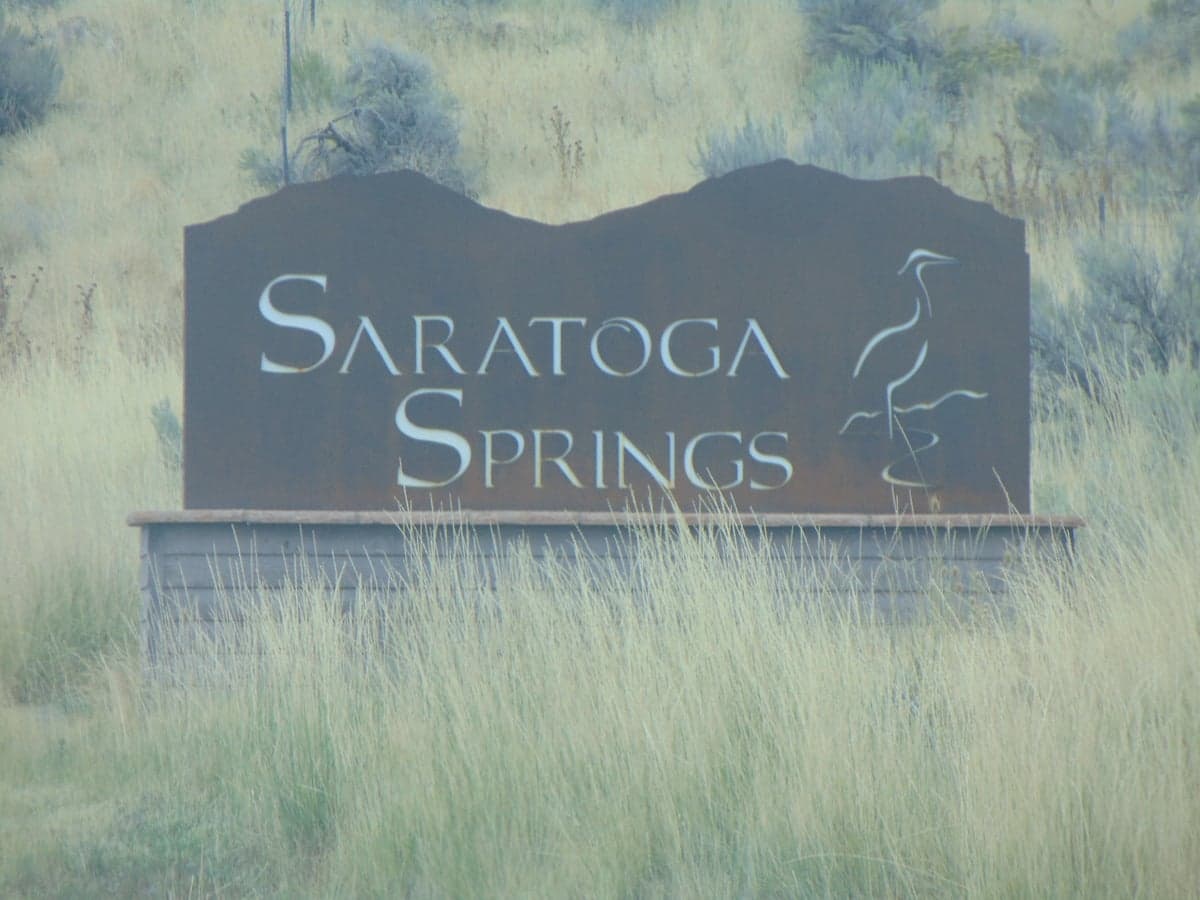
Photo: Wikipedia
Political ClimatePolitical Climate in Saratoga Springs, UT
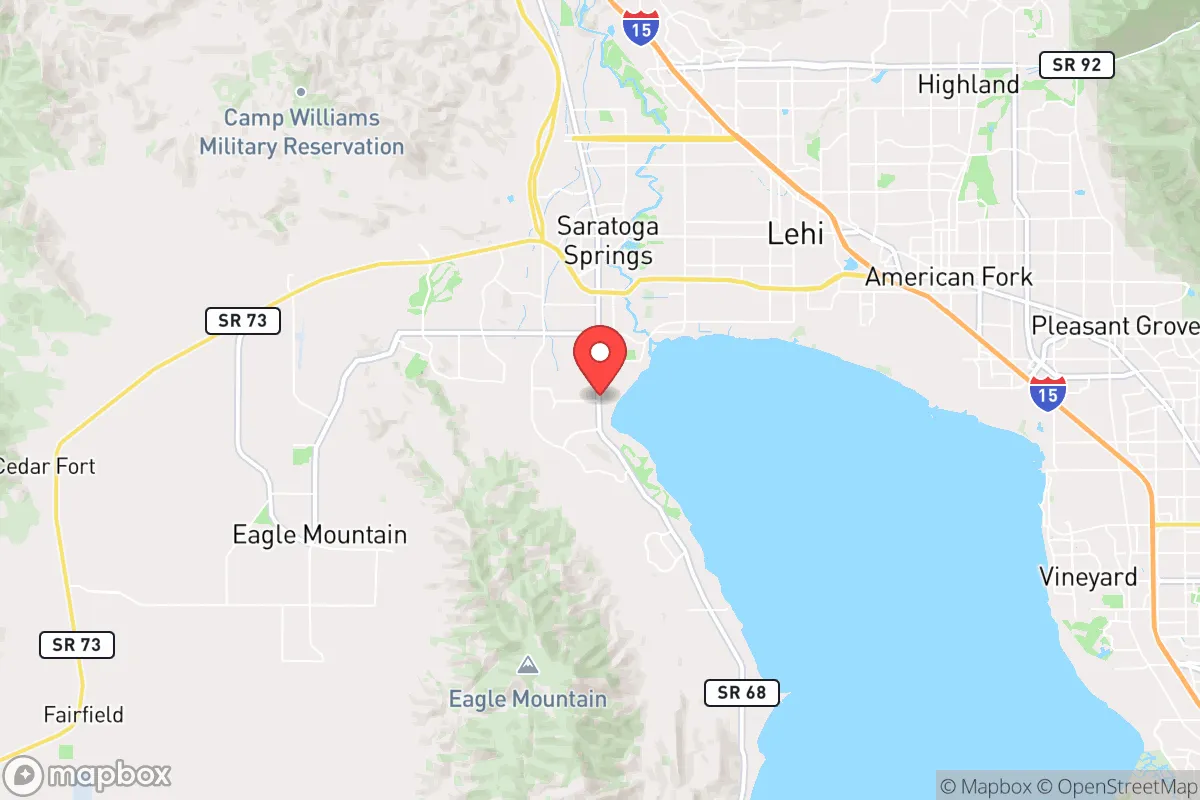
District shown is the primary district for this city’s centroid. Cities may span multiple districts.
Local Political AnalysisPolitical Analysis of Saratoga Springs, UT
Saratoga Springs is about as solidly conservative as it gets in Utah County, with a Cook PVI of R+14 that tells you exactly where the political winds blow. This isn't just a red area—it's deep crimson, and it's been that way for as long as I can remember. The city's growth has been fueled by families who moved here specifically to escape the more progressive lean of places like Salt Lake City or even Provo's downtown core. You won't find much hand-wringing over "diversity of thought" here; most folks are happy with a government that stays out of their business and lets them live their lives without constant interference.
How it compares
Drive ten miles east to Lehi, and you'll start seeing more tech transplants and a younger, slightly more moderate crowd—still conservative, but with a few more "Live Laugh Love" signs in the windows. Head south to Eagle Mountain, and it's a similar story: solidly red, but with a growing libertarian streak that sometimes clashes with the local HOA crowd. The real contrast is north to Salt Lake County, where you hit places like Draper or Sandy that have drifted noticeably left over the past decade. Saratoga Springs has largely resisted that shift. The city council and school board elections here are still dominated by candidates who talk about limited government, property rights, and parental control over education—not the woke agenda you see creeping into other Utah districts. That's a big reason why families keep moving here: they want a place where the government isn't trying to micromanage their kids' curriculum or their backyard projects.
What this means for residents
For the average resident, the political climate translates into a few concrete realities. First, taxes stay low—the city has consistently voted against property tax increases, even when the state dangles incentives for "smart growth." Second, gun rights are respected; you won't find any local ordinances trying to restrict concealed carry or magazine capacity. Third, and this is a big one, school choice is alive and well. The local school board has pushed back hard against state-level efforts to centralize curriculum or impose DEI mandates, and parents here are vocal about keeping that control local. The downside? If you're hoping for a vibrant nightlife or a progressive arts scene, you'll be disappointed. But most people here moved to Saratoga Springs for the space, the views, and the peace of mind that comes from living in a community that shares their values.
One thing that sets Saratoga Springs apart from even its conservative neighbors is the strong libertarian undercurrent. You see it in the way people talk about property rights—there's a real resistance to HOA overreach, even though many neighborhoods have them. The city has also been a battleground over water rights and development, with residents pushing back against what they see as state-level overreach into local planning. If there's a shift to watch, it's the slow creep of "smart growth" policies from the state legislature that could impose density requirements or transit-oriented development. That's the kind of government overreach that gets people here fired up. For now, though, Saratoga Springs remains a place where the political culture is defined by a simple principle: leave us alone, and we'll leave you alone. It's a refreshing stance in a state that's increasingly torn between its conservative roots and the progressive pressures of a growing population.

State Political ClimatePolitical Climate in Utah
State Political AnalysisPolitical Environment in the State
Utah is a deeply red state, with Republicans holding every statewide office and supermajorities in both legislative chambers, but the political landscape is far more complex than a simple partisan label suggests. The state has voted Republican in every presidential election since 1968, with Donald Trump winning by 21 points in 2024, yet the dominant political force remains the Church of Jesus Christ of Latter-day Saints (LDS), which shapes a unique brand of conservatism that prioritizes family, community, and limited government. Over the last 10-20 years, the biggest shift has been the rapid growth of the Wasatch Front—from Salt Lake City to Provo—which has brought in a wave of out-of-state transplants and younger voters, creating a subtle but real tension between the state’s traditional, church-aligned conservatism and a more libertarian, tech-driven, and occasionally moderate Republicanism.
Urban vs. rural divide
The political map of Utah is a textbook example of the urban-rural split, but with a twist. The Wasatch Front—Salt Lake City, Provo, Ogden, and their suburbs—holds roughly 80% of the state’s population and is where the real political action happens. Salt Lake City itself is the only reliably blue area, voting for Biden by 30 points in 2020 and for Harris by a similar margin in 2024, driven by a mix of university students, young professionals, and a growing Hispanic population. But the surrounding suburbs tell a different story: Draper, Sandy, and Lehi are deeply red, though they’ve become more libertarian-leaning in recent years, with voters who support lower taxes and gun rights but are skeptical of Trump-style populism. Provo and Orem are the heart of the LDS conservative base, where social conservatism on abortion and marriage is still the norm. Head east to Moab or Price, and you’ll find a mix of rural conservatism and resource-extraction politics, while the southwestern corner—St. George—has become a magnet for conservative retirees and is one of the fastest-growing red areas in the country. The rural counties like San Juan and Garfield are overwhelmingly Republican, but they’re losing population and political clout to the booming Wasatch Front.
Policy environment
Utah’s policy environment is a mixed bag for a conservative audience. On the plus side, the state has a flat income tax rate of 4.65% (down from 4.95% in 2022), no estate tax, and a sales tax that’s moderate at around 6.1% state rate, though local options can push it higher. Property taxes are low by national standards, with a median effective rate of 0.57%. The regulatory posture is business-friendly, with right-to-work laws and a strong tort reform environment. Education policy is a flashpoint: the state has a robust school choice program, including a new universal school voucher law (HB 215, passed in 2023) that gives families up to $8,000 per child for private or homeschool expenses. However, the state’s public schools are underfunded relative to its wealth, and teacher shortages are a real concern. Healthcare is a mixed bag—Utah expanded Medicaid under the Affordable Care Act in 2019, which some conservatives see as government overreach, but the state also has a strong network of private options and a growing direct-primary-care movement. Election laws are solid: voter ID is required, same-day registration is not allowed, and mail-in voting is universal but with signature verification. The state has no sanctuary city policies, and immigration enforcement is cooperative with federal authorities.
Trajectory & freedom
Utah is becoming more free in several key areas, but there are warning signs. On the positive side, the state passed a constitutional carry law in 2021 (HB 60), allowing permitless carry of firearms for anyone 21 or older, and it has strong preemption laws that prevent local governments from enacting their own gun restrictions. Parental rights were strengthened in 2023 with HB 261, which requires schools to notify parents of any curriculum changes related to sexuality or gender identity and prohibits instruction on these topics in K-3. Medical autonomy is a mixed bag: the state banned abortion after 18 weeks in 2023 (HB 467) and has a trigger law that would ban it entirely if Roe v. Wade were overturned—which it was, so the law is now in effect, with exceptions for rape, incest, and life of the mother. Property rights are generally strong, but the state’s rapid growth has led to zoning battles, especially in Salt Lake County, where cities like Cottonwood Heights are pushing for higher-density housing that some residents see as an infringement on neighborhood character. The biggest red flag for freedom-minded conservatives is the state’s heavy-handed approach to alcohol regulation—Utah still has state-run liquor stores, strict DUI laws, and limits on alcohol content in grocery stores, which feels like a nanny-state relic.
Civil unrest & political movements
Utah is not a hotbed of civil unrest, but there have been notable flashpoints. The most visible was the 2020 protests in Salt Lake City, where Black Lives Matter demonstrations turned violent on a few occasions, leading to property damage and clashes with police. The state’s response was firm—Governor Spencer Cox called in the National Guard and imposed a curfew—but the protests exposed a growing progressive activist base in the capital. On the right, the “Sovereign Utah” movement has gained some traction in rural areas, with calls for nullification of federal land management policies, especially around the Bears Ears and Grand Staircase-Escalante national monuments. The state has also seen a rise in “Parents’ Rights” activism, particularly in Davis County and Utah County, where school board meetings have become battlegrounds over critical race theory and LGBTQ curriculum. Immigration politics are relatively calm, but there was a controversy in 2023 when a bill (HB 348) was proposed to allow local law enforcement to enforce federal immigration law—it passed, but only after significant debate. Election integrity is not a major issue here; the state’s mail-in voting system is widely trusted, and there were no significant fraud claims in 2020 or 2024.
Projection
Over the next 5-10 years, Utah will likely remain red, but the nature of that red is shifting. The biggest driver is in-migration: the state is growing at about 1.5% per year, mostly from California, Colorado, and other blue states. These newcomers are often conservative-leaning but more libertarian than traditional LDS Republicans—they want low taxes and gun rights but are less interested in social issues like abortion or alcohol regulation. This is already visible in Lehi and Draper, where the “Silicon Slopes” tech boom has created a class of young, wealthy, and politically moderate voters. Meanwhile, the LDS church’s influence is slowly waning as the state becomes more diverse—the share of Utahns who are LDS has dropped from 70% in 2000 to about 55% today. This could lead to a more competitive Republican primary environment, with a split between the traditional social conservatives and the tech-libertarian wing. The Democratic Party is unlikely to win statewide office anytime soon, but they could become more competitive in Salt Lake County and maybe even flip a congressional seat if the trends continue. The biggest risk for conservatives is that the state’s growth could lead to higher housing costs and more government intervention in zoning, which would erode the very freedom that brought people here in the first place.
For a new resident, the bottom line is this: Utah is still one of the best states in the country for a conservative family—low taxes, strong gun rights, school choice, and a culture that values community and self-reliance. But it’s not a static paradise. The Wasatch Front is getting more crowded, more expensive, and more politically diverse, and the state’s unique LDS-influenced conservatism is slowly giving way to a more generic, tech-driven libertarianism. If you’re moving here, expect to find a place that’s still deeply red, but with a growing undercurrent of tension between the old guard and the newcomers. The key is to get involved early—join a local school board, attend a city council meeting, and make your voice heard before the progressive wave that’s lapping at Salt Lake City reaches your suburb.
* Values derived from national, state, county, city and local statistics and may differ in a specific area. Last updated: 2026-04-21T10:30:41.000Z
Narrative content on this page is AI-generated and may contain mistakes. Verify any details that matter before acting on them.
ReloMaps may earn a commission from affiliate links at no extra cost to you.

