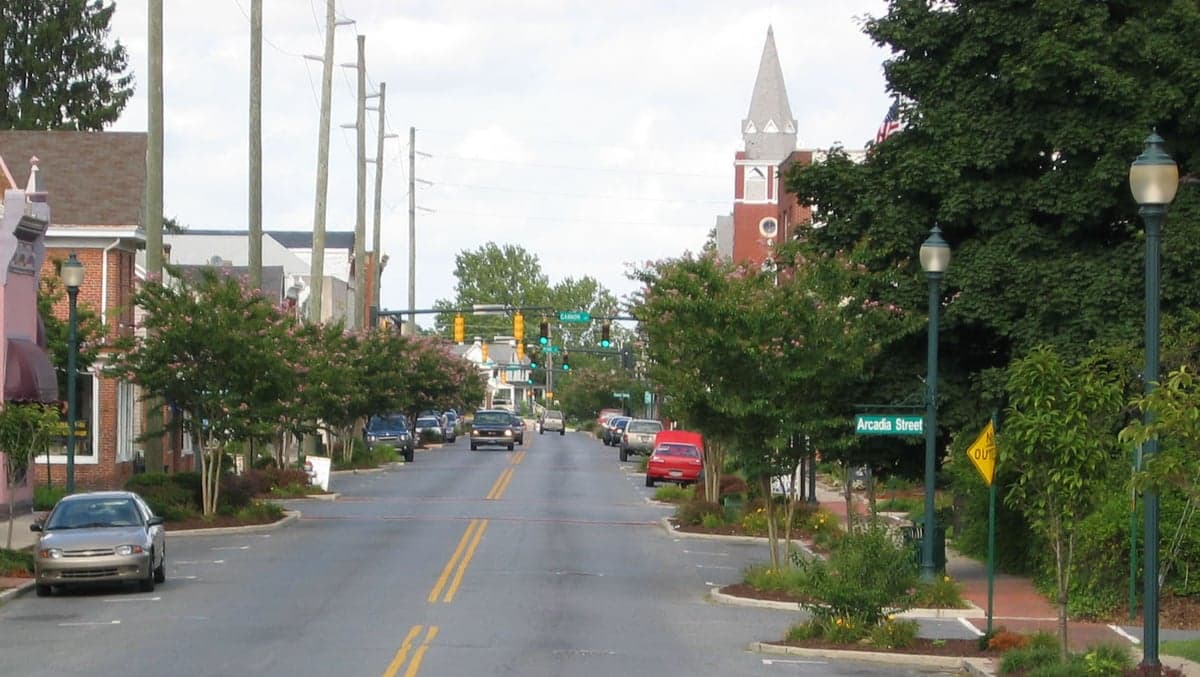
Photo: Wikipedia
Political ClimatePolitical Climate in Seaford, DE
District shown is the primary district for this city’s centroid. Cities may span multiple districts.
Inherited from parent state — no local data available.
Local Political AnalysisPolitical Analysis of Seaford, DE
Seaford, Delaware, has a political climate that leans reliably Democratic, with a Cook PVI of D+8, but that number doesn't tell the whole story of a community that's been quietly shifting under the surface. For a long time, this was a more conservative-leaning town, a place where folks valued self-reliance and weren't too keen on being told how to live their lives by folks in Dover or Washington. But over the last decade or so, you've seen a real change, driven by an influx of folks from up north and a growing reliance on state-level policies that feel more like a nudge toward progressive ideology than a reflection of local values.
How it compares
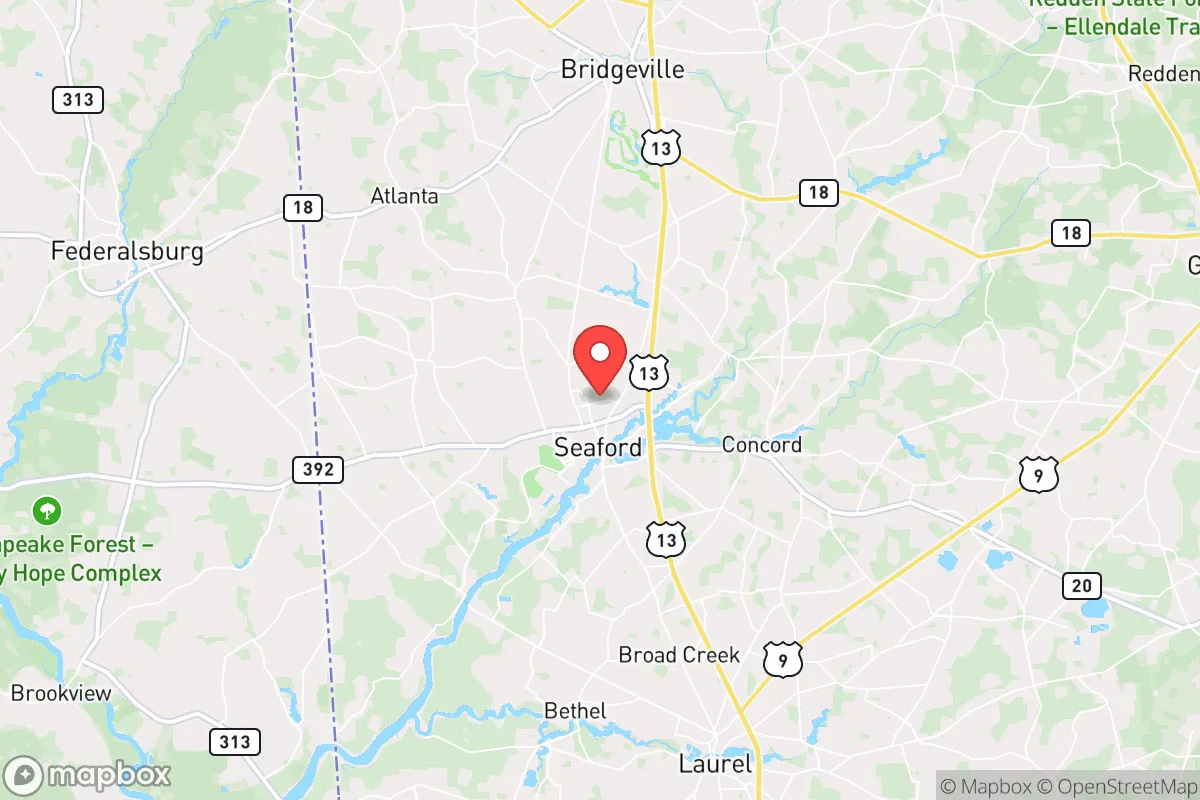
To really understand Seaford's politics, you have to look at the towns around it. Head west a few miles to Bridgeville or Laurel, and you'll find communities that vote much more conservatively, places where the Second Amendment and lower taxes are still the main talking points. Even Milford, just to the north, has a more balanced political mix. Seaford, by contrast, has become a bit of a Democratic stronghold in western Sussex County, largely due to its larger population and the influence of state employees and retirees who've moved in from more liberal areas. The contrast is stark: you can drive 15 minutes and feel like you're in a different political universe, where the local government is less likely to meddle in your personal freedoms and more focused on keeping things simple.
What this means for residents
For folks living here, the D+8 lean translates into some real concerns about government overreach. You see it in things like the push for stricter zoning laws that can make it harder to run a small business out of your home, or the steady creep of state-level mandates on everything from energy efficiency to school curriculum. A lot of us remember when Seaford was a place where you could pretty much do what you wanted on your own property without a dozen permits. Now, there's a feeling that the local government is more interested in aligning with state-level progressive priorities than in protecting the rights of individual residents. The property tax rate is still relatively low compared to northern Delaware, but the pressure to raise them for new social programs is a constant worry.
What this means on a day-to-day level is that you have to be more vigilant about what your local council and school board are doing. The shift hasn't been dramatic overnight, but it's a steady drift. You see it in the way the town handles things like public gatherings or even the push for more bike lanes and "complete streets" projects that can feel like they're more about making a political statement than actually solving a problem. For a long-time resident, it's a bit of a bummer to watch a place that used to be pretty hands-off become a little more bureaucratic and a little less free.
Culturally, Seaford still holds onto some of its old character—the Nanticoke River, the annual Seaford Riverfest, and a strong sense of community among the older families. But there's a growing divide between the newer arrivals who see the town as a bedroom community for Dover or even Wilmington, and the folks who've been here for generations and just want to be left alone. The biggest policy distinction you'll notice is the local government's willingness to accept state and federal grants that come with strings attached, which often means adopting policies that don't really fit the local culture. It's a quiet battle, but one that's shaping the future of the town in ways that a lot of us find concerning. If you're thinking of moving here, just know that the political climate is changing, and not necessarily in a direction that favors personal freedom and local control.

State Political ClimatePolitical Climate in Delaware
State Political AnalysisPolitical Environment in the State
Delaware has long been a blue state, but its political lean is more nuanced than a simple label suggests. The state has voted for the Democratic presidential candidate in every election since 2000, but the margins have tightened in recent cycles, with Joe Biden (a native son) winning by 19 points in 2020, down from Hillary Clinton’s 11-point margin in 2016. Over the past 20 years, the state has shifted leftward on social issues and government expansion, but a stubborn conservative undercurrent persists in the southern counties and rural areas, making it a place where the political climate varies dramatically depending on where you live.
Urban vs. rural divide
The political map of Delaware is a tale of three counties, with the urban corridor of New Castle County driving the state’s Democratic lean. The city of Wilmington and its close-in suburbs, including Newark and Bear, are heavily Democratic, powered by a mix of union households, government employees, and a growing professional class tied to the financial and chemical industries. In contrast, Kent County (home to Dover) is a true swing area—Dover itself leans Democratic due to state government workers and the historically Black community, but the surrounding farmland and small towns like Smyrna and Milford vote reliably Republican. Sussex County, the southernmost and fastest-growing part of the state, is the conservative stronghold. Towns like Georgetown, Seaford, and Laurel are deeply red, driven by agriculture, poultry processing, and a growing retiree population from more conservative states. The coastal resort areas like Rehoboth Beach and Lewes are more moderate-to-liberal, thanks to an influx of LGBTQ+ retirees and second-home owners from the Northeast, but they don’t flip the county. The rural-urban split is stark: New Castle County alone holds over 55% of the state’s population, meaning statewide elections are effectively decided in Wilmington and its suburbs.
Policy environment
Delaware’s policy environment is a mixed bag for a conservative. On the plus side, the state has no sales tax, which is a major draw for families and retirees. Property taxes are also among the lowest in the nation, averaging about 0.5% of assessed value. However, the state income tax is progressive, with a top marginal rate of 6.6% on income over $60,000, and the corporate income tax is a flat 8.7%. The regulatory posture is decidedly pro-government: Delaware is the corporate home to over 60% of Fortune 500 companies due to its business-friendly Chancery Court, but for individuals, the state’s regulatory footprint is heavy. Education policy is a flashpoint: the state has a strong teachers’ union and has resisted school choice expansion, though charter schools exist in Wilmington and Newark. Healthcare is dominated by the state’s Medicaid expansion under Obamacare, and the state has its own health insurance exchange. Election laws are among the most permissive in the country—no-excuse absentee voting, same-day registration, and automatic voter registration are all in place. For a conservative, the policy environment feels like a trade-off: low property taxes and no sales tax are attractive, but the income tax and regulatory creep are concerning.
Trajectory & freedom
Delaware is moving in a direction that should worry anyone concerned about personal liberty. The state has been a leader in progressive legislation over the past five years. In 2022, the legislature passed a red flag law (the "Lethal Violence Protection Order Act"), allowing courts to temporarily seize firearms from individuals deemed a risk, without a criminal conviction. The same year, the state banned the sale of "assault weapons" and high-capacity magazines, and raised the purchasing age for all firearms to 21. On parental rights, the state has moved aggressively: in 2021, it passed a law requiring all public schools to adopt "culturally responsive" curricula, and in 2023, it enacted a law prohibiting school districts from notifying parents if a child changes their gender identity or pronouns without the child’s consent. Medical autonomy took a hit with the state’s strict COVID-19 mandates, which were among the longest-lasting in the region, including a universal mask mandate in schools that persisted into 2022. On taxation, the state has not cut income tax rates in over a decade, and the corporate tax structure remains unchanged. The trajectory is clear: Delaware is becoming more regulated, more centralized, and less friendly to individual choice, particularly on guns and education.
Civil unrest & political movements
Delaware has not seen the large-scale civil unrest of bigger states, but there have been notable flashpoints. In the summer of 2020, Wilmington experienced several nights of protests and property damage following the George Floyd killing, with the city’s mayor imposing a curfew. The state’s sanctuary policies are a point of tension: while Delaware is not a formal "sanctuary state," the attorney general’s office has issued guidance limiting cooperation with federal immigration enforcement, and Wilmington has a "Welcoming City" ordinance. Election integrity has been a quiet controversy: in 2020, Delaware was one of the states that sent absentee ballot applications to all registered voters, and the state’s same-day registration system has drawn scrutiny from conservative groups. On the right, the Delaware GOP has been revitalized by grassroots activists, particularly in Sussex County, where the "Sussex County Patriots" and other groups have held regular rallies and school board protests. The parental rights movement has been especially active in Middletown and Dover, where school board meetings have become heated over curriculum and transgender policies. A new resident would notice the political divide most acutely in these local school board races, which have become proxy battles for the state’s cultural war.
Projection
Over the next 5-10 years, Delaware is likely to continue its leftward drift, but the pace may slow. The biggest demographic shift is the influx of retirees and remote workers into Sussex County, many from conservative-leaning states like Florida and Texas. This could make the southern part of the state more reliably red, but it won’t flip the state because New Castle County is growing too, driven by the expansion of the financial and pharmaceutical sectors around Wilmington and Newark. The state’s in-migration patterns show a net gain of about 5,000 people per year, mostly from neighboring states like Maryland and Pennsylvania, which are also blue. The state legislature is unlikely to flip Republican in the next decade—Democrats hold supermajorities in both chambers. Expect more progressive legislation on climate mandates, electric vehicle incentives, and further gun control. The parental rights fight will intensify, but the state’s Democratic leadership has shown no willingness to compromise. A new resident moving in now should expect that the state’s political environment will become more, not less, progressive, especially on social issues and government regulation.
Bottom line for a new resident: If you’re a conservative considering Delaware, you’ll find a welcoming community in Sussex County and parts of Kent County, but you’ll be fighting an uphill battle at the state level. The low property taxes and no sales tax are real financial benefits, but you’ll pay for them with a heavy income tax and a regulatory environment that increasingly intrudes on personal choices, from gun ownership to how you raise your kids. The state is not a lost cause for conservatives—the grassroots are active and growing—but it’s a place where you’ll need to be engaged in local politics to protect your freedoms. If you value low taxes and a slower pace of life, Delaware can work, but don’t expect the state government to be on your side.
* Values derived from national, state, county, city and local statistics and may differ in a specific area. Last updated: 2026-04-29T23:40:57.000Z
Narrative content on this page is AI-generated and may contain mistakes. Verify any details that matter before acting on them.
ReloMaps may earn a commission from affiliate links at no extra cost to you.

