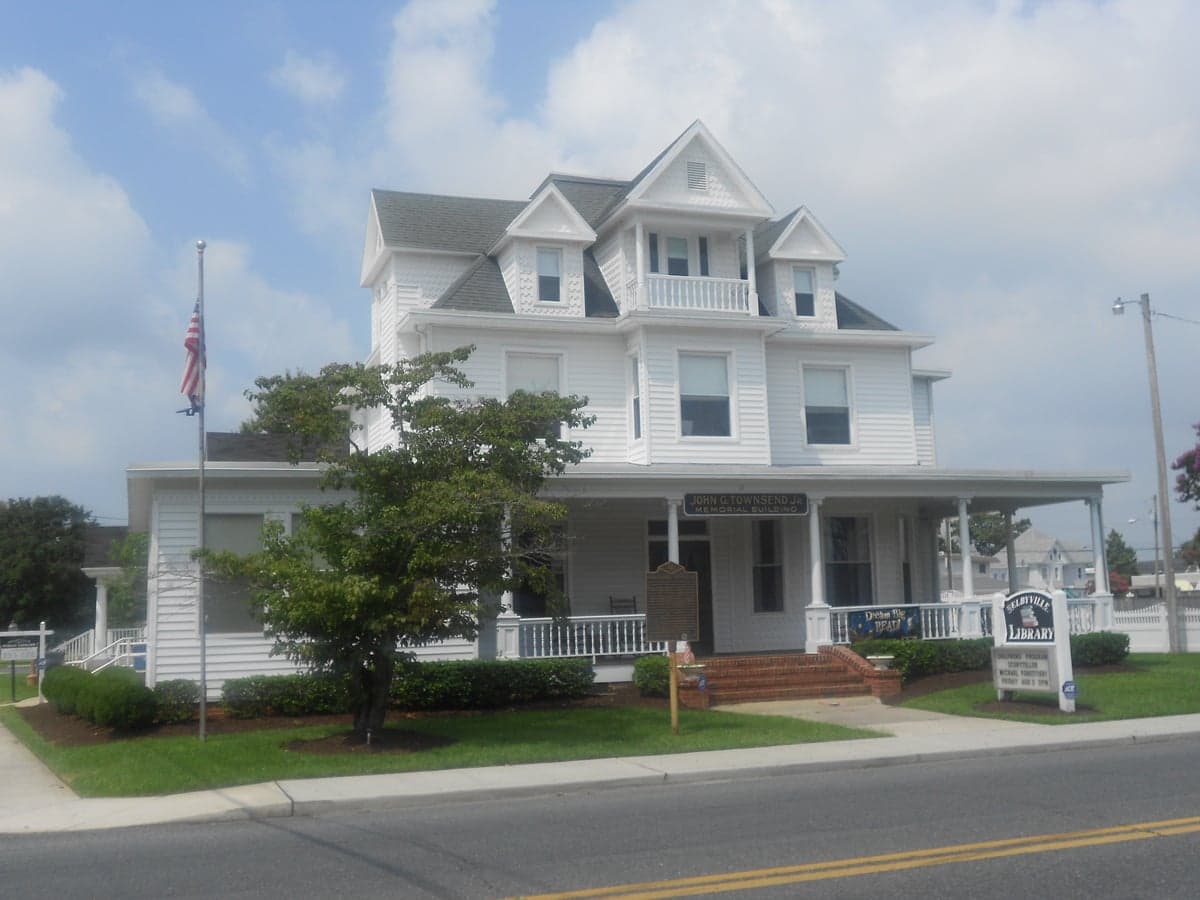
Photo: Wikipedia
Personal Sovereignty in Selbyville, DE
Viable for self-reliance. Generally workable, though some barriers may limit total independence.
What does Personal Sovereignty tell us?
Personal Sovereignty measures your capacity for self-reliance and independence with minimal government friction. Higher scores mean fewer barriers between you and the way you want to live... but it assumes you have the space you need and good neighbors.
What does this tell us?
Personal Sovereignty measures your capacity for self-reliance and independence with minimal government friction. Higher scores mean fewer barriers between you and the way you want to live... but it assumes you have the space you need and good neighbors.
State Policy
Energy independence: Importer (2% of energy produced in-state)
Personal Liberty
Homesteading

Personal Liberty Analysis
Selbyville, Delaware, offers a notably high degree of personal sovereignty compared to many areas in the Mid-Atlantic, largely due to Delaware’s light-touch state government and the town’s small, rural character. For those with a survivalist or prepper mindset, the key question is how much freedom you actually have to live by your own rules—and here, the answer is more encouraging than in most of the region. While no place is a libertarian utopia, Selbyville’s combination of low taxes, minimal business regulation, and a culture of self-reliance makes it a serious contender for anyone prioritizing autonomy over convenience.
Tax burden and regulatory posture: how much the state leaves in your pocket
Delaware’s tax structure is a major draw for those who resent government taking a large cut of their labor. The state has no sales tax, which means every dollar you earn stays in your control unless you choose to spend it. Property taxes in Sussex County, where Selbyville sits, are among the lowest in the nation—typically around 0.5% of assessed value, or roughly $1,000 annually on a $200,000 home. Income taxes are moderate but progressive, topping out at 6.6% for high earners, and there are no local income taxes in Selbyville itself. For a single individual or family, this means significantly more disposable income to invest in supplies, land, or savings. On the regulatory side, Delaware is known for being business-friendly, with a streamlined incorporation process and minimal red tape for small operations. However, the state does enforce building codes and environmental regulations, particularly near wetlands and the coast, so off-grid construction may require permits. Overall, the tax burden is light enough that you can keep the fruits of your labor, and the regulatory posture is hands-off unless you’re trying to do something that impacts protected areas.
Self-defense and gun law specifics: what you can own and where you can carry
Delaware is not a constitutional carry state, but its gun laws are still relatively permissive compared to neighboring Maryland or New Jersey. As of 2026, you need a permit to carry a concealed handgun, but the process is shall-issue—meaning if you meet the requirements (background check, training course, and fee), the state must approve it. Open carry is legal without a permit for anyone 18 or older who can legally possess a firearm. There is no state-level assault weapons ban and no magazine capacity limit, so you can own standard AR-15s and high-capacity magazines. The state does have a red flag law (Extreme Risk Protection Order), which allows law enforcement or family members to petition a court to temporarily seize firearms if someone is deemed a danger. This is a point of concern for those wary of government overreach, as it relies on subjective judgment. However, in practice, Selbyville’s rural nature means fewer aggressive enforcement actions than in urban areas like Wilmington. For self-defense at home, no permit is needed to own a firearm, and castle doctrine applies—you have no duty to retreat if someone unlawfully enters your residence. For preppers, the key takeaway is that you can stockpile and train without excessive state interference, but you should be aware of the red flag law’s potential for abuse.
Self-reliance and homesteading viability: lot sizes, zoning, and off-grid feasibility
Selbyville’s zoning and land availability make it a strong candidate for those seeking self-sufficiency. The town itself is small, but the surrounding unincorporated areas of Sussex County offer residential lots ranging from half an acre to several acres at reasonable prices—often under $10,000 per acre for raw land. Zoning in the county is generally permissive for agricultural and residential uses, meaning you can keep chickens, goats, or even a small garden without much hassle. However, if you’re looking to go fully off-grid, there are hurdles. Delaware requires connection to the electrical grid for new construction in most subdivisions, though rural parcels may allow solar with battery backup as a primary source if you work with the county planning office. Rainwater collection is legal for non-potable uses, but well and septic permits are required and can be costly—expect $5,000–$10,000 for a drilled well and $3,000–$8,000 for a septic system. Burning trash is restricted, and open burning of yard waste requires a permit. For a serious prepper, the best strategy is to buy a few acres outside town limits, install solar panels, drill a well, and keep a low profile. The county’s enforcement is minimal for established properties, so you can build a resilient homestead without constant government oversight.
Personal liberties: parental rights, medical autonomy, speech, and property
Delaware’s record on personal liberties is mixed but leans positive for conservative-minded individuals. Parental rights are strong in the state—there is no universal vaccine mandate for schoolchildren, and parents can opt out of sex education or specific health curricula with a written request. Homeschooling is legal with minimal regulation: you must file a notice of intent annually and provide a basic curriculum outline, but there are no standardized testing requirements or home visits. Medical autonomy is more complicated. Delaware has a vaccine mandate for healthcare workers and some state employees, but for private citizens, there is no forced medical treatment outside of emergency situations. The state does not have a right-to-try law for terminally ill patients, but it does allow medical marijuana for qualifying conditions. On speech, Delaware has no specific laws restricting political expression, and Selbyville’s small-town atmosphere means you can voice your views without fear of social or legal retaliation. Property rights are well-protected; eminent domain is rarely used for private development, and there are no rent control laws. The main concern is the state’s environmental regulations, which can restrict what you do on your land near wetlands or waterways. For a prepper, the bottom line is that you can raise your children as you see fit, make your own medical choices, and speak your mind—but you should buy land away from protected areas to avoid bureaucratic entanglements.
Overall, Selbyville offers a level of personal sovereignty that is rare in the Northeast and Mid-Atlantic. The combination of low taxes, permissive gun laws, affordable land for homesteading, and strong parental rights creates an environment where a determined individual or family can live largely on their own terms. Compared to nearby states like Maryland or New Jersey, where taxes are higher, gun laws are stricter, and regulations are more intrusive, Selbyville feels like a pocket of freedom. It is not a complete escape from government—the red flag law, building permits, and environmental rules are real constraints—but for someone serious about self-reliance and wary of state overreach, this small Delaware town is a solid strategic choice. If you’re looking to build a resilient life with minimal interference, Selbyville deserves a close look.

* Values derived from national, state, county, city and local statistics and may differ in a specific area. Last updated: 2026-04-23T03:52:20.000Z
Narrative content on this page is AI-generated and may contain mistakes. Verify any details that matter before acting on them.
ReloMaps may earn a commission from affiliate links at no extra cost to you.

