Photo: Wikipedia
Personal Sovereignty in Shelby, MT
Viable for self-reliance. Generally workable, though some barriers may limit total independence.
What does Personal Sovereignty tell us?
Personal Sovereignty measures your capacity for self-reliance and independence with minimal government friction. Higher scores mean fewer barriers between you and the way you want to live... but it assumes you have the space you need and good neighbors.
What does this tell us?
Personal Sovereignty measures your capacity for self-reliance and independence with minimal government friction. Higher scores mean fewer barriers between you and the way you want to live... but it assumes you have the space you need and good neighbors.
State Policy
Energy independence: Net exporter (120% of energy produced in-state)
Personal Liberty
Homesteading

Personal Liberty Analysis
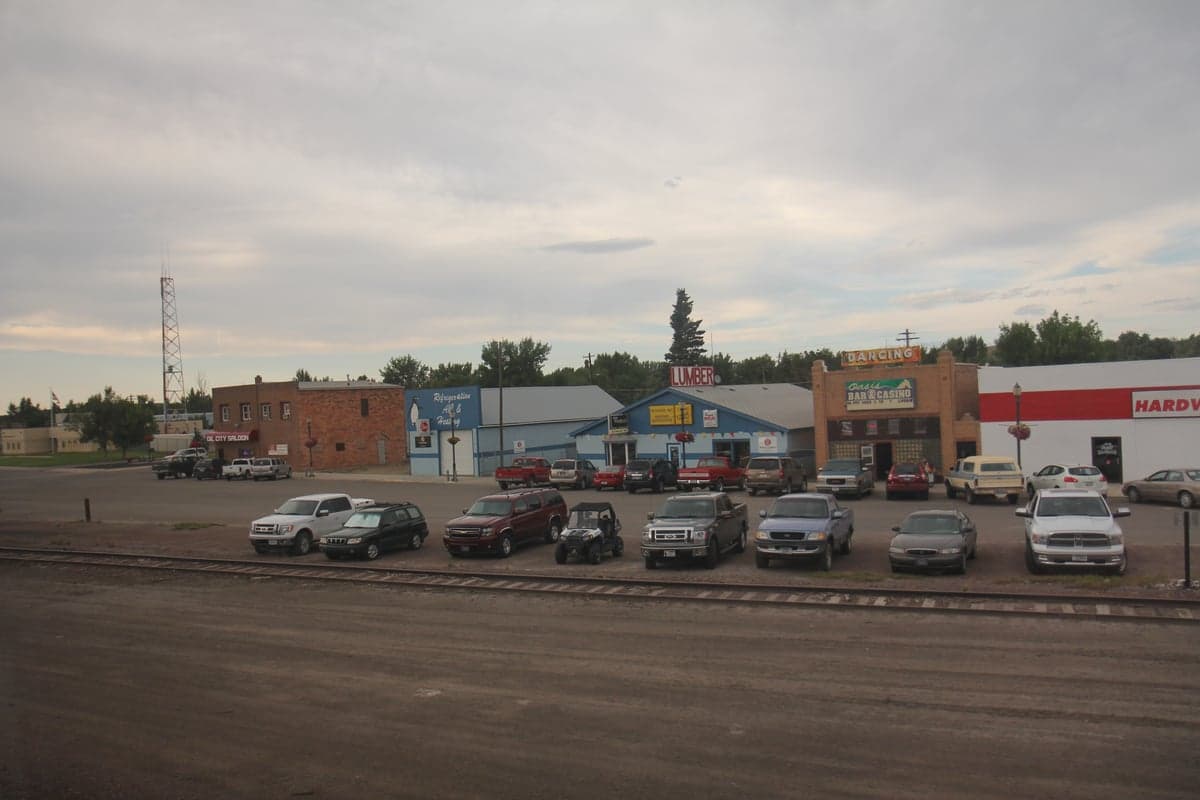
Shelby, Montana, offers a level of personal sovereignty that is increasingly rare in the modern United States, functioning as a practical outpost for those who prioritize individual autonomy over state control. Located in Toole County, this small agricultural and railroad town sits in a state that has long resisted federal overreach, maintaining a legal and cultural environment where self-reliance is not just encouraged but expected. For the strategic relocator—whether a single individual or a parent—Shelby represents a place where the government’s footprint is light, the regulatory climate is permissive, and the community’s ethos leans heavily toward live-and-let-live independence. This analysis examines the specific pillars of personal sovereignty here, from tax burdens to self-defense laws, to help you gauge whether this remote corner of the Hi-Line aligns with your survivalist or prepper priorities.
Tax burden and regulatory posture: How Montana’s fiscal climate supports autonomy
Montana’s tax structure is a clear win for anyone seeking to minimize government extraction from their earnings. The state imposes no sales tax, meaning every dollar you earn stays in your pocket or can be spent without an additional layer of state-level taxation. Property taxes in Toole County are among the lowest in the state, with effective rates often hovering around 0.6% to 0.8% of assessed value—far below the national average. For a family or individual, this means owning land and a home is not a perpetual lease from the government. Income tax is a flat 6.75%, which is moderate but still lower than many coastal states, and there are no local income taxes layered on top. The regulatory posture in Shelby is equally lean. Zoning is minimal, building permits are straightforward, and the county commission generally defers to property owners. There is no state-level equivalent of California’s CEQA or Oregon’s land-use planning bureaucracy. For the prepper, this translates into fewer hurdles when constructing a workshop, installing a backup generator, or modifying your property for self-sufficiency. The state’s general resistance to federal mandates—evident in its frequent legal challenges to EPA and BLM overreach—reinforces a culture where local control trumps distant bureaucracy.
Self-defense and gun law specifics: What the Second Amendment looks like in practice
Montana is a constitutional carry state, and Shelby sits squarely within that framework. As of 2021, no permit is required to carry a concealed firearm for anyone legally allowed to possess a gun. This is not a theoretical right; it is exercised openly and without stigma. The state preempts local gun ordinances, so Shelby’s city council cannot impose its own restrictions—what applies in Billings applies here. Stand-your-ground laws are in effect, with no duty to retreat in any place you are lawfully present. Castle doctrine protections extend to your home, vehicle, and workplace. For the survivalist, this means your defensive capabilities are not hamstrung by waiting periods, magazine bans, or “may issue” permitting schemes. The state also has strong firearm preemption laws that prevent local governments from creating a patchwork of restrictions. Additionally, Montana law explicitly protects the right to keep and bear arms for self-defense, hunting, and sport, and there is no state-level registry. While federal laws still apply (NFA items require tax stamps, for example), the local sheriff’s office in Toole County is known for a pro-Second Amendment stance. For parents, this environment allows for teaching firearm safety and marksmanship to children without fear of legal overreach—a stark contrast to states where even possessing a pellet gun can trigger a police response.
Self-reliance and homesteading viability: Lot sizes, zoning, and off-grid feasibility
Shelby’s rural character makes it a prime location for those looking to reduce dependence on centralized systems. Within the town limits, residential lots typically range from a quarter-acre to half-acre, but just outside town, acreages of 5 to 40 acres are common and affordable—often under $5,000 per acre. Zoning is virtually nonexistent in the county; there are no HOA-style restrictions dictating what you can build, how you can use your land, or whether you can keep livestock. Chickens, goats, and even larger animals are standard on properties of even modest size. Off-grid living is entirely feasible. Montana law does not require connection to municipal water or sewer if you have a well and a septic system, and solar panels are common, with net metering available through local cooperatives. The county does not enforce building codes outside of incorporated towns, meaning you can construct a cabin, workshop, or root cellar without government inspection—though you should still follow sound engineering for safety. For the prepper, this means you can establish a fully independent homestead: grow your own food, harvest rainwater, generate your own power, and store supplies without bureaucratic interference. The long, cold winters require serious planning—heating fuel, food storage, and snow removal are real concerns—but the legal framework does not stand in your way. The nearest major city, Great Falls, is about 90 miles south, providing access to bulk supplies without the urban density that invites regulatory creep.
Personal liberties: Parental rights, medical autonomy, speech, and property
Montana has a strong track record on parental rights. The state does not have a universal vaccine mandate for schoolchildren, and parents retain broad authority over medical decisions for their kids. During the COVID-19 pandemic, Toole County saw minimal enforcement of mask mandates, and the state legislature passed laws limiting emergency powers and prohibiting vaccine passports. Medical autonomy for adults is similarly respected; Montana is one of the few states with a constitutional right to privacy that courts have interpreted to protect medical choices, including the right to refuse treatment. There is no state-level prescription drug monitoring program that overreaches, and alternative medicine practitioners operate with less restriction than in many states. Free speech is robustly protected under the Montana Constitution, which explicitly guarantees the right to speak, write, or publish freely on any subject. Property rights are enshrined in state law, with strong protections against eminent domain abuse—the state cannot take land for private economic development. For the survivalist, this means you can stockpile supplies, discuss preparedness openly, and maintain a low profile without fear of government surveillance or asset forfeiture. The local culture is one of mutual respect for privacy; neighbors generally do not pry into your business, and law enforcement is not proactive in enforcing minor code violations. For parents, this environment allows raising children with traditional values, minimal government intrusion into family life, and the freedom to homeschool without excessive state oversight—Montana’s homeschool laws are among the most lenient in the nation, requiring only a simple notification.
In the broader landscape of American personal sovereignty, Shelby, MT, ranks as a stronghold. Compared to states like New York, California, or Illinois, where taxes, regulations, and surveillance erode individual autonomy at every turn, Shelby offers a refuge where the government is a distant presence rather than an active manager of daily life. The trade-offs are real: extreme isolation, harsh winters, limited economic opportunity, and a population that has been declining for decades. But for the strategic relocator who values freedom over convenience, who is willing to trade urban amenities for the ability to live on their own terms, Shelby represents one of the last viable outposts in the Lower 48. The sovereignty here is not theoretical—it is lived, every day, by people who have chosen to opt out of the managed society. If your priority is to minimize government overreach and maximize personal control over your life, your family, and your property, this corner of Montana deserves serious consideration.

* Values derived from national, state, county, city and local statistics and may differ in a specific area. Last updated: 2026-04-20T08:57:05.000Z
Narrative content on this page is AI-generated and may contain mistakes. Verify any details that matter before acting on them.
ReloMaps may earn a commission from affiliate links at no extra cost to you.

