

Photo: Wikipedia
Political ClimatePolitical Climate in Shelbyville, KY
District shown is the primary district for this city’s centroid. Cities may span multiple districts.
Local Political AnalysisPolitical Analysis of Shelbyville, KY
Shelbyville, Kentucky, is a rock-solid conservative stronghold, and it’s been that way for as long as most folks around here can remember. With a Cook Partisan Voting Index (PVI) of R+18, the area leans heavily Republican—think 58-60% of the vote going red in most presidential elections, compared to the national average. That’s not just a number; it’s the reality you see in the local school board meetings, the county commission votes, and the way people talk about their freedoms. The trajectory here is steady, but there’s a quiet unease as national trends push progressive ideas into smaller towns. We’re not seeing a blue wave, but there’s a growing sense that we need to stay vigilant to keep government overreach from creeping into our daily lives.
How it compares
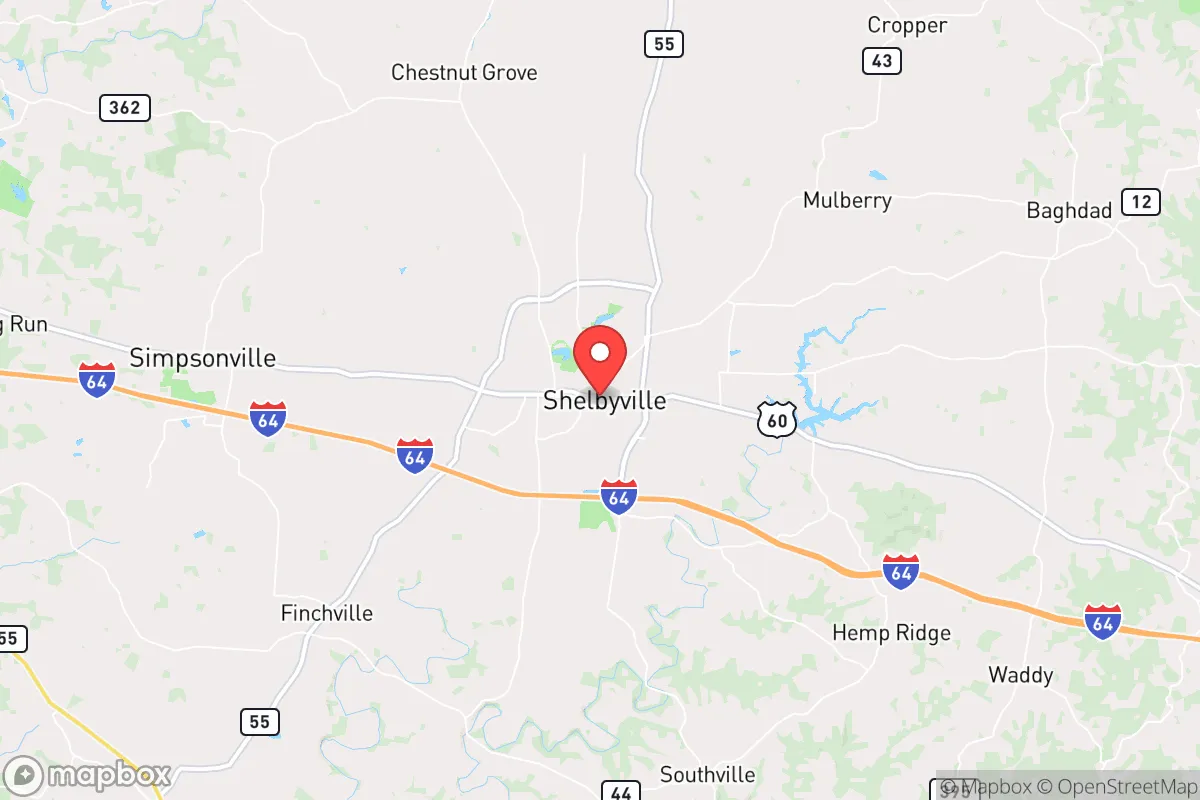
To really get the picture, look at the surrounding area. Head east about 20 miles to Frankfort, the state capital, and you’ll find a more mixed political scene—still conservative overall, but with a noticeable progressive presence thanks to state workers and university folks. Drive 30 miles north to Louisville, and it’s a whole different world: a deep-blue city where policies on taxes, zoning, and public health mandates can feel like they’re from another planet. Shelbyville sits in the middle, a kind of buffer zone where the values are more aligned with rural Kentucky—think Simpsonville or Eminence—than the urban centers. The contrast is stark: while Louisville debates rent control and police reform, we’re still focused on keeping property taxes low and making sure the county sheriff has the resources to do his job without interference from state or federal mandates.
What this means for residents
For the people living here, the political climate means a lot of things, but mostly it means freedom from the kind of heavy-handed government you see in bigger cities. You won’t find mask mandates lingering in Shelbyville, or strict business shutdowns that kill local livelihoods. The county commission and city council tend to take a hands-off approach—let people run their businesses, raise their kids, and keep their guns without a bunch of red tape. That said, there’s a growing concern about the long-term direction. As the state sees more migration from places like California and Illinois, there’s pressure to adopt policies that sound good on paper but erode personal rights—like expanded zoning that tells you what you can do with your own land, or tax hikes disguised as “investments.” The key for residents is staying engaged, because once those progressive ideas take root, they’re hard to pull out.
Culturally, Shelbyville still feels like a place where neighbors look out for each other, and that’s reflected in the policy choices. The local school system, for instance, has resisted the kind of curriculum changes that push ideological agendas, and the county has kept its tax burden low—property taxes here are about half of what you’d pay in Jefferson County. There’s a strong sense of local control, which is exactly how it should be. The biggest distinction is the attitude toward personal responsibility: people here don’t expect the government to solve their problems, and they don’t want it meddling in their lives. That’s the Shelbyville way, and as long as folks keep showing up to vote and speaking up at meetings, it’ll stay that way for the foreseeable future.

State Political ClimatePolitical Climate in Kentucky
State Political AnalysisPolitical Environment in the State
Kentucky has been a reliably red state for decades, but it’s not the deep-red monolith outsiders imagine. The state leans Republican by about 15-20 points in presidential elections, with Donald Trump winning 62% of the vote in 2024. But the real story is the 20-year trajectory: Kentucky was a competitive swing state as recently as the 1990s, and the shift rightward has been driven by a wholesale realignment of its rural and working-class voters away from the Democratic Party. Today, the dominant coalition is a mix of evangelical conservatives, gun-rights advocates, and anti-tax voters, concentrated outside the urban cores of Louisville and Lexington.
Urban vs. rural divide
The political map of Kentucky is a tale of two worlds. Louisville (Jefferson County) and Lexington (Fayette County) are the only reliably blue metros, delivering about 60% of their votes to Democrats. These cities are home to the state’s universities, healthcare systems, and a growing professional class. But drive 20 minutes in any direction, and you’re in deep-red territory. Bowling Green (Warren County) is a conservative stronghold, voting +35 R in 2024, while Owensboro (Daviess County) and Paducah (McCracken County) are reliably Republican. The real action is in the exurban and rural counties that flipped hard after 2008. Pike County in the eastern coalfields went from voting for Obama in 2008 to giving Trump 80% in 2024. Boone County, part of the Cincinnati metro area in northern Kentucky, is a bellwether: it voted for Obama in 2008, then flipped to Romney and has stayed +20 R ever since. The urban-rural divide is stark, and it’s widening every cycle.
Policy environment
Kentucky’s policy environment is broadly conservative, but with some notable wrinkles. The state has a flat income tax that is being phased down from 5% to 4% by 2026, with a goal of elimination. Property taxes are low, and there is no state-level estate or inheritance tax. The regulatory posture is business-friendly, with right-to-work laws and tort reform in place. On education, Kentucky has a robust school choice movement: the state passed a charter school law in 2017 (though no charters have opened yet) and expanded education opportunity accounts in 2022. However, the state’s public school system is heavily unionized, and teacher protests in 2018 and 2019 over pension reform were a major flashpoint. Healthcare is a mixed bag: Kentucky expanded Medicaid under the Affordable Care Act, and about 30% of the population is on Medicaid. But the state has also imposed work requirements and premiums for some enrollees. Election laws are moderately restrictive: voter ID is required, early voting is limited to three days, and no-excuse absentee voting was rolled back after 2020. Secretary of State Michael Adams has been a moderate voice, but the legislature has pushed for tighter rules.
Trajectory & freedom
On the freedom front, Kentucky has been moving in a decidedly positive direction over the past decade. The biggest win was constitutional carry (permitless concealed carry), signed into law in 2019. This was a major expansion of Second Amendment rights. In 2021, the legislature passed a parental rights bill requiring schools to notify parents of any changes to a student’s mental, emotional, or physical health, including gender identity. This was a direct response to progressive overreach in school districts like Fayette County, where some schools had policies that kept information from parents. On medical freedom, Kentucky passed a telemedicine abortion ban and a near-total abortion ban after the Dobbs decision, with exceptions only for life of the mother. This is a clear win for pro-life residents. However, there are concerning trends: the state’s Board of Education has been increasingly politicized, with the governor and legislature clashing over curriculum standards. And while property rights are generally strong, the state has seen some eminent domain battles over pipeline projects in eastern Kentucky. The overall trajectory is toward more personal liberty, especially on guns and parental rights, but the education and healthcare battles are ongoing.
Civil unrest & political movements
Kentucky has not seen the level of civil unrest seen in coastal states, but there have been flashpoints. The Breonna Taylor protests in Louisville in 2020 were the most significant, with weeks of demonstrations, property damage, and a heavy police presence. This led to a lasting political divide in Louisville, with the city council passing police reform measures that were seen as weak by activists and excessive by conservatives. Outside of Louisville, the most visible political movement is the rural conservative backlash against COVID-19 mandates. In 2021, counties like Pulaski and Whitley passed resolutions declaring themselves “sanctuary counties” for the unvaccinated, refusing to enforce mask or vaccine mandates. Immigration politics are less heated than in border states, but there is a growing concern about illegal immigration in the Louisville and Lexington construction and hospitality sectors. Election integrity has been a hot topic: the 2020 election saw no major fraud in Kentucky, but the legislature passed a bill in 2021 requiring signature verification for absentee ballots and banning ballot drop boxes. The Kentucky Freedom Coalition and Moms for Liberty are active in school board races, particularly in Boone County and Warren County.
Projection
Over the next 5-10 years, Kentucky will likely become more Republican, but the nature of that conservatism may shift. The in-migration pattern is interesting: people are moving to Kentucky from the Midwest and Northeast, particularly to the Lexington and Bowling Green areas, drawn by lower taxes and housing costs. These newcomers tend to be more libertarian-leaning than the traditional evangelical base, which could push the state toward more economic freedom and less social intervention. However, the urban cores of Louisville and Lexington will continue to drift left, creating a more polarized state. The biggest wildcard is the coal country in eastern Kentucky, which is depopulating rapidly. As those counties shrink, their political influence wanes, and the center of gravity shifts to the more prosperous, conservative suburbs of Northern Kentucky and the I-65 corridor. Expect continued fights over school choice, Medicaid work requirements, and Second Amendment protections. The state is unlikely to go blue in a presidential election anytime soon, but the margin could narrow if the GOP overreaches on social issues.
For a new resident, the bottom line is this: Kentucky offers a high degree of personal freedom, especially on guns, taxes, and parental rights. The state is safe from the worst excesses of progressive governance, but you’ll need to be strategic about where you live. Stick to the suburbs and rural areas—Bowling Green, Owensboro, Paducah, or the Boone County suburbs of Cincinnati—and you’ll find a community that shares your values. Avoid the urban cores of Louisville and Lexington if you want to avoid the culture wars and high taxes. The state is on a good trajectory, but it requires active citizenship to keep it that way.
* Values derived from national, state, county, city and local statistics and may differ in a specific area. Last updated: 2026-05-03T20:24:19.000Z
Narrative content on this page is AI-generated and may contain mistakes. Verify any details that matter before acting on them.
ReloMaps may earn a commission from affiliate links at no extra cost to you.

