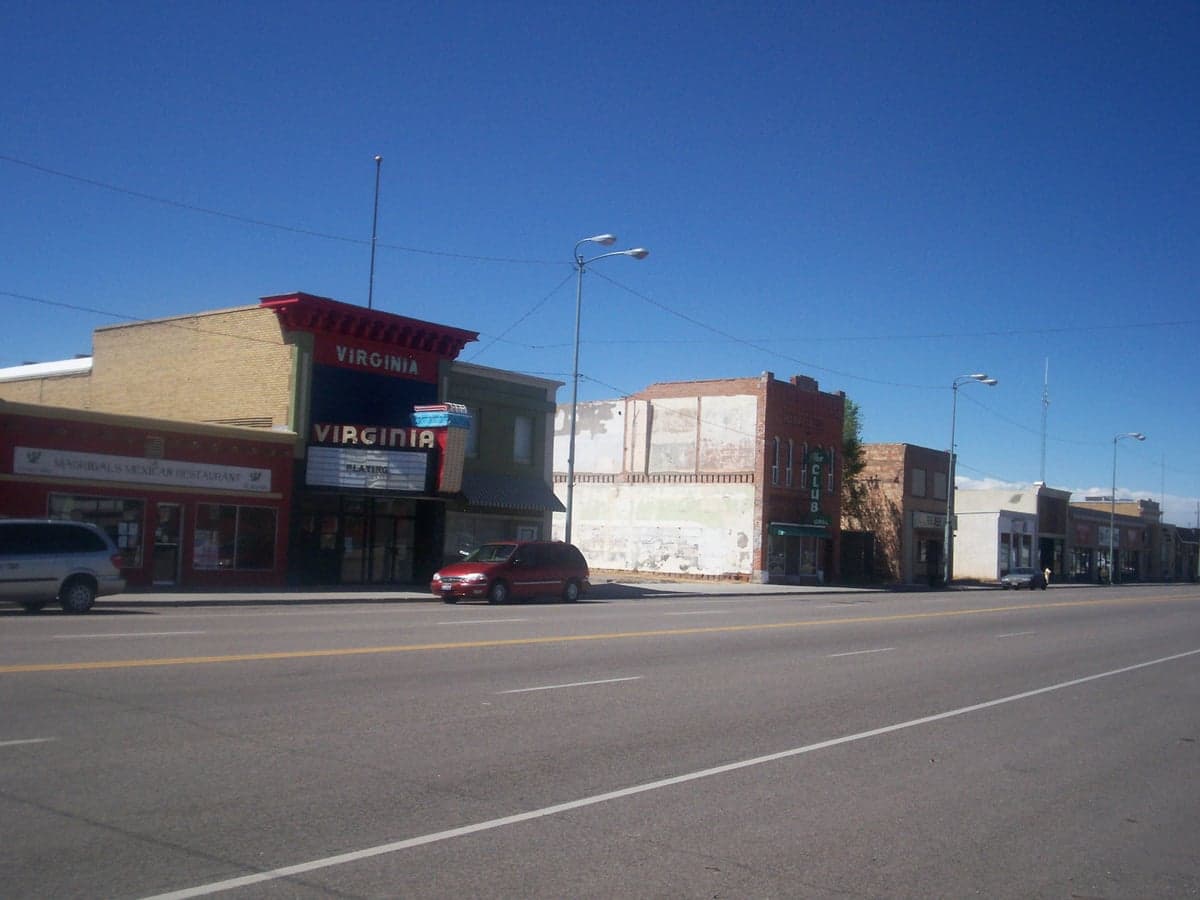
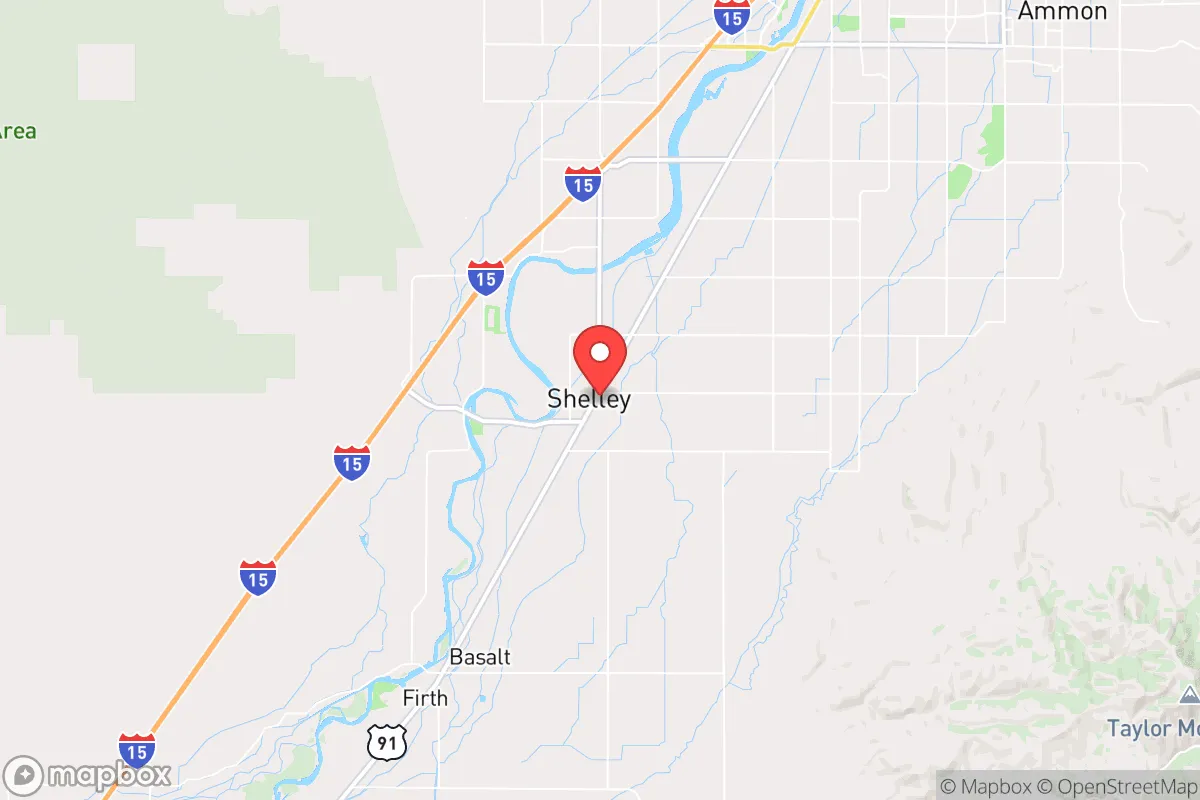
Photo: Wikipedia
Demographics of Shelley, ID
Affluence Level in Shelley, ID
A below-average socioeconomic profile. Incomes, home values, and educational attainment trail the U.S., with higher poverty and unemployment.
People of Shelley, ID
The people of Shelley, Idaho, today form a predominantly white, family-oriented community of 4,987 residents, with a notably low foreign-born share of 2.3% and a Hispanic population of 12.5% that represents the largest minority group. The city’s character is shaped by its agricultural roots, a strong Latter-day Saint (Mormon) cultural presence, and a population density that feels small-town but is within commuting distance of Idaho Falls. Distinctive markers include a high rate of homeownership, a median age around 34, and a civic identity tied to the annual Idaho Annual Spud Day celebration, reflecting the area’s deep potato-farming heritage.
How the city was settled and grew
Shelley was originally settled in the 1860s by Mormon pioneers sent by Brigham Young to colonize the Snake River Plain for agriculture. The first permanent settlers, primarily of English and Scandinavian descent, arrived via the Oregon Trail and established farms along the Snake River. The city was formally platted in 1904 when the Oregon Short Line Railroad extended a branch line through the area, naming the station after a railroad official. The original settlement clustered around Main Street and the railroad depot, an area now known as Old Town Shelley, where the earliest homes and the first LDS meetinghouse were built. A second wave of settlers, mostly German-Russian immigrants fleeing conscription and famine in the Russian Empire, arrived between 1900 and 1920, drawn by the promise of irrigated farmland. These families settled the West Side district, south of the railroad tracks, where many descendants still live today. The city incorporated in 1915, and by 1930 the population had reached 1,200, sustained by sugar beet and potato processing at the local factory.
Modern era (post-1965)
After the 1965 Immigration and Nationality Act, Shelley saw very little direct immigration from abroad; the foreign-born share remains at just 2.3%, well below the national average. Instead, the modern era has been defined by domestic in-migration from other parts of the Mountain West and California, driven by lower housing costs and a slower pace of life. The Hispanic population grew from under 5% in 1990 to 12.5% today, largely through second- and third-generation families moving from southern Idaho’s agricultural corridors, not from new immigration. These families have concentrated in the South Shelley area, near the potato processing plants and along the Highway 39 corridor, where older, more affordable housing stock exists. The North Bench neighborhood, developed in the 1990s and 2000s on the bluffs overlooking the river, attracted middle-class white families seeking newer subdivisions and better school access. The East/Southeast Asian population remains negligible at 0.2%, and the Indian-subcontinent population is effectively zero, reflecting the city’s lack of high-tech or university employment anchors. The Black population is 0.4%, mostly military-affiliated families stationed at the nearby Idaho National Laboratory. Shelley has not experienced the rapid diversification seen in larger Idaho cities like Boise or Twin Falls; its demographic shifts have been gradual and largely driven by internal migration within the state.
The future
The population of Shelley is projected to grow modestly, reaching roughly 5,500–6,000 by 2040, driven by spillover growth from Idaho Falls and the continued expansion of the Idaho National Laboratory. The city is not homogenizing into a single identity but is instead developing distinct enclaves: the Riverbend Estates subdivision, built in the 2010s, is attracting younger white families with children, while Old Town Shelley is seeing a slight increase in Hispanic homebuyers as older residents downsize or move. The Hispanic population is likely to continue growing slowly, reaching perhaps 15–18% by 2040, but will remain largely assimilated into the local economy and school system rather than forming a separate ethnic enclave. The foreign-born share is expected to stay below 5%, as Shelley lacks the rental housing stock and entry-level jobs that attract new immigrants. The city is becoming more suburban and less agricultural, with new subdivisions replacing potato fields on the eastern edge. For a conservative-leaning mover, this means a stable, culturally homogeneous community where property values are rising but remain affordable relative to the Front Range or Pacific Northwest, and where the dominant social institutions—the LDS church, the school district, and local agricultural businesses—continue to anchor daily life.
Shelley is becoming a quieter, more residential satellite of Idaho Falls, with a population that is slowly aging and slowly diversifying along Hispanic lines, but remains overwhelmingly white and native-born. For someone moving in now, the city offers a predictable, family-oriented environment with low crime, strong schools, and a community where most residents share similar cultural and religious backgrounds. The trade-off is limited ethnic diversity and few amenities for single adults without children, but for those seeking a stable, conservative small town within commuting distance of a regional hub, Shelley fits that profile well.

* Values derived from national, state, county, city and local statistics and may differ in a specific area. Last updated: 2026-05-03T20:23:23.000Z
Narrative content on this page is AI-generated and may contain mistakes. Verify any details that matter before acting on them.
ReloMaps may earn a commission from affiliate links at no extra cost to you.

