
Photo: Wikipedia
Political ClimatePolitical Climate in Shelley, ID
District shown is the primary district for this city’s centroid. Cities may span multiple districts.
Local Political AnalysisPolitical Analysis of Shelley, ID
Shelley, Idaho, is about as solidly conservative as they come, and it’s been that way for as long as anyone around here can remember. The Cook PVI of R+13 tells the story, but it doesn’t capture the feel of the place—this is a community where folks still believe in local control, the Second Amendment, and keeping government out of your business. If you look at the voting maps, Shelley and the surrounding Bingham County area have been reliably red for decades, and while the rest of the country seems to be shifting in strange directions, this corner of Idaho has held the line pretty well. That said, there’s always a little pressure from the outside, especially as more people move in from places like California or even Boise, bringing ideas that don’t always fit with how we do things here.
How it compares
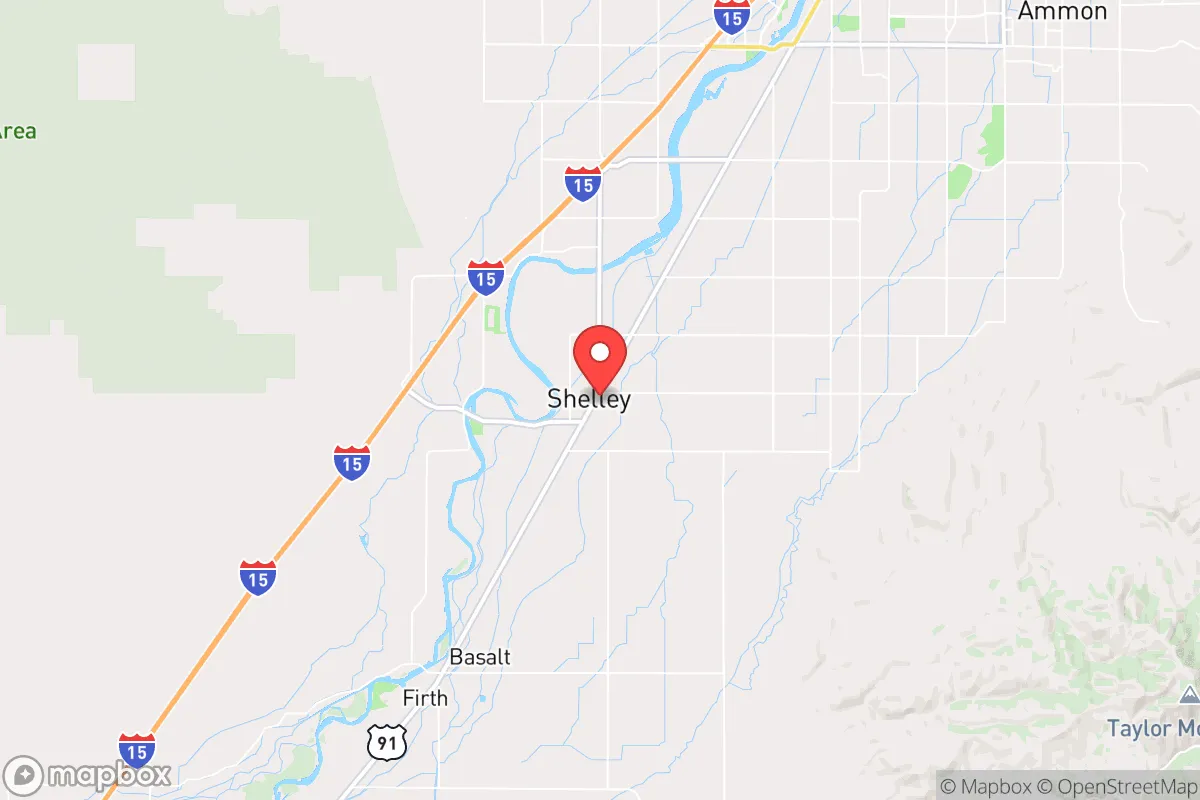
Drive twenty minutes west to Idaho Falls, and you’ll notice a slightly different vibe—it’s still conservative, but it’s a bit more polished, with more transplants and a younger crowd that sometimes leans a little softer on certain issues. Head south to Blackfoot, and you’re in even more rural, deeply traditional territory, where the politics are even more no-nonsense than Shelley’s. Shelley itself sits in a sweet spot: it’s small enough that you know your neighbors and the local school board meetings actually matter, but close enough to larger towns that you don’t feel isolated. The contrast with places like Pocatello, which has a university influence and a more mixed political scene, is stark—Shelley feels like a place where the old values of self-reliance and limited government are still the default, not something you have to fight for.
What this means for residents
For someone living here, the political climate means you can generally trust that your local leaders aren’t going to push radical experiments on your family. The city council and county commissioners tend to focus on practical stuff—roads, water, schools—without getting tangled up in the kind of overreach you see in bigger cities. There’s a strong sense that your personal freedoms, from how you raise your kids to what you do on your own property, are respected. That said, there’s a growing unease as the state government in Boise sometimes gets a little too cozy with federal mandates or progressive trends from the West Coast. Locals keep a close eye on things like land use regulations and school curriculum, because once that kind of government creep starts, it’s hard to roll back. The general attitude is: we’re doing fine on our own, and we don’t need anyone telling us how to live.
One thing that sets Shelley apart is its strong agricultural roots and the influence of the LDS Church, which shapes a lot of the community’s values around family, service, and stability. You won’t find much of the culture war noise here that dominates national headlines—people are more concerned with the harvest and the high school football game than with political drama. But there’s a quiet vigilance, especially as the area grows. New housing developments are popping up, and with them come new neighbors who might not share the same deep-seated belief in limited government. The long-term worry is that Shelley could slowly drift toward the kind of suburban blandness that loses its character and its independence. For now, though, it’s still a place where you can breathe easy, knowing your vote actually means something and your voice still carries weight at the local level.

State Political ClimatePolitical Climate in Idaho
State Political AnalysisPolitical Environment in the State
Idaho is one of the most reliably Republican states in the nation, with a deep-red partisan lean that has only intensified over the past two decades. The state hasn’t voted for a Democratic presidential candidate since 1964, and in 2024, Donald Trump carried Idaho by a margin of roughly 30 points. The dominant coalition is a mix of rural conservatives, Mormon cultural conservatives in the southeast, and a growing wave of out-of-state transplants—many from California, Oregon, and Washington—who are fleeing progressive policies and seeking a freer way of life. Over the last 10-20 years, the state has shifted from a more libertarian-leaning conservatism to an aggressively active conservative governance, with the legislature passing some of the most protective laws in the country on gun rights, parental rights, and election integrity.
Urban vs. rural divide
The political map of Idaho is starkly divided between a handful of blue-leaning urban islands and a vast red sea of rural counties. The Treasure Valley—centered on Boise, Meridian, and Nampa—is the state’s population and economic engine, but it’s also where the most political competition lives. Ada County (Boise) has been trending purple for a decade; in 2020, Biden won it by less than 1 point, though Trump flipped it back in 2024 by a narrow margin. The city of Boise itself is a blue dot in a red county, with progressive activism concentrated around the university and tech sectors. Meanwhile, Canyon County (Nampa, Caldwell) is reliably red and growing fast, driven by families and retirees seeking lower taxes and conservative values. The rural north—places like Coeur d’Alene and Sandpoint in Kootenai County—is deeply conservative, though the influx of wealthy out-of-staters has introduced some libertarian-leaning tensions. The southeastern Mormon corridor, including Rexburg and Idaho Falls, is the most solidly Republican region in the state, with precincts routinely voting 80-90% GOP. The only reliably blue counties are Blaine County (Sun Valley) and Teton County (near Jackson Hole), both driven by wealthy second-home owners and resort workers.
Policy environment
Idaho’s policy environment is a model of limited-government conservatism, though recent years have seen a shift toward more active legislative intervention on cultural issues. The state has a flat income tax of 5.8% (down from 6.5% in 2023), no corporate income tax on pass-through entities, and a property tax system that is among the lowest in the West. The legislature meets for only about 80 days a year, keeping the regulatory footprint small. On education, Idaho has a robust school choice landscape: the state offers a $5,500 education savings account (ESA) per student, usable for private school tuition, homeschooling materials, or tutoring. The state also passed the “Parental Rights in Education” law in 2023, requiring schools to notify parents of any curriculum involving sexuality or gender identity and prohibiting classroom discussion of these topics before grade 5. Healthcare policy is similarly conservative: Idaho has not expanded Medicaid under the traditional ACA model (though it did pass a limited expansion via ballot initiative in 2018), and the state has some of the strictest abortion laws in the nation, banning the procedure at conception with narrow exceptions. Election laws are tight: voter ID is required, same-day registration is not allowed, and the state has a closed primary system for Republicans. In 2024, the legislature passed a law banning ranked-choice voting and requiring hand-count audits of all ballots.
Trajectory & freedom
Idaho is becoming more free in many respects, but the trajectory is not without tension. The state has aggressively expanded gun rights: in 2023, it passed a “constitutional carry” law allowing permitless concealed carry for anyone 18 or older, and in 2024 it passed a law prohibiting local governments from enforcing federal gun laws (a “Second Amendment Sanctuary” statute). Property rights have been strengthened with a 2023 law limiting the use of eminent domain for private economic development. On medical freedom, Idaho passed a law in 2024 prohibiting employers from requiring COVID-19 vaccines as a condition of employment, and it banned public schools from requiring masks. However, the state has also moved to restrict certain personal liberties: the 2023 “Medical Freedom Act” actually limited access to gender-affirming care for minors, and the state has a strict ban on abortion that some libertarians argue infringes on bodily autonomy. The biggest freedom concern for many transplants is the rapid growth of government spending—the state budget has nearly doubled since 2020, driven by population growth and inflation, though taxes have been cut. The legislature also passed a law in 2024 requiring parental consent for minors to create social media accounts, which is popular with conservatives but raises free-speech questions.
Civil unrest & political movements
Idaho has a history of fringe political movements, but the mainstream is firmly conservative. The most visible flashpoint in recent years has been the “People’s Rights” movement led by Ammon Bundy, which has organized protests against public health mandates and property seizures. In 2022, Bundy’s group staged a weeks-long occupation of the Idaho Statehouse to protest vaccine mandates, leading to several arrests. The state also saw significant protests in 2020 over COVID-19 restrictions, with armed demonstrators at the capitol in Boise. On the left, the “Idaho Women’s March” and “Indivisible Boise” have organized protests against abortion bans and for LGBTQ rights, but these are small and concentrated in Boise. Immigration politics are a hot-button issue: the state passed a law in 2024 requiring local law enforcement to cooperate with ICE and banning “sanctuary city” policies. There is a small but vocal secessionist movement in northern Idaho (the “State of Jefferson” proposal), but it has no real political traction. Election integrity controversies have been minimal—Idaho’s voting system is widely trusted, and the 2020 and 2024 elections saw no major disputes. The most visible political tension is between the old-guard libertarian ranchers and the new-wave culture-war conservatives, particularly over land use and property rights in fast-growing areas like Kuna and Star.
Projection
Over the next 5-10 years, Idaho will likely become more conservative, not less, despite the influx of out-of-state transplants. The reason is simple: the people moving to Idaho are overwhelmingly fleeing progressive policies in California, Oregon, and Washington, and they are voting for the same conservative policies that attracted them. The Boise metro will continue to grow and may become more politically competitive, but the rural and suburban areas—places like Eagle, Middleton, and Post Falls—will remain deeply red. The legislature will likely continue to push on parental rights, school choice, and gun rights, while also grappling with the challenges of rapid growth: housing affordability, water rights, and infrastructure. The biggest wildcard is the influence of the “Mormon corridor” in the southeast, which is becoming more politically active and may push for even stricter social policies. A new resident moving in now should expect to find a state that is aggressively protecting conservative values, but also one that is changing fast—the small-town feel of 20 years ago is giving way to suburban sprawl and a more diverse (but still conservative) population.
For a conservative individual or family considering relocation, Idaho offers a policy environment that is deeply aligned with traditional values: low taxes, strong gun rights, parental control over education, and a government that respects personal liberty. The trade-offs are real—rapid growth means higher housing costs, more traffic, and a loss of the rural character that made Idaho special. But if you’re looking for a state where your vote counts, your rights are protected, and your children can grow up in a community that shares your values, Idaho is one of the best bets in the country. Just be prepared for winter, and for the fact that everyone else had the same idea.
* Values derived from national, state, county, city and local statistics and may differ in a specific area. Last updated: 2026-05-03T20:23:23.000Z
Narrative content on this page is AI-generated and may contain mistakes. Verify any details that matter before acting on them.
ReloMaps may earn a commission from affiliate links at no extra cost to you.

