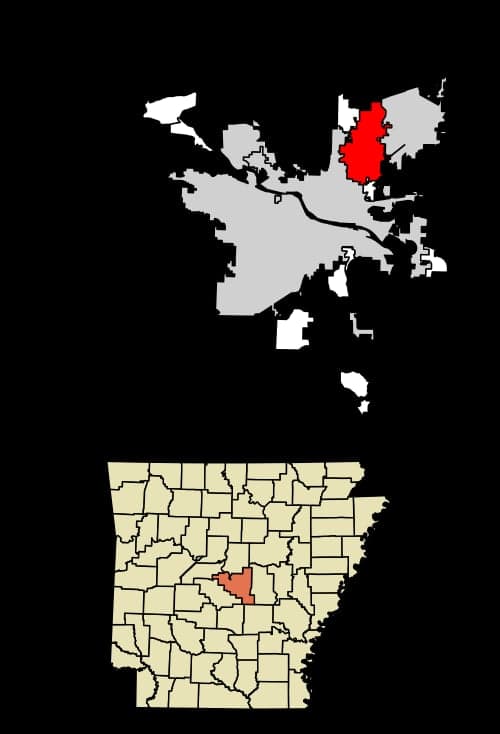
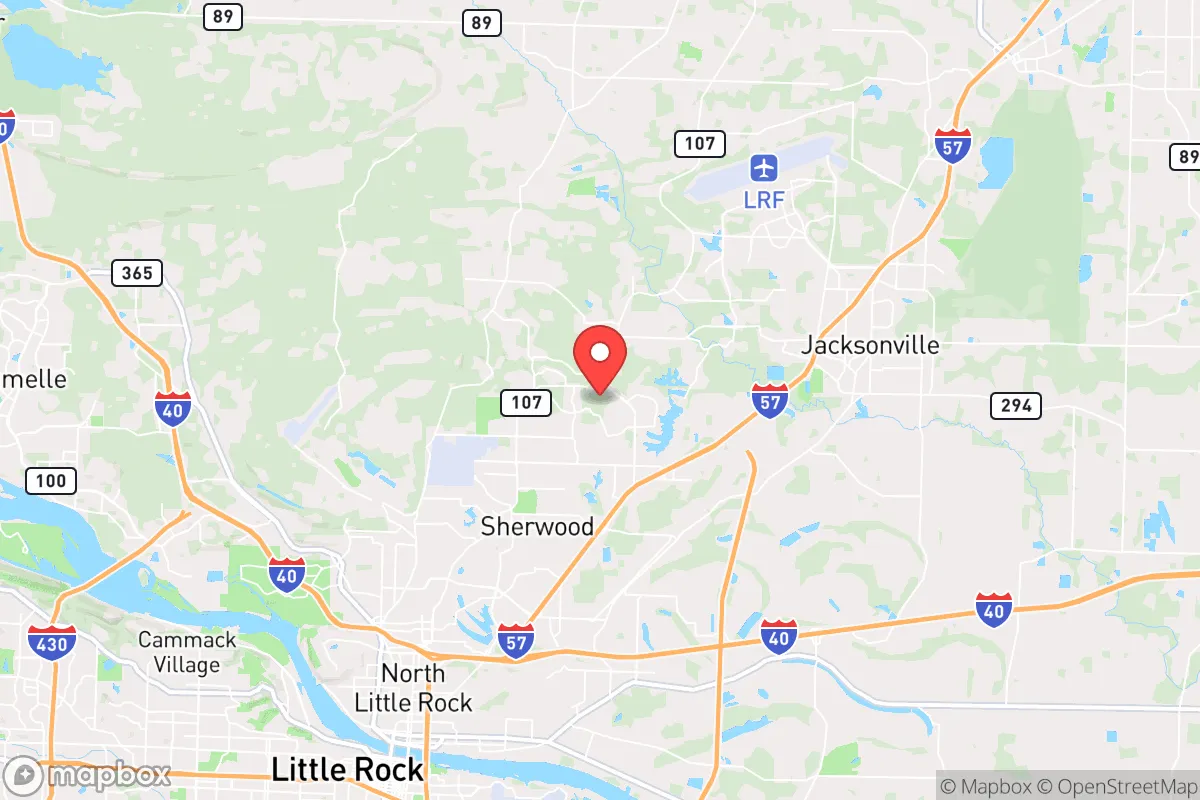
Photo: Wikipedia
Political ClimatePolitical Climate in Sherwood, AR
District shown is the primary district for this city’s centroid. Cities may span multiple districts.
Local Political AnalysisPolitical Analysis of Sherwood, AR
Sherwood, Arkansas, sits solidly in the red column, with a Cook PVI of R+8 that reflects a community where conservative values aren't just a talking point—they're the baseline. For decades, this Pulaski County suburb has been a reliable pocket of Republican strength, and while the broader Little Rock metro has seen some purple creep, Sherwood has held the line. The 2024 election cycle confirmed that trend, with local races consistently favoring candidates who prioritize limited government and personal liberty. If you've been here a while, you've watched the surrounding areas—like North Little Rock to the south or the increasingly progressive enclaves in central Little Rock itself—shift leftward, but Sherwood remains a place where folks still expect the government to stay out of their business.
How it compares
Drive ten minutes south into North Little Rock, and you'll feel the political temperature change. That city has leaned more Democratic in recent cycles, especially in its older, urban wards, while Sherwood's precincts routinely deliver 60-65% of the vote for Republican candidates. Head west to Maumelle, and you'll find a similar R+ tilt, though Maumelle's newer transplants sometimes bring a more moderate suburban vibe. The real contrast is with Little Rock proper, where progressive policies on zoning, policing, and taxes have created a regulatory environment that many Sherwood residents view as a cautionary tale. Sherwood's city council and school board elections tend to be low-key affairs dominated by fiscal conservatives and candidates who emphasize property rights and Second Amendment protections—issues that resonate deeply here.
What this means for residents
For someone living in Sherwood, the political climate translates into tangible everyday freedoms. You won't see the kind of overreach that's become common in blue-run cities—no heavy-handed business mandates, no zoning fights that strangle small property owners, and no pressure to adopt woke policies in local schools. The city's leadership has consistently pushed back against state-level attempts to centralize control, preferring local solutions over one-size-fits-all edicts from Little Rock or Washington. That said, there are warning signs on the horizon. As the metro area grows, developers and new arrivals from out of state sometimes bring progressive ideas about density, transit, and "equity" that could erode the community's character. Longtime residents keep a wary eye on city planning meetings, knowing that a few well-funded advocacy groups can shift the conversation if conservatives get complacent.
Culturally, Sherwood still feels like the Arkansas of a generation ago—church potlucks, Friday night football, and a general distrust of politicians who promise to fix everything with other people's money. The city's annual Fourth of July parade and its strong network of volunteer fire departments reflect a self-reliant spirit that doesn't look to government for answers. If you're considering a move here, understand that the political climate isn't just about who you vote for—it's about a way of life that values personal responsibility over bureaucratic control. The near-term outlook is stable, but the long-term trajectory depends on whether residents stay engaged and keep pushing back against the creeping influence of progressive ideology that's already reshaped nearby cities.

State Political ClimatePolitical Climate in Arkansas
State Political AnalysisPolitical Environment in the State
Arkansas has been a reliably red state for decades, with a solid Republican lean that has only deepened since the early 2000s. The state hasn't voted for a Democratic presidential candidate since Bill Clinton's 1996 re-election, and the GOP now holds every statewide office, both U.S. Senate seats, and a supermajority in the state legislature. The shift accelerated after 2010, driven by the realignment of rural and exurban voters who once identified as conservative Democrats but now vote straight-ticket Republican. While the state's overall partisan lean is roughly R+15 to R+20 in federal races, the real story is the growing divide between its few urban centers and the vast, deeply conservative countryside.
Urban vs. rural divide
The political map of Arkansas is stark. The two major metro areas — Little Rock and Northwest Arkansas — are the only places where Democrats can compete, and even there, the margins are shrinking. Little Rock, the state capital and largest city, is a Democratic stronghold in Pulaski County, but the surrounding suburbs like Conway and Benton have trended red. Northwest Arkansas, anchored by Fayetteville, Bentonville, and Springdale, is more of a mixed bag. Fayetteville, home to the University of Arkansas, is the most liberal city in the state, regularly electing Democrats to local office and even a few progressive city council members. But the rest of the region — especially the booming suburbs of Rogers and Centerton — is solidly Republican, fueled by the growth of Walmart, Tyson Foods, and JB Hunt. Outside these two metro areas, the state is overwhelmingly red. Counties like Stone, Van Buren, and Yell routinely vote 80%+ Republican. The Arkansas Delta, once a Democratic stronghold due to its large Black population, has seen its influence wane as population declines and Republican gains among white voters have flipped counties like Crittenden and Mississippi from blue to purple.
Policy environment
Arkansas's policy environment is aggressively conservative, with a focus on low taxes, limited regulation, and cultural conservatism. The state has a flat income tax rate of 4.4% (down from 7% in 2015), and the legislature has passed multiple rounds of tax cuts, with the goal of eventually eliminating the income tax entirely. The sales tax is high — around 9.5% in most areas — but there is no tax on groceries or prescription drugs. The regulatory climate is business-friendly, with few zoning restrictions outside of Little Rock and a right-to-work law that keeps unions weak. On education, Arkansas has a robust school choice program, including the Arkansas LEARNS Act of 2023, which created universal Education Freedom Accounts (vouchers) for any student, expanded charter schools, and banned "critical race theory" and "indoctrination" in public schools. Healthcare is a mixed bag: the state expanded Medicaid under the private option model, but the legislature has repeatedly tried to impose work requirements and other restrictions. Election laws have tightened, with voter ID requirements, limits on absentee ballot drop boxes, and a ban on private funding for election administration. The state also passed a near-total abortion ban in 2019 (triggered by Roe's reversal) with no exceptions for rape or incest, only to save the mother's life.
Trajectory & freedom
Over the past five years, Arkansas has moved decisively toward expanding personal liberty in several key areas, particularly gun rights, parental rights, and tax freedom. In 2021, the state passed constitutional carry, allowing any law-abiding adult to carry a concealed firearm without a permit. The same year, the legislature passed the Arkansas Parental Rights in Education Act, which requires schools to notify parents of any medical or mental health services offered to their children and prohibits instruction on sexual orientation or gender identity in K-3. In 2023, the Arkansas Medical Ethics Act was signed, protecting healthcare workers from being forced to participate in procedures they find morally objectionable. On the other hand, there have been concerning expansions of government power. The state's Act 1000 of 2021 gave the attorney general broad authority to investigate and prosecute "public nuisances," which critics say could be used to target political opponents or dissidents. The state also maintains a strict medical marijuana program (no smokable flower, no home grow) that many conservatives see as an overreach into personal medical choices. Overall, the trajectory is toward more freedom in the traditional conservative sense — lower taxes, fewer gun restrictions, more parental control — but with a heavy hand on social issues and a willingness to use state power to enforce cultural norms.
Civil unrest & political movements
Arkansas has not seen the kind of large-scale civil unrest that has hit other states. The 2020 Black Lives Matter protests in Little Rock and Fayetteville were relatively small and peaceful compared to cities like Portland or Seattle. The most visible political movements in the state are on the right. The Arkansas Citizens for Liberty and local Moms for Liberty chapters have been active in school board races, pushing for parental rights and against mask mandates and critical race theory. There is a growing nullification movement, with several counties passing resolutions declaring themselves "Second Amendment sanctuaries" and vowing not to enforce any federal gun laws they deem unconstitutional. Immigration politics are less heated than in border states, but the legislature has passed laws requiring local law enforcement to cooperate with ICE and banning sanctuary cities. Election integrity remains a hot-button issue, with the state's Republican secretary of state conducting a "forensic audit" of the 2020 election (which found no evidence of widespread fraud) and the legislature passing new restrictions on mail-in voting. A new resident would notice a general sense of political calm, but with a vocal and organized conservative grassroots that keeps pressure on elected officials.
Projection
Over the next 5-10 years, Arkansas is likely to become even more conservative, driven by two demographic trends. First, the state is attracting a steady stream of in-migrants from California, Illinois, and other high-tax states, many of whom are conservative-leaning families and retirees looking for lower costs and more freedom. These newcomers are settling in Northwest Arkansas, which is already the fastest-growing region in the state, and in the Hot Springs and Lake Hamilton areas. Second, the state's rural population is aging and shrinking, but those who remain are becoming more Republican. The Democratic base in Little Rock and the Delta is not growing fast enough to offset these trends. Expect the state to continue cutting taxes, expanding school choice, and tightening restrictions on abortion and transgender rights. The biggest wild card is the potential for a major economic downturn in Northwest Arkansas, which could shift the political calculus if the region's growth stalls. But for now, the trajectory is clear: Arkansas will remain a deeply red state, with a policy environment that is increasingly friendly to conservative families and hostile to progressive governance.
For a new resident, the bottom line is this: Arkansas offers a high degree of personal freedom in the traditional conservative sense — low taxes, strong gun rights, parental control over education, and a culture that values self-reliance. The trade-off is a state government that is not shy about using its power to enforce conservative social norms, particularly on abortion and LGBTQ issues. If you are looking for a place where your tax dollars are not funding progressive social experiments and where your children's education is not dictated by federal bureaucrats, Arkansas is a strong bet. Just be prepared for a political landscape that is overwhelmingly Republican, with little room for dissent in most communities outside of Fayetteville and parts of Little Rock.
* Values derived from national, state, county, city and local statistics and may differ in a specific area. Last updated: 2026-04-30T02:17:22.000Z
Narrative content on this page is AI-generated and may contain mistakes. Verify any details that matter before acting on them.
ReloMaps may earn a commission from affiliate links at no extra cost to you.

