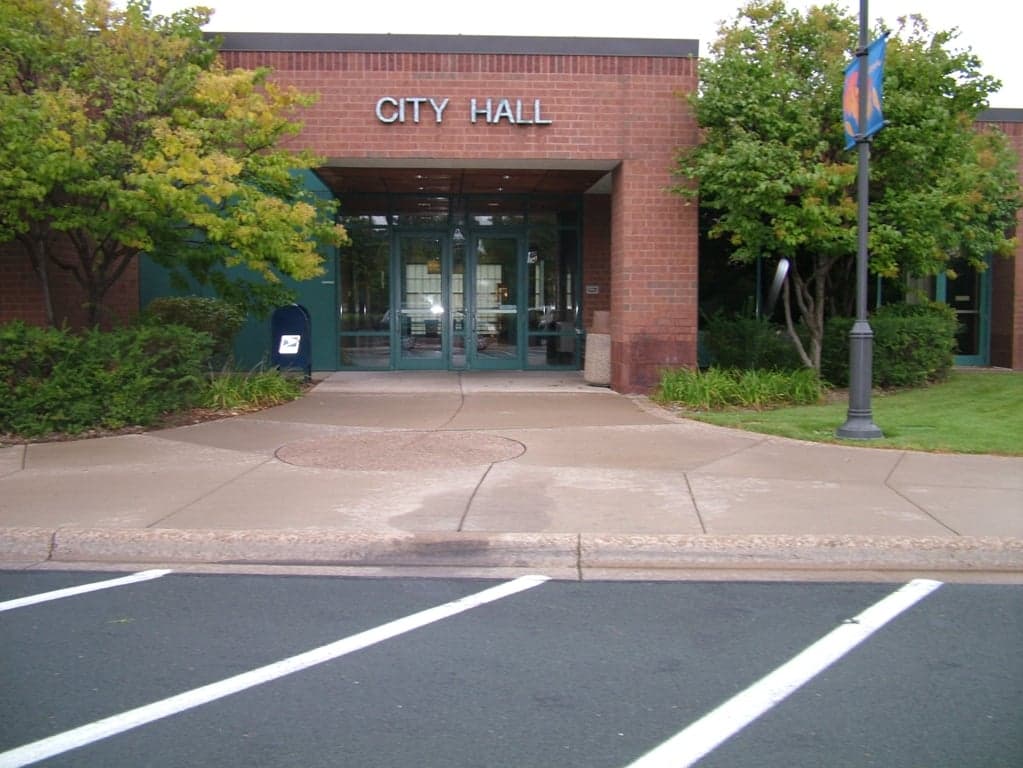
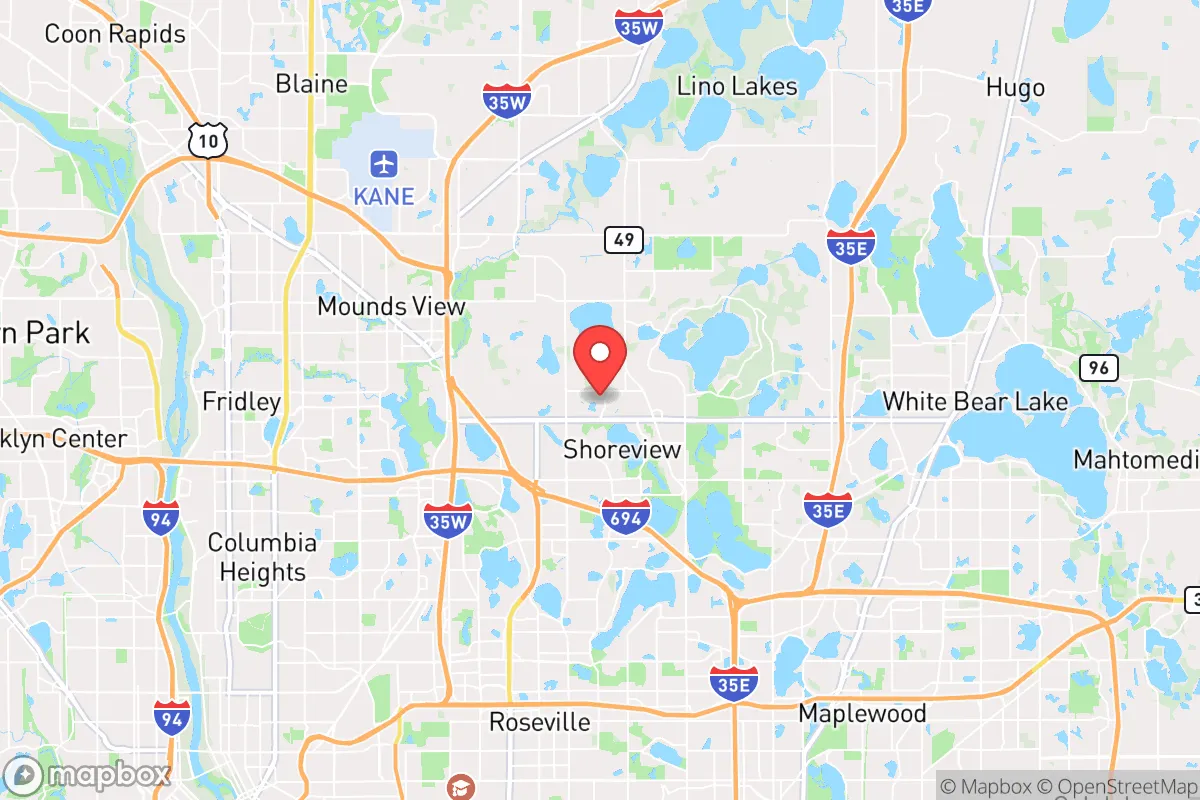
Photo: Wikipedia
Demographics of Shoreview, MN
Affluence Level in Shoreview, MN
An upper-middle-class area. Household wealth, education levels, and homeownership run ahead of national benchmarks.
People of Shoreview, MN
The people of Shoreview, Minnesota, today number 26,724, forming a predominantly white (76.9%), highly educated (63.1% college-educated) suburban community with a notably diverse Asian and Indian population. The city is characterized by its family-oriented, upper-middle-class character, with a foreign-born share of 4.8% that is lower than the national average but concentrated in specific professional and tech-worker enclaves. Distinctive identity markers include a strong sense of local governance, high homeownership rates, and a population that is both rooted in Scandinavian and German pioneer stock and increasingly shaped by second-generation East/Southeast Asian and Indian professionals.
How the city was settled and grew
Shoreview’s human history begins not with a town center but with the land itself—part of the former Mounds View Township, named for the Native American burial mounds along the Mississippi River bluffs. The first permanent white settlers arrived in the 1850s, primarily of Swedish, Norwegian, and German origin, drawn by the fertile glacial till and access to the Mississippi River via the small settlement of Snail Lake (now a neighborhood within Shoreview). These early families were subsistence farmers and loggers, and the area remained sparsely populated through the early 1900s. The first major growth wave came after World War II, when returning GIs and their families sought affordable land north of Saint Paul. The Rice Creek corridor and the area around Lake Owasso became the first suburban subdivisions, with modest ranch homes built on former farm fields. By 1950, the population was still under 2,000, almost entirely white and of Northern European descent, with a small number of German Catholic families in the Island Lake area.
Modern era (post-1965)
The post-1965 era transformed Shoreview from a rural township into a planned suburb. The 1970s and 1980s saw the construction of large-lot subdivisions like Shorewood Hills and Valley View, attracting white-collar families from Saint Paul and Minneapolis who were drawn by the Mounds View School District’s reputation. The city incorporated in 1957, and by 1990 the population had reached 20,000. The most significant demographic shift began in the 1990s and accelerated after 2000, driven by the expansion of Medtronic (headquartered in nearby Fridley) and other medical-device and tech employers. This drew a wave of East/Southeast Asian professionals (5.5% of the population today), particularly Chinese and Vietnamese engineers and their families, who settled in the newer developments around Lexington Avenue and the Rice Creek Commons area. Simultaneously, a distinct Indian-subcontinent community (4.5% of the population) arrived, many employed in IT and healthcare, concentrating in the Snail Lake and Lake Johanna neighborhoods. The Hispanic population (4.7%) is smaller and more dispersed, with roots in construction and service industries, while the Black population (3.8%) includes both African American families moving from Saint Paul and a small number of African immigrants. Notably, Shoreview has not experienced the white-flight patterns of some inner-ring suburbs; rather, the white population (76.9%) has gradually diversified through in-migration of educated professionals of all backgrounds, creating a stable, integrated suburban environment.
The future
Looking ahead, Shoreview is likely to continue its trajectory as a highly educated, professional-class suburb with a slowly diversifying population. The East/Southeast Asian and Indian communities are not plateauing but are growing through second-generation family formation and continued professional recruitment. The city’s housing stock—dominated by single-family homes on large lots with limited new construction—will constrain rapid demographic change, meaning the population will remain majority white but with a steadily rising share of Asian and Indian residents. The Hispanic and Black populations are expected to grow modestly, primarily through natural increase and movement from Saint Paul. The city is not tribalizing into distinct ethnic enclaves; rather, neighborhoods like Shorewood Hills and Valley View are becoming more mixed, while the Snail Lake area retains a slightly higher concentration of Indian families. The biggest unknown is the redevelopment of the Rice Creek Commons (the former Twin Cities Army Ammunition Plant site), a 427-acre mixed-use project that could bring 1,500+ new housing units and attract a younger, more diverse population. If built out as planned, it could accelerate the diversification of the city’s western edge.
For someone moving in now, Shoreview is becoming a stable, upper-middle-class suburb with a quiet but real diversity—a place where a family of Swedish-American descent might live next door to a Chinese-American engineer and an Indian-American doctor, all sharing the same school district and lake access. It is not a melting pot in the urban sense, but a collection of well-educated, civically engaged households who value property values, schools, and safety above ethnic identity. The future is one of gradual, managed diversification within a framework of affluence and stability.

* Values derived from national, state, county, city and local statistics and may differ in a specific area. Last updated: 2026-04-30T06:49:39.000Z
Narrative content on this page is AI-generated and may contain mistakes. Verify any details that matter before acting on them.
ReloMaps may earn a commission from affiliate links at no extra cost to you.

