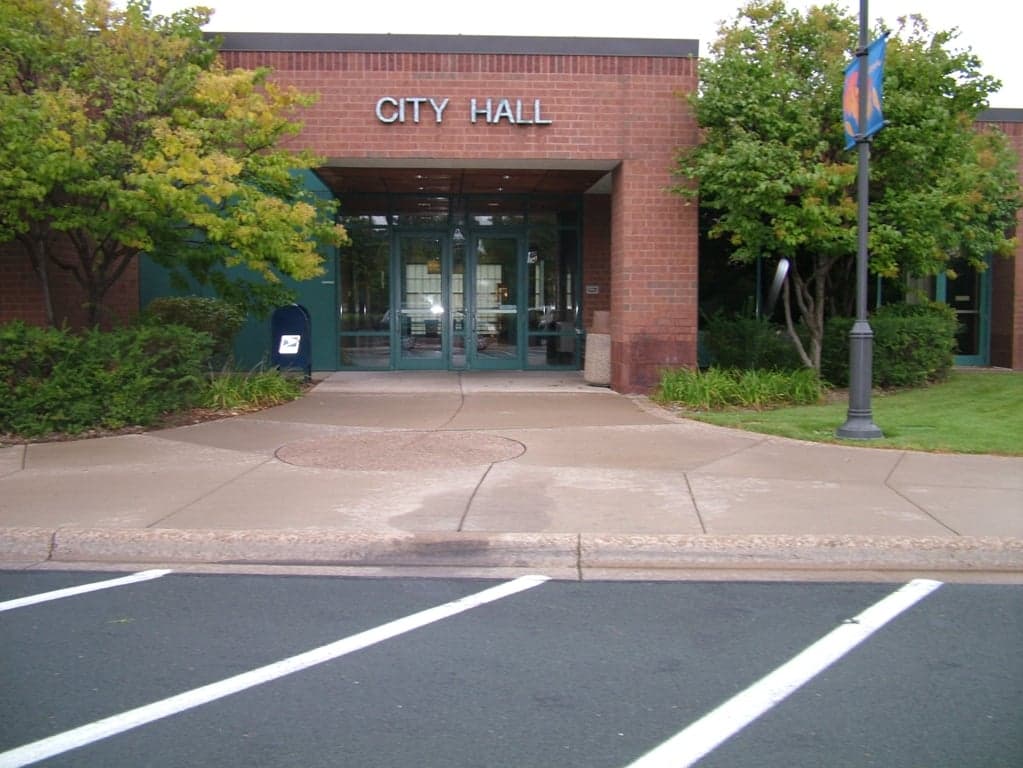
Photo: Wikipedia
Political ClimatePolitical Climate in Shoreview, MN
District shown is the primary district for this city’s centroid. Cities may span multiple districts.
Local Political AnalysisPolitical Analysis of Shoreview, MN
Shoreview, Minnesota, leans heavily to the left, with a Cook PVI of D+18 that places it among the most reliably Democratic suburbs in the Twin Cities metro. This wasn't always the case—twenty years ago, you'd find a more balanced mix of fiscal conservatives and moderate Democrats here, but the shift has been steady and pronounced. Today, local elections are often decided in the primary, and the general election is a formality for progressive candidates. If you're looking at Shoreview and value personal freedoms and limited government, it's worth understanding how deep this political tilt runs and what it means for your daily life.
How it compares
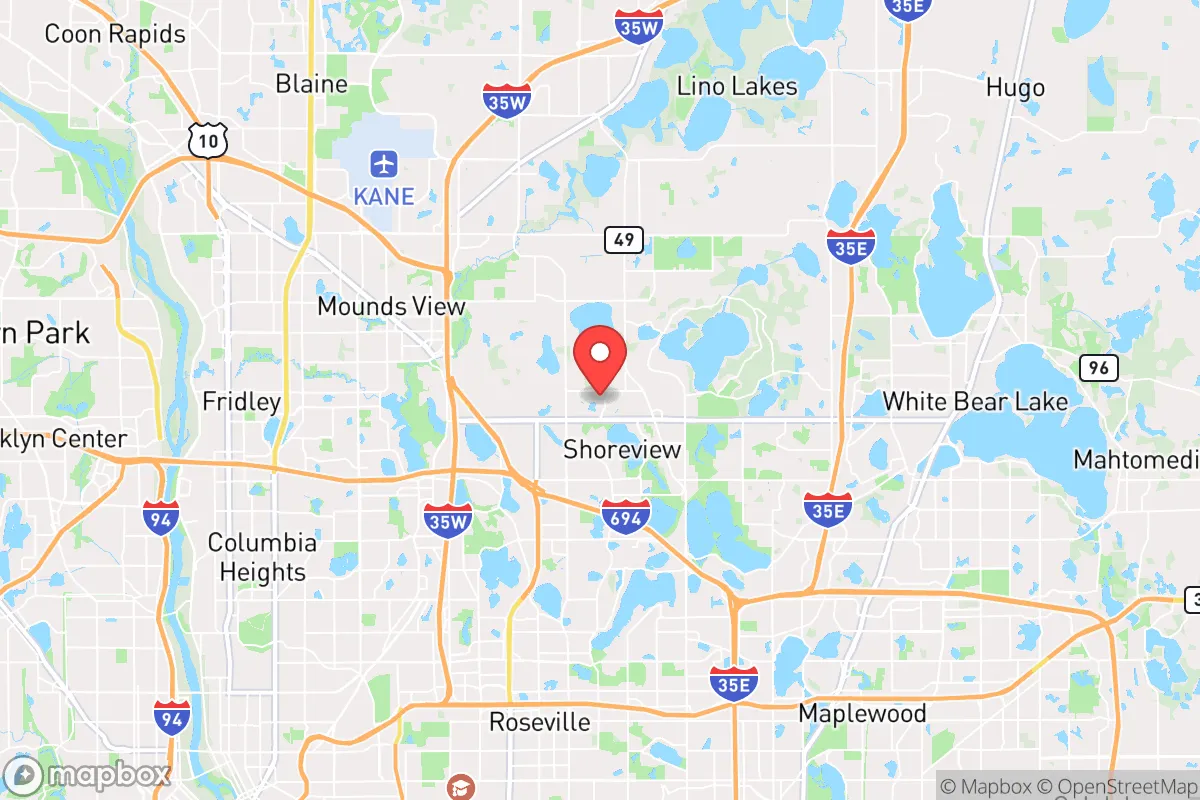
Shoreview sits in Ramsey County, which is a Democratic stronghold, but the contrast with nearby suburbs is stark. Head west to White Bear Lake or north to Lino Lakes, and you'll find communities that still elect Republicans to local office and have a more skeptical view of government expansion. Even Arden Hills, just south of Shoreview, has a slightly more independent streak. The difference isn't just on paper—it shows up in school board decisions, zoning policies, and how quickly the city adopts state-mandated progressive initiatives. Shoreview's D+18 rating means it votes about 18 points more Democratic than the national average, which puts it in the same league as Minneapolis' inner-ring suburbs like St. Louis Park, not the outer-ring communities where you still see "Don't Tread on Me" flags on pickup trucks.
What this means for residents
For a conservative or libertarian-leaning resident, the practical effect is that local government tends to be more interventionist. You'll see this in things like stricter rental regulations, higher property taxes to fund expanded public services, and a school district that emphasizes social-emotional learning over traditional academics. The city council has shown a willingness to adopt state-level progressive policies—like plastic bag bans and energy mandates—without much pushback from voters. If you value keeping government out of your business, you'll find yourself on the losing side of most votes. The long-term trend is concerning: as the metro area grows, Shoreview's demographics are shifting toward younger, more progressive families who see government as a solution, not a threat to liberty.
Culturally, Shoreview has become a place where conformity to progressive norms is expected, not just in politics but in social settings. You might feel out of place at a neighborhood gathering if you express skepticism about mask mandates or critical race theory in schools. The city's parks and libraries prominently display LGBTQ+ pride flags year-round, and the local newspaper's letters to the editor overwhelmingly support higher taxes and more regulation. For a conservative, it's not hostile—people are polite—but it's a constant reminder that your values are the minority. If you're considering a move here, I'd say visit on a weekend, grab coffee at the Shoreview Community Center, and listen to the conversations. You'll get a feel for whether this is a place where you can live freely or where you'll be constantly swimming against the current.

State Political ClimatePolitical Climate in Minnesota
State Political AnalysisPolitical Environment in the State
Minnesota has shifted from a classic purple battleground to a reliably blue state over the past two decades, with Democrats (DFL) now controlling all three levers of state government since 2023. The state voted for Hillary Clinton by 1.5 points in 2016, then for Joe Biden by 7 points in 2020, and Kamala Harris carried it by roughly 4 points in 2024. But that top-line number hides a deepening chasm: the Twin Cities metro area now drives the entire statewide result, while vast swaths of Greater Minnesota have swung hard right. If you’re a conservative looking to relocate, the key question isn’t whether Minnesota is red or blue—it’s which Minnesota you’ll be living in.
Urban vs. rural divide
The political map of Minnesota is a tale of two states. The seven-county Twin Cities metro—Hennepin, Ramsey, Dakota, Washington, Anoka, Carver, and Scott—casts about 55% of the statewide vote, and it’s become a Democratic stronghold. Minneapolis and St. Paul are deep blue, but the real story is the suburbs: once-reliable Republican areas like Edina, Bloomington, and Maple Grove have flipped decisively blue since 2016. Meanwhile, outstate Minnesota—from Rochester in the southeast to Duluth on the North Shore, and across the Iron Range to Moorhead in the west—has moved sharply right. In 2024, Donald Trump won 80 of Minnesota’s 87 counties. The Iron Range, historically a DFL stronghold due to union mining, flipped to Trump in 2016 and has stayed red. St. Cloud, a mid-sized city 70 miles northwest of the Twin Cities, is a political bellwether: it voted for Obama in 2012, then Trump in 2016 and 2020, and has become a flashpoint for immigration and education debates. The divide isn’t just rural vs. urban—it’s the metro core vs. everything else.
Policy environment
Under unified DFL control, Minnesota has enacted a progressive policy agenda that conservatives will find alarming. In 2023, the legislature passed a new state-level tax bracket of 10.85% on income over $1 million, making Minnesota one of the highest-taxed states in the nation. The corporate tax rate sits at 9.8%, and the state sales tax is 6.875% (with local add-ons pushing it higher in cities like Minneapolis). Property taxes are moderate but rising, especially in metro counties. On education, Minnesota enacted a universal free school meals program and expanded funding for public schools, but parental rights took a hit: the state passed a law requiring schools to adopt policies on “affirming” transgender students, including allowing them to use preferred names and pronouns without parental notification. On healthcare, Minnesota expanded Medicaid under the Affordable Care Act and created a state-based insurance exchange. Election laws have been loosened: Minnesota now has automatic voter registration, same-day registration, and no-excuse absentee voting. The state also passed a “sanctuary” law limiting local law enforcement cooperation with federal immigration authorities. For conservatives, the policy environment is increasingly hostile to traditional values and fiscal restraint.
Trajectory & freedom
Minnesota is clearly trending toward less personal freedom, especially for gun owners and parents. In 2023, the DFL passed a universal background check law and a “red flag” extreme risk protection order law, allowing courts to temporarily seize firearms from individuals deemed a risk. The state also banned “ghost guns” and raised the minimum age to purchase assault-style rifles from 18 to 21. On medical freedom, Minnesota codified abortion rights into state law in 2023, removing nearly all restrictions. The state also passed a law requiring insurance coverage for gender transition procedures, including for minors. On property rights, the state has not passed any major land-use reforms, but Minneapolis eliminated single-family zoning in 2018, a move that has been replicated in some suburbs. On speech, Minnesota has no statewide social media content laws, but local school boards have become battlegrounds over library books and curriculum. The overall trajectory is clear: the state is using its new unified power to expand government control over health, education, and firearms. A conservative moving here should expect this trend to continue.
Civil unrest & political movements
Minnesota has been a national flashpoint for civil unrest. The 2020 murder of George Floyd in Minneapolis sparked the largest protests in the state’s history, leading to billions in property damage and a lasting shift in the city’s political culture. The “defund the police” movement gained traction in Minneapolis, though voters rejected a 2021 ballot measure to replace the police department. Since then, crime rates have been a major issue: Minneapolis saw a spike in homicides and carjackings, though numbers have moderated somewhat. On the right, the Minnesota Gun Owners Caucus and Minnesota Parents Alliance have become active, organizing school board takeovers and legislative challenges. Immigration has been a hot-button issue, particularly in St. Cloud and Worthington, where Somali and other refugee populations have grown rapidly. The state’s sanctuary law has drawn federal scrutiny. Election integrity remains a concern for conservatives: Minnesota’s same-day registration and mail-in voting expansion have led to calls for stricter ID requirements, which have been blocked by the DFL. A new resident will find a state where political activism is high on both sides, and where local politics—especially school boards and city councils—are often more consequential than national races.
Projection
Over the next 5-10 years, Minnesota is likely to become more solidly blue at the state level, but with growing geographic polarization. The Twin Cities metro will continue to grow and diversify, while Greater Minnesota will age and shrink. In-migration patterns are mixed: the state is gaining domestic migrants from the Midwest but losing people to Sun Belt states like Texas and Florida. The DFL’s trifecta is likely to hold for at least another cycle, given the metro’s electoral weight. Expect more tax increases, expanded government healthcare, and further erosion of gun rights. The parental rights movement may win some local battles, but state law will continue to favor progressive education policies. A conservative moving to Minnesota should plan to live in an outstate county or a red-leaning exurb like Lakeville or Prior Lake to find like-minded neighbors and local governments. The state’s natural beauty, strong economy, and high quality of life remain draws, but the political climate will require active engagement to protect your values.
For a conservative relocating to Minnesota, the bottom line is this: you can find a good life here, but you’ll need to be strategic about where you live and how you engage. The state government is firmly in progressive hands and will likely stay that way. Your best bet is to settle in a red county or exurb, get involved in local politics, and brace for continued tax increases and cultural battles. Minnesota is not a lost cause—it’s a state where conservative voices still matter in the legislature and at the ballot box—but it’s no longer a purple state. It’s a blue state with a red heartland, and you’ll need to navigate that reality every day.
* Values derived from national, state, county, city and local statistics and may differ in a specific area. Last updated: 2026-04-30T06:49:39.000Z
Narrative content on this page is AI-generated and may contain mistakes. Verify any details that matter before acting on them.
ReloMaps may earn a commission from affiliate links at no extra cost to you.

