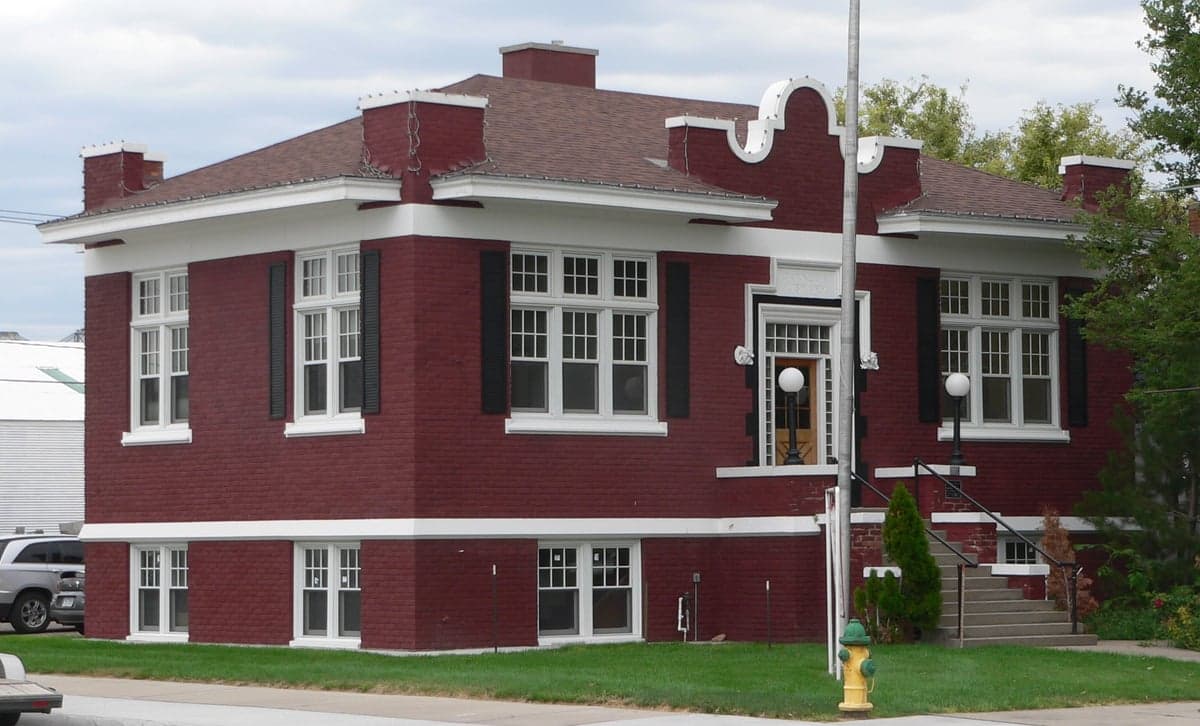
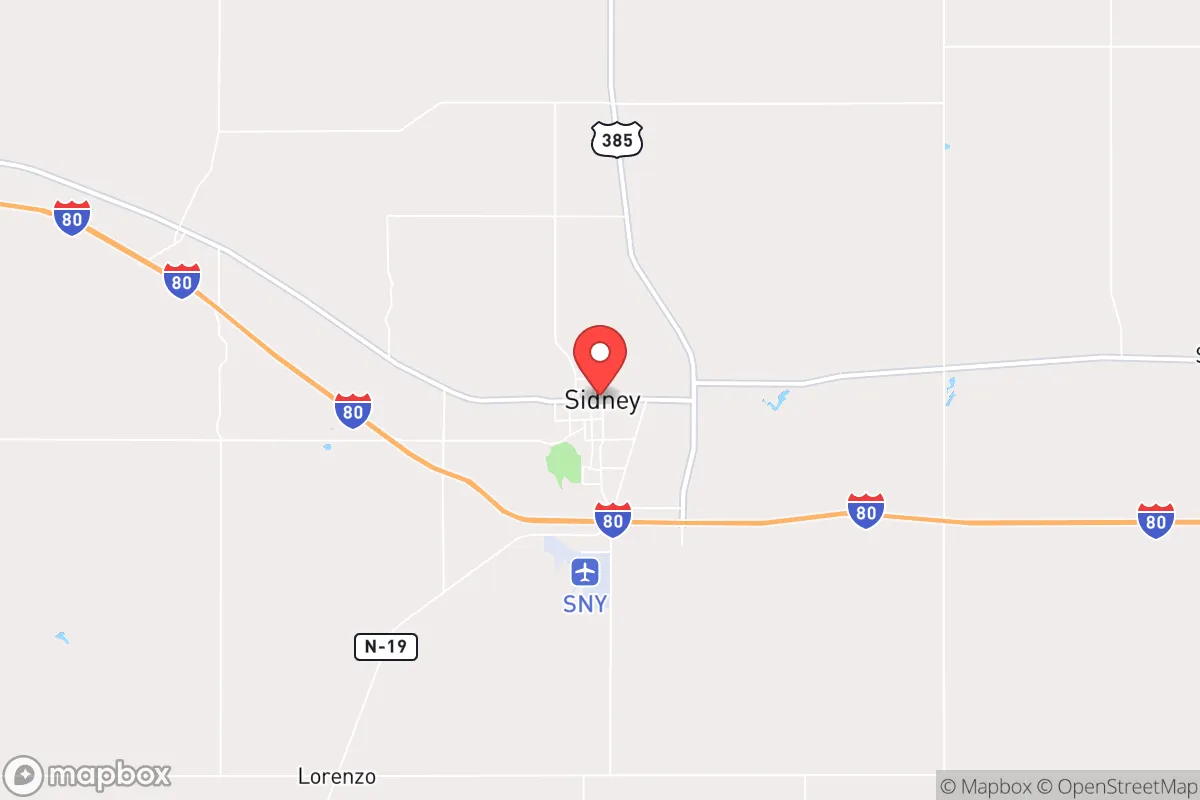
Photo: Wikipedia
Personal Sovereignty in Sidney, NE
Moderate friction. Expect trade-offs in some aspect of personal liberty and independence.
What does Personal Sovereignty tell us?
Personal Sovereignty measures your capacity for self-reliance and independence with minimal government friction. Higher scores mean fewer barriers between you and the way you want to live... but it assumes you have the space you need and good neighbors.
What does this tell us?
Personal Sovereignty measures your capacity for self-reliance and independence with minimal government friction. Higher scores mean fewer barriers between you and the way you want to live... but it assumes you have the space you need and good neighbors.
State Policy
Energy independence: Importer (35% of energy produced in-state)
Personal Liberty
Homesteading

Personal Liberty Analysis
For the individual or family prioritizing maximum personal sovereignty, Sidney, Nebraska offers a rare combination of low population density, minimal state interference, and a culture of self-reliance that is increasingly difficult to find in the United States. Located in the Nebraska Panhandle, this community of roughly 6,500 people operates under a legal and regulatory framework that consistently ranks among the most freedom-oriented in the nation. The state’s constitutional carry law, absence of a personal income tax on most retirement and investment income, and permissive land-use policies create an environment where a prepper or survivalist can operate with far fewer constraints than in coastal or even Midwestern urban centers. For those looking to build a life insulated from federal overreach and cultural decay, Sidney represents a strategic outpost where personal autonomy is not just tolerated, but structurally supported.
Tax burden and regulatory posture: How Nebraska compares to surrounding states
Nebraska’s tax structure is a mixed bag, but for the strategic relocator, the net effect in Sidney is favorable when weighed against the regulatory freedom gained. The state levies a progressive income tax with a top rate of 6.84%, which is higher than neighboring Wyoming (0%) and South Dakota (0%), but significantly lower than Colorado’s flat 4.4% when factoring in local taxes and cost of living adjustments. Crucially, Nebraska does not tax Social Security benefits, and it offers a partial exemption for military pensions and other retirement income, making it attractive for those seeking to reduce their tax footprint in retirement. Property taxes in Cheyenne County, where Sidney sits, are around 1.5% of assessed value—higher than the national average but offset by the relatively low home prices (median around $180,000). The regulatory posture is where Sidney truly shines: Nebraska is a right-to-work state, has no state-level occupational licensing requirements for many trades, and imposes minimal environmental regulations on small-scale agriculture and residential development. The state’s business climate ranks in the top 15 nationally according to the Tax Foundation, and local zoning in Sidney is remarkably permissive compared to cities of similar size in blue states. For the prepper, this means fewer hurdles for building a workshop, storing supplies, or operating a home-based business without government interference.
Self-defense and gun law specifics: Constitutional carry and castle doctrine
Nebraska is a constitutional carry state as of 2023, meaning any law-abiding adult can carry a concealed firearm without a permit. This is a non-negotiable baseline for anyone serious about personal sovereignty, and Sidney’s local culture fully embraces it. The state also has a strong castle doctrine with no duty to retreat in any place where the individual is lawfully present, including vehicles and public spaces. Stand-your-ground protections are codified in statute, and Nebraska law explicitly prohibits local governments from enacting their own gun control ordinances—so Sidney’s city council cannot impose magazine bans, waiting periods, or registration schemes. The state preemption law is ironclad, a critical detail for those who have watched cities like Denver or Lincoln attempt to circumvent state law. For the survivalist, the practical implication is clear: you can legally carry a sidearm for daily protection, stockpile ammunition without state-level background checks on private transfers, and defend your home or camp without fear of prosecution. The nearest gun-friendly jurisdiction is Wyoming, just 30 miles west, but Sidney itself offers a legal environment that is effectively indistinguishable from the Mountain West in terms of firearm freedom.
Self-reliance and homesteading viability: Lot sizes, zoning, and off-grid feasibility
Sidney’s zoning code is a prepper’s dream compared to suburban or urban alternatives. Residential lots in the city limits typically range from 7,000 to 15,000 square feet, with many older homes sitting on quarter-acre parcels that allow for substantial gardening, small livestock, and workshop construction. The city’s zoning ordinance permits chickens, bees, and even goats on lots over 10,000 square feet with a simple permit, and there are no restrictions on rainwater collection or solar panel installation. For those seeking true off-grid independence, the unincorporated areas of Cheyenne County—just a 10-minute drive from downtown Sidney—offer 1-acre to 40-acre parcels with no building codes, no permit requirements for wells or septic systems, and no restrictions on alternative energy. The county’s planning department is notoriously hands-off; as long as you meet basic health department standards for sewage, you can build a cabin, a shipping container home, or a yurt without architectural review. The high plains climate (15 inches of annual rainfall) makes dryland farming challenging, but with a well and solar panels, a family can achieve near-total energy and water independence. The nearest Home Depot is 90 miles away in Scottsbluff, which reinforces the local ethos of self-sufficiency—you either bring it with you or learn to do without.
Personal liberties: Parental rights, medical autonomy, speech, and property
Nebraska’s legal framework strongly favors parental rights and medical freedom, both of which are under direct assault in many states. The state has a parental bill of rights that explicitly affirms parents’ authority to direct the upbringing, education, and healthcare of their children. Sidney’s public schools are small (around 1,200 students district-wide) and responsive to community input, with no mask mandates or vaccine requirements for attendance as of 2025. Medical autonomy is protected by Nebraska’s lack of a state-level vaccine passport system and its prohibition on mandatory COVID-19 vaccinations for state employees. The state also has a robust religious exemption statute for any medical procedure. On speech and property, Nebraska is a one-party consent state for recording conversations, and there are no hate speech laws that could be weaponized against political dissent. Property rights are protected by a strong eminent domain statute that requires just compensation and public use, and Sidney’s city council has a track record of rejecting federal grant money that comes with strings attached—such as housing mandates or zoning changes tied to HUD funding. For the conservative individual watching federal overreach erode local control, Sidney represents a pocket where the Second Amendment, the First Amendment, and the Tenth Amendment still carry real weight.
In the broader landscape of American sovereignty, Sidney, Nebraska sits in a sweet spot that few other locations can match. It lacks the zero-tax appeal of Wyoming or the absolute off-grid freedom of rural Alaska, but it offers a balanced package of constitutional carry, low regulatory burden, affordable land, and a community that values self-reliance over government dependency. The nearest major city (Denver) is three hours away, which insulates Sidney from the cultural and political trends that have eroded freedom in urban centers. For the survivalist or prepper who wants to be left alone to build, stockpile, and live according to their own values, Sidney is not just a viable option—it is a strategic one. The trade-offs are real: harsh winters, limited healthcare access, and a 90-minute drive to the nearest Costco. But for those who prioritize personal sovereignty above convenience, those trade-offs are the price of freedom, and Sidney makes that price worth paying.

* Values derived from national, state, county, city and local statistics and may differ in a specific area. Last updated: 2026-05-03T20:31:48.000Z
Narrative content on this page is AI-generated and may contain mistakes. Verify any details that matter before acting on them.
ReloMaps may earn a commission from affiliate links at no extra cost to you.

