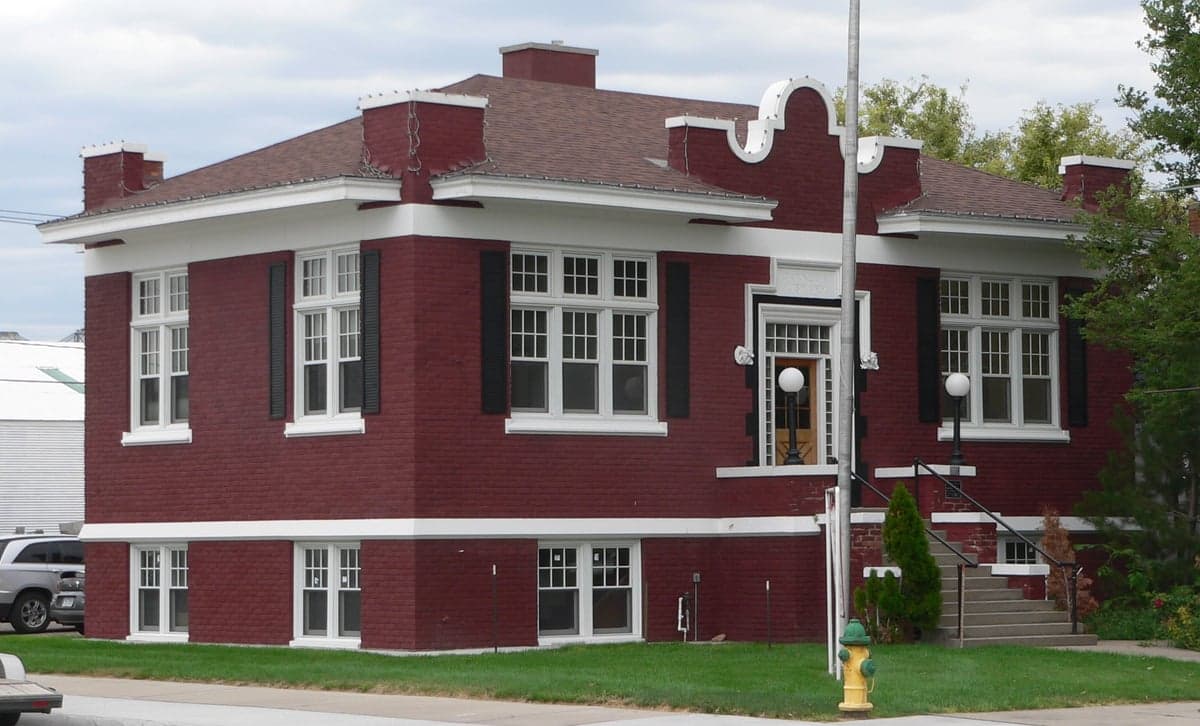
Photo: Wikipedia
Political ClimatePolitical Climate in Sidney, NE
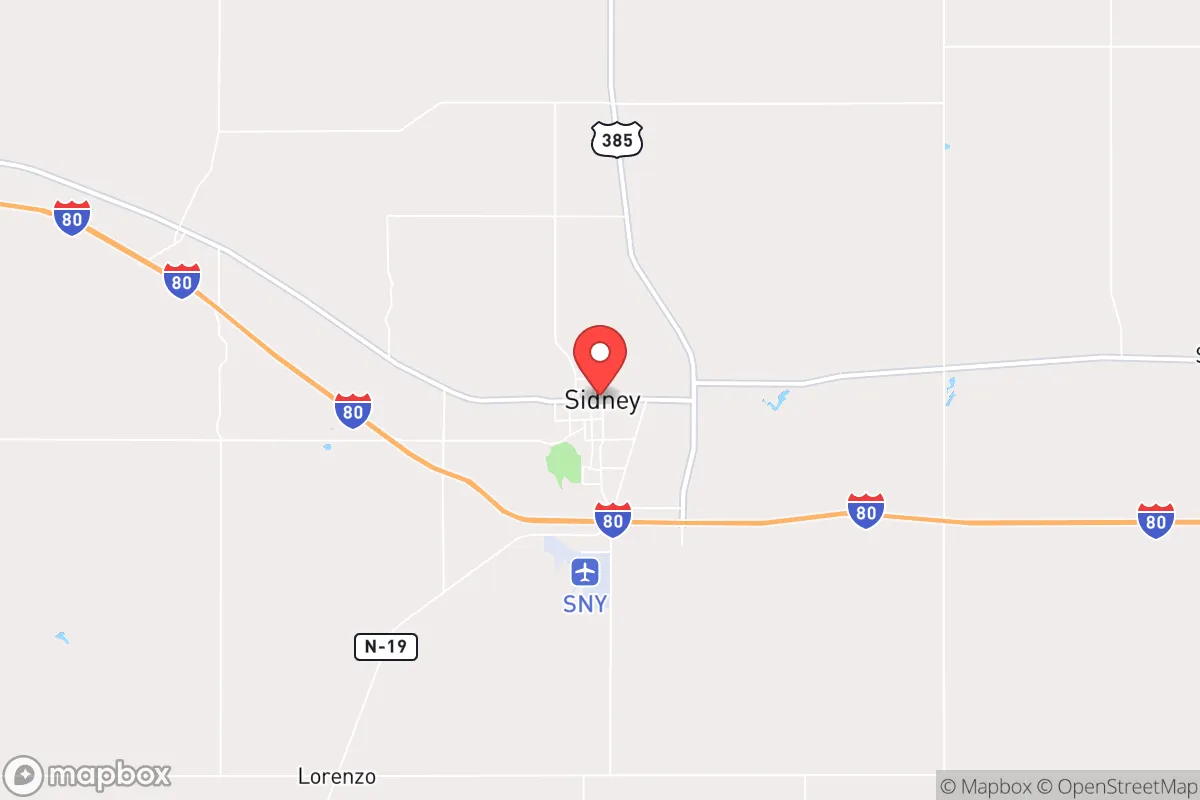
District shown is the primary district for this city’s centroid. Cities may span multiple districts.
Local Political AnalysisPolitical Analysis of Sidney, NE
Sidney, Nebraska, is about as solidly conservative as it gets, and that's not changing anytime soon. The Cook PVI of R+27 tells you the story in a single number—this area votes Republican by a massive margin, and it has for generations. You won't find much political hand-wringing here; the local sentiment leans heavily toward limited government, personal responsibility, and a healthy skepticism of federal overreach. If you're looking for a place where the political winds haven't shifted toward progressive ideology, Sidney is still holding the line.
How it compares
Drive an hour east to North Platte, and you'll find a similar conservative bent, though it's a bit more tempered by the railroad and college crowd. Head west to Scottsbluff, and you'll see a slightly more mixed picture—still red, but with a noticeable Hispanic population that votes more diversely. The real contrast is with places like Lincoln or Omaha, which are over three hours away and might as well be another country politically. In Sidney, the local county commission, school board, and city council are all reliably conservative. There's no real progressive presence to speak of, which is a relief for folks who've watched other small towns get steamrolled by outside political agendas. The nearest city that feels genuinely different is Cheyenne, Wyoming, about 90 minutes west, and even that's a pretty red state capital.
What this means for residents
For daily life, this political climate means you're not constantly fighting over basic freedoms. The local government generally stays out of your business—no heavy-handed mask mandates, no overreaching zoning rules, and a school system that hasn't been hijacked by critical theory nonsense. Property taxes are a concern, as they are everywhere in Nebraska, but the state's unicameral legislature has kept income taxes relatively low. The Second Amendment is respected without a lot of hoops to jump through. If you value being able to live your life without a bureaucrat in Lincoln or Washington telling you how to raise your kids or run your business, Sidney delivers. The downside? It can feel insular. Newcomers who bring big-city progressive ideas will find a cold reception, and the local economy is heavily tied to Cabela's/Bass Pro and the surrounding agriculture, so there's not a lot of tolerance for policies that would disrupt that.
Culturally, Sidney is a place where the local newspaper still runs a "Police Blotter" and the high school football game is the main event on Friday nights. There's a strong sense of community self-reliance—people here don't look to the government for handouts or solutions. The biggest policy distinction you'll notice is the lack of any real push for "diversity, equity, and inclusion" initiatives in local government or schools. That kind of stuff gets shut down fast. Looking ahead, the concern is that as the state legislature in Lincoln gets more pressure from Omaha and Lincoln metro areas, they might try to impose statewide mandates that Sidney would have to fight. But for now, the local culture is one of "we handle our own problems," and that's a breath of fresh air if you're tired of the constant political noise elsewhere.

State Political ClimatePolitical Climate in Nebraska
State Political AnalysisPolitical Environment in the State
Nebraska has long been a reliably conservative state, but its political landscape is more nuanced than a simple red-state label suggests. The state has voted Republican in every presidential election since 1968, and the GOP holds supermajorities in both legislative chambers and every statewide office. However, the last 10-20 years have seen a slow but steady shift, with the eastern urban corridor—particularly Omaha and Lincoln—pulling leftward while the vast rural expanse remains deeply conservative. This creates a fascinating tension: the state’s overall partisan lean remains solidly red, but the margin of victory has tightened in presidential races, from a 26-point win for Trump in 2016 to a 19-point win in 2020, driven largely by suburban and urban shifts.
Urban vs. rural divide
The political map of Nebraska is a textbook case of the urban-rural divide. The state’s two population centers—Omaha (Douglas County) and Lincoln (Lancaster County)—are the blue islands in a sea of red. Douglas County, home to roughly a third of the state’s population, has trended Democratic in recent cycles, flipping from a 2-point Romney win in 2012 to a 6-point Biden win in 2020. Lancaster County followed a similar path, going from a 1-point Romney win to a 9-point Biden win. Meanwhile, the rest of the state is overwhelmingly Republican. Counties like Buffalo (Kearney), Hall (Grand Island), and Dawson (Lexington) routinely vote 70-80% Republican. The rural panhandle, including Scottsbluff and Chadron, is even more conservative. A unique feature is Nebraska’s congressional district system for the Electoral College: the 2nd District (Omaha metro) is a swing seat that has gone for Obama, Trump, and Biden in recent cycles, making it one of the few competitive districts in the Great Plains. The 1st District (Lincoln and eastern Nebraska) is reliably red but less so than the overwhelmingly conservative 3rd District, which covers the rest of the state.
Policy environment
Nebraska’s policy environment is broadly conservative, but with some notable exceptions that reflect its independent streak. The state has no income tax on Social Security benefits and a flat state income tax rate of 5.58% (as of 2024), with a push to lower it further. Property taxes are a perennial complaint, ranking in the top 10 nationally, but the state has no sales tax on groceries or prescription drugs. The unicameral, nonpartisan legislature is unique—there are no party labels on the ballot, though in practice, the body operates along partisan lines. Education policy is a flashpoint: the state has a robust school choice movement, with the Nebraska Opportunity Scholarship Act (LB 753) passed in 2023, providing tax credits for private school scholarships. However, the state also has a strong tradition of local control, and many rural districts are consolidating. Healthcare is a mixed bag: Nebraska expanded Medicaid under the Affordable Care Act in 2020 via a ballot initiative, a move that rankled conservatives but passed with 53% support. Election laws are moderately strict: voter ID was passed in 2023 (LB 514), and the state has no-excuse absentee voting, which has been a point of contention among election integrity advocates. The state’s regulatory posture is generally business-friendly, with right-to-work laws and a low corporate income tax rate (5.58%).
Trajectory & freedom
On the freedom front, Nebraska has been a mixed bag over the last decade. On the positive side for conservatives, the state passed constitutional carry in 2023 (LB 77), allowing permitless concealed carry for anyone 21 or older. The same bill also preempted local gun ordinances, a win for uniformity. Parental rights saw a boost with the Parental Bill of Rights (LB 107) in 2024, requiring schools to notify parents of curriculum changes and medical services. However, there are concerning trends. The state’s Nebraska Equal Opportunity Commission has been aggressive in enforcing sexual orientation and gender identity protections, which were added to state anti-discrimination law via executive order in 2023—a move critics call government overreach. Medical freedom took a hit with the state’s strict COVID-19 mandates in 2020-2021, though those have since been repealed. Property rights remain strong, with no statewide rent control and limited eminent domain abuse. The biggest red flag for liberty-minded residents is the state’s K-12 education system, which has seen a push for more centralized control from the state Department of Education, including controversial social-emotional learning standards that some parents view as ideological indoctrination.
Civil unrest & political movements
Nebraska has not seen the level of civil unrest seen in coastal states, but there have been notable flashpoints. The 2020 George Floyd protests in Omaha turned violent, with looting and fires in the Old Market district, leading to a heavy National Guard presence. This event galvanized both the progressive movement in the city and the conservative backlash in the suburbs. The Nebraska State Patrol has been a frequent target of criticism from left-wing activists, but conservatives generally view them as professional. Immigration politics are a simmering issue, particularly in the Grand Island and Lexington areas, where meatpacking plants have drawn significant Hispanic populations. There have been no sanctuary city policies, and the state passed a law in 2024 (LB 123) requiring local law enforcement to cooperate with federal immigration authorities. Election integrity has been a hot topic since 2020, with the Nebraska Secretary of State conducting a forensic audit of the 2020 election that found no widespread fraud, but the issue remains alive among grassroots conservatives. The Nebraska Republican Party has seen internal strife between establishment and populist factions, with the latter gaining ground in recent county conventions.
Projection
Over the next 5-10 years, Nebraska is likely to become more politically divided, not less. The Omaha metro area, particularly Elkhorn and Papillion, is growing fast with young families and professionals, many of whom are moderate Republicans or independents who lean left on social issues. This will continue to push the 2nd Congressional District toward the Democrats. Meanwhile, the rural areas are depopulating, which will reduce their political clout in the legislature after the 2030 census. The state’s in-migration is coming primarily from blue states like California and Illinois, which could accelerate the leftward shift in the eastern corridor. However, the state’s conservative constitutional framework—including the unicameral legislature’s filibuster rules—will slow any dramatic policy changes. The biggest wildcard is the University of Nebraska-Lincoln and its influence on the state’s culture; as the university becomes more progressive, it will continue to be a source of tension with the state’s conservative majority. Expect continued battles over school choice, property taxes, and the scope of state government.
For a conservative considering a move to Nebraska, the bottom line is this: you’ll find a state that is still fundamentally red, but the blue is creeping in from the east. If you’re looking for a place where your values are the majority, the rural areas and smaller cities like Kearney or Norfolk are your best bet. If you need to be near Omaha for work, be prepared for a more politically mixed environment, especially in the suburbs. The state’s tax burden is moderate but property taxes are high, and the regulatory environment is generally light. The biggest practical concern is the education system—if you have kids, you’ll want to research school districts carefully, as the urban districts are increasingly progressive. Overall, Nebraska offers a solid foundation for conservative living, but it’s not immune to the national trends, and the next decade will test whether the state’s independent, live-and-let-live culture can withstand the pressures of demographic change.
* Values derived from national, state, county, city and local statistics and may differ in a specific area. Last updated: 2026-05-03T20:31:48.000Z
Narrative content on this page is AI-generated and may contain mistakes. Verify any details that matter before acting on them.
ReloMaps may earn a commission from affiliate links at no extra cost to you.

