
Photo: Wikipedia
Quality of Life in Siloam Springs, AR
A high quality of life with strong walkability, manageable living costs, healthy neighborhood signals, and solid amenity access.
What does Quality of Life tell us?
Quality of Life blends cost of living, nearby amenities, socioeconomic signals, and neighborhood character. City-level scores represent the whole municipality; individual neighborhoods can differ.
What does this tell us?
Quality of Life blends cost of living, nearby amenities, socioeconomic signals, and neighborhood character. City-level scores represent the whole municipality; individual neighborhoods can differ.
Cost of Living
22% below national average
The Real Cost of Living in Siloam Springs, AR for 2026
| Tier | Individual | Family (4) |
|---|---|---|
| Survival | $15k | $28k |
| Comfortable | $40k | $59k |
| Luxury | $101k+ | $157k+ |
| Elite (Top 5%) | $119k+ | $185k+ |
112%
The Area Signal
A metric tracking the socioeconomic signals of the area.
Hobbies
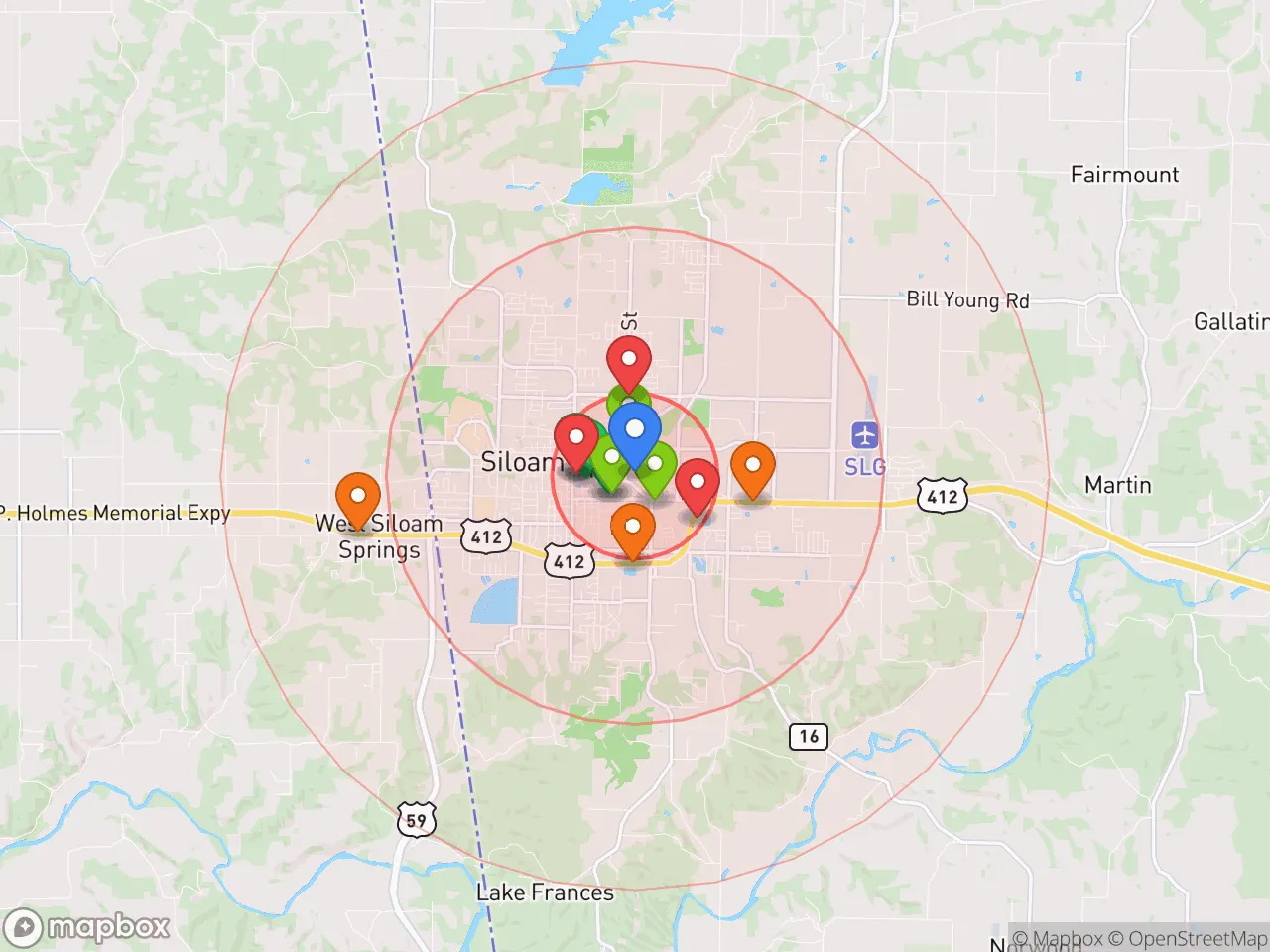
Explore the areaGroceries
2 within 10 miles
Gas
12 within 10 miles
Hospital
6 within 20 miles
Airport
MCI — Kansas City International
Post Office
USPS — Siloam Springs, AR
Critical Amenities
Quality-of-Life Analysis
Siloam Springs presents a notably affordable quality of life in Northwest Arkansas, with a cost of living index of 78 (well below the US average of 100) and a median home value of $205,000. The area attracts a mix of young families employed by regional manufacturing and logistics firms, retirees seeking lower property taxes, and professionals commuting to nearby Fayetteville or Bentonville. The community’s character is shaped by a blend of long-term residents and newcomers drawn by the region’s economic growth, creating a stable but evolving social fabric.
Cost of living, housing affordability, and how Siloam Springs compares to nearby cities
Housing in Siloam Springs is significantly more affordable than in neighboring Bentonville or Fayetteville, where median home values often exceed $350,000. With a median home value of $205,000 and a median rent of $941, the city offers a clear entry point for first-time buyers and renters. The overall cost of living index of 78 is driven largely by lower housing costs, though groceries and utilities are also slightly below national averages. The average commute of just over 20 minutes is shorter than the regional average of 25-30 minutes, which reduces transportation expenses and adds to the area’s appeal for workers employed at major local employers like Simmons Foods or the John Brown University campus. Compared to Rogers or Springdale, Siloam Springs offers more square footage per dollar, but buyers should note that property taxes in Benton County are moderate, and homeowners insurance rates are typical for the region.
What daily life is like: amenities, schools, and the local rhythm
Daily life in Siloam Springs centers around a walkable downtown with local restaurants, a farmers market, and the Sager Creek Arts Center. The Siloam Springs School District serves approximately 4,500 students and is rated above average for Arkansas, with a graduation rate near 90%. For outdoor recreation, residents use the 7-mile Razorback Greenway trail system, which connects to the larger Northwest Arkansas trail network, and the nearby Illinois River offers kayaking and fishing. The city’s population of roughly 17,000 means a slower pace than Fayetteville or Bentonville, but residents still have access to regional shopping, the Northwest Arkansas National Airport (XNA), and the Crystal Bridges Museum within a 30-minute drive. The local economy is anchored by manufacturing (Simmons Foods, Gates Corporation) and education (John Brown University), which provides a stable employment base and a steady influx of college-related activity. Evening and weekend life is quieter, with community events like the Dogwood Festival and the Siloam Springs Rodeo drawing consistent local participation.
This combination of low housing costs, short commutes, and solid schools makes Siloam Springs a strong fit for budget-conscious families and remote workers who want proximity to the amenities of a larger metro area without the premium price tag. Retirees on fixed incomes also benefit from the low cost of living and access to healthcare through Siloam Springs Regional Hospital. However, those seeking a vibrant nightlife or a dense urban environment may find the city too quiet, and the limited public transit means a car is essential. For anyone prioritizing affordability, a manageable commute, and a tight-knit community feel, Siloam Springs offers a practical and comfortable base in the growing Northwest Arkansas corridor.

Crime in Siloam Springs, AR
Crime rates similar to the national median for U.S. locations.
Violent CrimeViolent Crime Analysis
Property CrimeProperty Crime Analysis
Crime Analysis
Siloam Springs, Arkansas, reports a violent crime rate of 433.3 incidents per 100,000 residents and a property crime rate of 910 per 100,000, placing it above both state and national averages for overall crime. While the city benefits from a relatively low population density and a strong community identity, these statistics indicate that safety is a genuine concern for prospective residents. The data reflects a community where property offenses are the most common threat, but violent incidents occur at a rate that warrants careful consideration, particularly given the broader criminal justice environment in the region.
Crime in context
To understand Siloam Springs' safety profile, it is essential to compare its rates to benchmarks. The national average for violent crime is roughly 380 per 100,000, meaning Siloam Springs exceeds that figure by about 14%. Property crime nationally averages around 1,950 per 100,000, so the city's 910 rate is actually below the national norm. However, Arkansas as a whole has a higher violent crime rate than the U.S. average, and Siloam Springs' violent crime rate is notably higher than the state's average of approximately 540 per 100,000. This places the city in a challenging middle ground: safer than many parts of Arkansas but riskier than the typical American community. The violent crime rate of 433.3 per 100,000 is a key metric for anyone evaluating the area.
What residents experience
Residents of Siloam Springs most frequently encounter property crimes such as theft, burglary, and vehicle break-ins, which account for the bulk of the 910 per 100,000 figure. These offenses often occur in commercial districts and near the university, though residential areas are not immune. Violent crimes, while less common, include aggravated assault and robbery, with the rate of 433.3 per 100,000 translating to roughly 1 violent crime every 3 days in a city of about 17,000 people. Progressive prosecutorial policies in nearby larger jurisdictions, such as Washington County, can influence regional crime patterns by reducing consequences for repeat offenders, potentially increasing the risk of property and violent crimes spilling into smaller communities like Siloam Springs. This dynamic is a significant factor for families and individuals prioritizing public safety.
Neighborhood-level variation in Siloam Springs is not extensively documented in public data, but anecdotal reports and local police activity maps suggest that areas near the downtown core and along Highway 412 see higher incident rates. Newer subdivisions on the city's outskirts, such as those near the Kansas City Southern railway, tend to report fewer incidents. Prospective residents are advised to consult the Siloam Springs Police Department's annual reports and speak with local real estate agents for block-by-block insights. The combination of above-average violent crime and the influence of regional justice policies makes thorough local research essential before committing to a move.
* Values derived from national, state, county, city and local statistics and may differ in a specific area. Last updated: 2026-04-23T03:42:02.000Z
Narrative content on this page is AI-generated and may contain mistakes. Verify any details that matter before acting on them.
ReloMaps may earn a commission from affiliate links at no extra cost to you.

