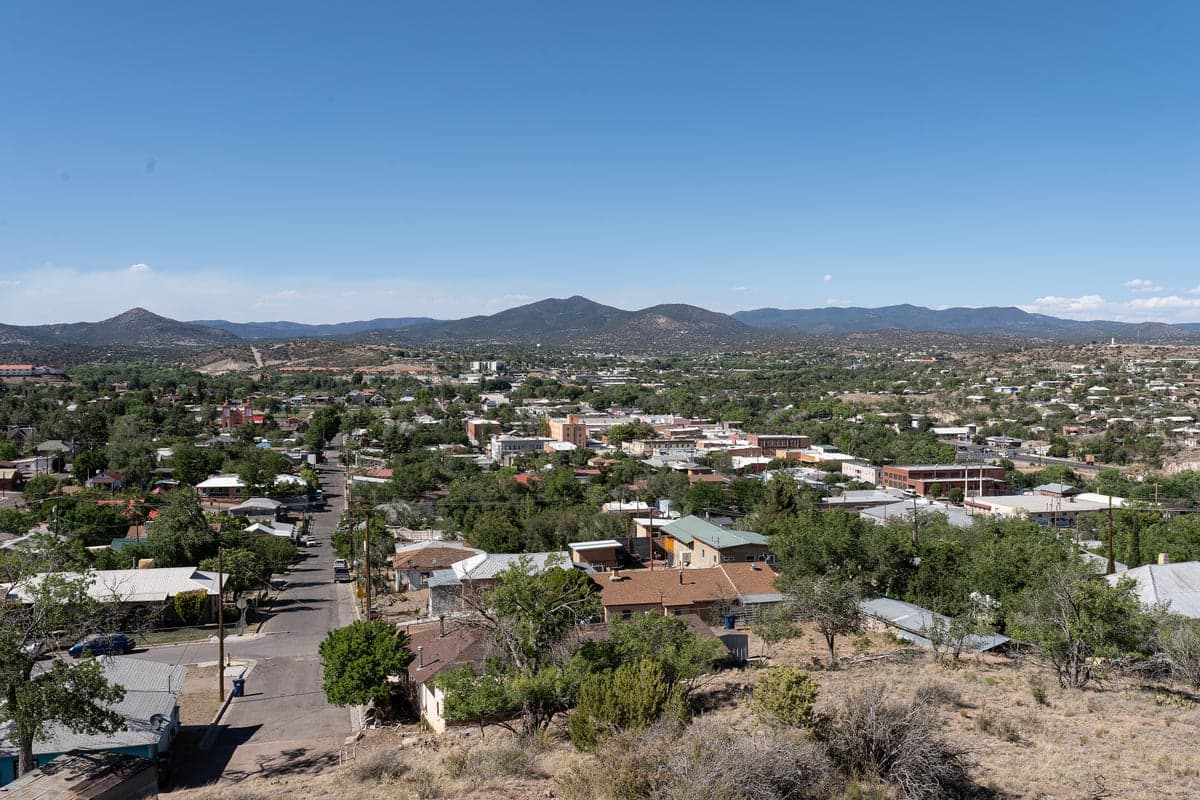
Photo: Wikipedia
Political ClimatePolitical Climate in Silver City, NM
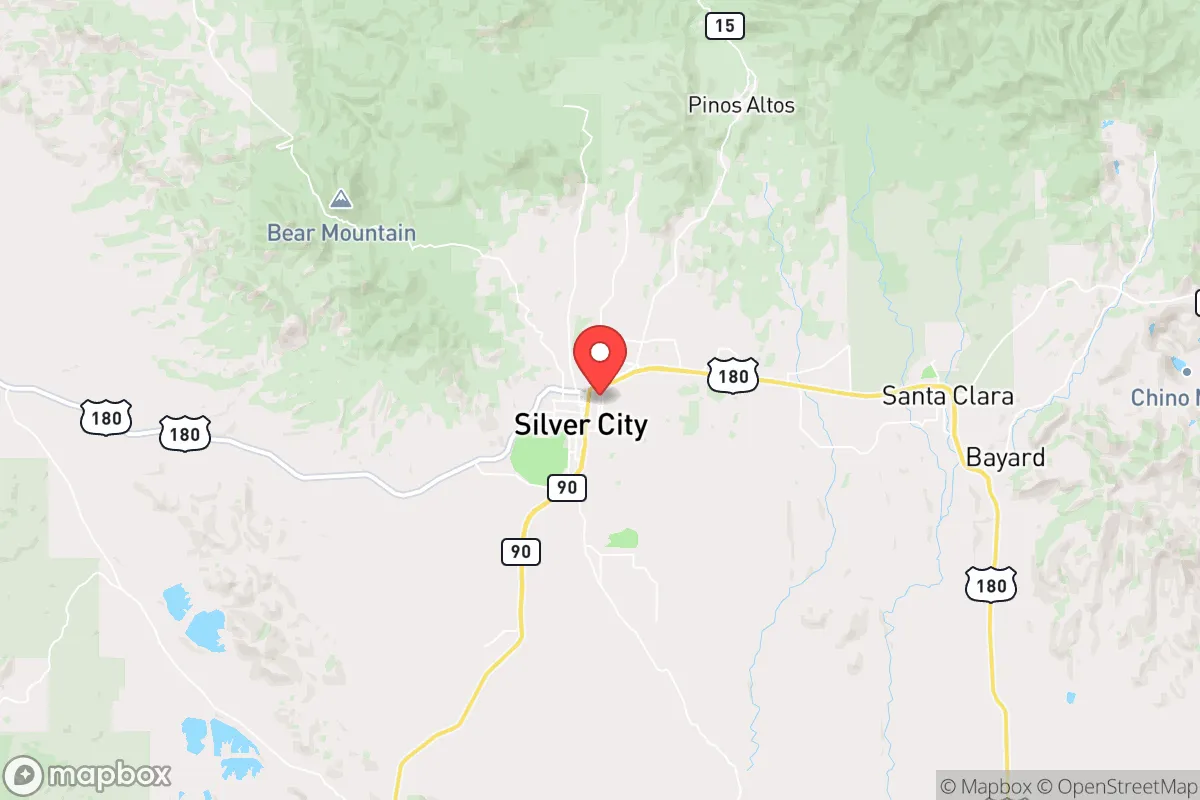
District shown is the primary district for this city’s centroid. Cities may span multiple districts.
Local Political AnalysisPolitical Analysis of Silver City, NM
Silver City’s political climate is a bit of a head-scratcher if you’re used to the rest of New Mexico. The Cook PVI rating of EVEN tells you exactly what you’d feel on the ground: this place is a true battleground, and it’s been swinging. For a long time, it was reliably blue, thanks to the university and the old mining unions, but that’s shifting. You’re seeing more and more folks, especially the ones who moved here to get away from the chaos in bigger cities, voting for common sense and personal freedom. The 2024 election was a real wake-up call, with Grant County flipping closer to the middle than it’s been in decades. The trajectory is clear: Silver City is getting redder, but it’s a slow, hard fight against the progressive tide that’s been trying to take over.
How it compares
Drive 45 minutes east to Las Cruces, and you’re in a different world—solidly blue, with all the big-government thinking that comes with a college town and a military base. Head north to the Gila National Forest, and you’ll find tiny towns like Reserve and Glenwood that are deeply conservative, where folks just want to be left alone. Silver City sits right in the middle, politically and geographically. It’s a weird mix: you’ve got the old-timers who remember when the copper mines were booming and the union hall ran things, and then you’ve got the new wave of retirees and remote workers who came here for the low taxes and the wide-open spaces. Those newcomers are the ones pushing back against the progressive agenda—they didn’t move to the middle of nowhere to have the government tell them how to live. The contrast with Santa Fe, which is a full-on progressive stronghold, couldn’t be starker. Down here, we still believe in the Second Amendment, property rights, and not having the county commission micromanage every little thing.
What this means for residents
For the average person living here, the political tug-of-war means you have to keep your eyes open. The local government has been flirting with some of that progressive nonsense—talk of “equity” initiatives in the schools, zoning changes that feel like they’re testing the limits of property rights, and a general attitude from some officials that they know better than you do. It’s not full-blown Santa Fe yet, but you can see the cracks. The good news is that the conservative voice is getting louder. The county commission has a few solid members who push back on tax hikes and overreach, and the local sheriff’s office is still run by folks who understand the Constitution. What this means for your daily life is that you can still enjoy a lot of freedom here—no mask mandates, no crazy business closures, and the gun laws are still sane—but you’ve got to stay involved. If you don’t show up to those town hall meetings, the progressive crowd will run the table. It’s a constant battle, but it’s one worth fighting.
The real cultural distinction in Silver City is that it’s still a place where your word matters more than a government form. The old mining town grit is fading, but it’s not gone. You’ll see it in the way people help their neighbors without asking for a permit, and in the way the local ranchers and hunters keep the land open and free. The biggest policy fight right now is over water rights and land use—the state government in Santa Fe keeps trying to grab more control, and locals are pushing back hard. It’s a classic story: the people who actually live here versus the bureaucrats who think they know what’s best. Long-term, I see Silver City staying a purple battleground, but if the progressive overreach keeps coming, more and more folks will wake up and vote for the side that just wants to be left alone. It’s not a done deal, but the potential is there for a real shift if we keep the pressure on.

State Political ClimatePolitical Climate in New Mexico
State Political AnalysisPolitical Environment in the State
New Mexico has long been a reliably blue state in presidential elections, but its political landscape is far more nuanced than a simple partisan label suggests. The state’s Democratic lean is driven overwhelmingly by the Albuquerque metro area (Bernalillo County) and the northern counties around Santa Fe and Taos, while the eastern and southern plains—places like Hobbs, Roswell, and Las Cruces—often vote Republican. Over the past 20 years, the state has shifted leftward on cultural issues, but a strong libertarian streak and a deep distrust of government overreach remain alive, especially in rural areas. For a conservative considering relocation, the picture is mixed: low taxes and a hands-off attitude in some regions coexist with progressive policies in the state capital that can feel like a different country.
Urban vs. rural divide
The political map of New Mexico is a tale of two worlds. Bernalillo County (Albuquerque) alone casts about a third of the state’s votes and consistently delivers 55-60% for Democrats, powered by a mix of government employees, university faculty, and a growing Hispanic electorate that leans left on immigration and social services. Santa Fe County is even bluer, with Democrats routinely pulling 70%+—it’s the epicenter of progressive activism, from environmentalism to indigenous rights. Meanwhile, the eastern plains—Lea County (Hobbs) and Eddy County (Carlsbad)—vote Republican by 30-40 point margins, driven by oil and gas workers who value energy independence and low regulation. Doña Ana County (Las Cruces) is a swing area, often tipping blue by single digits, but its rural outskirts lean red. The divide isn’t just partisan; it’s cultural. In Hobbs, you’ll find churches, gun shops, and a “live and let live” ethos. In Santa Fe, you’ll find organic co-ops, art galleries, and a government that seems to regulate everything from light bulbs to lawn watering.
Policy environment
On paper, New Mexico’s tax structure is relatively friendly: no state income tax on Social Security, a flat 4.9% personal income tax rate, and a gross receipts tax (GRT) that replaces a sales tax but can be high in some cities (Albuquerque’s GRT is around 7.9%). Property taxes are among the lowest in the nation, which is a genuine plus for homeowners. However, the regulatory environment is where the state’s progressive tilt shows. The Energy Transition Act (2019) mandates 100% carbon-free electricity by 2045, which has already led to the closure of the San Juan Generating Station near Farmington, costing hundreds of jobs. Education policy is a mixed bag: the state has a universal school voucher-like program (the Opportunity Scholarship Act) that covers tuition at any public college, but K-12 performance remains near the bottom nationally, and the powerful teachers’ union (NEA-New Mexico) fights school choice expansion. Healthcare is dominated by the state’s Medicaid expansion under the Affordable Care Act, covering nearly half the population, but private insurance costs are high. Election laws are relatively permissive: same-day voter registration and no-excuse absentee voting are standard, which conservatives often view as ripe for fraud, though no major scandals have been proven.
Trajectory & freedom
Over the past five years, New Mexico has become less free in several key areas, particularly for gun owners and parents. In 2021, the legislature passed a red flag law (HB 129) allowing courts to temporarily seize firearms from individuals deemed a risk, without a criminal conviction—a policy many conservatives see as a due-process violation. That same year, a universal background check law for private gun sales took effect. On the parental rights front, the state has moved in the opposite direction of Texas and Arizona: in 2023, the governor signed a shield law protecting out-of-state abortion providers and gender-transition procedures for minors, effectively making New Mexico a sanctuary for procedures banned in neighboring states. Medical autonomy took a hit with the COVID-19 vaccine mandate for state employees and healthcare workers, which remained in place longer than in many red states. On the plus side, property rights are relatively strong—no statewide zoning mandates—and the state has no income tax on military pensions, which appeals to veterans. But the overall trajectory is concerning: the legislature has become more uniformly Democratic after the 2020 redistricting, and the governor (Michelle Lujan Grisham) has shown little appetite for compromise on cultural issues.
Civil unrest & political movements
New Mexico hasn’t seen the large-scale protests of Portland or Seattle, but there have been flashpoints. In 2020, Albuquerque saw weeks of Black Lives Matter protests, some turning violent with property damage downtown, and the city council later voted to defund the police by 7.5%—a move that was partially reversed after a spike in homicides. Immigration politics are a constant undercurrent: the state has a sanctuary state law (SB 140, 2019) that prohibits state and local law enforcement from cooperating with federal immigration authorities, which has led to tensions with border communities like Sunland Park and Columbus. On the right, the New Mexico Civil Guard, a militia group, has been active in border surveillance and occasionally clashed with left-wing counter-protesters. Election integrity remains a hot-button issue: in 2020, the state used universal mail-in ballots due to COVID, and while no widespread fraud was found, many conservatives remain skeptical of the process. The most visible political movement is the “New Mexico Rising” coalition, a left-leaning group that pushes for environmental justice and indigenous rights, often clashing with oil and gas interests in the southeast.
Projection
Looking ahead 5-10 years, New Mexico is likely to continue its leftward drift, but at a slower pace than Colorado or Oregon. The key demographic shift is the growth of the Hispanic population, which now makes up nearly 50% of the state. While many Hispanic voters in rural areas are culturally conservative, the urban Hispanic vote is trending younger and more progressive, especially on climate and immigration. In-migration is modest—mostly retirees from California and Texas seeking lower housing costs—but these newcomers tend to be moderate or left-leaning, not the conservative refugees you see in Idaho or Tennessee. The oil and gas boom in the Permian Basin (southeast New Mexico) could slow if federal regulations tighten, which would hurt the red-leaning economies of Hobbs and Carlsbad. The most realistic projection is a state that remains blue at the top but with a growing rural backlash, similar to Illinois or New York. For a conservative moving in now, expect to live in a red island—like Rio Rancho (a conservative-leaning suburb of Albuquerque) or Los Lunas—where local politics are sane, but state-level policies will continue to feel like they’re written by Santa Fe progressives.
For a conservative weighing a move to New Mexico, the bottom line is this: you can find affordable land, low property taxes, and a community of like-minded folks in the eastern plains or the southern bootheel, but you’ll be fighting an uphill battle at the state level. If you value gun rights, parental control over education, and minimal government intrusion, you’ll need to be politically active just to hold the line. The state’s natural beauty and low cost of living are real draws, but the political climate is one where your vote for governor or state legislature will likely be on the losing side for the foreseeable future. It’s a place to live if you’re willing to be a minority voice—not if you want to see your values reflected in state law.
* Values derived from national, state, county, city and local statistics and may differ in a specific area. Last updated: 2026-05-01T11:10:40.000Z
Narrative content on this page is AI-generated and may contain mistakes. Verify any details that matter before acting on them.
ReloMaps may earn a commission from affiliate links at no extra cost to you.

