Personal Sovereignty in Sitka City And, AK
Viable for self-reliance. Generally workable, though some barriers may limit total independence.
What does Personal Sovereignty tell us?
Personal Sovereignty measures your capacity for self-reliance and independence with minimal government friction. Higher scores mean fewer barriers between you and the way you want to live... but it assumes you have the space you need and good neighbors.
What does this tell us?
Personal Sovereignty measures your capacity for self-reliance and independence with minimal government friction. Higher scores mean fewer barriers between you and the way you want to live... but it assumes you have the space you need and good neighbors.
State Policy
Energy independence: Net exporter (350% of energy produced in-state)
Personal Liberty
Homesteading

Personal Liberty Analysis
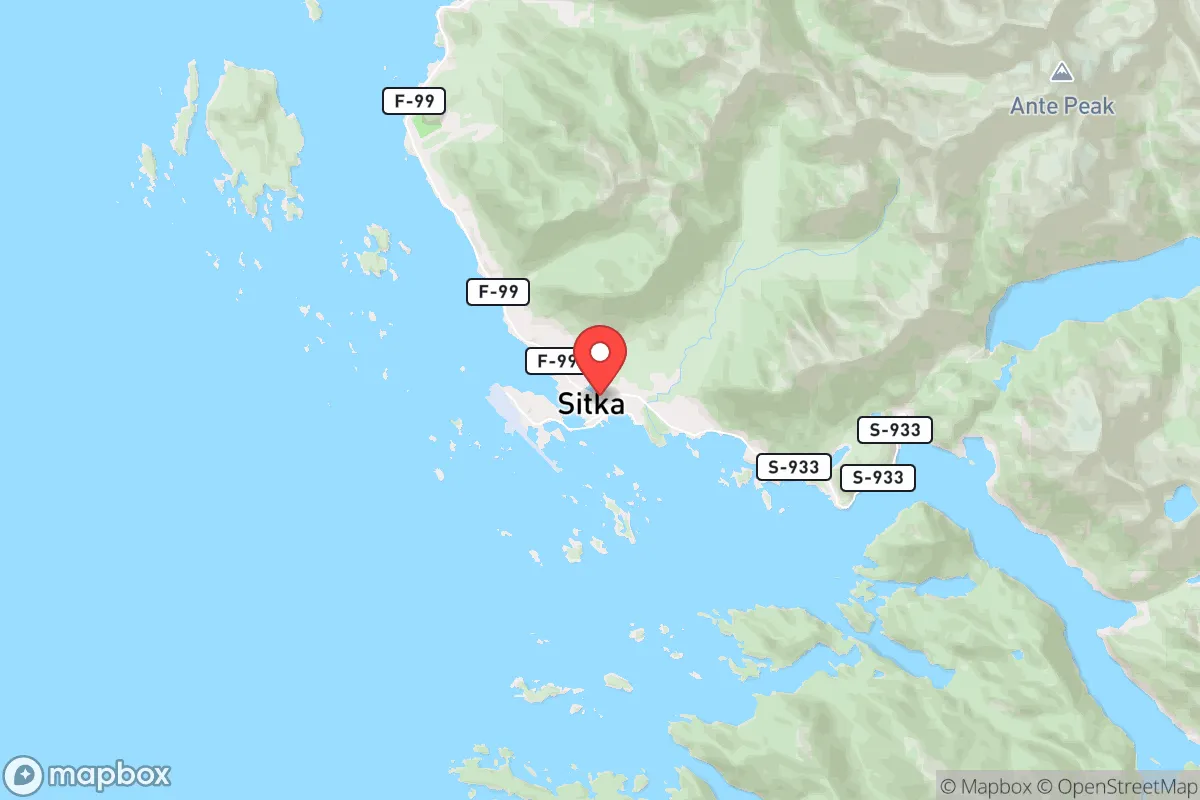
Sitka, Alaska, offers a unique environment for personal sovereignty that is shaped more by its extreme geography and small population than by any deliberate policy design. For the individual or family seeking to maximize autonomy, the city presents a paradox: the state of Alaska has a relatively light regulatory touch compared to the Lower 48, but Sitka itself is a remote, island-bound community where the local government and the federal presence (via the Tongass National Forest) still exert significant control over land use and daily life. The real sovereignty here comes from the physical isolation—the ability to live largely unseen—rather than from any robust legal framework protecting individual rights. A survivalist or prepper mindset will find the raw ingredients for self-reliance, but must navigate a political landscape that leans left locally, even as the state overall maintains a more libertarian bent.
Tax burden and regulatory posture in Sitka and Alaska
Alaska’s tax environment is arguably the most favorable in the nation for those seeking to minimize government extraction. There is no state income tax, no state sales tax, and the Permanent Fund Dividend provides an annual cash payment to every resident—effectively a negative tax. Sitka itself imposes a modest 5% sales tax on most goods, but no property tax on the first $150,000 of assessed home value, and rates above that are low by national standards. This creates a situation where a family can keep a much larger share of their earnings than in almost any other U.S. city. However, the regulatory posture is less friendly. The city enforces strict building codes tied to seismic and coastal hazards, and the federal government owns roughly 80% of the land within the city limits (Tongass National Forest). This means that any construction, timber harvest, or even significant land modification often requires permits from the U.S. Forest Service—a layer of bureaucracy that can frustrate those seeking to build off-grid or develop property without oversight. For the prepper, the tax advantage is real, but the regulatory drag on land use is a notable constraint.
Self-defense and gun law specifics in Sitka
Alaska is a constitutional carry state, meaning no permit is required to carry a concealed firearm for anyone 21 or older who can legally possess a gun. Sitka does not impose any local ordinances that restrict this right further. Open carry is also legal without a permit. The state has no "red flag" law, no magazine capacity restrictions, and no firearm registration. For the survivalist, this is as close to an unencumbered legal environment as exists in the United States. However, practical realities matter. Sitka is a small, tight-knit community of roughly 8,500 people, and violent crime rates are low—the 2023 FBI data shows zero homicides and a robbery rate of about 12 per 100,000, well below the national average. The primary self-defense concern is not human threat but wildlife: brown bears are common on the island, and many residents carry bear spray or a large-caliber handgun (e.g., .44 Magnum) as a matter of routine. The legal framework for self-defense is strong, but the actual need for armed self-defense against people is minimal. For those who view gun rights as a non-negotiable pillar of sovereignty, Sitka delivers on paper, but the social environment is not one of high tension or frequent defensive encounters.
Self-reliance and homesteading viability in Sitka
The viability of true self-reliance in Sitka is mixed. The city sits on Baranof Island, accessible only by boat or plane—no road connects it to the rest of Alaska. This isolation is a double-edged sword. On one hand, it provides a natural buffer against the chaos of the Lower 48; on the other, it makes supply chains fragile and expensive. Lot sizes within the city are typically small—quarter-acre to half-acre—due to the mountainous terrain and limited flat land. Zoning allows for backyard gardens, small livestock (chickens, rabbits), and even a single pig or goat with a permit, but the climate is cool and wet, with only about 100 frost-free days per year. Growing a significant portion of your own food is possible but requires a greenhouse and a lot of effort. Off-grid feasibility is high in theory: the surrounding forest offers timber, the ocean provides seafood (salmon, halibut, crab), and fresh water is abundant. But the city requires connection to municipal water and sewer for any habitable structure within the urban zone. True off-grid living is only possible on private land outside the city limits, which is scarce and expensive—raw lots can run $50,000–$100,000 for a few acres. For the prepper seeking a retreat, Sitka offers the raw materials but demands significant capital and a willingness to work within a permitting system that is not designed for radical independence.
Personal liberties in Sitka: parental rights, medical autonomy, speech, and property
Alaska’s state constitution includes a strong privacy clause that has been interpreted to protect personal medical decisions, including the right to refuse vaccines or treatments. Parental rights are generally respected, with no state-level mandate for school curriculum that overrides parental control—though Sitka’s public schools follow standard state standards, and homeschooling is legal with minimal reporting requirements. Medical autonomy is further supported by the state’s lack of a certificate-of-need law, meaning individuals can access a wider range of alternative or direct-pay medical services. Speech is protected under the First Amendment, and Alaska has no hate speech laws that chill expression. Property rights are where the friction appears. The heavy federal land ownership means that the "right to use your land as you see fit" is severely curtailed. The Tongass National Forest imposes restrictions on timber cutting, road building, and even recreational use. The city also enforces a strict coastal management plan that limits development near the shoreline. For the conservative individual concerned about government overreach, the state-level framework is among the best in the nation, but the local and federal overlay in Sitka creates a constant tension between the ideal of sovereignty and the reality of bureaucratic control.
Overall, Sitka offers a high degree of personal sovereignty relative to most of the United States, but it is a sovereignty that comes with strings attached. The tax burden is minimal, gun laws are among the freest, and the isolation provides a natural buffer against federal overreach. However, the regulatory grip of the U.S. Forest Service and the city’s permitting requirements mean that true independence—building your own home, living off the land, raising your family without interference—requires navigating a system that is not designed for it. For the survivalist or prepper who values financial freedom and the right to bear arms above all else, Sitka is a strong contender. For those who want to own their land outright and do with it as they please, the reality is more constrained. Compared to the Lower 48, it is a refuge; compared to a truly libertarian jurisdiction like rural Idaho or Montana, it is a compromise. The key is understanding that sovereignty in Sitka is less about legal protections and more about the practical freedom that comes from being far away, in a place where the government’s attention is often elsewhere.

* Values derived from national, state, county, city and local statistics and may differ in a specific area. Last updated: 2026-04-19T07:41:37.000Z
Narrative content on this page is AI-generated and may contain mistakes. Verify any details that matter before acting on them.
ReloMaps may earn a commission from affiliate links at no extra cost to you.

