Demographics of Sitka City And, AK
Affluence Level in Sitka City And, AK
A middle-class area roughly in line with national averages across income, home values, education, and employment.
People of Sitka City And, AK
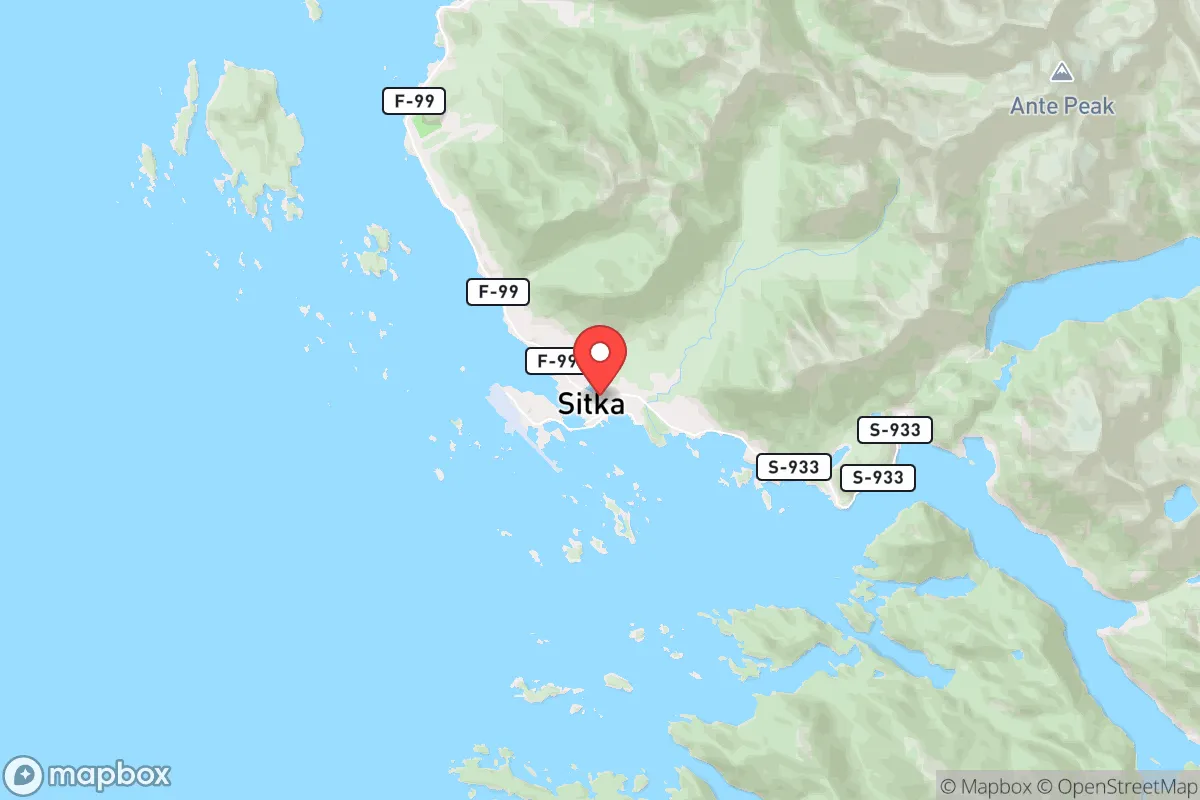
The people of Sitka, Alaska, are a predominantly white population of 8,393, with a notable 6.9% East/Southeast Asian community and a 6.9% Hispanic presence, reflecting its history as a Russian colonial outpost and later a U.S. fishing and administrative hub. The city is characterized by a strong sense of place, rooted in its Tlingit heritage and Russian Orthodox legacy, with a college-educated rate of 34.4% and a foreign-born share of just 5.3%, indicating a relatively stable, native-born population. Sitka is not a fast-growing or diversifying city; it is a mature, geographically isolated community where demographic change is slow and largely driven by domestic in-migration rather than international immigration.
How the city was settled and grew
Sitka’s human history begins with the Tlingit people, who established seasonal villages along the coast, with a major settlement at what is now the Indian River area. The first European wave came in 1799 with the Russian-American Company, which built a fort at Castle Hill and later established Novo-Arkhangelsk (Sitka) as the capital of Russian America. The Russian population was small—mostly fur traders, Orthodox missionaries, and administrators—and they intermarried with Tlingit and Aleut women, creating a distinct Creole class that settled in the Russian Bishop’s House district and along Lincoln Street. After the U.S. purchase of Alaska in 1867, Sitka became a U.S. military and missionary outpost. The late 19th and early 20th centuries saw an influx of American and European settlers—Scandinavians, Germans, and Irish—drawn by the salmon canning industry and government jobs. These groups established neighborhoods like Sawmill Creek and Japonski Island, the latter named for Japanese cannery workers who arrived seasonally but rarely settled permanently. By the mid-20th century, Sitka’s population was overwhelmingly white, with a small Tlingit minority concentrated in the Gavan Hill area and a tiny East/Southeast Asian community linked to the fishing industry.
Modern era (post-1965)
After the 1965 Immigration Act, Sitka did not experience the large-scale immigration seen in mainland U.S. cities. The foreign-born share remains low at 5.3%, and the East/Southeast Asian population (6.9%) is largely composed of Filipino and Vietnamese families who arrived in the 1970s and 1980s to work in the seafood processing plants. These families settled primarily in the Halibut Point and Starrigavan areas, near the industrial waterfront. The Hispanic population (6.9%) is a more recent addition, growing since the 1990s as Mexican and Central American workers moved into the fishing and tourism sectors, with a visible presence in the Katlians neighborhood. The Black population remains negligible at 0.4%, and the Indian subcontinent population is 0.3%, reflecting Sitka’s lack of the professional and tech sectors that drive South Asian immigration elsewhere. The white population (59.8%) has declined slightly in share due to out-migration of younger adults seeking jobs in Anchorage or the Lower 48, but it remains the dominant group, concentrated in the older, established neighborhoods like Lincoln Street and Lake Street. The Tlingit community, while not separately counted in the data, remains a culturally significant minority, with many living in the Sheet’ká Kwáan tribal areas and maintaining traditional practices.
The future
Sitka’s population is aging and slowly shrinking, with limited in-migration from outside Alaska. The East/Southeast Asian and Hispanic communities are plateauing, as the seafood industry automates and younger generations move to larger cities. The white population is also declining in absolute numbers, as the city’s economy—heavily reliant on fishing, tourism, and government—offers few opportunities for young families. The next 10-20 years will likely see a continued homogenization of the population, with the remaining residents being older, whiter, and more rooted in place. There is no sign of significant new immigrant waves, and the city’s isolation and high cost of living deter domestic migration. The Tlingit community may grow slightly in share as other groups leave, but overall, Sitka is becoming a more stable, less diverse, and older community.
For someone moving in now, Sitka offers a tight-knit, historically rich environment with a slow pace of life, but it is not a place of demographic dynamism or growth. The population is stable and predominantly white, with small, established East/Southeast Asian and Hispanic enclaves. New residents should expect a community that values tradition and continuity over change, and where the biggest demographic story is who stays rather than who arrives.

* Values derived from national, state, county, city and local statistics and may differ in a specific area. Last updated: 2026-04-19T07:41:37.000Z
Narrative content on this page is AI-generated and may contain mistakes. Verify any details that matter before acting on them.
ReloMaps may earn a commission from affiliate links at no extra cost to you.

