Strategic Assessment of Sitka City And, AK
Deep buffer from population centers and strategic targets. Low natural disaster risk and minimal exposure to border or coastal threats.
What does the Strategic Assessment tell us?
Our Strategic Assessment grades tactical survivability of an area. Major population centers, military targets, fallout zones, natural disasters, and border exposure all drive risk — lower exposure means a more defensible position in a crisis.
This is heavily inspired by Joel Skousen's Strategic Relocation book. Highly recommended you checkout the book ($)What does this tell us?
Our Strategic Assessment grades tactical survivability of an area. Major population centers, military targets, fallout zones, natural disasters, and border exposure all drive risk — lower exposure means a more defensible position in a crisis.
This is heavily inspired by Joel Skousen's Strategic Relocation book. Highly recommended you checkout the book ($)Strategic Pillars

Key Distances
Regional Safe Places
Below is our recommended "safe zones" in Alaska and the surrounding area based on our strategic heuristics. For most people, it's unrealistic to live in a “safe zone” full-time due to work, family or other personal reasons. They tend to be more rural. However, many of these areas are perfect for second homes and retreat properties that double as a vacation home or even a short-term rental.
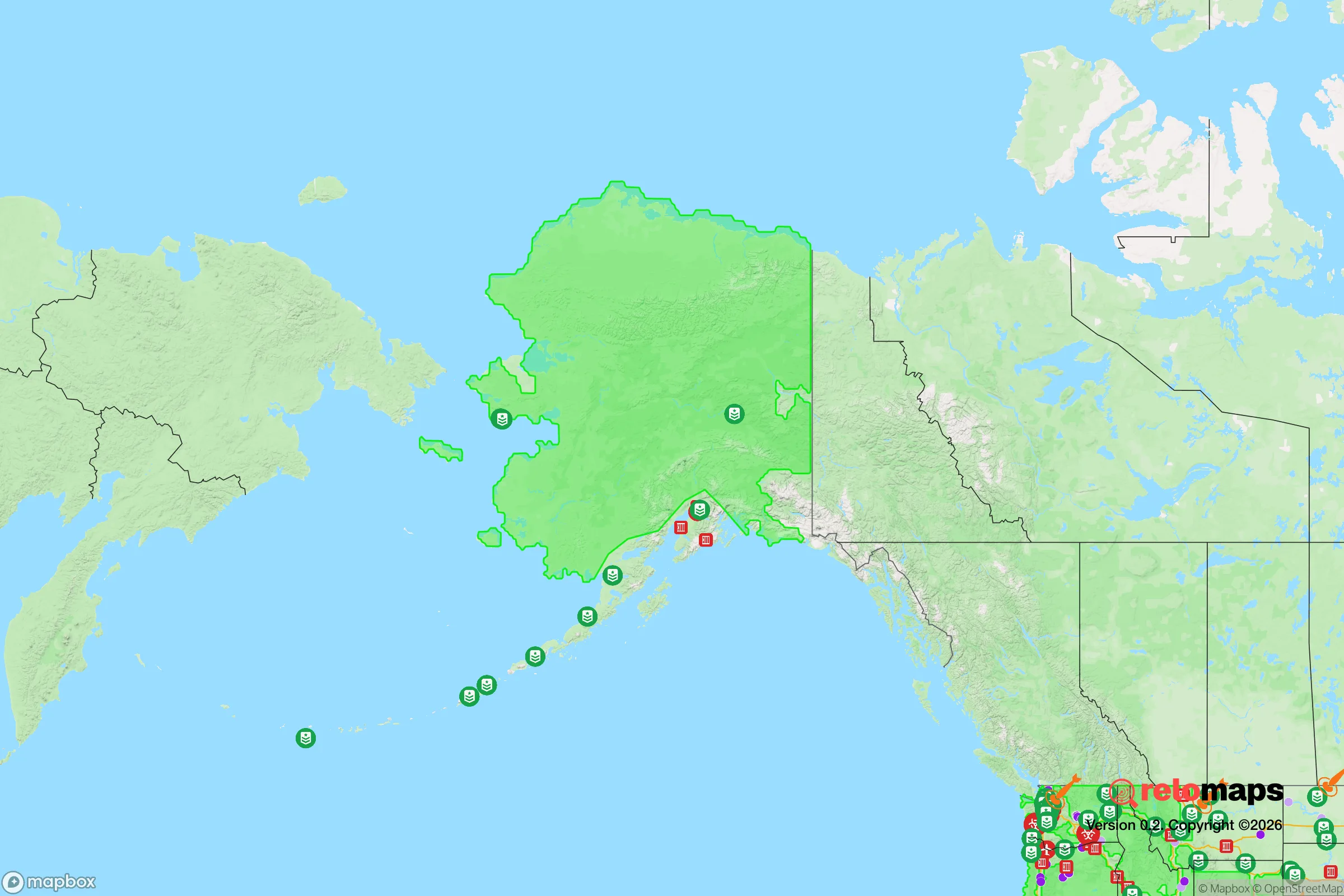
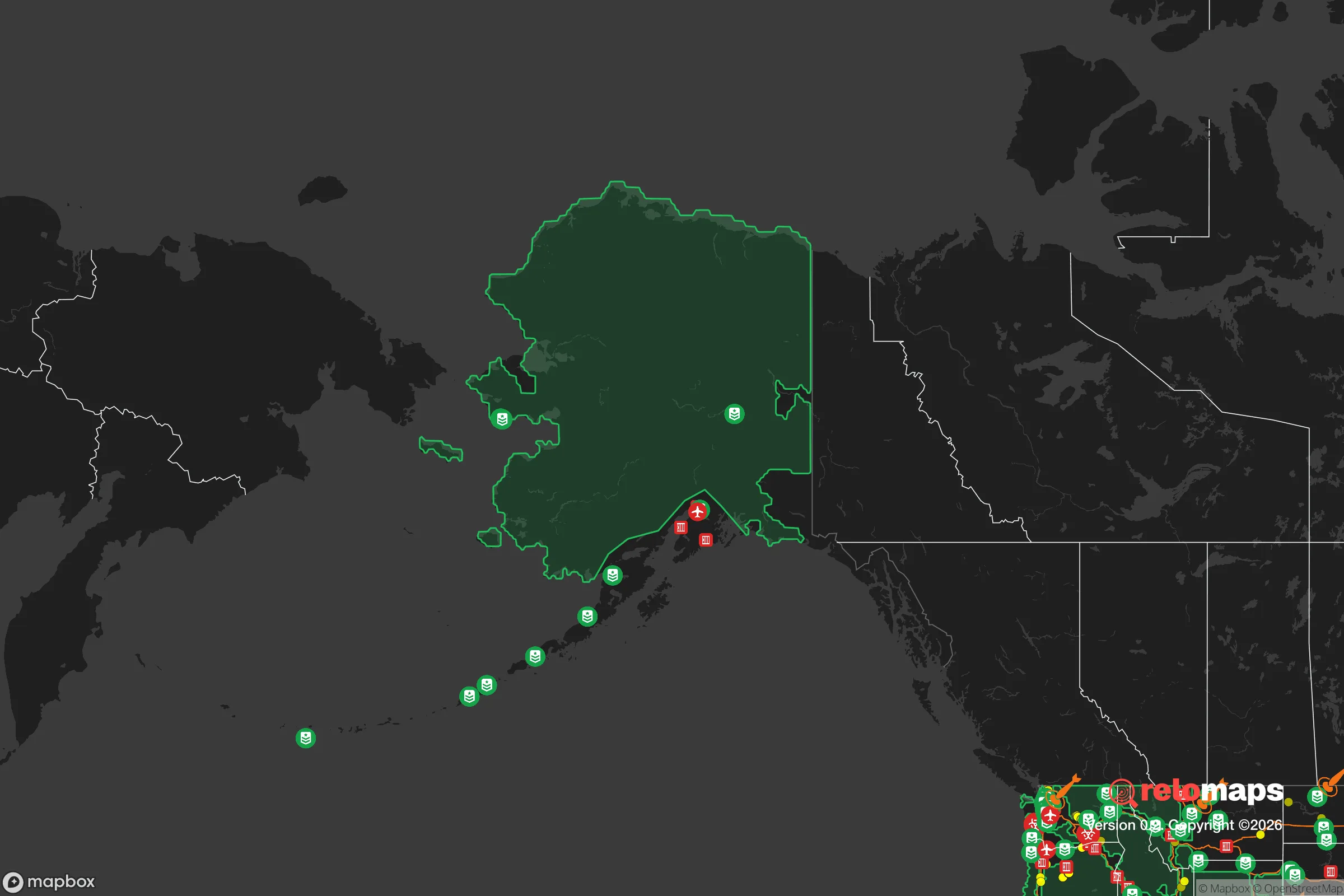


Important Note: For informational purposes only. This does not mean nothing bad ever happens in the green zones. Please use common sense. This is based on public data and modeled with AI. We tried to take a conservative approach but mistakes happen. We update this regularly as new information becomes available.
Solar Generator Recommendations
Backup power matters more here than in safer locations. We've picked three solar generators across budgets and capacity tiers — start with the budget unit if you only need a few essentials, or step up if you want to run a fridge and HVAC for days at a time.

Jackery Portable Power Station Explorer 300
Budget OptionPower on the Go: Weighing only 11 lbs, it's convenient to set up and store with book-sized foldable solar panels

BLUETTI Portable Power Station AC180
Designed for both indoor and outdoor scenarios, AC180 is highly capable as it has a robost capacity and continuous output power.

EF ECOFLOW DELTA Pro Ultra Power Station
Upgraded PickEcoFlow DELTA Pro Ultra is a whole-home energy system designed to grow with your family. Integrated with the Smart Home Panel 2, it scales to meet your evolving energy needs — keeping your home powered, intelligent, and secure through every stage of life.
We earn a commission, at no additional cost to you.
Strategic Assessment Analysis
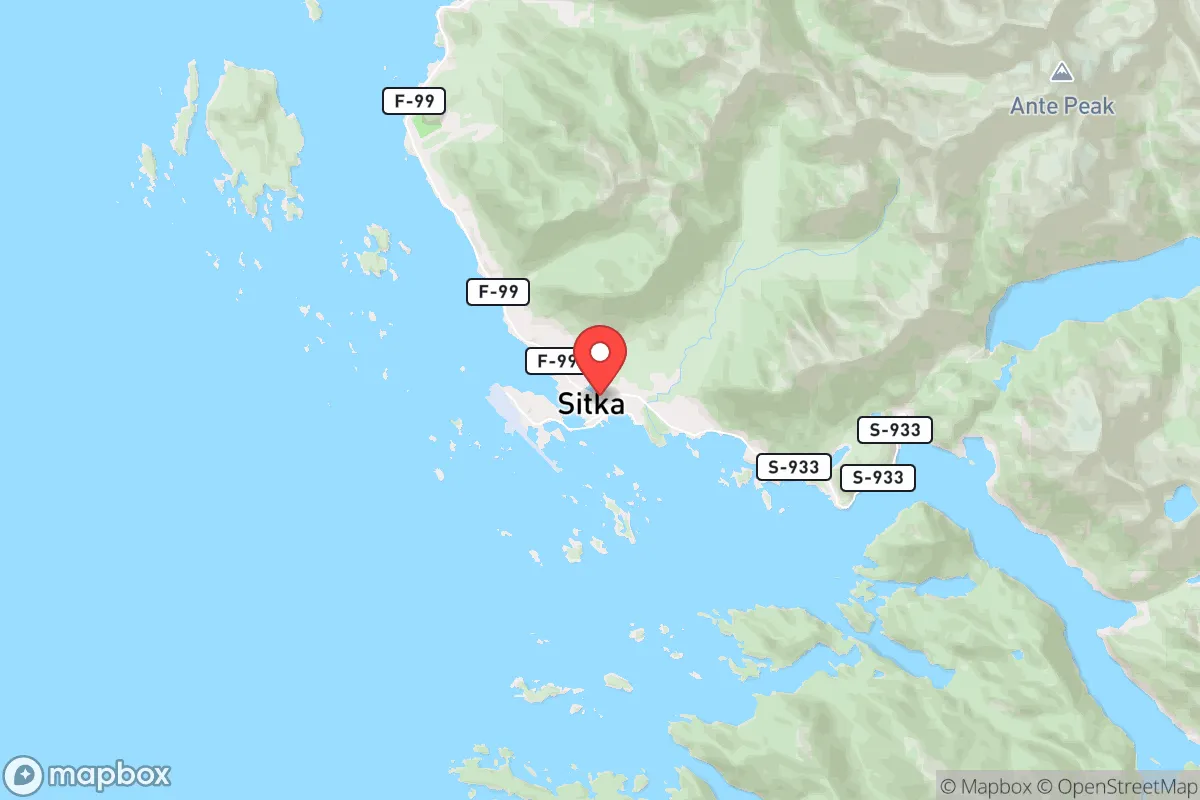
Sitka, Alaska, offers a strategic relocation option that is defined by its extreme geographic isolation and the inherent resilience that comes with it. For those concerned with civic unrest, mass casualty events, or a breakdown of national systems, this community on Baranof Island presents a unique set of trade-offs. Its primary advantage is its location: a coastal town accessible only by air or sea, with no road connection to the rest of North America, which creates a natural buffer against the cascading failures that could ripple through the Lower 48. However, this same isolation introduces severe logistical dependencies that must be carefully weighed by any prepper or survival-minded individual.
Geographic position and natural advantages for strategic isolation
Sitka’s position on the outer coast of the Alexander Archipelago is its strongest card. The town sits on the west side of Baranof Island, facing the Gulf of Alaska, with the Pacific Ocean as its front yard and the Tongass National Forest as its backyard. This means no land-based invasion route exists—any threat would have to come by sea or air, both of which are difficult and expensive to sustain. The surrounding terrain is rugged, with steep mountains, dense temperate rainforest, and countless islands, making overland movement nearly impossible for any organized force. The maritime climate, with heavy rainfall and frequent fog, also provides natural cover and complicates aerial surveillance or drone operations. For a relocator, this is about as close to a fortress as you can get without building walls. The local population is small—roughly 8,500 people—which reduces the risk of large-scale social friction, and the community is tight-knit, with a strong subsistence culture that values self-reliance. The ocean and forest provide abundant wild food: salmon, halibut, deer, berries, and seaweed, all of which are accessible with basic knowledge and gear. This is not a place where you can rely on a grocery store; it’s a place where you must be willing to harvest your own calories.
Risks, exposures, and proximity to fallout-relevant landmarks
The most significant risk for Sitka is its dependence on external supply chains. Nearly everything—fuel, ammunition, medical supplies, building materials, and most food—arrives by barge or cargo plane. If the national grid or transportation network collapses, Sitka would face a severe shortage of critical goods within weeks. The town has a small airport (Sitka Rocky Gutierrez Airport) and a deep-water port, but both are vulnerable to disruption. There is no road to the mainland, so evacuation or resupply by land is impossible. Additionally, Sitka is located in a seismically active zone; the 1964 Good Friday earthquake caused a tsunami that destroyed much of the waterfront, and a similar event today would be catastrophic. The town’s proximity to the Pacific Ring of Fire means volcanic ash from eruptions in the Aleutians or on the mainland could disrupt air travel and contaminate water sources. On the positive side, Sitka is far from any major military or industrial targets. The nearest large city is Anchorage, about 600 miles away by air, and the closest strategic infrastructure—such as Joint Base Elmendorf-Richardson or the Port of Anchorage—is distant enough that a nuclear exchange or EMP event would likely spare Sitka from direct effects. However, fallout patterns from a West Coast strike could drift over the Gulf of Alaska, so a radiation monitoring plan is essential. The town’s location also places it near the maritime shipping lanes of the Inside Passage, which could become a chokepoint in a conflict with a Pacific power, but this is a low-probability concern for most relocators.
Practical resilience for a relocator: food, water, energy, and defensibility
For a prepper, Sitka’s practical resilience is a mixed bag. Water is abundant: the area receives over 200 inches of rain annually, and streams and lakes are plentiful. A simple rainwater catchment system or a gravity-fed filter from a nearby creek can provide clean drinking water indefinitely. Food is available through fishing, hunting, and foraging, but it requires skill and equipment. The salmon runs (king, sockeye, coho, pink, and chum) are world-class, and halibut are plentiful offshore. Deer hunting on Baranof Island is productive, but the terrain is punishing. The growing season is short and cool, so gardening is limited to hardy greens and root vegetables in raised beds or greenhouses. Energy is the weak point. Sitka’s grid is powered by hydroelectricity from Blue Lake and Green Lake, which is reliable under normal conditions, but a major earthquake could damage the dams or transmission lines. Most homes use electric heat, so a prolonged outage would be dangerous in winter. A backup generator with a large fuel cache is mandatory, but fuel must be brought in by barge and stored properly. Solar panels are less effective due to the cloud cover, but micro-hydro or wind turbines could supplement in the right location. Defensibility is high: the town’s layout, with a single main road and limited access points, makes it easy to monitor and control entry. The surrounding forest provides cover, and the ocean offers escape routes by boat. However, the small population means that everyone knows everyone, so blending in is impossible—you will be vetted by the community. For a single individual or family, this can be an advantage if you are willing to integrate and contribute, but it also means that any outsider is immediately visible.
The overall strategic picture for Sitka is one of extreme isolation with high natural resilience but severe logistical vulnerabilities. It is not a location for someone who wants to maintain a modern lifestyle or who is unprepared for the physical demands of subsistence living. For the conservative-minded relocator who values self-sufficiency, community cohesion, and distance from the chaos of urban centers, Sitka offers a genuine sanctuary. The trade-off is that you must be willing to accept a lower standard of living in terms of convenience and access to goods, and you must invest heavily in pre-positioning supplies—especially fuel, ammunition, and medical gear—before any crisis hits. The town’s history of surviving the 1918 flu pandemic and the 1964 earthquake shows that the community can endure, but it does so through collective effort, not individual heroism. If you are looking for a place where you can hunker down and wait out a national collapse, Sitka is a strong candidate, provided you have the resources and mindset to handle its unique challenges. It is not a fallback option; it is a commitment.

* Values derived from national, state, county, city and local statistics and may differ in a specific area. Last updated: 2026-04-19T07:41:37.000Z
Narrative content on this page is AI-generated and may contain mistakes. Verify any details that matter before acting on them.
ReloMaps may earn a commission from affiliate links at no extra cost to you.

