Quality of Life in Sitka City And, AK
Above-average quality of iife. The area offers a reasonable cost of living, decent mobility, and a mix of neighborhood amenities.
What does Quality of Life tell us?
Quality of Life blends cost of living, nearby amenities, socioeconomic signals, and neighborhood character. City-level scores represent the whole municipality; individual neighborhoods can differ.
What does this tell us?
Quality of Life blends cost of living, nearby amenities, socioeconomic signals, and neighborhood character. City-level scores represent the whole municipality; individual neighborhoods can differ.
Cost of Living
32% above national average
The Real Cost of Living in Sitka City And, AK for 2026
| Tier | Individual | Family (4) |
|---|---|---|
| Survival | $22k | $41k |
| Comfortable | $82k | $120k |
| Luxury | $120k+ | $186k+ |
| Elite (Top 5%) | $141k+ | $219k+ |
84%
The Area Signal
A metric tracking the socioeconomic signals of the area.


Hobbies
Explore the areaGroceries
5 within 10 miles
Gas
0 within 10 miles
Hospital
3 within 20 miles
Airport
Sitka Rocky Gutierrez Airport
Post Office
USPS — Sitka, AK
Critical Amenities
Quality-of-Life Analysis
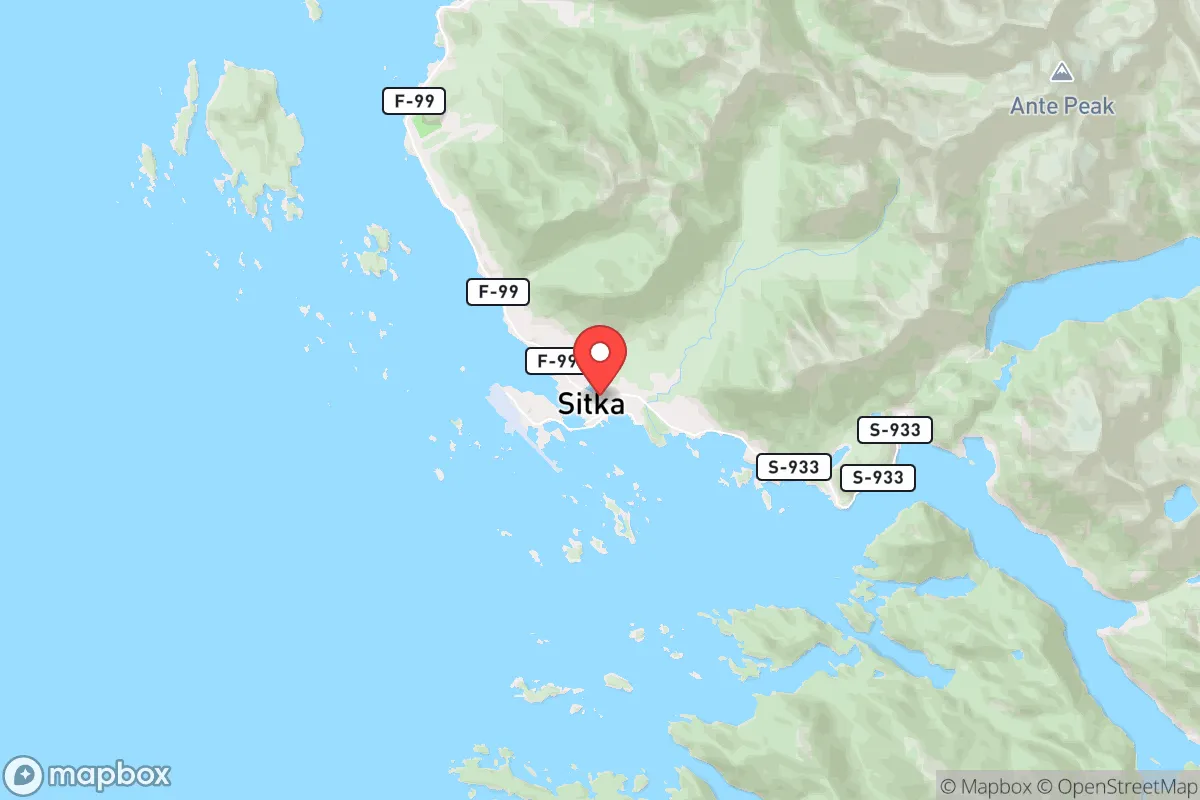
Sitka City And Borough presents a unique quality-of-life profile shaped by its remote Southeast Alaska location, where affluence is moderate and the population skews toward government employees, commercial fishermen, and healthcare professionals. The cost of living index of 132 (32% above the U.S. average) reflects the high expense of importing goods and limited housing supply, yet the median household income of roughly $70,000 keeps the area accessible for middle-class workers rather than exclusively wealthy retirees. Residents here tend to value self-sufficiency, outdoor recreation, and community ties over urban convenience, creating a tight-knit social fabric uncommon in larger Alaskan cities.
Cost of living, housing affordability, and how Sitka compares to Juneau and Ketchikan
Sitka’s housing market is expensive relative to the Lower 48 but more affordable than Alaska’s largest city, Anchorage, and comparable to Juneau. The median home value of $442,100 is roughly 30% higher than the national median, while median rent of $1,350 is about 15% above the U.S. average. However, housing costs in Sitka are 10-15% lower than in Juneau, where median home values exceed $500,000, and significantly cheaper than in Ketchikan, where limited land drives prices even higher. The average commute of just 19.5 minutes is notably short, reflecting the borough’s compact layout and the fact that most jobs are concentrated downtown or at the Sitka Rocky Gutierrez Airport. This short commute offsets some transportation costs, but groceries and utilities in Sitka run 25-35% above national averages due to barge and air freight reliance. For renters, the vacancy rate hovers around 3%, making competition for units stiff, while homebuyers face a market where inventory is low and properties often sell within weeks.
What daily life is like for families: schools, amenities, and community rhythm
Daily life in Sitka revolves around the ocean, the Tongass National Forest, and a walkable downtown core. The Sitka School District serves roughly 1,200 students across three elementary schools, one middle school, and Sitka High School, with graduation rates consistently above 90% and strong STEM programs supported by local fisheries and marine biology partnerships. Amenities include the Sitka Public Library, the Sitka Sound Science Center, and the Alaska Raptor Center, which double as educational attractions. Grocery shopping is limited to two major stores—Safeway and the Sitka Food Co-op—while dining options center on seafood-focused restaurants like the Ludvig’s Bistro and the Channel Club. The community calendar is shaped by the Sitka Summer Music Festival, the Sitka Whalefest, and weekly farmers markets from May to September. Healthcare is a standout feature: Sitka Community Hospital and SEARHC’s Mount Edgecumbe Medical Center provide specialist care that many rural Alaskan towns lack, reducing the need for medevac flights to Anchorage. The rhythm is slow and seasonal—summer brings cruise ship visitors and 18-hour daylight, while winter sees shorter days and a focus on indoor community events at the Harrigan Centennial Hall.
This quality of life suits individuals and families who prioritize nature, community, and a slower pace over career diversity or urban nightlife. Commercial fishermen, marine biologists, and remote workers with reliable Starlink internet are the most common transplants, drawn by the absence of road connections to the mainland and the resulting quiet. Retirees on fixed incomes may struggle with the high cost of goods, but those with flexible budgets find a safe, low-crime environment where violent crime rates are roughly half the national average. The lack of a road network means residents must fly or take the Alaska Marine Highway ferry to reach Juneau or Anchorage, which can feel isolating. For those who thrive in a place where the outdoors is the primary entertainment and neighbors know each other by name, Sitka offers a rare blend of wilderness access and small-city services that is hard to replicate elsewhere in Alaska.

Crime in Sitka City And, AK
Higher crime rates than 66% of comparable U.S. locations.
Violent CrimeViolent Crime Analysis
Property CrimeProperty Crime Analysis
Crime Analysis
Sitka presents a complex safety picture that diverges sharply from national averages. The city’s violent crime rate stands at 726.6 incidents per 100,000 residents, roughly double the U.S. national rate, while property crime occurs at 1,909.5 per 100,000, a figure that sits near the national median. These statistics, drawn from the most recent FBI Uniform Crime Reporting data, place Sitka among the higher-risk communities in Alaska for violent offenses, though the nature and context of these crimes differ significantly from urban centers in the Lower 48.
Crime in context
To understand Sitka’s numbers, they must be weighed against both state and national benchmarks. Alaska as a whole consistently reports the highest violent crime rate in the nation, and Sitka’s rate of 726.6 per 100K is actually lower than the statewide average of roughly 800 per 100K. Property crime, at 1,909.5 per 100K, falls below the Alaska average of approximately 2,400 per 100K. Nationally, the U.S. violent crime rate hovers around 380 per 100K, meaning Sitka’s rate is nearly double the national figure. However, direct comparisons are complicated by Alaska’s unique geography, limited road access, and high rates of alcohol-related offenses, which inflate both violent and property crime metrics relative to the contiguous U.S.
What residents experience
Daily life in Sitka is shaped by a small-town dynamic where most crime is concentrated among a relatively small number of repeat offenders, often linked to substance abuse. Theft and burglary are the most common property crimes, with vehicle break-ins and package thefts reported periodically. Violent crime, while statistically elevated, is rarely random; the majority of assaults and domestic violence incidents occur between individuals who know each other, often fueled by alcohol. Residents report feeling safe walking downtown and in residential neighborhoods during daylight hours, though caution is advised near bars and transient-heavy areas after dark. The Sitka Police Department maintains a visible presence, and community policing efforts are active, but the department’s small size limits rapid response in outlying areas.
Neighborhood-level crime data in Sitka is not published at granular detail, but anecdotal reports and police blotters indicate that the downtown core and areas near the ferry terminal see higher rates of petty theft and disorderly conduct. The more affluent neighborhoods along Halibut Point Road and the quieter residential streets near the Sheldon Jackson College campus experience fewer incidents. The city’s isolated geography—accessible only by air or sea—acts as a natural deterrent to organized property crime rings, but it also means that repeat offenders cycle through the local justice system frequently. Progressive sentencing policies in Alaska’s judiciary, which prioritize rehabilitation over incarceration for non-violent offenders, have been criticized by some residents for contributing to recidivism and a perception that property crimes carry insufficient consequences. For those considering relocation, Sitka offers a generally safe environment for families who exercise standard precautions, but the violent crime rate warrants awareness, particularly for single women or those living alone near the downtown corridor.
* Values derived from national, state, county, city and local statistics and may differ in a specific area. Last updated: 2026-04-19T07:41:37.000Z
Narrative content on this page is AI-generated and may contain mistakes. Verify any details that matter before acting on them.
ReloMaps may earn a commission from affiliate links at no extra cost to you.

