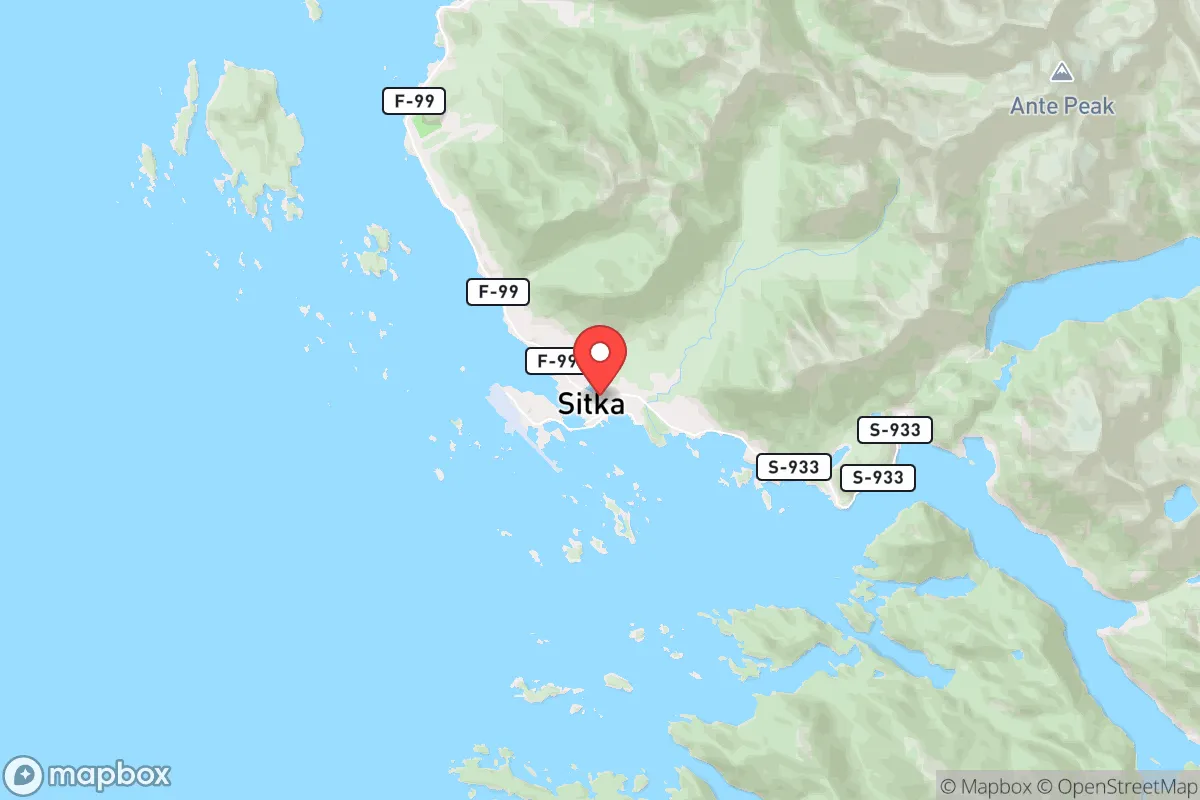
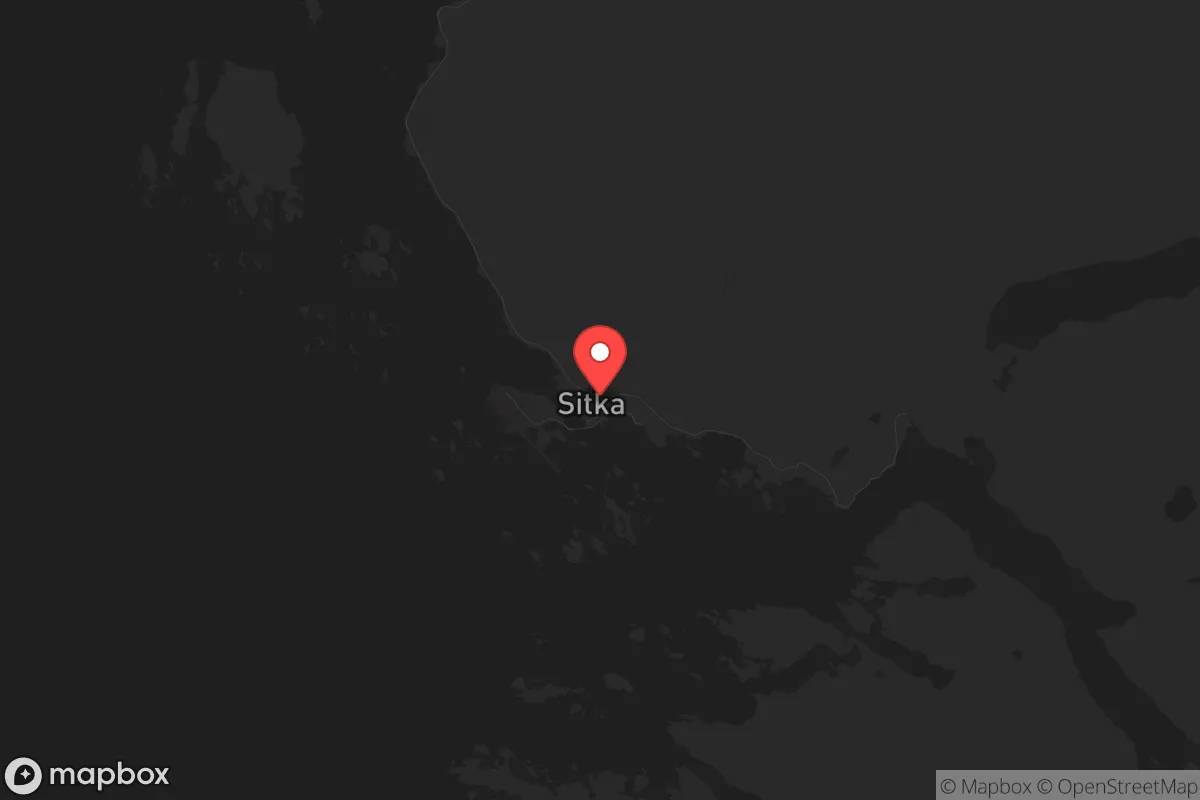
Political ClimatePolitical Climate in Sitka City And, AK
District shown is the primary district for this city’s centroid. Cities may span multiple districts.
Inherited from parent state — no local data available.
Local Political AnalysisPolitical Analysis of Sitka City And, AK
Sitka City And Borough has long been a place where folks value their independence and self-reliance, but the political winds have shifted noticeably over the past decade. The area now carries a Cook PVI of R+6, meaning it leans about six points more Republican than the national average, which is a solid conservative tilt for a coastal Alaskan community. That said, it wasn't always this way—Sitka used to be a bit more of a mixed bag politically, with a strong independent streak that could swing either direction. Lately, though, the trend has been toward a more reliably conservative vote, especially as residents push back against what they see as growing government overreach into their daily lives.
How it compares
When you stack Sitka up against other towns in Southeast Alaska, the contrast is pretty stark. Juneau, just a short flight south, leans heavily Democratic with a Cook PVI of D+9, and you can feel the difference in everything from local ordinances to the vibe at the grocery store. Meanwhile, Ketchikan and Wrangell both trend more conservative than Sitka, with PVIs around R+8 and R+10 respectively, making them closer to what Sitka's politics used to feel like a generation ago. The surrounding rural areas and smaller villages, like Angoon or Hoonah, tend to vote more pragmatically, often splitting tickets based on local issues rather than party lines. So Sitka sits in a kind of middle ground—conservative enough to feel familiar to a longtime Alaskan, but with enough progressive influence from the state capital and tourism industry to keep things interesting.
What this means for residents
For those of us who've lived here a while, the R+6 lean is a welcome sign that most folks still value personal freedom over government mandates. You see it in the way people talk about fishing regulations, land use, and even school policies—there's a healthy skepticism of anyone telling you how to live your life. The recent push for more progressive policies, like stricter environmental rules on private property or expanded government-run programs, has been met with real resistance at the borough assembly meetings. It's not that people here are against helping each other—far from it—but there's a strong sense that the government should stay out of your backyard and your wallet. If you're thinking of moving here, you'll find a community that respects your right to make your own choices, as long as you're willing to do the same for your neighbors.
One thing that really sets Sitka apart is how the local culture pushes back against the kind of top-down decision-making you see in bigger cities. The borough has consistently voted down measures that would increase property taxes for social programs, preferring to handle things through churches, nonprofits, and good old-fashioned neighborly help. There's also a strong Second Amendment culture here—most households have a rifle or shotgun for bear protection and hunting, and talk of gun control is about as welcome as a cruise ship dumping sewage in the harbor. The fishing and timber industries still carry weight politically, and they tend to vote for candidates who understand that regulations can kill a livelihood faster than a bad season. Looking ahead, the concern among conservatives here is that as more people move in from places like Seattle or Portland, they'll bring that "we know better" attitude with them. For now, though, Sitka remains a place where a person can still live free, as long as they're willing to speak up and vote accordingly.

State Political ClimatePolitical Climate in Alaska
State Political AnalysisPolitical Environment in the State
Alaska has long been a unique political outlier—a state where a fierce libertarian streak, rooted in its frontier history, has traditionally produced a reliably Republican lean in presidential elections, but with a deeply independent, often anti-establishment, flavor. Over the past 10-20 years, the state has shifted from a solid red stronghold (voting +21 points for McCain in 2008) to a more competitive but still conservative-leaning state (voting +10 points for Trump in 2024). The dominant coalition is a mix of resource-extraction workers, rural Natives, and fiscal conservatives, but a growing urban progressive bloc in Anchorage and Juneau is pulling the state’s cultural and policy center leftward, creating a palpable tension that any new resident will feel.
Urban vs. rural divide
The political map of Alaska is starkly divided between its few urban centers and the vast, sparsely populated bush. The Anchorage bowl, home to roughly 40% of the state’s population, is the key battleground. While the city itself has trended blue—Joe Biden won Anchorage in 2020 by about 2 points, and Mary Peltola’s 2022 House win was powered by strong Anchorage turnout—the surrounding Mat-Su Borough (Wasilla, Palmer) is one of the most reliably conservative regions in the nation, often voting 70%+ Republican. Juneau, the capital, is a progressive stronghold, driven by state government workers and environmental activists, while Fairbanks leans red but is more moderate than the Mat-Su. The rural areas—Nome, Bethel, the North Slope—are politically complex: they vote heavily Democratic in state races due to support for subsistence rights and government services, but they are culturally conservative on social issues. The real divide isn’t just urban vs. rural; it’s the Mat-Su and Kenai Peninsula (Seward, Homer) versus the rest of the state, with the former acting as the conservative bulwark against a creeping leftward shift in Anchorage and Juneau.
Policy environment
Alaska’s policy environment is a mixed bag for conservatives. On the plus side, there is no state income tax and no state sales tax, making it one of the lowest-tax states in the union—a direct result of the Permanent Fund Dividend (PFD) system, which distributes oil wealth to residents. The regulatory posture on resource extraction remains relatively friendly, though the Biden administration’s restrictions on ANWR and the Pebble Mine have been a major sore point. Education policy is a flashpoint: the state has a weak school choice landscape, with no voucher program and limited charter school options, though homeschooling is popular in rural areas. Healthcare is dominated by the state’s unique Medicaid expansion (passed under Governor Bill Walker, an independent) and the struggling Premera Blue Cross monopoly, leading to high premiums. Election laws are a bright spot: Alaska has a top-four primary system and ranked-choice voting (RCV), passed by ballot initiative in 2020. While RCV has been praised by moderates, it has been a source of deep frustration for conservatives, who argue it dilutes the party’s ability to nominate true conservatives—a sentiment that led to a 2024 ballot measure to repeal it, which narrowly failed. The state’s gun laws remain among the most permissive in the nation, with no permit required for concealed carry and no magazine capacity limits.
Trajectory & freedom
Alaska’s trajectory on personal freedom is concerning for conservatives. The state has seen a clear erosion of its libertarian ethos in recent years. In 2023, Governor Mike Dunleavy signed a parental rights bill (HB 105) that requires schools to notify parents of any changes to a student’s health or well-being, a win for traditional values. However, the state’s Supreme Court has been activist, striking down a 2020 ballot initiative that would have restricted abortion after 20 weeks (the state constitution protects abortion rights). On gun rights, Alaska remains a fortress, but there are creeping threats: a 2024 bill to require safe storage of firearms in homes with minors was introduced but died in committee. The biggest freedom issue is the PFD: the state legislature has repeatedly raided the fund to balance budgets, reducing the dividend from a high of $2,072 in 2015 to just $1,312 in 2023. This is seen by many as a direct assault on property rights and a betrayal of the state’s compact with its citizens. The trend is clear: the state is becoming less free fiscally and more interventionist socially, driven by a coalition of urban progressives and fiscally moderate Republicans.
Civil unrest & political movements
Civil unrest in Alaska is relatively muted compared to the Lower 48, but there are flashpoints. The most visible is the ongoing battle over the Pebble Mine in Bristol Bay, which has galvanized environmental activists and Native groups, leading to protests in Anchorage and Juneau. On the right, the “Alaska Independence Party” (AIP) remains a fringe but vocal presence, advocating for secession and nullification of federal laws—a sentiment that flares up whenever the federal government restricts resource development. Election integrity has been a hot-button issue since the 2020 RCV implementation, with conservative groups alleging voter confusion and irregularities, though no major fraud has been proven. Immigration politics are less prominent here than in border states, but the influx of out-of-state workers for the oil and fishing industries has created a cultural tension, with locals feeling priced out of housing. The most notable political movement is the “Don’t Tread on Alaska” coalition, which fights against federal overreach on land use and gun control, and has successfully pushed back against attempts to ban lead ammunition on federal lands.
Projection
Over the next 5-10 years, Alaska is likely to become more politically competitive but not necessarily more conservative. The demographic shift is driven by two factors: an aging, conservative-leaning population in rural areas and the Mat-Su, and a younger, more progressive influx into Anchorage and Juneau, fueled by remote workers and climate refugees. The state’s economy, heavily dependent on oil, is in long-term decline, which will force painful budget cuts or tax increases—likely eroding the low-tax advantage that has kept conservatives happy. The RCV system will continue to produce moderate, often centrist, representatives (like Senator Lisa Murkowski and Representative Mary Peltola), frustrating the conservative base. However, the Mat-Su and Kenai Peninsula are growing faster than the rest of the state, which could offset some of the urban leftward drift. A new resident moving in now should expect a state where the culture is still independent and gun-friendly, but where the political battles will increasingly be about preserving those freedoms against a rising progressive tide in the cities.
For a conservative individual or family considering a move, Alaska offers a unique blend of low taxes, strong gun rights, and a frontier culture that values self-reliance. But the honeymoon won’t last forever. The state’s political trajectory is toward a more urban, more regulated, and more expensive future. The key is to choose your location wisely: the Mat-Su Valley (Wasilla, Palmer) or the Kenai Peninsula (Soldotna, Homer) will offer the most aligned political environment, while Anchorage and Juneau will feel increasingly like the Lower 48’s blue states. If you value personal freedom above all, Alaska is still a better bet than most, but you’ll need to stay engaged in the fight to keep it that way.
* Values derived from national, state, county, city and local statistics and may differ in a specific area. Last updated: 2026-04-19T07:41:37.000Z
Narrative content on this page is AI-generated and may contain mistakes. Verify any details that matter before acting on them.
ReloMaps may earn a commission from affiliate links at no extra cost to you.

