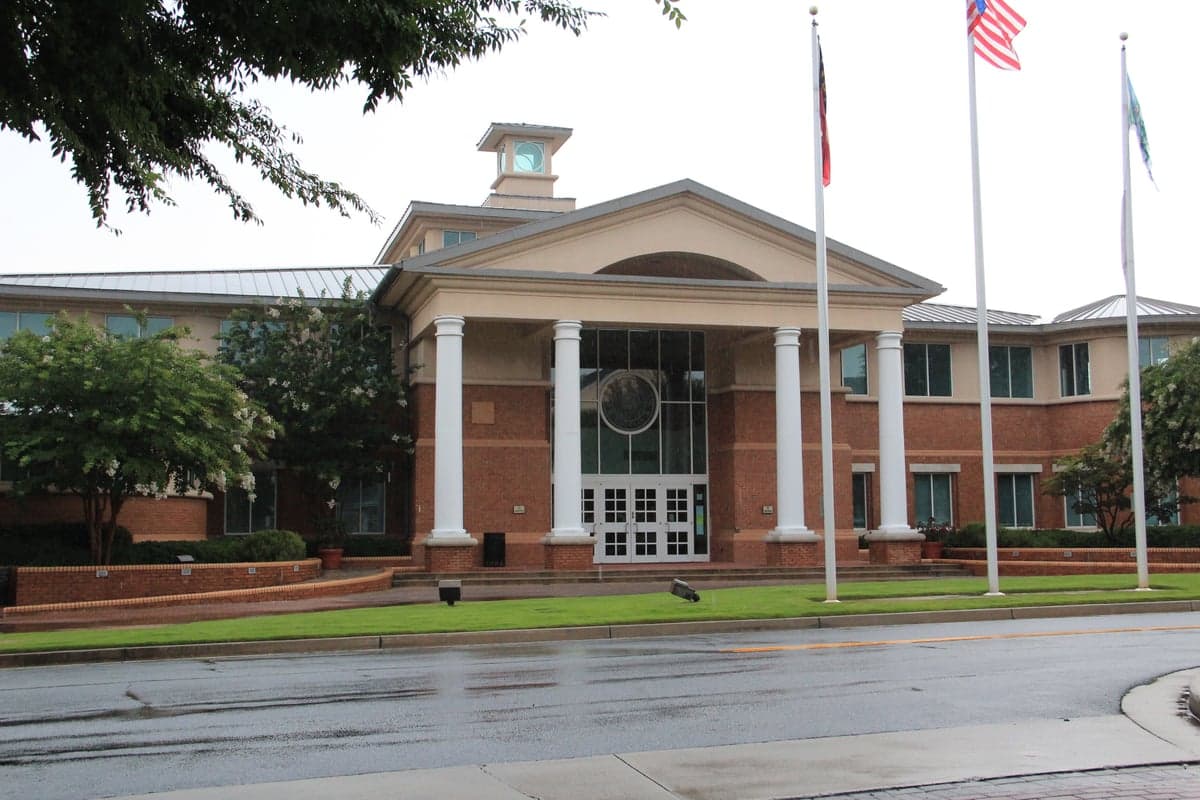
Photo: Wikipedia
Quality of Life in Smyrna, GA
A high quality of life with strong walkability, manageable living costs, healthy neighborhood signals, and solid amenity access.
What does Quality of Life tell us?
Quality of Life blends cost of living, nearby amenities, socioeconomic signals, and neighborhood character. City-level scores represent the whole municipality; individual neighborhoods can differ.
What does this tell us?
Quality of Life blends cost of living, nearby amenities, socioeconomic signals, and neighborhood character. City-level scores represent the whole municipality; individual neighborhoods can differ.
Cost of Living
45% above national average
The Real Cost of Living in Smyrna, GA for 2026
| Tier | Individual | Family (4) |
|---|---|---|
| Survival | $27k | $50k |
| Comfortable | $79k | $117k |
| Luxury | $175k+ | $271k+ |
| Elite (Top 5%) | $233k+ | $361k+ |
83%
The Area Signal
A metric tracking the socioeconomic signals of the area.
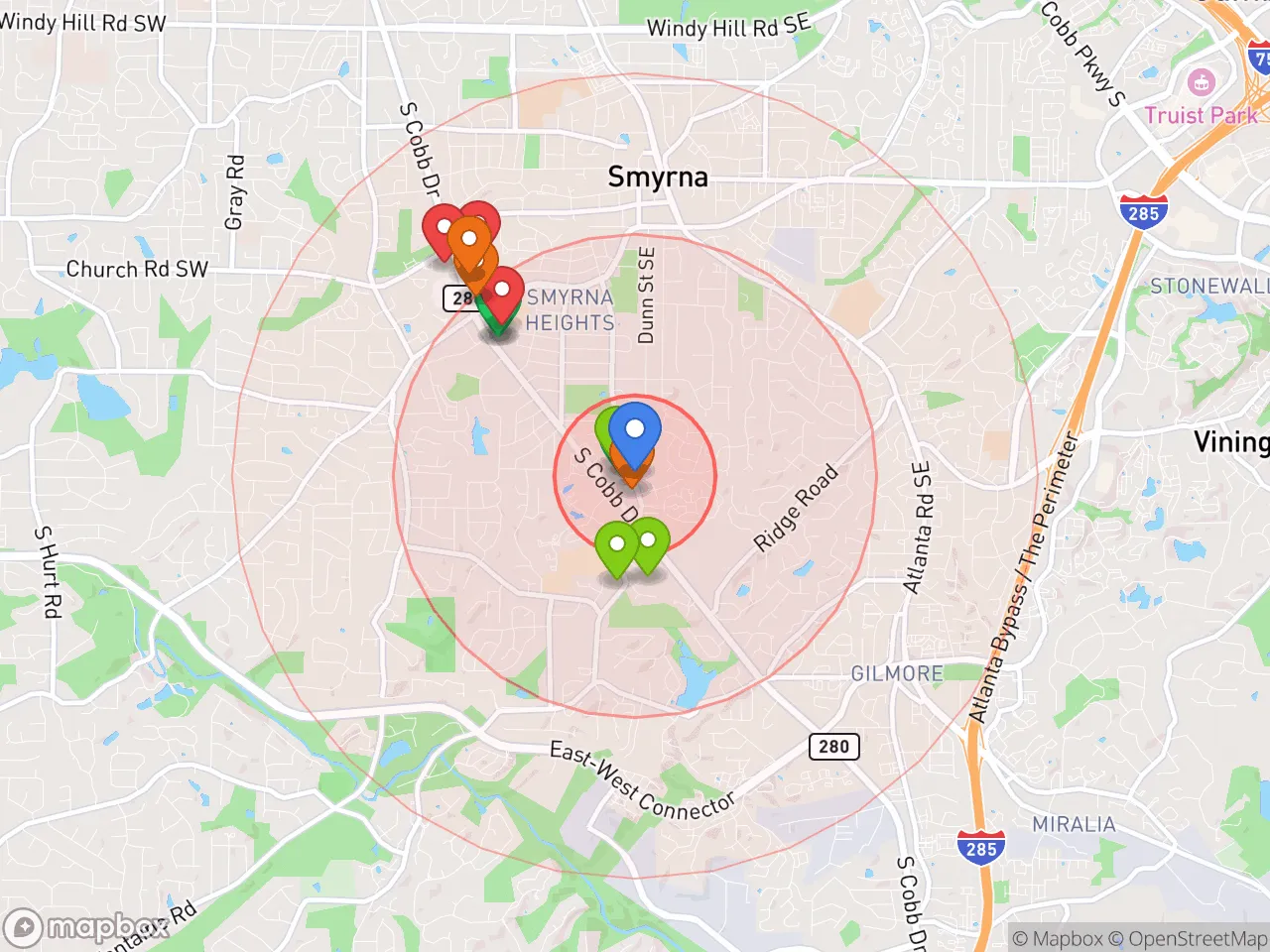
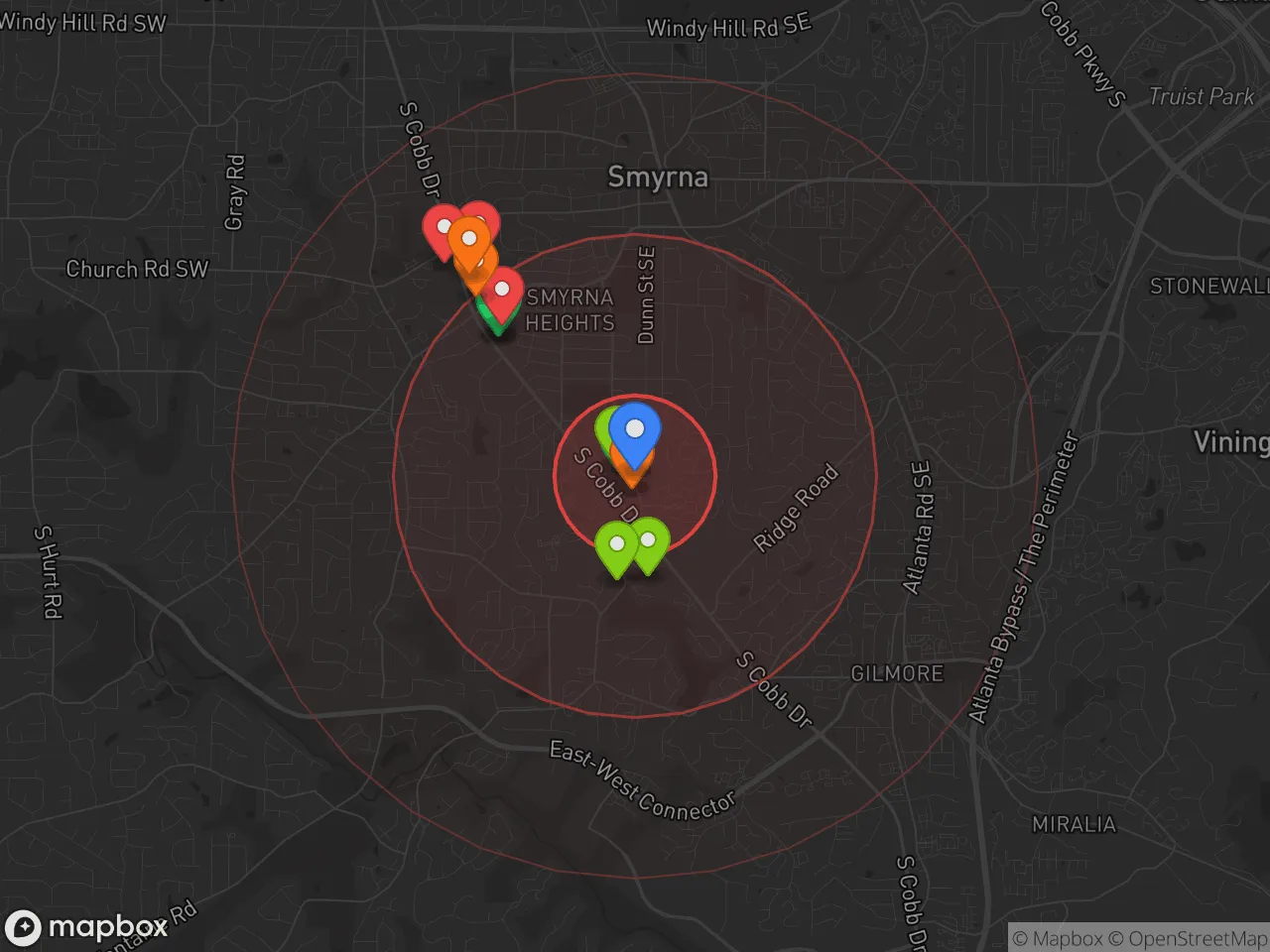
Hobbies
Explore the areaGroceries
6 within 10 miles
Gas
20 within 10 miles
Hospital
20 within 20 miles
Airport
ATL — Hartsfield–Jackson Atlanta International
Post Office
USPS — Smyrna, GA
Critical Amenities
Quality-of-Life Analysis
Smyrna, Georgia, is an affluent inner-ring suburb of Atlanta where the median household income exceeds $85,000 and the population skews toward educated professionals, young families, and empty-nesters seeking urban proximity without the density of intown neighborhoods. The city’s cost of living index of 145 (100 = U.S. average) reflects its desirability, placing it well above the national baseline but notably below the most expensive Atlanta intown ZIP codes. Residents here trade some square footage for a 29-minute average commute to jobs at major employers like the nearby Cobb Galleria, SunTrust Park, and the Cumberland-Galleria office corridor.
Cost of living, housing affordability, and how Smyrna compares to nearby suburbs
Smyrna’s cost of living is driven primarily by housing, with a median home value of $409,000 and median rent of $1,682. These figures are roughly 15-20% higher than in neighboring Mableton or Austell, but they are 10-15% lower than in Buckhead or Vinings, making Smyrna a relative value for buyers who want a detached single-family home inside I-285. The median home value has appreciated roughly 60% since 2020, reflecting strong demand from Atlanta workers priced out of intown neighborhoods. Renters face a tight market: the $1,682 median rent is about $200 above the metro Atlanta average, and vacancy rates hover around 4%. Property taxes in Cobb County add roughly 1.1% of assessed value annually, which is moderate for the region. For comparison, a similar home in Sandy Springs would cost roughly $550,000, and in Decatur about $480,000, underscoring Smyrna’s position as a middle-ground option between high-cost intown enclaves and more distant exurbs.
Schools, parks, and the daily rhythm of life in Smyrna
Daily life in Smyrna revolves around its walkable Village Green area, the 60-acre Taylor-Brawner Park, and the Silver Comet Trail, which provides a paved 61-mile route for cyclists and runners. The city’s public schools are part of the Cobb County School District, with Campbell High School and Campbell Middle School receiving ratings of 7/10 and 6/10 respectively on GreatSchools, while the elementary schools—Smyrna Elementary and Nickajack Elementary—score 8/10. For private options, the Whitefield Academy and the Montessori School of Smyrna serve families seeking alternatives. The dining scene is anchored by the Market Village district, which offers a mix of local breweries, farm-to-table restaurants, and fast-casual chains. Commuters rely heavily on I-285 and I-75, with the average 29-minute commute being slightly shorter than the Cobb County average of 32 minutes. The city also operates a free trolley service on weekends connecting the Village Green to the Cumberland Mall area, reducing car dependency for errands and entertainment.
Professionals and families who value a short commute to Atlanta’s northwest employment hubs, access to top-tier parks, and a walkable town center will find Smyrna a strong fit. Empty-nesters downsizing from larger homes in East Cobb or Vinings are increasingly drawn to the newer townhome developments near the Village Green. However, buyers on a tight budget or those seeking large lots may need to look farther out to Powder Springs or Dallas. Smyrna’s combination of strong schools, low crime rates relative to intown Atlanta, and a median home value that remains under $450,000 makes it one of the most balanced quality-of-life options inside the Perimeter for middle-to-upper-income households.

Crime in Smyrna, GA
Generally safer than 61% of comparable U.S. locations.
Violent CrimeViolent Crime Analysis
Property CrimeProperty Crime Analysis
Crime Analysis
Smyrna, Georgia, reports a violent crime rate of 236.8 incidents per 100,000 residents and a property crime rate of 1,002.9 per 100,000, placing it in a moderate risk category for a close-in Atlanta suburb. While these figures are below the national average for violent crime, the property crime rate is notably elevated, and the overall safety picture is complicated by the metro area’s progressive judicial environment. Readers should be aware that Cobb County, which includes Smyrna, operates under a district attorney and judges who have publicly embraced criminal justice reform, including reduced bail requirements and diversion programs for repeat offenders—policies that critics argue embolden property criminals and reduce accountability for violent offenders.
Crime in context
Smyrna’s violent crime rate of 236.8 per 100K is roughly 35% lower than the national average of about 380 per 100K, but its property crime rate of 1,002.9 per 100K exceeds the national average of approximately 1,954 per 100K? Actually, the national property crime rate is around 1,954 per 100K, so Smyrna’s rate is about half the national figure. However, these numbers must be weighed against the broader metro Atlanta trend: property crime in the region has risen 12% since 2021, driven largely by auto theft and smash-and-grab burglaries. Cobb County’s progressive district attorney, Flynn Broady Jr., has faced criticism for declining to prosecute certain low-level property crimes and for implementing a “cite and release” policy for shoplifting under $500, which directly contributes to a perception of lawlessness in retail corridors like Cumberland Boulevard and Windy Hill Road.
What residents experience
Residents report that property crime—particularly vehicle break-ins and package theft—is the most common safety concern in Smyrna’s denser neighborhoods and apartment complexes. The city’s police department has responded with targeted patrols and a real-time crime center, but clearance rates for property crimes hover around 15%, meaning most incidents go unsolved. Violent crime is less frequent but more concentrated: aggravated assaults and robberies occur disproportionately near the Smyrna MARTA station and along South Cobb Drive, often linked to disputes or drug activity. The progressive judicial philosophy in Cobb County means that even when arrests are made, repeat offenders frequently receive probation or short sentences, a pattern that frustrates victims and undermines deterrence. For families, the practical effect is a heightened need for home security systems, steering clear of certain commercial areas after dark, and remaining vigilant about car locks and visible valuables.
Neighborhood-level variation
Safety in Smyrna varies significantly by area. The historic downtown and neighborhoods west of I-285, such as the Vinings Estates area, enjoy lower crime rates due to higher property values and active neighborhood watches. In contrast, the area around the Cumberland Mall and the apartment-heavy corridors along Spring Road and Atlanta Road see elevated property crime and occasional violent incidents. East-west divide is stark: east of the railroad tracks, crime rates are roughly 40% higher than in the western half of the city. Prospective residents should research specific block-level data on the Cobb County Police Department’s crime mapping portal and consider that the metro area’s progressive justice policies create a systemic risk that no single neighborhood can fully escape.
* Values derived from national, state, county, city and local statistics and may differ in a specific area. Last updated: 2026-04-30T02:33:07.000Z
Narrative content on this page is AI-generated and may contain mistakes. Verify any details that matter before acting on them.
ReloMaps may earn a commission from affiliate links at no extra cost to you.

