

Photo: Wikipedia
Political ClimatePolitical Climate in Smyrna, GA
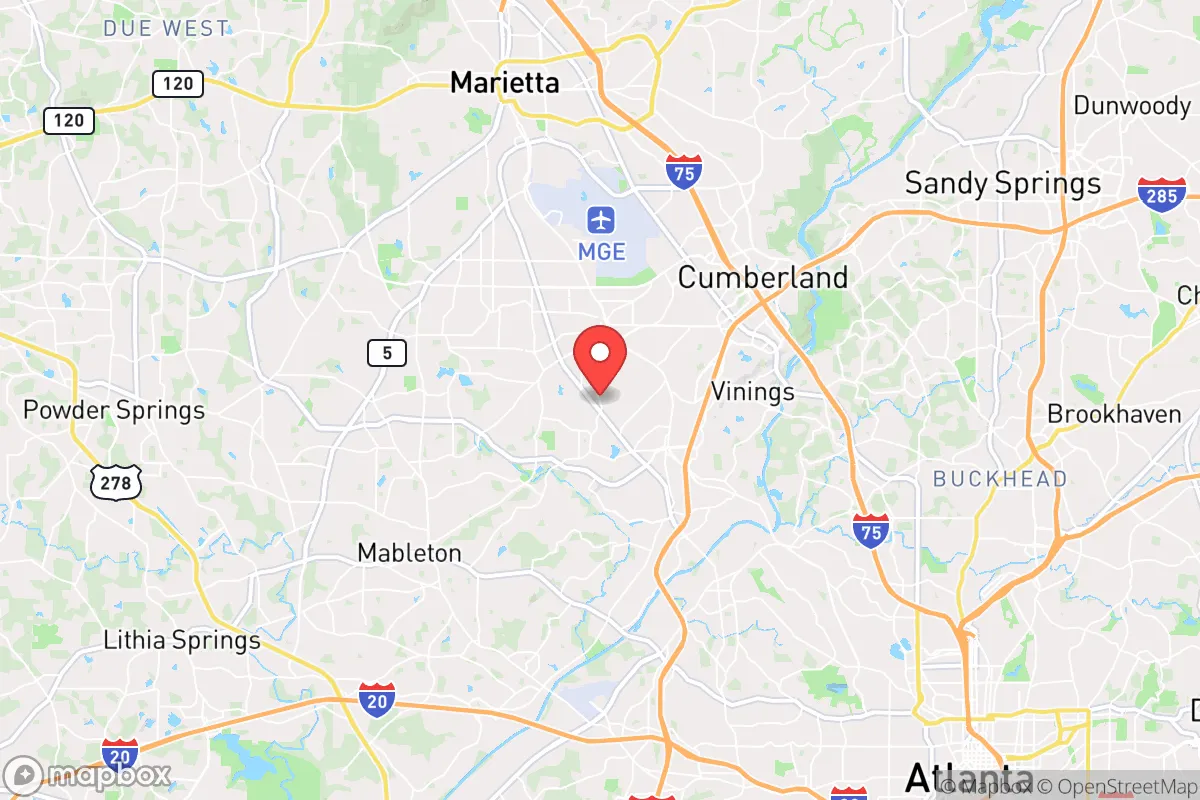
District shown is the primary district for this city’s centroid. Cities may span multiple districts.
Local Political AnalysisPolitical Analysis of Smyrna, GA
Smyrna, Georgia, has shifted hard and fast to the left over the past decade, and if you’re looking at the numbers, there’s no sugarcoating it. The Cook Partisan Voting Index (PVI) now sits at D+25, meaning the area votes about 25 points more Democratic than the national average. That’s a massive swing from even 15 years ago, when Cobb County as a whole was a reliable Republican stronghold. The trajectory is clear: Smyrna is deep blue, and it’s getting bluer with every election cycle.
How it compares
To understand just how stark the change is, you have to look at what’s happening around Smyrna. Just a few miles north, in places like Kennesaw and Acworth, you still see a more balanced political mix—those areas lean red, especially in local races. But Smyrna itself? It’s now firmly in the same camp as Decatur or Atlanta’s intown neighborhoods. The contrast is jarring when you drive from the more conservative parts of Cobb County into Smyrna’s city limits. The local government has embraced progressive policies on zoning, taxes, and social issues that would have been unthinkable here 20 years ago. If you value limited government and personal freedoms, this shift is a real concern—it’s not just about voting patterns; it’s about how those votes translate into rules that affect your daily life.
What this means for residents
For folks who’ve been here a while, the biggest worry is government overreach. The city council and county commission have pushed through higher property taxes and stricter land-use regulations, often citing “equity” or “sustainability” goals that sound good on paper but mean more red tape for homeowners and small businesses. There’s also been a push for more public spending on programs that some residents see as expanding the government’s role in personal choices—like housing mandates and local business licensing requirements. If you’re someone who believes the best government is the one that stays out of your way, Smyrna’s direction is frustrating. The political climate here now rewards candidates who promise more intervention, not less.
What daily life is like for families
On a day-to-day level, the political lean shows up in the schools and local culture. The Cobb County School District has become a battleground over curriculum and parental rights, and Smyrna’s representatives tend to side with the progressive agenda. You’ll see more diversity initiatives and less emphasis on traditional academic standards. For families who want their kids to get a straightforward education without ideological overtones, it’s something to watch. The social atmosphere is also shifting—neighborhoods are becoming more transient, with younger renters replacing long-term homeowners, and that changes the feel of community events and local politics.
One thing that stands out culturally is the city’s embrace of “smart growth” and transit-oriented development. That sounds nice, but it often means higher density, more apartment complexes, and less green space. The old Smyrna—the one with quiet streets and a slower pace—is fading. If you’re considering moving here, just know that the political climate isn’t neutral. It’s actively progressive, and that influences everything from your tax bill to what your kids learn in school. For those who prefer a lighter touch from government, the surrounding towns to the north might be a better fit. But if you’re okay with a blue-leaning, activist local government, Smyrna’s got its perks—just don’t expect much pushback against the trend.

State Political ClimatePolitical Climate in Georgia
State Political AnalysisPolitical Environment in the State
Georgia has shifted from a reliably Republican stronghold to a genuine battleground state over the past two decades, with the 2020 presidential election being decided by fewer than 12,000 votes and both Senate seats flipping Democratic in 2021. The state’s overall partisan lean is now a razor-thin Republican tilt, driven by explosive growth in the Atlanta metro area that has brought in waves of out-of-state transplants and younger voters, while the rest of the state remains deeply conservative. For a conservative considering relocation, the key question is whether the state’s traditional culture and limited-government ethos can hold the line against the demographic and political forces reshaping the Atlanta region.
Urban vs. rural divide
The political map of Georgia is a tale of two Georgias: the sprawling, diversifying Atlanta metro and the rest of the state. Metro Atlanta’s core counties—Fulton, DeKalb, Cobb, Gwinnett, and Clayton—now reliably vote Democratic, with Gwinnett and Cobb flipping blue in 2016 and 2020 respectively after decades of Republican control. Meanwhile, exurban and rural counties like Forsyth, Cherokee, and Paulding remain deeply red, with Forsyth County voting over 60% for Trump in 2020. Outside the metro, cities like Augusta, Savannah, and Columbus lean Democratic but are surrounded by conservative rural areas, while Macon and Athens are blue islands in red seas. The real battleground is the “collar counties” like Henry, Newton, and Rockdale, which are rapidly diversifying and trending left. For a conservative, the safest bets are the exurbs and smaller cities like Gainesville, Dalton, or Valdosta, where the political culture remains traditional and the pace of change is slower.
Policy environment
Georgia’s state-level policy environment is broadly conservative, but with notable exceptions that should give a freedom-minded resident pause. The state has a flat income tax rate of 5.49% (down from 5.75% in 2024), and the Republican legislature has passed multiple tax cuts, including a 2023 law accelerating the rate reduction. Property taxes are relatively low, with a median effective rate of 0.87%, and there is no state tax on Social Security income. However, the state’s regulatory posture is mixed: occupational licensing requirements are moderate, and the state has a right-to-work law, but Atlanta’s city government has imposed its own minimum wage and paid sick leave mandates on businesses. On education, Georgia has a robust school choice program, including the Georgia Promise Scholarship Act (2024) that provides $6,500 for private school tuition, but the state also mandates the “Georgia Standards of Excellence” curriculum, which some conservatives view as overly centralized. Healthcare policy is a flashpoint: Georgia rejected Medicaid expansion under the Affordable Care Act, but the state’s “Georgia Pathways” program (2023) added work requirements for limited coverage, a compromise that pleased few. Election laws were tightened with SB 202 (2021), which added voter ID requirements for absentee ballots and limited drop boxes, but critics argue it didn’t go far enough to restore confidence. For a conservative, the policy environment is favorable at the state level, but local control varies dramatically—moving to Atlanta means accepting a very different set of rules than Peachtree City or Warner Robins.
Trajectory & freedom
Georgia’s trajectory on personal freedom is a mixed bag, with clear wins and worrying losses. On the positive side, the state enacted constitutional carry (permitless carry) in 2022, allowing law-abiding citizens to carry a concealed firearm without a permit—a major victory for Second Amendment rights. Parental rights were strengthened with the “Parental Rights in Education” law (2022), which requires schools to notify parents of any health or wellness services offered and prohibits instruction on sexual orientation or gender identity in grades K-3. However, the state also expanded its hate crimes law in 2020, adding enhanced penalties for offenses motivated by race, gender, or sexual orientation—a move that some conservatives view as a slippery slope toward viewpoint-based prosecution. On medical autonomy, Georgia has a restrictive abortion law (HB 481, 2019) that bans most abortions after six weeks, but the law has been tied up in court and enforcement remains uncertain. Property rights are generally strong, with no statewide rent control and limited eminent domain abuse, but Atlanta’s city council has imposed rent stabilization studies and tenant protection ordinances. The biggest freedom concern is the state’s response to COVID-19: Governor Brian Kemp lifted restrictions early, but local governments in Atlanta and Savannah imposed mask and vaccine mandates, creating a patchwork of rules. For a conservative, the state is moving in the right direction on guns and parental rights, but the growing influence of Atlanta’s progressive politics is a constant threat to expand government overreach.
Civil unrest & political movements
Georgia has seen its share of political flashpoints, particularly in Atlanta. The 2020 murder of George Floyd sparked weeks of protests in Atlanta, including the burning of the Wendy’s where Rayshard Brooks was killed, leading to a heavy police presence and a state of emergency. The “Stop Cop City” movement, opposing the construction of a police training facility in Atlanta’s South River Forest, has resulted in ongoing protests, arrests, and a domestic terrorism designation by the state—a controversial move that has drawn criticism from civil liberties groups. On the right, the Georgia Republican Party has been fractured between establishment and Trump-aligned factions, with the 2022 primary featuring a bitter gubernatorial challenge against Kemp that he survived. Immigration politics are heated: Georgia passed HB 87 (2011), one of the strictest immigration enforcement laws in the country, but Atlanta has declared itself a “welcoming city” and limits cooperation with ICE. Election integrity remains a live issue, with the 2020 audit and hand recount confirming Biden’s win, but many conservatives remain skeptical of the state’s voting machines and absentee ballot processes. A new resident in Atlanta would notice the political activism on both sides—yard signs, protests, and community meetings are common—while in rural areas, politics is quieter but deeply felt. The overall climate is one of tension, with the state’s rapid demographic change fueling cultural and political clashes.
Projection
Over the next 5-10 years, Georgia is likely to continue its slow drift toward a purple or even blue state, driven by the continued in-migration of diverse, college-educated voters to the Atlanta metro. The 2024 election will be a critical test: if Trump loses Georgia again, the state’s Republican establishment may face a reckoning, and the party could shift further right or fracture. Demographic trends favor Democrats: the state’s Black population (33%) is highly mobilized, and Hispanic and Asian populations are growing rapidly, particularly in Gwinnett and Cobb counties. However, the exurbs and rural areas are also growing, and many new arrivals from blue states are choosing Georgia for its lower taxes and conservative culture—so the outcome is not predetermined. For a conservative moving in now, expect to see more competitive elections, more local battles over school boards and zoning, and a continued fight over election laws. The state’s freedom trajectory will depend on which party controls the governor’s mansion and legislature after 2026. If Republicans hold the line, expect more tax cuts, school choice expansion, and gun rights protections. If Democrats gain ground, look for Medicaid expansion, voting law changes, and local preemption fights over minimum wage and housing policy. The safest bet for a conservative is to choose a county that is already red and likely to stay that way—places like Forsyth, Cherokee, or Fayette—rather than hoping to turn a blue county around.
For a conservative relocating to Georgia, the bottom line is this: the state offers a generally favorable policy environment with low taxes, strong gun rights, and school choice, but you must choose your location carefully. The Atlanta metro is a political battleground where your vote matters but your local government may not share your values. The exurbs and smaller cities offer a more stable conservative culture, but even there, demographic change is coming. If you value personal freedom and limited government, Georgia is still a good bet—but it’s no longer a sure thing. Pay close attention to local elections, get involved in your community, and be prepared for the fight to keep the state from following the path of Virginia or Colorado.
* Values derived from national, state, county, city and local statistics and may differ in a specific area. Last updated: 2026-04-30T02:33:07.000Z
Narrative content on this page is AI-generated and may contain mistakes. Verify any details that matter before acting on them.
ReloMaps may earn a commission from affiliate links at no extra cost to you.

