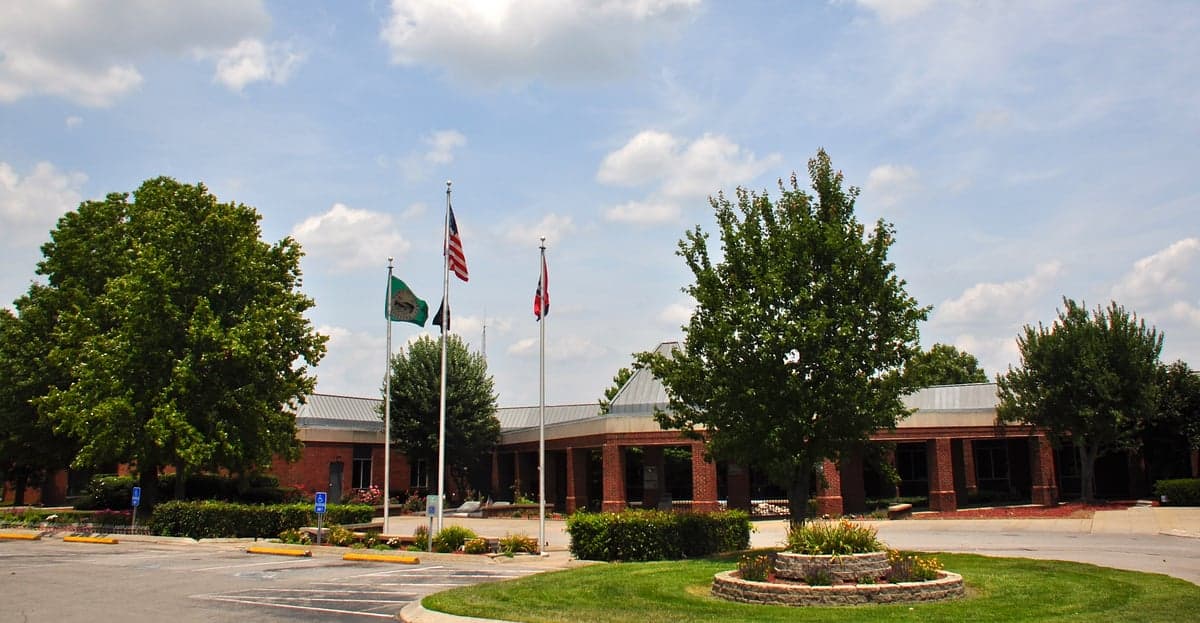
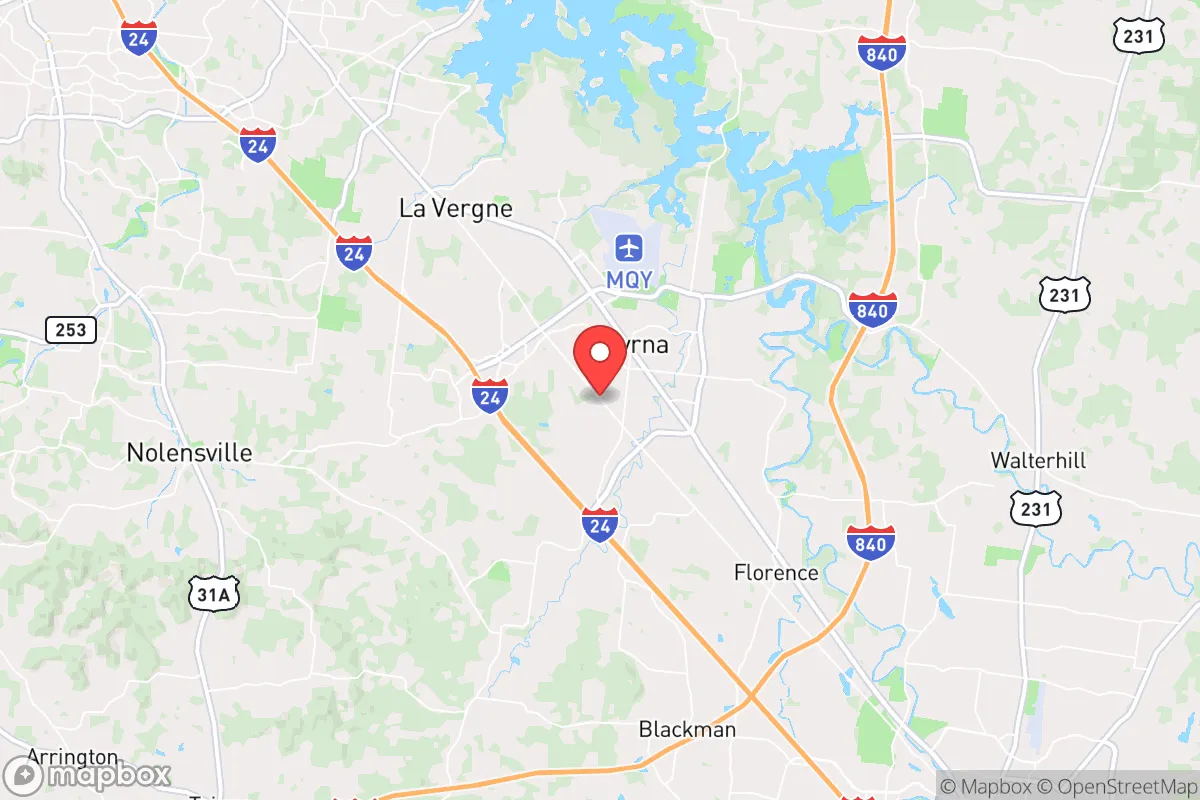
Photo: Wikipedia
Demographics of Smyrna, TN
Affluence Level in Smyrna, TN
A middle-class area roughly in line with national averages across income, home values, education, and employment.
People of Smyrna, TN
The people of Smyrna, Tennessee today form a rapidly diversifying suburban community of 55,066 residents, where no single ethnic group holds a majority. The city is characterized by a blend of long-standing white families, a substantial Black population, a growing Hispanic community, and a notable East and Southeast Asian presence, creating a demographic profile distinct from many neighboring Rutherford County towns. This is a place where the old guard of post-war suburbanites lives alongside newer arrivals drawn by jobs and affordability, giving Smyrna a pragmatic, working-to-middle-class identity rather than an elite or rural one.
How the city was settled and grew
Smyrna’s population history begins not with colonial settlement but with the railroad. Founded in 1855 as a depot stop on the Nashville and Chattanooga Railroad, the town’s early residents were largely white farmers and merchants who serviced the surrounding agricultural economy. The original settlement clustered around what is now Lowry Street and the historic downtown district, where the first general stores, churches, and a school were built by these Anglo-American families. A second wave arrived during and after World War II, when the U.S. Army established what is now Smyrna Airport as a training base. This brought a transient military population and, more durably, the infrastructure that would later attract manufacturing. The post-war boom saw white families from rural Middle Tennessee and Appalachia move in for factory jobs, settling in neighborhoods like Lee Victory and the Enon Springs area, which remain predominantly white and older in housing stock today. Through the 1960s, Smyrna remained overwhelmingly white and small—its population did not crack 5,000 until the 1970s.
Modern era (post-1965)
The 1965 Hart-Cellar Act had a delayed but significant effect on Smyrna. The city’s modern demographic transformation began in earnest after 1990, driven by two forces: the expansion of the Nissan manufacturing plant (opened 1983) and the broader suburban spillover from Nashville. Nissan’s arrival drew a wave of domestic migrants—white and Black workers from the Midwest and the South—who settled in newer subdivisions like Stonebrook and Stewarts Creek. Simultaneously, the plant’s supply chain and the region’s construction boom attracted Hispanic laborers, many from Mexico and Central America, who concentrated in older, more affordable rental areas near Sam Ridley Parkway and around Rock Springs Road. By 2000, Smyrna’s Hispanic share had risen to roughly 8%, and it has since doubled to 16.6%. The Black population, historically small, grew from about 10% in 1990 to 16.4% today, with many families moving into the Stewarts Creek and Rock Springs areas as new subdivisions opened. The East and Southeast Asian community—largely Vietnamese and Filipino—arrived more quietly, often through family reunification and employment at Nissan or in healthcare, and clusters around the Enon Springs corridor. The Indian subcontinent population remains tiny at 0.4%, a fraction of the Asian total. The foreign-born share of 10.6% is nearly double the Tennessee state average, underscoring Smyrna’s role as a gateway suburb for immigrant families seeking affordable housing and manufacturing jobs.
The future
Smyrna’s population is heading toward further diversification, but not toward homogenization. The white share, now 56.4%, is declining slowly as older residents age in place and younger white families choose newer exurbs like Murfreesboro or Nolensville. The Hispanic and Black shares are both projected to grow, driven by continued in-migration for logistics and construction jobs, and by higher birth rates among Hispanic families. The East and Southeast Asian community is likely to plateau or grow modestly, as it lacks the same chain-migration momentum. The city is not tribalizing into stark enclaves—most neighborhoods are mixed—but subtle concentrations persist: Stonebrook and Stewarts Creek are more white and Black, while the Sam Ridley corridor is heavily Hispanic. Over the next decade, Smyrna will likely become a majority-minority city, with no single group above 50%. The college-educated share (28.2%) is below the national average, suggesting the population will remain working-class and trade-oriented rather than professional.
For someone moving in now, Smyrna offers a genuinely diverse, middle-class suburb where manufacturing and logistics anchor the economy, and where the population is still in flux. It is not a place of entrenched elites or homogeneous enclaves, but a city where new arrivals—whether from rural Tennessee, Mexico, or Vietnam—are reshaping the community in real time. The bottom line: Smyrna is becoming a majority-minority working-class suburb, and its character will continue to be defined by the tension between its older white base and its newer, more diverse residents.

* Values derived from national, state, county, city and local statistics and may differ in a specific area. Last updated: 2026-05-01T11:26:58.000Z
Narrative content on this page is AI-generated and may contain mistakes. Verify any details that matter before acting on them.
ReloMaps may earn a commission from affiliate links at no extra cost to you.

