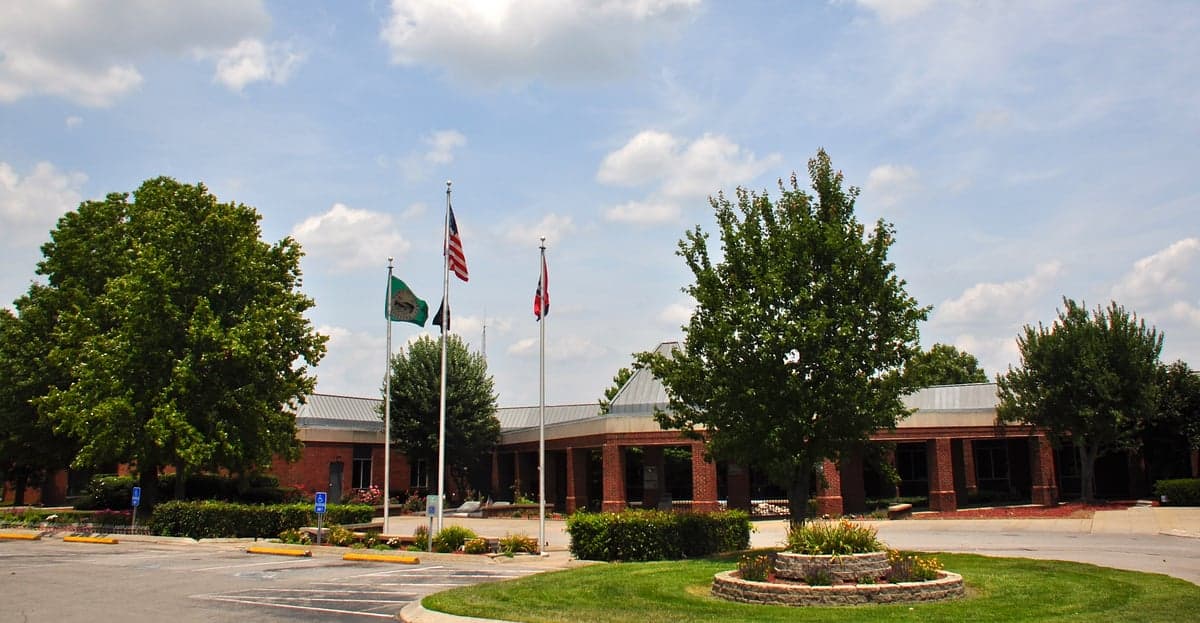
Photo: Wikipedia
Political ClimatePolitical Climate in Smyrna, TN
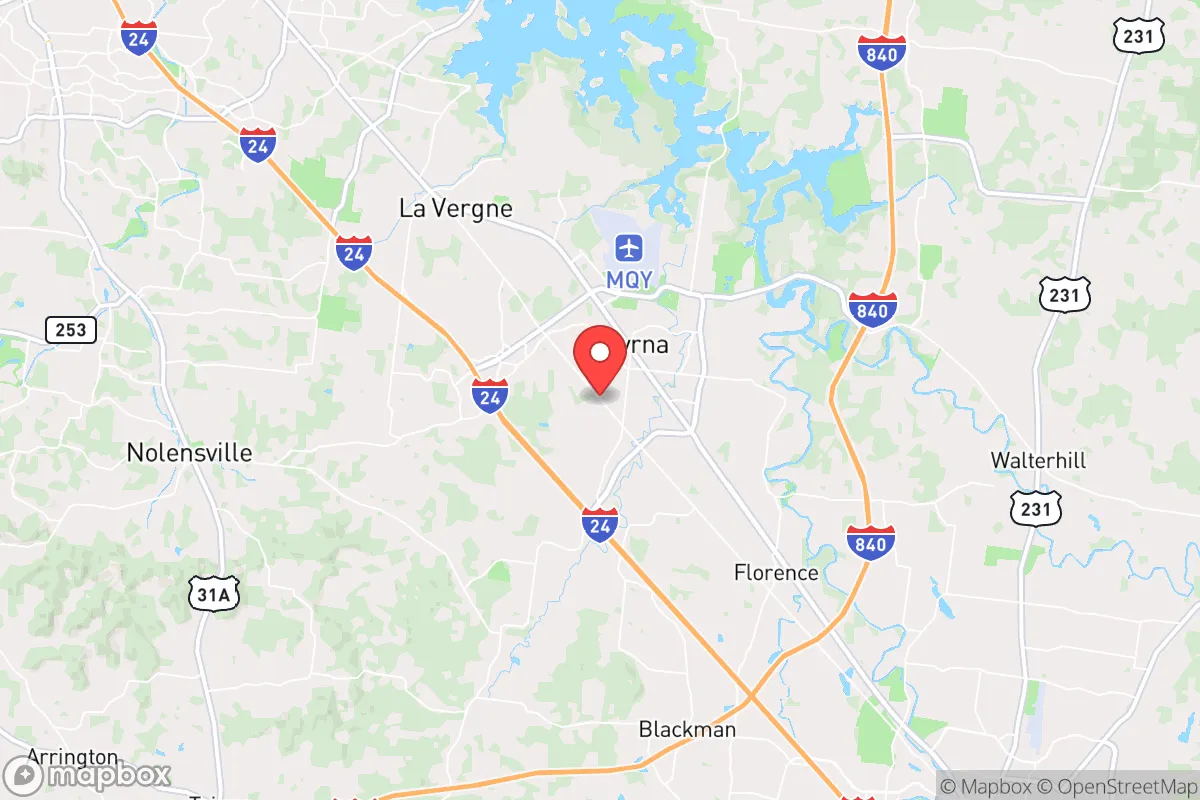
District shown is the primary district for this city’s centroid. Cities may span multiple districts.
Local Political AnalysisPolitical Analysis of Smyrna, TN
Smyrna, Tennessee, sits squarely in deep-red territory with a Cook PVI of R+21, meaning the area votes about 21 points more Republican than the national average. That’s not just a number on a map—it’s the reality of a community where conservative values like limited government, personal responsibility, and Second Amendment rights have long been the bedrock. But if you’ve been around here as long as I have, you’ve seen the winds start to shift, and not always for the better. The political lean is still overwhelmingly conservative, but the trajectory is worth watching, especially as Nashville’s sprawl pushes more folks our way.
How it compares
Drive 20 minutes north to Nashville, and you’re in a different world—a deep-blue city where progressive policies on taxes, policing, and zoning are the norm. Smyrna, by contrast, has held the line, but the comparison gets sharper when you look at neighboring towns. Murfreesboro, just east, leans red but has seen a noticeable uptick in progressive activism, especially around local school board races and development debates. Smyrna still feels more like the Tennessee of 20 years ago: folks wave from their porches, churches are full on Sunday, and the county commission isn’t itching to raise property taxes or impose new mandates. That said, the influx of new residents from California and New York—drawn by jobs at Nissan or the Amazon distribution center—has started to dilute the local culture. You can feel it in the local elections, where candidates who talk about “diversity and inclusion” are getting more airtime than they used to.
What this means for residents
For those of us who value personal freedoms, the political climate here is still a breath of fresh air compared to what you’d find in Davidson County. Smyrna has no city income tax, and property taxes remain among the lowest in the region, which means less government reach into your wallet. The local government generally stays out of your business—no mask mandates, no overreaching business closures, and a sheriff’s office that respects the Second Amendment. But here’s the concern: as the population grows, so does the pressure to adopt more progressive policies. School board meetings have gotten heated over curriculum content and library books, a sign that the culture war is knocking on our door. If you’re moving here for the conservative vibe, keep an eye on the 2026 local elections—that’s where the real battle for Smyrna’s soul will play out.
One cultural distinction that sets Smyrna apart is its strong military and veteran presence, thanks to nearby Arnold Air Force Base and the Tennessee Air National Guard. That’s a community that doesn’t take kindly to government overreach or disrespect for the flag. You’ll also notice a fierce independence in local small business owners, who’d rather compete on quality than rely on government handouts. The policy landscape here still favors personal liberty, but the long-term outlook depends on whether we can keep the progressive creep from taking root. If you value a place where your rights aren’t up for debate, Smyrna is still a solid bet—just don’t take it for granted.

State Political ClimatePolitical Climate in Tennessee
State Political AnalysisPolitical Environment in the State
Tennessee has been a reliably red state for decades, with Donald Trump carrying it by roughly 30 points in 2024 and Republicans holding supermajorities in both the state House and Senate. The dominant coalition is a mix of rural and suburban conservatives, though the fast-growing Nashville and Memphis metros inject a persistent blue undercurrent that keeps the state from drifting too far right on every issue. Over the past 10-20 years, the state has moved decisively rightward on cultural and economic policy, but the in-migration wave—especially into Williamson County and the I-24 corridor—has introduced a more libertarian-leaning, business-friendly conservative strain that sometimes clashes with the older, more traditionalist rural base.
Urban vs. rural divide
The political map breaks down cleanly: the three major metros—Nashville (Davidson County), Memphis (Shelby County), and Knoxville (Knox County)—are the blue anchors, with Nashville being the most reliably Democratic and Memphis the most racially polarized. Nashville’s growth has actually made it more liberal over the past decade, with the city council pushing progressive policies like sanctuary-city rhetoric and a failed transit tax referendum. Memphis remains deeply Democratic, driven by a large African American population, but its political influence is waning as the state legislature preempts its local ordinances. The real story is the suburban and exurban ring: Williamson County (Franklin, Brentwood) is one of the wealthiest and most conservative counties in the nation, while Rutherford County (Murfreesboro) and Sumner County (Gallatin) have flipped from purple to deep red as Nashville’s sprawl brings in families fleeing the city’s taxes and crime. Rural West Tennessee (Jackson, Dyer County) and East Tennessee (Johnson City, Kingsport) are solidly red, with the latter being the historic birthplace of Tennessee Republicanism.
Policy environment
Tennessee’s policy posture is aggressively conservative on most fronts. There is no state income tax—only a 7% sales tax on most goods, which is high but predictable. The regulatory environment is business-friendly, with right-to-work laws and no state-level minimum wage above the federal floor. Education policy has been a flashpoint: the state passed a universal school voucher program in 2023 (Education Freedom Scholarship Act) that allows families to use state funds for private school or homeschooling, a huge win for parental rights. Healthcare is a mixed bag—Tennessee refused Medicaid expansion under Obamacare, but the state’s managed-care system (TennCare) is efficient. Election laws are strict: voter ID is required, early voting is limited to 14 days, and the state has purged inactive voters from rolls. The legislature has also preempted local gun laws, abortion restrictions (trigger law after Dobbs), and banned sanctuary cities outright.
Trajectory & freedom
Tennessee is becoming MORE free in several key areas, but there are warning signs. On gun rights, the state passed permitless carry in 2021 (HB 786), allowing any law-abiding adult to carry a handgun without a permit—a clear expansion of personal liberty. On parental rights, the 2022 “Parental Bill of Rights” (SB 1818) requires schools to notify parents of any medical or counseling services provided to minors, and the 2023 “Don’t Say Gay” style law (HB 1233) bans classroom instruction on sexual orientation and gender identity in K-8. On medical autonomy, the state passed a law in 2023 allowing doctors to refuse to perform abortions or gender-transition procedures based on conscience. However, there are concerning trends: the state’s COVID-era emergency powers were used to shut down businesses and churches, and the legislature has been slow to rein in executive overreach. Property rights are strong—no state-level rent control, and eminent domain is rarely abused. Taxation remains low, but the sales tax is regressive and hits low-income families hardest.
Civil unrest & political movements
Tennessee has seen its share of flashpoints. In 2023, the “Tennessee Three” (two Democratic state representatives expelled for protesting gun control on the House floor) became a national left-wing cause, but the backlash actually strengthened the GOP’s hand. Nashville has seen recurring BLM protests and a 2020 riot that damaged the state capitol, but these have faded. Immigration politics are hot: the state passed a law in 2023 (SB 261) requiring local law enforcement to cooperate with ICE, and there have been high-profile arrests of illegal immigrants in the Nashville area. Election integrity controversies are minimal—the state’s voter ID law has been upheld, and there is no evidence of widespread fraud. On the right, the Tennessee Firearms Association and the Tennessee Eagle Forum are active, and there is a growing “constitutional sheriff” movement in rural counties. A new resident would notice the stark contrast between Nashville’s progressive city council and the state’s conservative legislature, which regularly overrides local ordinances on everything from mask mandates to short-term rentals.
Projection
Over the next 5-10 years, Tennessee will likely remain solidly red, but the nature of that red is shifting. The in-migration from California, Illinois, and New York is bringing a more libertarian, tech-savvy conservative who cares about low taxes and gun rights but is less concerned with social issues like abortion or school prayer. This could create a tension between the old guard (rural, evangelical) and the new guard (suburban, secular) on issues like school vouchers and property taxes. The Nashville metro will continue to grow, but the state legislature will keep preempting its progressive impulses—expect more fights over local control. The biggest wildcard is the federal government: if a future Democratic administration tries to impose national gun control or abortion mandates, Tennessee will likely push back with nullification-style legislation. A new resident moving in now should expect a state that is culturally conservative but increasingly diverse in its conservatism, with a strong emphasis on personal freedom and limited government—but also a state that is not afraid to use government power to enforce those values.
Bottom line: if you’re moving to Tennessee, you’re getting a state that respects your right to live your life without much interference—low taxes, strong gun rights, and a government that generally stays out of your business. But you’ll also need to accept that the state is not a libertarian paradise: the sales tax is high, the education system is still a work in progress, and the urban areas will continue to push back against the state’s conservative direction. For a single person or parent looking for a place where your values are respected and your freedoms are protected, Tennessee is one of the best bets in the country—just don’t expect it to stay exactly the same as it is today.
* Values derived from national, state, county, city and local statistics and may differ in a specific area. Last updated: 2026-05-01T11:26:58.000Z
Narrative content on this page is AI-generated and may contain mistakes. Verify any details that matter before acting on them.
ReloMaps may earn a commission from affiliate links at no extra cost to you.

