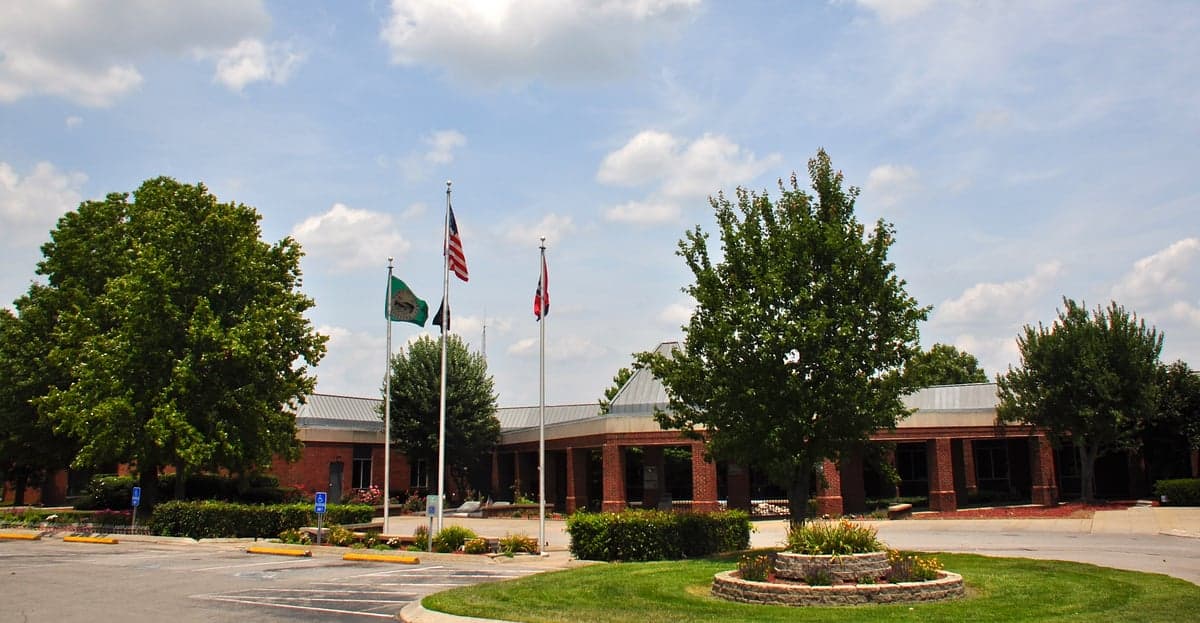
Photo: Wikipedia
Strategic Assessment of Smyrna, TN
Multiple tactical vulnerabilities. Population density, target proximity, or disaster risk are likely compounding. A retreat property and exit planning is required.
What does the Strategic Assessment tell us?
Our Strategic Assessment grades tactical survivability of an area. Major population centers, military targets, fallout zones, natural disasters, and border exposure all drive risk — lower exposure means a more defensible position in a crisis.
This is heavily inspired by Joel Skousen's Strategic Relocation book. Highly recommended you checkout the book ($)What does this tell us?
Our Strategic Assessment grades tactical survivability of an area. Major population centers, military targets, fallout zones, natural disasters, and border exposure all drive risk — lower exposure means a more defensible position in a crisis.
This is heavily inspired by Joel Skousen's Strategic Relocation book. Highly recommended you checkout the book ($)Strategic Pillars

Key Distances
Regional Safe Places
Below is our recommended "safe zones" in Tennessee and the surrounding area based on our strategic heuristics. For most people, it's unrealistic to live in a “safe zone” full-time due to work, family or other personal reasons. They tend to be more rural. However, many of these areas are perfect for second homes and retreat properties that double as a vacation home or even a short-term rental.
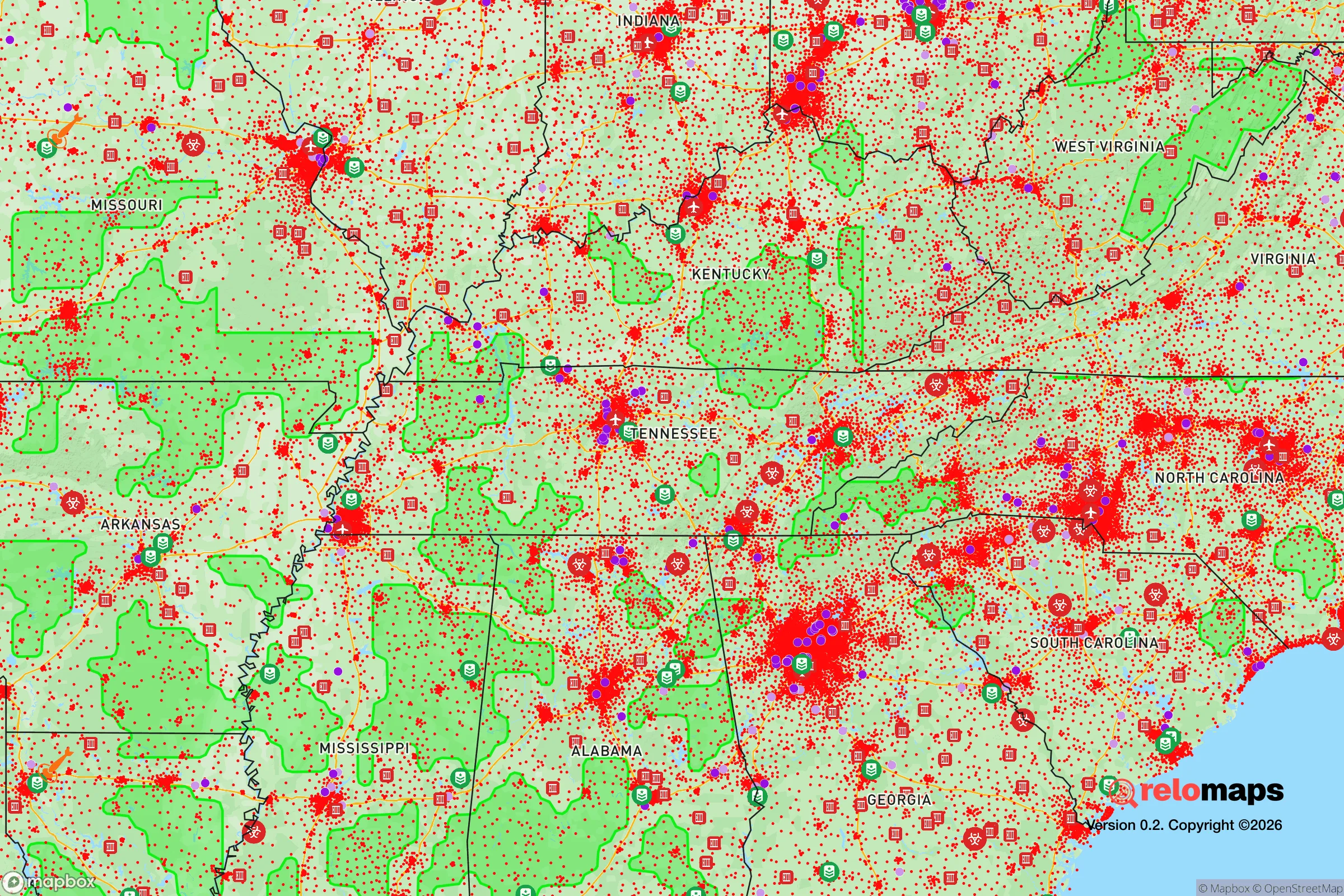
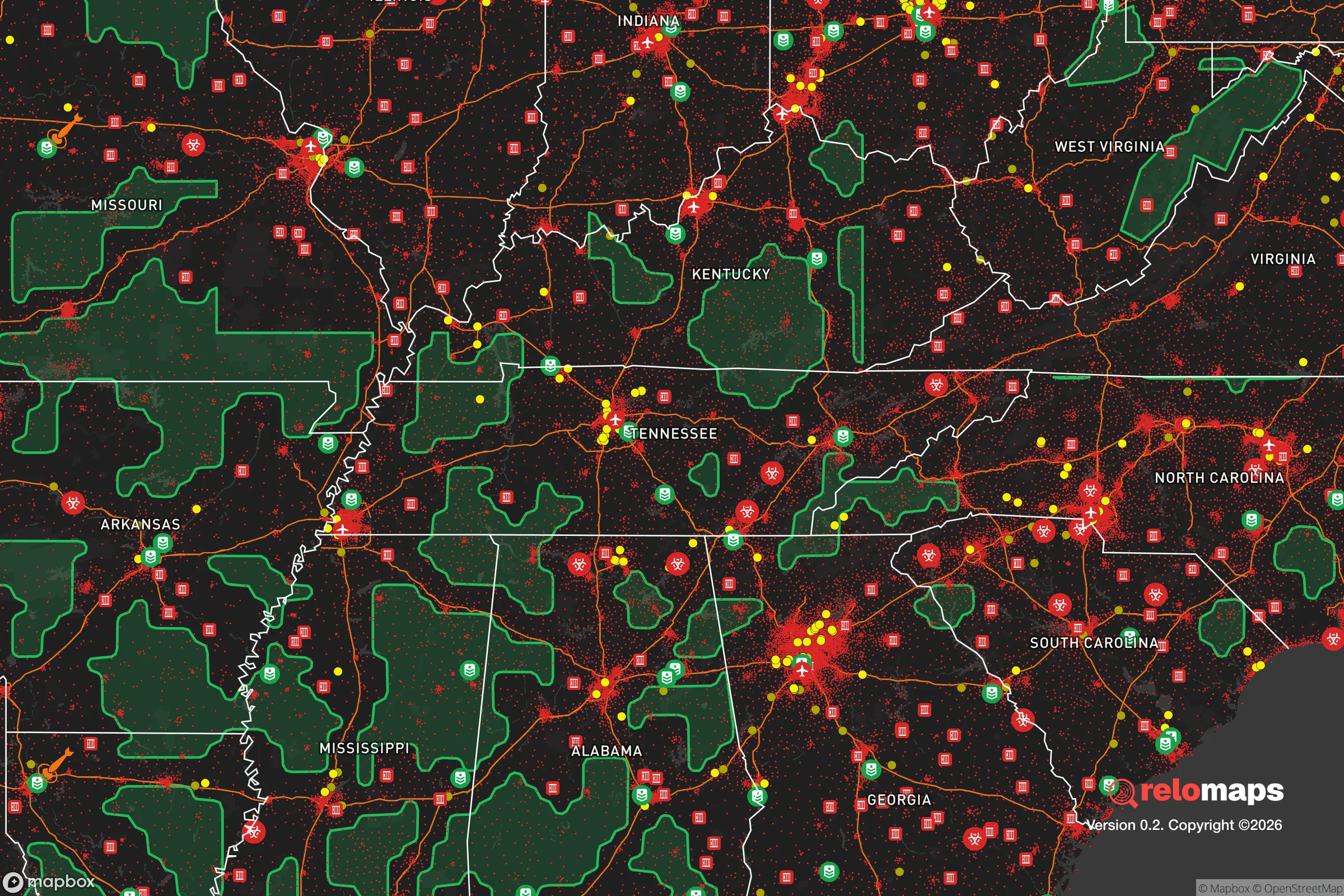


Important Note: For informational purposes only. This does not mean nothing bad ever happens in the green zones. Please use common sense. This is based on public data and modeled with AI. We tried to take a conservative approach but mistakes happen. We update this regularly as new information becomes available.
Solar Generator Recommendations
Backup power matters more here than in safer locations. We've picked three solar generators across budgets and capacity tiers — start with the budget unit if you only need a few essentials, or step up if you want to run a fridge and HVAC for days at a time.

Jackery Portable Power Station Explorer 300
Budget OptionPower on the Go: Weighing only 11 lbs, it's convenient to set up and store with book-sized foldable solar panels

BLUETTI Portable Power Station AC180
Designed for both indoor and outdoor scenarios, AC180 is highly capable as it has a robost capacity and continuous output power.

EF ECOFLOW DELTA Pro Ultra Power Station
Upgraded PickEcoFlow DELTA Pro Ultra is a whole-home energy system designed to grow with your family. Integrated with the Smart Home Panel 2, it scales to meet your evolving energy needs — keeping your home powered, intelligent, and secure through every stage of life.
We earn a commission, at no additional cost to you.
Strategic Assessment Analysis
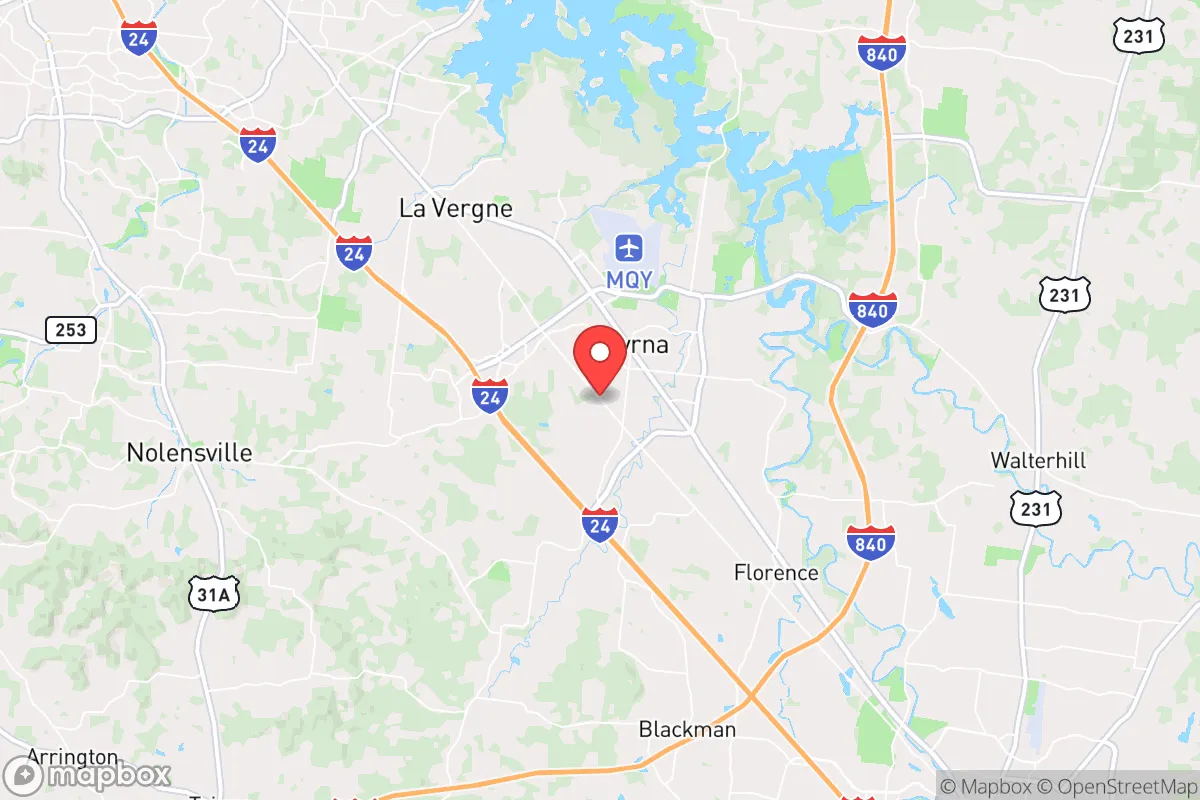
Smyrna, Tennessee, occupies a strategic position that balances proximity to a major economic hub with the practical advantages of a smaller, more manageable community, making it a location worth serious consideration for those prioritizing long-term stability and preparedness. Its location along the I-24 corridor, roughly 20 miles southeast of Nashville, places it within a zone that has experienced significant growth and infrastructure investment, yet it remains distinct from the urban core’s density and associated vulnerabilities. For a relocator focused on resilience—whether against economic disruption, civil unrest, or large-scale emergencies—Smyrna offers a blend of access to resources and a degree of separation from the most acute risks, though it is not without its own exposures that demand careful evaluation.
Geographic position and natural advantages for long-term stability
Smyrna sits within the Nashville Basin, a region characterized by rolling hills, moderate elevation, and a climate that avoids the extremes of both the Deep South and the northern states. The area’s topography provides natural drainage and reduces the risk of catastrophic flooding compared to low-lying river towns, though localized flash flooding can occur after heavy rains. The presence of the Stones River and Percy Priest Lake to the north offers water resources, but these are shared with a growing population and are not isolated—meaning a relocator should plan for private well or rainwater catchment if self-sufficiency is a priority. The region’s geology is stable, with no significant seismic activity, and tornado risk, while present, is lower than in the traditional “Dixie Alley” corridor further west. The moderate climate supports year-round gardening and livestock, a key advantage for those looking to reduce dependence on supply chains. Smyrna’s position roughly 250 miles from the Gulf Coast and 150 miles from the Appalachian foothills provides a buffer against hurricane storm surge and coastal flooding, while still offering access to higher ground if needed.
Risks, exposures, and proximity to fallout-relevant landmarks
The most significant strategic drawback of Smyrna is its proximity to Nashville, a major metropolitan area with a population exceeding 1.9 million in the broader MSA. In a scenario involving civil unrest, supply chain collapse, or a mass casualty event, Nashville would likely become a source of outward migration, placing pressure on surrounding communities like Smyrna. Smyrna is also home to the Smyrna Airport (MQY), a general aviation and cargo hub that hosts a Tennessee Air National Guard unit and sees regular military transport activity. While this provides some local capability, it also makes the area a potential target in a conflict scenario—something a prepper must weigh. Additionally, the nearby Nissan North America manufacturing plant, a major employer, represents a concentration of industrial activity that could draw unwanted attention during disruptions. The presence of Interstate 24, a primary evacuation route from Nashville, means that Smyrna’s roads could become congested or blocked during an emergency, limiting mobility. There are no nuclear power plants within 50 miles, but the potential for a radiological release from a transportation accident on I-24 or from the nearby Oak Ridge National Laboratory (about 150 miles east) is a low-probability but non-zero risk. The area’s reliance on the Tennessee Valley Authority (TVA) for electricity, while generally reliable, means that a grid failure would affect a wide region, and local backup generation is advisable.
Practical resilience for a relocator: food, water, energy, and defensibility
For a relocator serious about self-sufficiency, Smyrna offers a mixed picture. The soil in Rutherford County is predominantly clay-based, which can be challenging for gardening without amendment, but the growing season is long (roughly 200 days) and supports a wide variety of crops. Local farmers’ markets and agricultural supply stores are accessible, but the area is not a major food-producing region—most staples are trucked in, meaning a disruption in fuel supply would quickly empty grocery shelves. Water is generally plentiful from municipal sources, but a private well is the gold standard for resilience; many properties in the outskirts of Smyrna have access to groundwater, though well depths vary. The local water table is adequate for a household, but drought conditions in recent years have lowered levels, so a backup storage system is prudent. Energy resilience is achievable: solar potential is moderate, with about 4.5 peak sun hours per day, and many homes can accommodate rooftop panels. Natural gas is available in most developed areas, providing a backup heating option. Defensibility is a concern—Smyrna is a suburban community with a typical grid layout, not a rural homestead with natural barriers. Properties on the eastern or southern edges, near the more rural areas of Rockvale or Christiana, offer better seclusion and defensible space than those closer to the Sam Ridley Parkway commercial corridor. The local law enforcement presence is adequate for day-to-day security, but in a widespread crisis, the Rutherford County Sheriff’s Office would be stretched thin, making neighborhood mutual aid and personal preparedness essential.
The overall strategic picture for Smyrna is one of calculated trade-offs. It is not a remote survivalist retreat, nor is it a high-risk urban core. For a conservative-leaning relocator who values community stability, economic opportunity, and a degree of separation from the most volatile elements of modern society, Smyrna offers a viable middle ground. The key is to recognize its vulnerabilities—proximity to a major city, reliance on regional infrastructure, and limited natural defensibility—and to mitigate them through property selection, resource stockpiling, and community engagement. Those who treat Smyrna as a base for resilience, rather than a final redoubt, will find it a practical choice in an uncertain landscape, provided they remain aware that no location is immune to the broader trends shaping the country. The area’s growth and relative prosperity are double-edged: they bring opportunity but also attract attention. A prepared relocator can thrive here, but only with eyes wide open to both the advantages and the risks.

* Values derived from national, state, county, city and local statistics and may differ in a specific area. Last updated: 2026-05-01T11:26:58.000Z
Narrative content on this page is AI-generated and may contain mistakes. Verify any details that matter before acting on them.
ReloMaps may earn a commission from affiliate links at no extra cost to you.

