Photo: Wikipedia
Demographics of South Bethany, DE
Affluence Level in South Bethany, DE
A wealthy area with high-earning, well-educated households. Incomes, home values, and educational attainment meaningfully outpace national averages.
People of South Bethany, DE
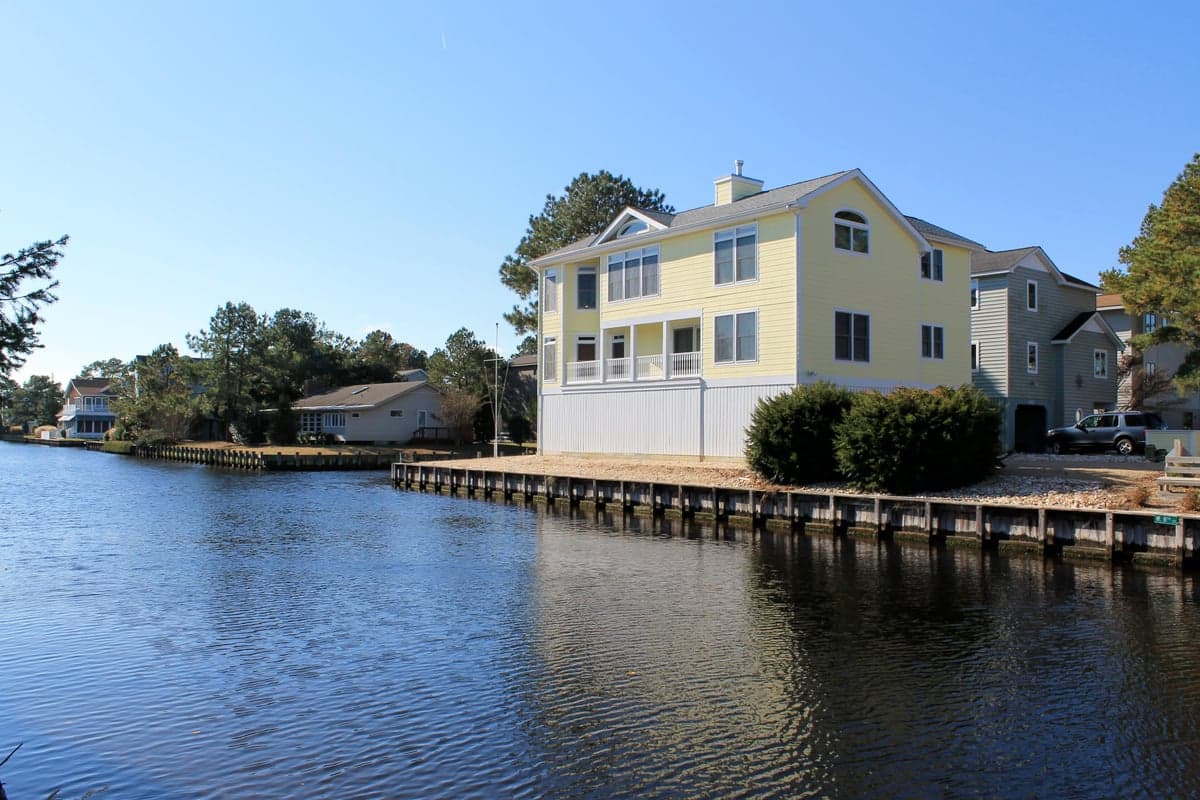
South Bethany, Delaware, is a small, affluent beach town of 503 residents characterized by a highly homogeneous population, a high concentration of college-educated professionals (76.0%), and a near-total absence of racial or ethnic diversity. The city’s identity is rooted in seasonal tourism and second-home ownership, with a permanent population that is overwhelmingly White (83.1%) and a foreign-born share of just 1.0%, making it one of the least diverse communities in Sussex County. Its residents are predominantly older, property-owning individuals and families who value quiet, low-density living and direct beach access, distinguishing it from the more commercialized resort towns to the north.
How the city was settled and grew
South Bethany was not a colonial settlement or an agricultural hub. It was a planned beach resort community, incorporated in 1967, built on land that was largely undeveloped marsh and scrub pine. The original population consisted of middle- and upper-middle-class families from the Washington, D.C., Baltimore, and Philadelphia metropolitan areas seeking a seasonal escape. The earliest homes were modest cottages concentrated in the York Beach and Sea Colony neighborhoods, the latter of which became a defining condominium and townhome development. The town’s growth was driven by the post-World War II boom in automobile travel and the construction of the Chesapeake Bay Bridge in 1952, which made Delaware’s coast accessible to the Mid-Atlantic’s growing suburban population. By the 1970s, South Bethany had established itself as a quieter alternative to Rehoboth Beach, attracting families who wanted a private, low-key beach community rather than a boardwalk destination.
Modern era (post-1965)
After the 1965 Hart-Cellar Act, South Bethany saw virtually no change in its ethnic composition because the town had no industrial base, no immigrant labor demand, and no rental housing stock affordable to new arrivals. The population remained overwhelmingly White and native-born. The most significant demographic shift was not racial but economic: as property values rose sharply from the 1990s onward, the town became increasingly exclusive. Newer, larger homes replaced many of the original cottages, particularly in the South Bethany Beach core and along the canals in the Little Neck area. The Bayside neighborhood, with its waterfront lots, attracted wealthy retirees and second-home buyers from the Northeast. The 2020 Census data confirms this trajectory: the town’s Black population is 0.0%, its Hispanic population is 1.8%, and its East/Southeast Asian population is 0.2%. The Indian subcontinent population is 0.0%. These figures reflect a community that has not diversified through either immigration or domestic migration, and that remains a preserve of affluent, predominantly White homeowners.
The future
The demographic trajectory of South Bethany points toward continued homogenization and aging. The town has no land for new large-scale development, and its zoning strongly favors single-family homes and low-density condominiums, which limits the construction of affordable or rental housing that might attract a more diverse population. The foreign-born share (1.0%) is among the lowest in Sussex County, and there is no evidence of emerging immigrant communities. The Hispanic population (1.8%) is small and likely tied to seasonal service workers who do not settle permanently. The town’s college education rate (76.0%) is exceptionally high, suggesting that future in-movers will continue to be professionals and retirees from outside Delaware. Over the next 10–20 years, South Bethany will likely become slightly older and wealthier, with a stable or slowly declining permanent population as younger families are priced out. The town will not tribalize into distinct ethnic enclaves because there are no ethnic groups large enough to form them; instead, it will remain a single, homogeneous enclave of affluent White homeowners.
For someone moving in now, South Bethany offers a predictable, stable, and safe environment with a permanent population that is small, well-educated, and politically and culturally conservative. The trade-off is a near-total lack of racial, ethnic, or socioeconomic diversity, and a community that is more oriented toward seasonal residents and vacationers than toward year-round families. It is a place for those who prioritize privacy, property values, and a quiet beach lifestyle over demographic variety or urban amenities.

* Values derived from national, state, county, city and local statistics and may differ in a specific area. Last updated: 2026-04-29T23:39:23.000Z
Narrative content on this page is AI-generated and may contain mistakes. Verify any details that matter before acting on them.
ReloMaps may earn a commission from affiliate links at no extra cost to you.

